AM
Adam Morton
Environment & Climate · United Kingdom
Covers
Environment & Climate
Politics & Government
Energy & Infrastructure
Business & Economy
International Affairs
Social Issues & Demographics
Seen in
Published work
EV sales outpace petrol cars for first time as Australians dodge soaring fuel costs
Australian sales of electric vehicles reached a record more than 27,000 in August, accounting for 24.9% of new-car sales and exceeding petrol and diesel vehicles for the first time. Rising fuel prices linked to conflict in Iran and a federal vehicle-efficiency standard have accelerated adoption by making EVs more competitive and expanding model availability. Industry representatives describe a structural shift with economic and environmental benefits, but say reliable, accessible charging remains essential, particularly for regional motorists, apartment residents and renters.
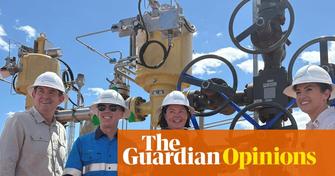
Albanese’s resources minister celebrating the Beetaloo carbon bomb is a hell of a choice. Labor can’t say it wasn’t warned
Global heating will hit at least 1.8C, UN warns, and there are ‘no good outcomes’
A UN Environment Programme report concludes that global heating will exceed 1.5C even under the most optimistic scenario, probably reaching at least 1.8C, with every additional fraction of warming worsening extreme weather, glacier loss, food insecurity, ecosystem damage and risks to coastal communities. The report says temperatures could return to 1.5C this century only if warming remains below about 1.8C, requiring immediate deep emissions cuts, net-zero emissions and carbon dioxide removal, alongside major adaptation efforts. Existing policies point to at least 2.3C of warming, while climate advocates from Pacific island states demand an end to fossil-fuel expansion. Scientists and policy groups welcome the warning but criticize the report for insufficiently emphasizing fossil-fuel phaseout and the practical route to recovery.
NSW’s koala national park will protect threatened species and cap logging. Could the Greens really block it?
Australia’s Greens are considering whether to join the Nationals in blocking a Labor-backed plan for a 476,000-hectare Great Koala National Park in northern New South Wales. The proposal would protect koalas and other threatened species, sharply reduce native-forest logging, and generate potentially hundreds of millions of dollars through carbon credits. Critics, including former Greens leaders and the Australia Institute, argue the credits are not additional, could let polluters claim questionable emissions reductions, and should not replace public funding for the forestry transition. Supporters say the strengthened plan would cap logging well below recent levels and that its credits would represent less than 1% of Australia’s annual total. A compromise, potentially restricting credits to industries outside fossil-fuel extraction, could preserve the park while addressing the Greens’ concerns.
Australia’s largest aluminium smelter to run on renewables by 2033 after Rio Tinto strikes $2.5bn taxpayer bailout deal
Rio Tinto has secured a 10-year below-market electricity guarantee from the Australian federal and New South Wales governments, worth $2.5bn, to keep the Tomago aluminium smelter operating after its coal-focused contract with AGL ends in December 2028. The smelter is expected to run entirely on renewable energy by 2033, cutting annual emissions by 7.1m tonnes. The arrangement will support almost 3,000 megawatts of new renewable and firming capacity, while the smelter’s owners will invest $1.1bn in Tomago, including $100m for decarbonisation. Supporters say the deal protects thousands of jobs and regional industry; opposition figures and independent MPs criticise its cost and the failure of governments to secure cheaper renewable power sooner.
Coalition plan to scrap energy rules for new houses condemned as ‘cost-of-living timebomb’
Australia’s opposition Coalition plans to cut the National Construction Code from more than 2,000 pages to 80 and make energy-efficiency and accessibility requirements for new homes optional. Housing, energy and social-service advocates warn this would shift costs onto households, increase inequality and leave residents with higher heating and cooling bills. Coalition spokesperson Andrew Bragg argues the changes would reduce construction costs and give buyers more choice, while government figures and industry experts say national standards reduce long-term energy and health costs, already account for regional climate differences and have had little effect on construction prices. The Albanese government says it is working with states to streamline the code rather than abolish its protections.
Former top BHP economist urges tougher government policies to push miners to decarbonise
Former BHP chief economist Huw McKay says governments need stronger policies, preferably a carbon price, to force major mining companies to make faster decarbonisation investments. Leaked documents indicated that BHP delayed large renewable projects, considered postponing fleet electrification and continued acquiring diesel haulage trucks despite its public climate commitments. BHP says battery-electric truck and locomotive trials are necessary because the technology is not yet ready for large-scale deployment. Climate minister Chris Bowen defended Australia’s safeguard mechanism, which requires major industrial facilities to reduce emissions intensity or purchase offsets, and rejected introducing a carbon tax. The dispute highlights concerns that voluntary targets and the current policy framework may be insufficient to deliver deep emissions cuts from heavy industry.
Donald Trump may be the accidental hero of a feelgood climate tale even as a creeping horror story plays alongside
A deadly, record-breaking heatwave across Europe illustrates the escalating human and infrastructure impacts of climate change, while Australia and other regions show similar warning signs. At the same time, the disruption caused by Donald Trump’s attack on Iran and the resulting Strait of Hormuz blockade may encourage countries to reduce dependence on fossil-fuel imports. Renewable energy, battery storage and electric vehicles are expanding rapidly because their costs are falling and they improve energy security. Solar and wind now supply significant shares of electricity in the EU, United States, China and elsewhere, although global emissions have not yet begun to decline and fossil-fuel interests continue to resist the transition. Electrification offers qualified optimism but does not diminish the scale of the climate challenge.
Court rules identities of multiple survivors of Bondi attack cannot be published – as it happened
A New South Wales court ordered that the identities of multiple survivors and witnesses in the Bondi terror attack case against Naveed Akram remain suppressed until the matter reaches a higher court, citing risks to their mental safety and further trauma. The live coverage also reported Australia and Vanuatu signing the Nakamal treaty, parliamentary disputes over housing, digital safety, environmental policy and the Murray–Darling Basin, and renewed Liberal debate over multiculturalism and a possible party rebrand. Labor led the latest Newspoll, while One Nation gained significant support. Other developments included the antisemitism royal commission hearing evidence of threats against the Lowy family, new domestic-violence murder charges in Sydney, Queensland electorate boundary changes and continuing debate over infrastructure costs and climate-related issues.
Park to protect 12,000 koalas to go ahead via contentious carbon credit deal by Albanese government
New South Wales’ long-promised Great Koala National Park is set to proceed after the Albanese government approved a method allowing states to generate carbon credits by protecting native forests on public land. The proposed 176,000-hectare park near Coffs Harbour is expected to protect at least 12,000 koalas, old-growth forests and more than 100 threatened species, while generating regional revenue and about 100 jobs. Supporters say the scheme could reduce logging and preserve stored carbon, but conservationists and industry critics question whether the credits meet additionality and integrity requirements. Environmental groups are divided: some welcome safeguards against shifting logging elsewhere, while others argue offsets let major emitters continue polluting and that the forests should be protected without carbon credits. The NSW government will now register its project with the federal Clean Energy Regulator.
Paterson says Hanson’s vision for monocultural Australia is ‘deeply weird’ as he defends Taylor’s response – as it happened
Australia’s federal parliament passed the government’s tax package, with ministers promising later amendments to protect people affected by divorce or death from adverse capital-gains-tax consequences. Opposition MPs pressed the government over when it became aware of the issue, while Treasurer Jim Chalmers accused them of trying to distract from their expected opposition to tax cuts. Liberal senator James Paterson criticized Pauline Hanson’s call for a monocultural Australia as “deeply weird” but defended Opposition Leader Angus Taylor’s emphasis on Australian values. Zali Steggall and Allegra Spender launched the centrist Community Strong Australia party, although Zoe Daniel remained undecided and Kate Chaney declined to join. Other developments included a fall in unemployment to 4.4%, continued controversy over an Australian woman linked to Islamic State being allowed to return, concerns from spy chief Mike Burgess about foreign-state threats, debate over social-media algorithms and the NDIS, and scrutiny of a proposed Brisbane riverfront redevelopment.
Trapped by floods and fearing death in the heat: the Australians taking legal action over the climate crisis
Ten Australians affected by floods, bushfires, extreme heat and a toxic algal bloom have filed a complaint with the UN Human Rights Committee, arguing that Australia’s continued support for coal and gas exports violates their human rights. Supported by environmental and human-rights groups, the case seeks recommendations on government action, though any findings would not be legally enforceable. Scientists and legal experts say the claim has a strong basis because fossil fuel emissions increase the risk of extreme weather, while the government is expected to argue that it is cutting domestic emissions and developing renewable industries.