AP
Adam Page
Film & Television · United Kingdom
Covers
Film & Television
Arts & Culture
Entertainment & Celebrity
Technology
Misinformation & Media Literacy
Seen in
Published work
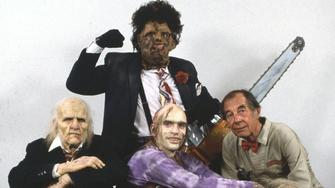
From Terror to Farce: The Texas Chainsaw Massacre 2 at 40
Is Natural Born Killers Actually Funny? Oliver Stone's Savage Comedy and Why It Unsettles Us
Adam Page argues that Oliver Stone's Natural Born Killers is fundamentally a dark comedy and satire rather than merely an ultraviolent film. The film's sitcom framing of domestic abuse, its grotesque treatment of Mickey and Mallory's violence, Robert Downey Jr.'s performance as tabloid journalist Wayne Gale, and its abrupt shifts between visual styles expose how American media turns horror into entertainment. The discomfort of laughing at these scenes is presented as the film's central purpose: it implicates viewers in the same spectacle-driven culture the movie critiques. Despite its excesses, the film is portrayed as a formally inventive work whose tonal instability accurately reflects the chaotic media environment of the 1990s and beyond.
Campy on Purpose: Irony, Self-Awareness, and the Knowingly Bad Horror Movie
Deliberately campy horror films of the late 1980s and 1990s used irony, self-awareness, and knowingly cheap effects as both an aesthetic and a defense against critical failure. Troma Entertainment, the Evil Dead films, Stuart Gordon’s Lovecraft adaptations, and Tremors are presented as successful examples whose camp reflects genuine artistic commitment, while many post-Scream imitators used referentiality as a substitute for ideas and craftsmanship. The trend is situated within 1990s postmodern culture, when audiences had become highly aware of media conventions and irony offered an alternative to seemingly compromised sincerity. Although these films rarely produced conventional fear, their openness about their artificiality gave the best of them a lasting cultural integrity.
The Best Worst Movie: How Showgirls Became Camp Canon
Showgirls evolved from a major 1995 critical and commercial failure into a camp-cinema touchstone through rental circulation, ironic viewing parties, drag screenings and David Schmader’s annotated presentations. MGM eventually embraced that audience response through a best-selling tenth-anniversary DVD, while critics and filmmakers increasingly argued that the film might function as both sincere disaster and savage satire of American ambition. The article also emphasizes Elizabeth Berkley’s career damage and her emotional 2015 return to the film’s audience. Jeffrey McHale’s documentary You Don’t Nomi ultimately consolidates these competing interpretations, showing that cult canonisation is built gradually by fringe audiences before institutions and critics confer legitimacy.
The Longest Leap: Quantum Leap's Ending is Still a Gut-Punch Thirty Years On
The finale of Quantum Leap, “Mirror Image,” remains devastating because Sam Beckett learns he may be able to return home but instead uses his agency to restore Al’s marriage before leaping onward alone. The article argues that the infamous title card—“Dr. Sam Beckett never returned home”—is not merely a cruel cancellation artifact but the honest culmination of Sam’s identity as a man who continually chooses responsibility over personal reward. It also reflects on the show’s portrayal of decency, friendship and sacrifice, the production’s abrupt ending after NBC’s cancellation, and the difficulty the 2022 revival faced in reproducing the original series’ moral and cultural resonance.
J-Horror and the Western Gaze: When Asian Horror Invaded the 90s
J-Horror emerged in 1990s Japan from economic dislocation, longstanding yūrei and onryō traditions, and anxieties surrounding alienation and patriarchal violence. Films such as Ringu and Ju-On: The Grudge use ambiguity, nonlinear storytelling and female vengeful spirits to represent unresolved social damage rather than conventional monsters. Hollywood remakes including The Ring and The Grudge successfully introduced the genre to wider audiences but, in the author’s view, often reduced its cultural specificity and political critique to explainable threats and familiar scares. Despite this dilution, the remakes also directed some viewers toward influential Japanese films such as Audition, Cure and Pulse.
The TV Shows That Dared To Be Complex Before Complexity Was Allowed
The article argues that complex, serialised television did not begin with The Sopranos in 1999. It credits 1990s genre shows including The X-Files, Millennium, Nowhere Man, Dark Skies and the early seasons of Sliders with pioneering moral ambiguity, long-form storytelling, conspiracy narratives, formal experimentation and sustained psychological dread. Their genre status, network affiliations, cancellations and unresolved endings caused critics to overlook them, while HBO’s institutional prestige helped later dramas receive the credit for innovations these shows had already developed. The X-Files in particular is presented as a powerful expression of late-20th-century American fears about government deception and unaccountable institutions.
Peak Paranoia: Why David Cronenberg's 80s Body Horror Movies Are More Relevant Than Ever
David Cronenberg's 1980s films, particularly Videodrome, The Fly and Naked Lunch, are presented as prescient explorations of technological anxiety, bodily transformation and the erosion of a stable self. Their body horror dramatizes how media, ideology, addiction and systems of control become physically embedded in people. The films resonate with the smartphone era, social-media algorithms, biohacking, artificial intelligence and the monetization of identity because they depict individuals gradually surrendering agency to tools and processes they cannot fully understand. Cronenberg offers no solution, only a disturbing clarity about how colonization by technology can become indistinguishable from personal desire.
David Cronenberg's The Fly at 40: A Love Letter to the Rot
David Cronenberg’s 1986 remake of The Fly is presented as far more than a B-movie monster story: it is an intimate meditation on disease, bodily identity, addiction, aging and the pain of loving someone undergoing irreversible change. The piece praises Jeff Goldblum’s physical performance, Geena Davis’s emotionally substantial role, and Chris Walas and Stephan Dupuis’s practical makeup effects. It also reads the film as an implicit AIDS-era allegory, emphasizing its refusal to impose a moral explanation on biological catastrophe and arguing that its central horror remains powerful four decades later.
Clive Barker's Hellraiser Universe: Ambition, Excess, and the Franchise That Could Have Been
Clive Barker’s 1987 Hellraiser and 1988 Hellbound: Hellraiser II are presented as ambitious, philosophically unsettling films built around desire, transgression, and the Cenobites’ alien logic. The franchise’s decline began with Hellraiser III, when studio priorities recast Pinhead as a conventional slasher villain, and intensified through Bloodline and a series of direct-to-video films assembled from unrelated scripts. Studio interference and rights-driven production gradually preserved the brand while stripping away its mythology. The 2022 Hulu reboot offered a partial recovery of Barker’s themes, but the franchise remains a cautionary example of commerce diluting a distinctive artistic vision.