توظيف الصحفيين

الناشرون وهيئات البث فرق تسويق المحتوى فرق العلاقات العامة والاتصال فرق المخاطر والاستخبارات ابحث عن صحفيين الرصد الإعلامي الأسعار

للصحفيين

وظائف صحفية أسعار الأجور أنشئ ملفك المجاني

نبذة عن Ahmad

التعليم: 2015 – حتى الآن طالب دراسات عليا في السنة الثانية، كلية العلوم الإنسانية والاجتماعية، Peoples' Friendship University of Russia (موسكو, روسيا) September 2006 – August 2010 Islamic University، bachelor، Political science (طهران, إيران) September 2011 – August 2014 Islamic University، master، Political science (طهران, إيران) الخبرة المهنية: July 2018 – حتى الآن – نائب رئيس التحرير the events daily newspaper (www.vaghayedaily.ir) August 2017 – حتى الآن – أستاذ مساعد، كلية العلوم الإنسانية والاجتماعية، Peoples' Friendship University of Russia (موسكو, روسيا) Jun 2017 – حتى الآن – لدي عمود أسبوعي في Etemad newspaper في إيران. اسمه: “around of red square” 2016 – حتى الآن – رئيس التحرير RussiaViewer (****/) August 2015 - حتى الآن - استشارات إدارية لـ – Editor in chief economy of Iran (http://ireconomy.ir/) October 2015 until January 2018 - عضو هيئة التحرير في society and culture of Russia Today August 2015 until June 2017 - استشارات إدارية لـ Quarterly of creative economy November 2013 until October 2015 - رئيس تحرير Institute of Iran Eurasian Studies (IRAS) (www.iras.ir) September 2014 until March 2015 - رئيس تحرير Hi citizen (http://www.shahrvandsalam.com/) July 2013 January 2014 - رئيس تحرير Hi president قبل ذلك: (www.raisjomoorsalam.ir) new link: (http://salamkhabar.com الكتب: 1.Trillions for military technology: how the pentagon innovates and why it costs of much Publish in: Tehran, institute of ministry of defense Date: 2015 2. Key trends that will shape army installations of tomorrow Publish in: Tehran, institute of ministry of defense Date: 2015 3. 2030 in view of N.I.C (National Intelligent Council of America) Publish in: Beirut, institute Amjad Date: 2012 4. Politics and government in Israel Publish in: Tehran, institute Javan Date: 2012

اللغات
الفارسية
ظهر في
Euronews

الأعمال 38

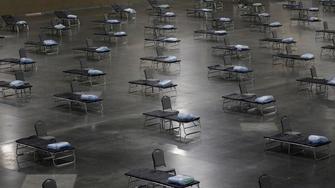
The Challenge Between Government and Nation Under the Shadow of the Coronavirus; Which Will Prevail?

Parsi 7 أبريل 2020 Persian

The article discusses the varying approaches of governments and populations in dealing with the COVID-19 crisis, highlighting the debate over whether nations or governments hold the executive power to implement home quarantine measures effectively. It examines the Iranian society as a case study, where the public initially emphasized the government's role in enforcing quarantine before the Nowruz holidays, while the government stressed the people's role. The article also touches on the economic concerns governments have regarding the shutdown of private sectors and the need for supportive policies to ensure public health. Furthermore, it explores the impact of COVID-19 on international norms and regional cooperation, citing the European Union's symbolic borders and the potential for a new globalization trend post-pandemic. The expert opinion of Maria Lagutina from Saint Petersburg State University is included, discussing the responsibilities of governments and citizens in combating the virus and the broader implications for international relations.
Coronavirus Pandemic Government Policy Public Health Iran Europe International European Union Maria Lagutina
أسلوب التغطيةمتوازن

Contains both factual reporting and analysis or opinion
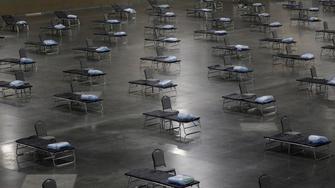
The Challenge Between Government and Nation Under the Shadow of the Coronavirus; Which Will Prevail?

Farsi 7 أبريل 2020 Persian

The article discusses the varying approaches of governments and populations in dealing with the COVID-19 crisis, highlighting the debate over whether nations or governments hold the executive power to implement home quarantine measures effectively. It examines the Iranian society as a case study, where the public initially emphasized the government's role in enforcing quarantine before the Nowruz holidays, while the government stressed the people's role. The article also touches on the economic concerns governments have regarding the shutdown of private sectors and the need for supportive policies to ensure public health. Furthermore, it explores the impact of COVID-19 on international norms and regional cooperation, citing the European Union's symbolic borders and the potential for a new globalization trend post-pandemic. The expert opinion of Maria Lagutina from Saint Petersburg State University is included, discussing the responsibilities of governments and citizens in combating the virus and the broader implications for international relations.

Coronavirus Pandemic Government Policy Public Health Iran Europe International European Union Maria Lagutina

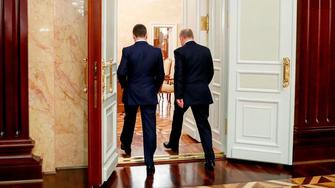
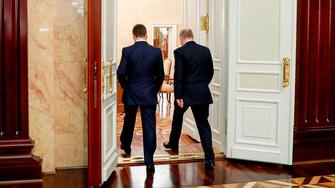
Why did Medvedev's cabinet resign after Putin's speech?

Parsi 15 يناير 2020 Persian

Vladimir Putin's annual speech focused on domestic issues, signaling a need for change and development in Russia. He emphasized government policies to increase the population, improve living standards, and enhance economic stability. Putin proposed increasing the role of the parliament and political parties, suggesting a shift in the political structure. Shortly after the speech, Prime Minister Dmitry Medvedev's cabinet resigned to facilitate the proposed reforms with a new team, indicating a pre-planned strategy to align the government closer to the parliament and boost Putin's popularity.

Political Changes Government Policy Economic Development Russia Russian Government Federal Assembly State Duma Vladimir Putin Dmitry Medvedev Alexei Navalny
أسلوب التغطيةإخباري

The text reports on specific events and statements made by political figures, with some analysis and interpretation of these events.

السياق السياسيوسط

The article discusses political reforms and strategies within Russia, indicating a focus on internal politics and governance.

Why did Medvedev's cabinet resign after Putin's speech?

Farsi 15 يناير 2020 Persian

Vladimir Putin's annual speech focused on domestic issues, signaling a need for change and development in Russia. He emphasized government policies to increase the population, improve living standards, and enhance economic stability. Putin proposed increasing the role of the parliament and political parties, suggesting a shift in the political structure. Shortly after the speech, Prime Minister Dmitry Medvedev's cabinet resigned to facilitate the proposed reforms with a new team, indicating a pre-planned strategy to align the government closer to the parliament and boost Putin's popularity.

Political Changes Government Policy Economic Development Russia Russian Government Federal Assembly State Duma Vladimir Putin Dmitry Medvedev Alexei Navalny

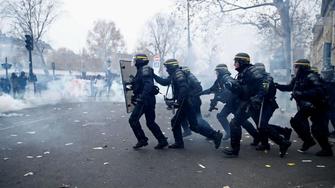
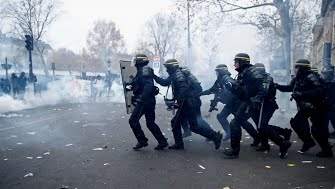
What happens that governments become the helmsman of tyranny?

Parsi 5 ديسمبر 2019 Persian

The article explores the conditions under which governments resort to tyranny and violence, questioning whether the use of force signifies an increase in state power. It references Aristotle's view of political violence as a social disease and a reaction to social discontent rooted in political, economic, and cultural factors. The text discusses the perspectives of various thinkers, including Hannah Arendt's distinction between power and violence, and the Bolshevik Leon Trotsky's assertion that all states are founded on coercion. It also touches on the political thought in Shi'a Islam regarding the legitimacy of government and the use of force. The article concludes that governments that rely on violence and coercion lack legitimacy and cannot sustain power, as true power is granted by the people's support and cannot be replaced by force.

Governmental Violence Political Philosophy Social Ethics Iran Ancient Greece China Bolsheviks Aristotle Hannah Arendt Leon Trotsky François Voltaire Thucydides
أسلوب التغطيةإخباري

Contains analysis and interpretation of political theories and historical events

السياق السياسيوسط

The text discusses political philosophy and the dynamics of power and violence, not aligning with a specific contemporary political spectrum

What happens that governments become the helmsman of tyranny?

Farsi 5 ديسمبر 2019 Persian

The article explores the conditions under which governments resort to tyranny and violence, questioning whether the use of force signifies an increase in state power. It references Aristotle's view of political violence as a social disease and a reaction to social discontent rooted in political, economic, and cultural factors. The text discusses the perspectives of various thinkers, including Hannah Arendt's distinction between power and violence, and the Bolshevik Leon Trotsky's assertion that all states are founded on coercion. It also touches on the political thought in Shi'a Islam regarding the legitimacy of government and the use of force. The article concludes that governments that rely on violence and coercion lack legitimacy and cannot sustain power, as true power is granted by the people's support and cannot be replaced by force.

Governmental Violence Political Philosophy Social Ethics Iran Ancient Greece China Bolsheviks Aristotle Hannah Arendt Leon Trotsky François Voltaire Thucydides

Russia, the US, and Hybrid Conflicts in the Middle East

Parsi 8 نوفمبر 2019 Persian

The Middle East, previously embroiled in the Syrian crisis, faces increased turmoil with conflicts between Turkey and Syrian Kurds, and widespread protests in Lebanon and Iraq against corruption and government inefficiency. The region is experiencing a complex hybrid conflict involving regional powers like Iran, Saudi Arabia, and Turkey, and superpowers like Russia and the US. These conflicts have evolved from classic warfare to non-linear, hybrid wars that utilize non-state actors and aim to destabilize through various means, including economic sanctions and support for opposition groups. The US, under Trump, has been particularly active in this new form of warfare, withdrawing from international agreements and employing sanctions. Experts suggest that public opinion is a primary battlefield in these conflicts, which aim to polarize societies and destabilize targeted countries. The article implies that the US is seeking to reshape the Middle East, while Russia and the EU face serious threats from the consequences of hybrid wars, such as terrorism and migration, prompting their involvement in conflict resolution.

Hybrid Warfare Middle East Conflicts International Relations Middle East Syria United States Russia Donald Trump Yuri Mikhailovich Pechta Irina Vladimirovna Kudriashova
أسلوب التغطيةمتوازن

Contains analysis and expert opinions

السياق السياسيوسط

The text discusses geopolitical strategies and conflicts, which are inherently political, but does not espouse a specific political ideology.

Russia, the US, and Hybrid Conflicts in the Middle East

Farsi 8 نوفمبر 2019 Persian

The Middle East, previously embroiled in the Syrian crisis, faces increased turmoil with conflicts between Turkey and Syrian Kurds, and widespread protests in Lebanon and Iraq against corruption and government inefficiency. The region is experiencing a complex hybrid conflict involving regional powers like Iran, Saudi Arabia, and Turkey, and superpowers like Russia and the US. These conflicts have evolved from classic warfare to non-linear, hybrid wars that utilize non-state actors and aim to destabilize through various means, including economic sanctions and support for opposition groups. The US, under Trump, has been particularly active in this new form of warfare, withdrawing from international agreements and employing sanctions. Experts suggest that public opinion is a primary battlefield in these conflicts, which aim to polarize societies and destabilize targeted countries. The article implies that the US is seeking to reshape the Middle East, while Russia and the EU face serious threats from the consequences of hybrid wars, such as terrorism and migration, prompting their involvement in conflict resolution.

Hybrid Warfare Middle East Conflicts International Relations Middle East Syria United States Russia Donald Trump Yuri Mikhailovich Pechta Irina Vladimirovna Kudriashova

Will Russia Enter the Persian Gulf?

Parsi 31 يوليو 2019 Persian

Amid escalating tensions between Tehran and Washington around the anniversary of the U.S. withdrawal from the JCPOA, Russia has proposed a 'Collective Security Concept' for the Persian Gulf to the UN Security Council, aiming to reduce the conflict between Iran and the U.S. in the region. The article discusses the implications of Russia's increased foreign policy activity in the Middle East, its stance on the JCPOA, and the potential for a joint military exercise with Iran in the context of the Persian Gulf's strategic importance and the recent downing of a U.S. drone by Iran. It also explores the viability of Russia's security proposal and the likelihood of its implementation given the history of unsuccessful negotiations in resolving Middle Eastern crises.

International Relations Military Engagement Geopolitical Tensions Persian Gulf Iran United States United Nations Security Council Islamic Revolutionary Guard Corps Russian Government Vladimir Putin Mohammad Javad Zarif Hassan Rouhani
أسلوب التغطيةإخباري

The article contains a mix of factual reporting and analysis, with some subjective statements.

Will Russia Enter the Persian Gulf?

Farsi 31 يوليو 2019 Persian

Amid escalating tensions between Tehran and Washington around the anniversary of the U.S. withdrawal from the JCPOA, Russia has proposed a 'Collective Security Concept' for the Persian Gulf to the UN Security Council, aiming to reduce the conflict between Iran and the U.S. in the region. The article discusses the implications of Russia's increased foreign policy activity in the Middle East, its stance on the JCPOA, and the potential for a joint military exercise with Iran in the context of the Persian Gulf's strategic importance and the recent downing of a U.S. drone by Iran. It also explores the viability of Russia's security proposal and the likelihood of its implementation given the history of unsuccessful negotiations in resolving Middle Eastern crises.

International Relations Military Engagement Geopolitical Tensions Persian Gulf Iran United States United Nations Security Council Islamic Revolutionary Guard Corps Russian Government Vladimir Putin Mohammad Javad Zarif Hassan Rouhani

اعرض الأعمال كلها (38) بحساب مجاني

وظّف رسالة
×

سجّل لمراسلة Ahmad

هل لديك حساب بالفعل؟ تسجيل الدخول
هل تبحث عن عمل؟ سجّل كصحفي
وثّق بريدك الإلكتروني لإتمام التسجيل
لقد أرسلنا للتوّ رسالة إلكترونية إلى . يرجى التحقّق من صندوق الوارد والنقر على الرابط لتوثيق عنوان بريدك الإلكتروني وإتمام تسجيلك. وإذا لم تجد الرسالة، فتأكّد من التحقّق من مجلد البريد العشوائي أو غير المرغوب فيه.
لم تستلم البريد الإلكتروني؟

سجّل للاطّلاع على الملفات الشخصية

هل لديك حساب بالفعل؟ تسجيل الدخول
هل تبحث عن عمل؟ سجّل كصحفي
وثّق بريدك الإلكتروني لإتمام التسجيل
لقد أرسلنا للتوّ رسالة إلكترونية إلى . يرجى التحقّق من صندوق الوارد والنقر على الرابط لتوثيق عنوان بريدك الإلكتروني وإتمام تسجيلك. وإذا لم تجد الرسالة، فتأكّد من التحقّق من مجلد البريد العشوائي أو غير المرغوب فيه.
لم تستلم البريد الإلكتروني؟