Contratar jornalistas

Editoras e emissoras Equipes de marketing de conteúdo Equipes de RP e comunicação Equipes de risco e inteligência Encontrar jornalistas Monitoramento de mídia Preços

Para jornalistas

Vagas de jornalismo Tarifas Crie seu perfil gratuito

Sobre Aisling

Aisling Ní Chúláin é jornalista de vídeo com base em Dublin, Irlanda.

Idiomas
inglês francês
Visto em
Euronews Africanews Malaysia Ca

Trabalhos 97

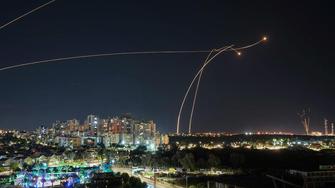
Why was Israel’s Iron Dome unable to intercept some missiles during Iran’s attack?

Euronews (Persian) 3 out. 2024 Persian

Iran launched roughly 200 missiles at Israel, with Israel reporting a 90 percent interception rate by the Iron Dome defense system. Experts note that the success rate is difficult to verify and depends on how Israel defines intercepts, since the system only targets projectiles deemed threats to populated areas. The Iron Dome has proven operationally effective but lacks deterrence against groups such as Hamas and Hezbollah, which continue to launch large volumes of rockets. Maintaining the system is costly, relying heavily on US funding and cooperation. Analysts warn that a wider conflict involving Hezbollah, with its extensive rocket arsenal, could overwhelm Israel’s defenses.

Iran–Israel conflict Missile defense systems Middle East tensions Israel Iran Middle East Islamic Revolutionary Guard Corps Israeli Army US Congress Hamas Hezbollah Islamic Jihad
Estilo de reportagemInformativo

Mostly factual reporting with expert analysis and limited subjective interpretation

Contexto políticoCentro

Geopolitical analysis without explicit ideological stance
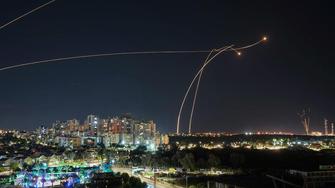
The Iron Dome: How does Israel’s missile defence system work?

Euronews 2 out. 2024 English

Israel’s Iron Dome missile defence system, central to the country’s security since 2011, has faced renewed testing amid rocket attacks from Hamas, Iran, and Hezbollah. The system uses radar, interceptor missiles, and command software to stop projectiles threatening populated areas and is publicly credited with a high interception rate, though experts note uncertainty around these figures and its limited strategic deterrence. Its high operational cost has led to substantial US financial support, with nearly $3 billion contributed and additional aid requested. Concerns persist that a wider regional escalation, particularly involving Hezbollah’s larger arsenal, could overwhelm the system. The conflict has produced heavy casualties in Gaza and ongoing humanitarian concerns.

Israeli-Palestinian conflict Missile defence systems Middle East tensions Israel Gaza Strip Lebanon Israeli government Hamas Iran Hezbollah United States government UN
Estilo de reportagemInformativo

Mostly factual reporting with some expert interpretation

Contexto políticoCentro

Geopolitical analysis without clear ideological stance

Iron Dome: How does Israel's air defense system work?

Euronews 2 out. 2024 Turkish

Israel’s Iron Dome air defense system, developed by Rafael, continues to play a key role in intercepting rockets fired by Hamas, Hezbollah and Iran, with officials citing around a 90 percent success rate. Experts note uncertainties in how effectiveness is measured and emphasize that the system does not deter militant groups from launching attacks. High operational costs have driven substantial U.S. financial support, with contributions exceeding $3 billion and further assistance requested. Analysts warn that regional escalation, particularly involving Hezbollah’s larger arsenal, could overwhelm the system. The ongoing conflict has resulted in major casualties in Gaza and raised significant humanitarian concerns from international bodies.

Israel-Hamas War Military Technology Middle East Conflict Israel Gaza Strip Iran Hamas Hezbollah United States US Congress United Nations Jean-Loup Samaan
Estilo de reportagemInformativo

Mostly factual reporting with some expert interpretation

Contexto políticoCentro

Focused on factual geopolitical and military developments

The Iron Dome: How does Israel’s missile defence system work?

Euronews 2 out. 2024 English

The article discusses the Iron Dome, Israel's missile defense system, highlighting its role in intercepting rockets during recent conflicts with Hamas and other groups. Despite its reported 90% success rate, experts question its strategic effectiveness, as it does not deter attacks from Palestinian militants. The system's high operational costs are partly funded by the United States, emphasizing the bilateral relationship. Concerns are raised about the potential for regional escalation, particularly involving Hezbollah, which could overwhelm the Iron Dome. The article also touches on the humanitarian impact of the ongoing conflict in Gaza.

Israeli-Palestinian Conflict Missile Defense Iron Dome Israel Gaza Strip Lebanon Hamas Israeli Government Hezbollah United States UN Jean-Loup Samaan
Estilo de reportagemEquilibrado

The article presents a mix of factual information and expert opinions on the effectiveness of the Iron Dome.

Contexto políticoCentro

The article provides a balanced view of the military and political aspects of the Iron Dome and the Israeli-Palestinian conflict.

The Iron Dome: How does Israel’s missile defence system work?

Euronews 2 out. 2024 English

The article discusses the Iron Dome, Israel's missile defense system, highlighting its role in intercepting rockets during recent conflicts with Hamas and other groups. Despite a claimed 90% success rate, experts question its strategic effectiveness, as it does not deter attacks. The system's high operational costs are partly funded by the United States, emphasizing the bilateral defense relationship. Concerns are raised about potential regional escalation, particularly involving Hezbollah, which could overwhelm the Iron Dome. The ongoing conflict has resulted in significant casualties and humanitarian issues in Gaza.

Israeli-Palestinian Conflict Missile Defense Iron Dome Israel Gaza Strip Lebanon Hamas Israeli Government Hezbollah United States UN Jean-Loup Samaan
Estilo de reportagemEquilibrado

Balanced analysis of Iron Dome's effectiveness and strategic implications.

Contexto políticoCentro

Focuses on military and defense aspects without strong political bias.

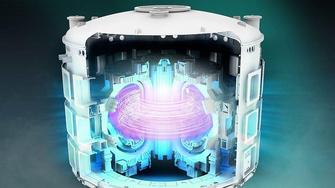
Inside the world's first reactor that will power Earth using the same nuclear reactions as the Sun

Yahoo News Canada 26 mar. 2024 English

In Provence, France, scientists are constructing the International Thermonuclear Experimental Reactor (ITER), aimed at demonstrating the feasibility of nuclear fusion at an industrial scale. The project, signed in 2006 by multiple countries including the US, EU, Russia, China, India, and South Korea, involves over 30 countries. ITER's tokamak, designed to withstand extreme temperatures, will use magnetic confinement to achieve fusion, potentially offering a safer and less radioactive alternative to fission reactors. Despite setbacks, including misalignments in components and budget increases, ITER aims to maintain its target for starting fusion operations by 2035. The project is notable for its international collaboration, even amidst geopolitical tensions.

Nuclear Fusion Clean Energy Science Experiment Provence, France United States Europe Elysée Palace National Ignition Facility Laban Coblentz Richard Pitts ITER
Estilo de reportagemInformativo

The article presents factual information about the ITER project and nuclear fusion, with quotes from experts.

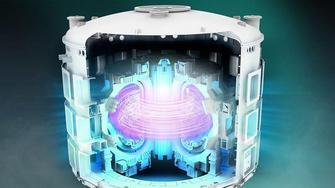
Inside the world's first reactor that will power Earth using the same nuclear reactions as the Sun

Yahoo News Malaysia 26 mar. 2024 English

The ITER project in Provence, France, aims to demonstrate the feasibility of nuclear fusion at an industrial scale, using the world's largest magnetic confinement chamber, or tokamak. Signed in 2006 by multiple countries, the project has faced delays and budget increases but remains a significant international collaboration. Nuclear fusion offers a safer and less radioactive alternative to fission, with the potential to provide clean energy in response to climate change challenges. Despite setbacks, the project aims to stick to its 2035 target for the start of fusion operations.

Nuclear Fusion Clean Energy Science Experiment Provence France Europe International Thermonuclear Experimental Reactor (ITER) National Ignition Facility Elysée Palace Laban Coblentz Richard Pitts
Estilo de reportagemInformativo

The article presents factual information about the ITER project and nuclear fusion technology, with quotes from experts.

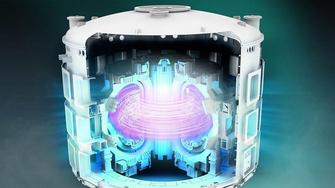
Inside the world's first reactor that will power Earth using the same nuclear reactions as the Sun

Euronews 26 mar. 2024 English

In Provence, scientists are constructing the world's largest magnetic confinement chamber, the ITER project, to demonstrate the feasibility of harnessing nuclear fusion at an industrial scale. The project, involving over 30 countries, aims to generate net energy by 2035 despite facing significant technical and financial challenges. ITER's fusion method, which uses a tokamak to confine charged particles with a magnetic field, promises a safer and more efficient alternative to traditional nuclear fission. The project underscores the importance of international collaboration and the potential of fusion energy to address long-term energy and climate challenges.

Nuclear Fusion Science Experiment Clean Energy Provence France Russia International Thermonuclear Experimental Reactor National Ignition Facility Elysée Palace Laban Coblentz Richard Pitts
Estilo de reportagemInformativo

Mostly factual with some subjective statements about the project's significance and challenges.

Contexto políticoCentro

The article discusses international collaboration and geopolitical tensions in a neutral manner.

Inside the world's first reactor that will power Earth using the same nuclear reaction as the Sun

Euronews 30 jan. 2024 English

The ITER project in Provence, France, aims to demonstrate the feasibility of nuclear fusion at an industrial scale using the world's largest magnetic confinement chamber, or tokamak. Signed in 2006 by multiple countries, the project has faced delays and budget increases but maintains international collaboration despite geopolitical tensions. Nuclear fusion offers safety and waste management advantages over fission, but challenges remain in achieving the high temperatures and precision required. ITER's success is seen as crucial for long-term clean energy solutions, especially in the context of climate change.

Nuclear Fusion Energy Science & Technology Provence France International International Thermonuclear Experimental Reactor (ITER) National Ignition Facility Laban Coblentz Richard Pitts
Estilo de reportagemInformativo

The article is primarily informative, providing details on the ITER project and nuclear fusion technology.

Veja todos os 97 trabalhos com uma conta gratuita

Contratar Mensagem
×

Cadastre-se para enviar uma mensagem para Aisling

Já tem uma conta? Entrar
Procurando trabalho? Cadastre-se como jornalista
Verifique seu e-mail para concluir o cadastro
Acabamos de enviar um e-mail para . Verifique sua caixa de entrada e clique no link para verificar seu endereço de e-mail e concluir seu cadastro. Se não vir o e-mail, não deixe de checar sua pasta de spam ou lixo eletrônico.
Não recebeu o e-mail?

Cadastre-se para desbloquear perfis

Já tem uma conta? Entrar
Procurando trabalho? Cadastre-se como jornalista
Verifique seu e-mail para concluir o cadastro
Acabamos de enviar um e-mail para . Verifique sua caixa de entrada e clique no link para verificar seu endereço de e-mail e concluir seu cadastro. Se não vir o e-mail, não deixe de checar sua pasta de spam ou lixo eletrônico.
Não recebeu o e-mail?