Editori ed emittenti Team di content marketing Team di PR e comunicazione Team di risk e intelligence Giornalisti e professionisti dei media Monitoraggio dei media Prezzi

Su Alina

Alina Yanchur è una giornalista basata a Gothenburg, Svezia. Interessata al giornalismo dei dati e al giornalismo investigativo.

Lingue
bielorusso inglese russo spagnolo svedese
Visto su
Investigatebel Euronews EUobserver AlgorithmWatch Oko 15Min

Lavori 15

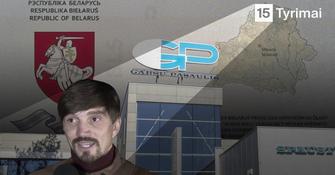
Garsų pasaulis targets passports of democratic Belarus – will the data be in safe hands?

15min 25 mag 2024 Lithuanian

Garsų pasaulis, a Lithuanian company, is set to produce new passports for democratic Belarus, offering an alternative to the regime's documents. The proposal was made by Mikita Zabuga, a Belarusian citizen with ties to business plans near the Astravyets nuclear power plant. The article raises questions about the security of the data involved in this initiative.
Belarusian Opposition Passport Production Data Security Belarus Lithuania Mikita Zabuga A. Lukašenka Garsų pasaulis New Belarusian Passports
Stile giornalisticoEquilibrato

The article presents a mix of factual reporting and subjective questioning regarding data security.

Contesto politicoCentro-sinistra

Focuses on democratic processes and opposition to authoritarian regimes.
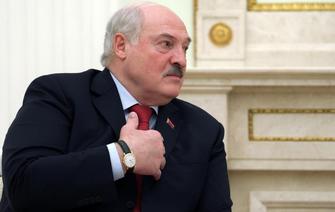
How to profit from the 'holographization' of Belarus? You need to know Lukashenko's 'treasurer'

Oko.press 8 mag 2024 Polish

The article investigates the lucrative business of holography in Belarus, revealing its ties to Viktor Chevtsov, known as Lukashenko's 'treasurer'. The Belarusian company Golograficheskaya Industria, linked to Chevtsov, dominates the market for security holograms, benefiting from government mandates. Despite questions about the cost-effectiveness of holograms, the Belarusian government supports their widespread use. The investigation highlights the intertwining of business and political interests, with Chevtsov's connections aiding the company's market position. The article underscores the role of investigative journalism in uncovering these connections.

Corruption Belarusian Politics Holography Industry Belarus Russia Venezuela Białoruskie Centrum Śledcze OCCRP CyberPartisans Goznak Minskaya Bumazhnaya Fabrika KGB
Stile giornalisticoEquilibrato

The article presents a mix of investigative findings and some subjective interpretations.

Contesto politicoEstrema destra

The article discusses the control and influence of Lukashenko's regime over the holography industry in Belarus.

Who profits from holographising Belarus and how

Belarusian Investigative Center 7 mag 2024 English

A private Belarusian company, Golograficheskaya Industria, holds a state‑protected monopoly over security holograms used on a vast array of consumer goods and official documents. Its rapid revenue growth is supported by the Ministry of Finance and Goznak, with procurement structures and patents linking it to key state institutions. Founder Leanid Tanin maintains strong political connections, while businessman Viktor Chevtsov, known for past involvement in international corruption scandals, holds significant influence over the company. Members of the Tanin family also maintain social ties to relatives of President Lukashenko. A second hologram company, Magia Sveta, has worked with the KGB and appears to have benefited from non-competitive procurement. Together, these entities form a politically connected duopoly controlling Belarus’s holography sector.

Corruption Belarusian politics Business networks State influence Belarus Russia Iraq Belarusian Ministry of Finance Goznak KGB National Academy of Sciences of Belarus UN
Stile giornalisticoInformativo

Investigative but largely factual with sourced findings

Contesto politicoCentro-sinistra

focus on corruption, monopolies, and state-business entanglement

How Uzbekistan assists Belarus in bypassing bans and selling fertilisers from a sanctioned enterprise to the EU

BIC / InvestigateBel 27 set 2023 English

Belarusian fertiliser producer Grodno Azot continues supplying urea to EU markets despite sanctions by disguising exports as Uzbek through intermediary companies including Grikom, Dunger and related entities tied to Ukrainian businessmen. Documents from activists reveal contracts, transport records and false certificates used to conceal Belarusian origin. Lithuanian and Serbian authorities have intercepted shipments and launched investigations, while additional schemes involve mislabelled products routed through multiple Belarusian and Uzbek firms. Experts and activists argue that insufficient oversight enables systematic sanctions evasion and call for broader restrictions on Grodno Azot’s product lines to fully block access to European markets.

Sanctions evasion Belarus politics EU trade Fertiliser industry Belarus Uzbekistan European Union Grodno Azot EU Council Rabochy Ruch Lithuanian customs authorities Navoiyazot
Stile giornalisticoEquilibrato

Investigative reporting with factual findings but includes evaluative commentary on sanctions effectiveness

Contesto politicoCentro-sinistra

Focuses on accountability, sanctions enforcement, and state-linked corruption

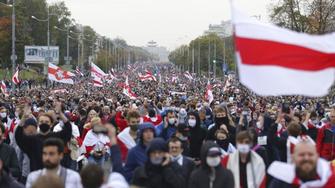
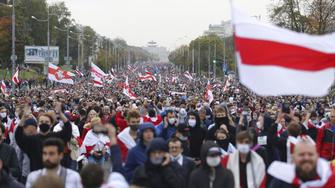
Belarusian Asylum Seekers in the EU: A Surge in Numbers Post-Election

Euronews 5 apr 2023 English

The article by Alina Yanchur discusses the sharp increase in the number of Belarusian asylum seekers in the EU following the disputed reelection of Alexander Lukashenko. It highlights the story of Yana, a protester who fled to Poland with her son after realizing she could face prison for her actions during a demonstration. The article provides statistics on the rise in asylum applications and notes the support provided by countries like Poland, Germany, and France. It also mentions the work of the Helsinki Foundation for Human Rights and the Viasna human rights center in Belarus. The piece reflects on the fear and uncertainty faced by Belarusians who have fled, as well as their hope to return home if the political situation changes.

Asylum Seekers Belarus Political Crisis Human Rights European Union Belarus Poland Helsinki Foundation for Human Rights Eurostat Viasna
Stile giornalisticoEquilibrato

Belarusian Asylum Seekers in the EU: A Surge in Numbers Post-Election

Euronews 5 apr 2023 English

The article by Alina Yanchur discusses the sharp increase in the number of Belarusian asylum seekers in the EU following the disputed reelection of Alexander Lukashenko. It highlights the story of Yana, a protester who fled to Poland with her son after realizing she could face prison for her actions during a demonstration. The article provides statistics on the rise in asylum applications and notes the support provided by countries like Poland, Germany, and France. It also mentions the work of the Helsinki Foundation for Human Rights and the Viasna human rights center in Belarus. The piece reflects on the fear and uncertainty faced by Belarusians who have fled, as well as their hope to return home if the political situation changes.

Asylum Seekers Belarus Political Crisis Human Rights European Union Belarus Poland Helsinki Foundation for Human Rights Eurostat Viasna

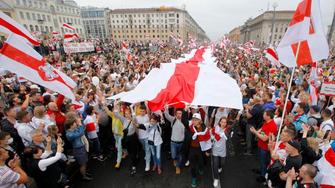
Is Europe turning its back on Belarusians fleeing Lukashenko's regime?

Euronews 4 gen 2022 English

Belarusians fleeing political repression under Alexander Lukashenko face significant challenges in obtaining asylum in Europe, with countries like Sweden rejecting most applications. Despite the European Parliament's call for simplified procedures and greater recognition of Belarusian exiles, many EU countries still consider Belarus a safe country, leading to standard asylum procedures. Human rights organizations and opposition leaders argue that Belarus is experiencing a humanitarian catastrophe, urging European countries to provide immediate residence and work permits to Belarusian refugees. The article highlights individual stories, such as Olga's, to illustrate the broader issue of denied asylum and the ongoing repression in Belarus.

Migration Human Rights Political Repression Belarus Sweden European Union Swedish Migration Agency European Parliament United Nations Movement for Freedom Imena BYSOL
Stile giornalisticoInterpretativo

The article contains a mix of factual reporting and subjective statements, particularly in the portrayal of the European response to Belarusian asylum seekers.

Contesto politicoCentro-sinistra

The article advocates for more lenient asylum policies and criticizes the current handling of Belarusian asylum seekers, aligning with center-left views on human rights and migration.

How Big Tech dominates EU's AI ethics group

EUobserver 15 nov 2021 English

The article investigates how Big Tech companies have come to dominate the EU's AI ethics group, despite initial resistance to the idea of AI ethics. It highlights the efforts of Oxford professor Luciano Floridi in bringing attention to AI ethics and the subsequent influence of industry on the European Commission's regulatory approach. The piece is part of a broader investigation into lobbying efforts surrounding the EU's AI regulation proposal.

Artificial Intelligence Ethics Lobbying European Union European Commission Luciano Floridi Alina Yanchur Camille Schyns Greta Rosén Fondahn Sarah Pilz Big Tech
Stile giornalisticoInterpretativo

The article contains subjective statements and personal beliefs, particularly regarding the influence of Big Tech on the EU's AI ethics group.

Contesto politicoCentro-sinistra

The article discusses regulatory measures and ethical considerations in AI, which are typically associated with center-left political views.

Computer says No: How the EU's AI laws cause new injustice

EUobserver 23 ago 2021 English

Roger Derikx, a 46-year-old father, faced severe financial hardship after being asked to repay €68,000 in childcare benefits to the Dutch government without clear justification. Authorities repossessed his car and deducted 40 percent of his salary for years. The article highlights the injustices caused by the EU's AI laws, which can lead to significant personal and financial distress for individuals.

AI Regulation Injustice Netherlands EU Dutch government Roger Derikx
Stile giornalisticoInterpretativo

The article appears to be critical of the EU's AI laws and their impact on individuals, indicating a subjective stance.

Contesto politicoSinistra

Critical of government policies and their impact on individuals

A pathetic revenge policy: Is Belarus facilitating illegal migration to Lithuania?

Euronews 30 giu 2021 English

The article discusses the significant increase in illegal migration from Belarus to Lithuania, with Lithuanian officials accusing Belarus of facilitating the crossings in retaliation for EU sanctions. Belarus denies these accusations, attributing the rise to the easing of COVID-19 restrictions. The majority of migrants are from the Middle East, with a small number of Belarusians seeking asylum. Lithuanian authorities are enhancing border security, and the EU is providing support. The situation is described as a challenge to regional security, with Belarusian President Alexander Lukashenko accused of using migration as a political weapon.

Illegal Migration Belarus-Lithuania Relations European Union Sanctions Belarus Lithuania Middle East State Border Guard Service of Lithuania Belarusian State Border Committee European Union Lithuanian Riflemen's Union Frontex Rokas Pukinskas
Stile giornalisticoInterpretativo

The article contains a mix of factual reporting and subjective statements, particularly from various officials and opposition figures.

Contesto politicoCentro-sinistra

The article criticizes the actions of the Belarusian government and supports the EU's stance on sanctions and border control.

Registrati gratis per vederli tutti e 15

Ingaggia Messaggio
×

Registrati per inviare un messaggio a Alina

Hai già un account? Accedi
Cerchi lavoro? Registrati come giornalista
Verifica la tua email per completare la registrazione
Abbiamo appena inviato un'email a . Controlla la tua casella di posta e clicca sul link per verificare il tuo indirizzo email e completare la registrazione. Se non vedi l'email, assicurati di controllare la cartella spam o posta indesiderata.
Non hai ricevuto l'email?

Registrati per sbloccare i profili

Hai già un account? Accedi
Cerchi lavoro? Registrati come giornalista
Verifica la tua email per completare la registrazione
Abbiamo appena inviato un'email a . Controlla la tua casella di posta e clicca sul link per verificare il tuo indirizzo email e completare la registrazione. Se non vedi l'email, assicurati di controllare la cartella spam o posta indesiderata.
Non hai ricevuto l'email?