Publishers & Broadcasters Content Marketing Teams PR & Comms Teams Risk & Intelligence Teams Journalists & News Professionals Media Monitoring Pricing

About Amanda

Amanda Coakley is an award-winning journalist covering central and eastern Europe, and a Europe’s Futures Fellow at the IWM in Vienna. Her work has been published in national and international outlets including Foreign Policy, TIME, The Irish Times, Prospect Magazine, The Independent, New Humanist, Al Jazeera, The Guardian, World Politics Review, and POLITICO Europe. Beyond the region she has produced in-depth coverage of Pakistan's general election in 2018, the war in Nagorno-Karabakh, and the humanitarian crisis in Burkina Faso. She has worked as a Senior Staff Reporter at Coda Story and a producer at Channel 4 News in London. Her work on the coronavirus pandemic with the programme was awarded ‘Coronavirus Journalism Excellence’ by Press Gazette in July 2020. She started her career as a producer and writer on Christiane Amanpour’s prime time programme, Amanpour, at CNN International. Her reporting has earned her the Piazza Grande Religion Journalism Award, an MHP International Affairs Reporting Award, and an Emmy nomination. Appeared on: Deutsche Welle Radio, BBC Radio 4, RTÉ Radio, LBC Radio, The Irish Times podcast, and Times Radio UK.

Languages
Spanish English
Seen in
Foreign Policy The Independent Worldpoliticsreview Al Jazeera Coda Story Vice The Irish Times The Telegraph Time Tortoise The National Newhumanist Cordópolis Rappler The Guardian Carnegieendowment Europeanbusiness Newlinesmag Prospectmagazine

Work 126

To Understand Bulgaria’s Gen Z Protests, Follow the Money

World Politics Review 17 Dec 2025 English

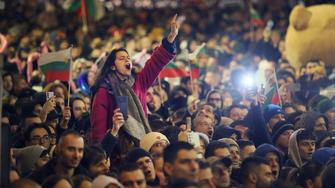
Mass protests erupted across Bulgaria in late November, driven by public anger over widespread corruption and a draft budget that proposed higher taxes and social security contributions to fund increased spending. Demonstrators quickly broadened their demands into a challenge to entrenched political influence and state capture, leading to the rapid resignation of Prime Minister Rosen Zhelyazkov ahead of a no-confidence vote. The unusually swift government collapse contrasts with previous protest cycles that took months to force political change.
Bulgarian politics Corruption Public protests Bulgaria Sofia Bulgarian government Rosen Zhelyazkov
Reporting styleInformative

Mostly factual reporting with limited interpretive framing.

Political contextCentre

Analytical reporting on political events without ideological advocacy.
The EU Risks Sacrificing AI Safety on the Altar of Competitiveness

World Politics Review 19 Nov 2025 English

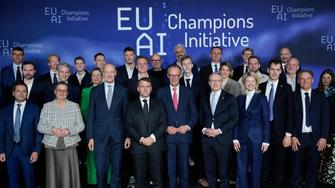
The EU’s AI Act, once celebrated as a pioneering effort to regulate artificial intelligence through strict, risk-based safeguards, is now facing potential weakening through reforms proposed in the European Commission’s leaked “Digital Omnibus” package. The draft indicates possible dilution of GDPR protections by allowing companies to use personal data for AI training under a “legitimate interest” exemption and outlines reduced enforcement of the AI Act, including a one-year grace period for compliance by high-risk systems. These moves suggest a shift toward prioritizing competitiveness at the expense of the robust safety and rights protections that have defined the EU’s digital regulatory approach.

AI regulation European Union policy Data privacy Technology governance European Union Europe European Commission Digital Services Act General Data Protection Regulation AI Act ChatGPT large language models
Reporting styleBalanced

The text blends factual reporting about policy drafts with some interpretive language suggesting concern over weakening safeguards.

Political contextCentre-left

critical of deregulation efforts and supportive of strong consumer and data protections

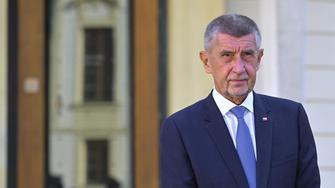
Babis’ Win Makes Czechia the EU’s Latest Headache

World Politics Review 22 Oct 2025 English

Recent Czech election results strengthen the growing right-wing bloc in Europe and intensify political divisions within the European Union. Andrej Babis and his ANO movement won nearly 35 percent of the vote, defeating Prime Minister Petr Fiala’s pro‑European coalition in a high-turnout contest. Despite the victory, ANO lacks a majority and must negotiate with the anti-immigration SPD and the Motorists party, which opposes climate regulations, signaling potential challenges for EU cohesion on digital policy, Ukraine, and climate action.

Czech elections European Union politics Right-wing populism Czechia European Union Ukraine ANO movement Freedom and Direct Democracy (SPD) Motorists party Andrej Babis Petr Fiala
Reporting styleInformative

Analytical reporting with limited subjective language

Political contextCentre

Neutral analytical coverage of political developments without advocacy

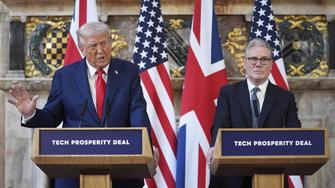
As the EU Opts for AI Regulation, Britain Turns to the U.S.

World Politics Review 24 Sep 2025 English

The U.S.-U.K. Tech Prosperity Deal signals a strategic shift in Britain’s alignment on technology governance, with London embracing the United States’ investment-focused, light-regulation model for AI and emerging technologies. The agreement includes significant commitments from leading technology companies, aimed at revitalizing the British economy through advances in AI, quantum computing and nuclear technologies. The developments highlight a growing divergence between the U.K. and the European Union, with Brussels advancing a regulatory-first framework while Britain positions itself within a more market-driven U.S. approach.

AI regulation UK-US relations Brexit aftermath Technology policy United Kingdom United States European Union U.K. government U.S. government Keir Starmer Donald Trump Microsoft
Reporting styleInformative

Primarily factual analysis with some interpretive framing.

Political contextCentre

Analytical discussion of government policy choices without partisan framing.

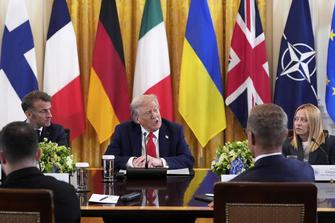
The Ukraine Peace Talks Highlighted Europe’s Disunity

World Politics Review 27 Aug 2025 English

High-level peace talks in Washington brought together leaders from Ukraine, Western Europe, and the European Union following an unproductive U.S.-Russia summit in Alaska. The gathering highlighted notable absences, with Central and Eastern European leaders missing despite their proximity to the conflict. Discussions centered on efforts to advance negotiations to end the prolonged war in Ukraine while navigating strained diplomatic relationships, including previous tensions between U.S. officials and Ukrainian President Volodymyr Zelenskyy.

Ukraine War International Diplomacy European Politics Ukraine United States Europe White House European Union Governments of France, Germany, Italy, U.K., Finland Donald Trump Volodymyr Zelenskyy Vladimir Putin
Reporting styleInformative

Primarily factual reporting with minor interpretive framing about diplomatic dynamics

Political contextCentre

Focuses on geopolitical events without clear partisan framing

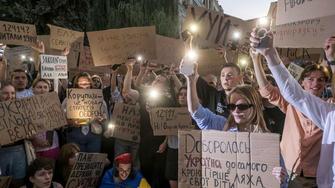
Ukraine’s Anti-Corruption Protests Were a Wakeup Call for Zelenskyy

World Politics Review 30 Jul 2025 English

Public outrage surged across major Ukrainian cities after a law signed by President Volodymyr Zelenskyy weakened the independence of key anti-corruption agencies. Mass protests, unprecedented since the start of the 2022 invasion, prompted Zelenskyy to quickly reverse course and urge Parliament to restore the agencies’ autonomy. The events signaled a break from wartime reluctance to criticize the government and underscored the public’s insistence on maintaining anti-corruption standards aligned with Ukraine’s aspirations for closer integration with the European Union.

Anti-corruption Ukraine politics War in Ukraine Ukraine Kyiv Odesa National Anti-Corruption Bureau (NABU) Special Anti-Corruption Prosecutor’s Office (SAPO) Ukrainian Parliament European Union Volodymyr Zelenskyy
Reporting styleBalanced

Primarily factual reporting with interpretive political analysis

Political contextCentre

Analytical discussion of government actions and public protests without clear ideological bias

Dancing with Putin: How Austria’s former foreign minister found a new home in Russia

elDiario.es (The Guardian) 13 Jul 2025 Spanish

Former Austrian foreign minister Karin Kneissl moved to Russia in 2023 and now leads a research institute in St Petersburg, after years of public closeness to Vladimir Putin, including inviting him to her wedding and dancing with him. Her rise through Austria’s diplomatic and political circles, her association with the far-right Freedom Party, and her subsequent isolation are traced alongside her increasingly prominent role in Russian state media and institutions. The account argues that her story reflects Austria’s long-standing, commercially valuable relationship with Russia, which has persisted despite the invasion of Ukraine and EU sanctions. Critics say Austria’s neutrality has often served as cover for protecting its interests, while Kneissl’s relocation offers Moscow a way to suggest that sidelined European officials can find status in Russia.

Karin Kneissl Austria-Russia relations Russian influence in Europe Austrian far-right politics Russia's invasion of Ukraine Austria Russia Ukraine Austrian Foreign Ministry Freedom Party of Austria Russian government European Union
Reporting styleFactual

Primarily reported and attributed to sources, with critical framing but little direct editorial argument.

Political contextCentre

The piece is largely evidence-led reporting that critically examines ties between Austrian politics and Russia without advocating a party position.

Budapest Pride Could Be a Hollow Victory for Hungary’s Opposition

World Politics Review 2 Jul 2025 English

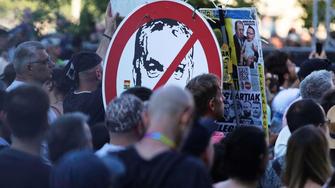
Budapest hosted its largest-ever Pride parade, with over 100,000 participants defying a government ban to support the LGBTQ+ community. This event, surpassing expectations, stands as a significant opposition demonstration against Prime Minister Viktor Orban's illiberal policies, highlighting the growing resistance to his administration in Hungary.

LGBTQ+ Rights Hungarian Politics Budapest Hungary Prime Minister Viktor Orban's government Viktor Orban
Reporting styleBalanced

The article presents a mix of factual reporting and subjective interpretation of the political implications.

Political contextCentre-left

The article criticizes the illiberal policies of a right-wing government, suggesting a center-left perspective.

Dancing with Putin: How Austria’s Former Foreign Minister Found a New Home in Russia

The Guardian 1 Jul 2025 English

Karin Kneissl’s controversial 2018 wedding dance with Vladimir Putin became a symbol of Austria’s close relationship with Russia. The former Austrian foreign minister, appointed through the far-right Freedom Party, later left Austria and settled in Russia, where she leads a research centre at St Petersburg University, appears on state media and advocates positions aligned with Moscow. The account traces her career, ambition, ideological evolution and growing alienation at home, while documenting Austria’s longstanding business and political ties to Russia and its slow retreat from those ties after the invasion of Ukraine. Analysts suggest Russia’s support for Kneissl also signals to European officials that they may find status and opportunity in Russia after leaving office.

Karin Kneissl Austria-Russia Relations Russian Influence in Austria Austria’s Freedom Party Vladimir Putin Kneissl’s Relocation to Russia Austria Russia Ukraine Austrian Foreign Ministry Freedom Party of Austria United Russia
Reporting styleInterpretive

Reported feature with extensive sourcing, but uses interpretive framing and evaluative descriptions of Kneissl and Austria’s relationship with Russia.

Political contextCentre

The piece is a reported profile and investigation rather than an advocacy article; it criticizes Russian influence while also examining Austrian political and economic interests.

In Poland, Nawrocki’s Win Complicates Tusk’s Reform Agenda

World Politics Review 4 Jun 2025 English

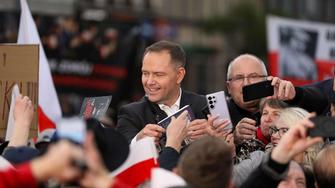
Karol Nawrocki's narrow victory in Poland's presidential election, backed by the nationalist Law and Justice party and endorsed by Donald Trump's MAGA movement, signals a significant political shift. Despite the limited formal powers of the Polish presidency, Nawrocki's win could impact Poland's domestic and European relations, particularly if he uses his veto power to block pro-democratic reforms. Prime Minister Donald Tusk, a pro-EU figure, faces continued challenges in navigating a political landscape dominated by PiS-aligned leaders.

Polish Presidential Election Political Reform European Union Relations Poland Europe Law and Justice MAGA movement European Union Karol Nawrocki Donald Trump Rafal Trzaskowski Donald Tusk
Reporting styleBalanced

The article presents a mix of factual reporting and analysis, with some subjective interpretation of political implications.

Political contextRight

The article discusses the victory of a hard-right, Euroskeptic candidate backed by nationalist parties.

Sign up free to see all 126

Hire Message
×

Sign up to message Amanda

Already have an account? Log in
Looking for work? Register as a Journalist
Verify your email to complete registration
We’ve just sent an email to . Please check your inbox and click the link to verify your email address and complete your registration. If you don’t see the email, be sure to check your spam or junk folder.
Didn’t receive the email?

Sign up to unlock profiles

Already have an account? Log in
Looking for work? Register as a Journalist
Verify your email to complete registration
We’ve just sent an email to . Please check your inbox and click the link to verify your email address and complete your registration. If you don’t see the email, be sure to check your spam or junk folder.
Didn’t receive the email?