Engager des journalistes

Éditeurs et diffuseurs Équipes de marketing de contenu Équipes RP et communication Équipes risques et renseignement Trouver des journalistes Veille médias Tarifs

Pour les journalistes

Offres d'emploi en journalisme Tarifs Créez votre profil gratuit

À propos de Andreas

Andreas Rossbach est basé entre deux villes européennes, Berlin en Allemagne et Moscou en Russie. En raison du COVID-19, il se trouve actuellement à Berlin, en Allemagne, et ne voyage pas. Il s'intéresse à un large éventail de sujets, des actualités et reportages économiques, technologiques et sportifs à la culture, art &mode, la politique et les droits de l'homme en Russie et en Europe de l'Est. Ses travaux ont été publiés dans des médias comme DW, BBC, Moscow Times, Die Zeit, Die Bild et d'autres. Il est passionné par le journalisme d'investigation et les articles de fond, mais accepte également l'actualité. Il est reporter expérimenté et rédacteur d'articles de fond. Son expérience de missions comprend le reportage en direct et les commentaires à la télévision, la rédaction, l'écriture de scripts vidéo et la production, la recherche de terrain pour le cinéma, l'écriture et la production de podcasts, la traduction (russe, allemand, anglais). Il est en général ouvert à toute mission.

Langues
anglais allemand russe
Vu dans
Coda Story Themoscowtimes The Independent Playbook

Travaux 8

Meet the Kremlin’s keyboard warrior in Crimea

Coda Story 1 oct. 2023 English

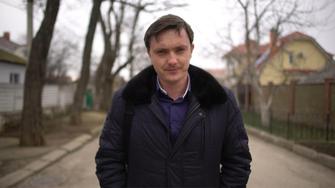
Konstantin Knyrik, a pro-Kremlin nationalist and editor-in-chief of News Front, has been a key figure in spreading disinformation since Russia's annexation of Crimea in 2014. News Front, allegedly funded by the FSB, produces content in multiple languages and has a significant impact, particularly in Germany. The agency is known for its false and inflammatory stories, often aligning with Kremlin narratives. Knyrik's background includes leadership roles in pro-Russian organizations and political affiliations with Russia's far-right Rodina party. Despite allegations of disinformation, Knyrik defends his work as a counter to Western media.
Disinformation Armed Conflict Russian Politics Crimea Russia Germany News Front FSB Eurasian Youth Union Rodina party Atlantic Council Konstantin Knyrik
Style rédactionnelInterprétatif

The article contains subjective statements and personal beliefs, particularly from Konstantin Knyrik, but also includes factual reporting.

Contexte politiqueExtrême droite

The article discusses far-right ideologies and affiliations, particularly through the Rodina party and Eurasian Youth Union.
Meet the Kremlin’s keyboard warrior in Crimea

Coda Story 1 oct. 2023 English

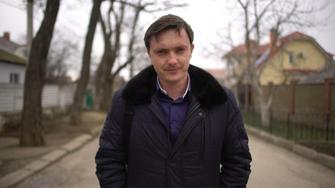
Konstantin Knyrik, a pro-Kremlin nationalist and editor-in-chief of News Front, has been a key figure in spreading disinformation since Russia's annexation of Crimea in 2014. News Front, allegedly funded by the FSB, produces content in multiple languages and has a significant impact, particularly in Germany. The agency is known for its false and inflammatory stories, often aligning with Kremlin narratives. Knyrik's background includes leadership roles in pro-Russian organizations and political affiliations with Russia's far-right Rodina party. Despite allegations of disinformation, Knyrik defends his work as a counter to Western media.

Disinformation Armed Conflict Russian Politics Crimea Russia Germany News Front FSB Eurasian Youth Union Rodina party Atlantic Council Konstantin Knyrik
Style rédactionnelInterprétatif

The article contains subjective statements and personal beliefs, particularly from Konstantin Knyrik, but also includes factual reporting.

Contexte politiqueCentre

The article discusses far-right ideologies and affiliations, particularly through the Rodina party and Eurasian Youth Union.

'Women of the Gulag' Shortlisted for Oscar Nomination

The Moscow Times 21 janv. 2019 English

The documentary 'Women of the Gulag' by Russian-American director Marianna Yarovskaya has been shortlisted for an Oscar nomination, marking a historic moment for a Russian woman director. The film, which focuses on the stories of six women who survived the Soviet Gulag, has received limited attention in Russia, facing criticism from Gulag deniers and some Russian officials. Despite this, it has been praised by Russia's small liberal press for its poignant portrayal of Stalinist atrocities. Yarovskaya hopes for broader viewership, including a potential screening on Russia's first channel, though she acknowledges potential disapproval from President Putin. The 91st Oscars will be held on February 24, 2019.

Film Awards History Russia United States Academy of Motion Picture Arts and Sciences Memorial Stanford University’s Hoover Institute Echo Moskvy Kultura TV Moscow International Documentary Film Festival DOKer Marianna Yarovskaya
Style rédactionnelÉquilibré

The article contains a mix of factual reporting and subjective statements, particularly regarding the reception of the film and the opinions of various individuals.

Contexte politiqueCentre

The article criticizes the Russian government's stance on historical events and supports liberal viewpoints.

Meet the Kremlin’s Keyboard Warrior in Crimea

Coda Story 29 mai 2018 English

Konstantin Knyrik, a pro-Russian politician from Crimea and head of the multilingual outlet News Front, first drew attention in 2014 when he led a militia takeover of an independent investigative news organization. News Front has since built a global audience with strongly pro-Kremlin coverage. Media monitors have documented false and inflammatory reporting, including a fabricated account of migrant-led riots in Germany that circulated widely before being debunked. Knyrik denies that the outlet is funded by Russia’s FSB or receives assignments from Moscow, saying it relies on donations and other business income. His nationalist and Eurasianist ties, political roles, and support for Crimea’s separation from Ukraine underscore the overlap between his activism and the outlet’s messaging. Researchers cited in the story regard News Front as a significant amplifier of disinformation.

Russian Disinformation Information Warfare Russian Annexation of Crimea Media Freedom Far-Right Politics Crimea Russia Germany Russian government Federal Security Service (FSB) Crimean Center for Investigative Reporting Crimean Front militia
Style rédactionnelInterprétatif

Investigative reporting with a critical framing of News Front and its role in Russian disinformation, while presenting responses and denials from Knyrik.

Contexte politiqueCentre gauche

Critical of Russian state influence, nationalist politics, and disinformation, while grounding claims in reporting and attributed sources.

Harassed LGBT Activists Rally in St. Petersburg

The Moscow Times 13 août 2017 English

In St. Petersburg, around one hundred LGBT activists gathered for the city's eighth Gay Pride, marking the largest turnout since 2010. Despite the presence of riot police and the challenges posed by Russia's 'gay propaganda' law, the event highlighted the community's resilience and the partial victories achieved, such as the European Court of Human Rights ruling against Russia's discriminatory practices. The parade faced obstacles, including the rejection of permits and pseudo-events to block the pride. Notable figures like Yury Gavrikov and political leaders from Yabloko and Alexei Navalny have shown support for LGBT rights. The event ended with an attack on activists and journalists, underscoring the ongoing challenges faced by the LGBT community in Russia.

LGBT Rights Protests Discrimination St. Petersburg Russia Chechnya European Court of Human Rights Orthodox Church Celtic German Church Yabloko OVD-Info Radio Liberty
Style rédactionnelInterprétatif

The article contains subjective statements and personal beliefs, particularly from activists and participants.

Contexte politiqueCentre

The article supports LGBT rights and criticizes discriminatory laws and practices.

Russia attack: Police hunt two suspects after at least 11 dead in St Petersburg metro bombing

The Independent 3 avr. 2017 English

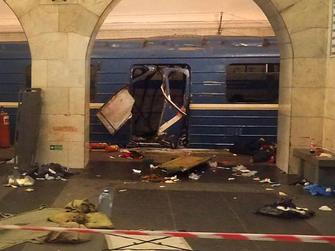
A bomb blast in the St Petersburg metro system has resulted in at least 11 deaths and 45 injuries. Russian authorities are searching for two suspects and have identified the suspected bomber as a 23-year-old linked to radical Islamists from central Asia. A second device was defused at another station. President Vladimir Putin, in St Petersburg at the time, stated that all possible causes, including terrorism, are being investigated. The attack has been met with international condolences and has led to increased security measures across Russia.

Terrorism Public Safety St. Petersburg Russia Syria Russian National Anti-Terrorist Committee Russian State Investigative Committee ISIS Vladimir Putin Alexander Lukashenko Dmitry Medvedev Veronika Skvortsova
Style rédactionnelInformatif

The article reports on a specific event with factual information but lacks detailed publication date and author attribution.

Deadly Spiral

Coda Story English

Russia’s HIV crisis is sustained not only by a small but influential denialist movement, but also by stigma, inadequate counseling, medication shortages, and weak prevention and treatment services. The story follows Natasha, whose adoptive father, priest Georgi Sychov, stopped her antiretroviral treatment because he feared its side effects and believed alternatives might work; she died of AIDS-related complications. Other patients describe how fear, poor communication from doctors, and denialist media led them to avoid care, while activists argue that condemning frightened families can deepen their isolation. Despite a proposed bill to criminalize HIV denial, specialists emphasize that systemic healthcare failures are the larger drivers of the epidemic: deaths rose sharply, and only about one-third of people officially diagnosed with HIV were receiving medication in late 2017.

HIV/AIDS in Russia HIV denialism Antiretroviral treatment access Healthcare system Medical stigma Russia St. Petersburg Moscow Russian Ministry of Health State Duma of Russia SPID Center Federal Center for Fighting AIDS
Style rédactionnelInformatif

Reported feature grounded in interviews, statistics, and personal observations, with some critical framing of Russian healthcare and media coverage.

Back to Basics: Ethical Dilemmas in Cross-Border Investigations

Playbook by n-ost English

The article explores various ethical dilemmas faced by journalists in cross-border investigations, emphasizing the importance of accountability, independence, and fairness. It includes a quiz to help journalists navigate ethical decisions and provides case studies with expert commentary. Key ethical issues discussed include paying sources, forming cross-border teams, maintaining objectivity, and protecting vulnerable sources. The article also highlights the importance of establishing ground rules, providing context, and ensuring the newsworthiness of stories. Insights from experts like Donna R. Leff, Ties Gijzel, and Aidan White are featured to offer diverse perspectives on ethical journalism.

Ethics in Journalism Cross-Border Investigations Poland Germany Romania Reporters in the Field Robert Bosch Foundation Ethical Journalism Network The Revolutionary Armed Forces of Colombia (FARC) Donna R. Leff Ties Gijzel Aidan White
Style rédactionnelInterprétatif

The text contains subjective statements and personal beliefs about ethical journalism practices.

Recruter Message
×

Inscrivez-vous pour envoyer un message à Andreas

Vous avez déjà un compte ? Se connecter
Vous cherchez du travail ? S'inscrire en tant que journaliste
Vérifiez votre e-mail pour finaliser l'inscription
Nous venons d'envoyer un e-mail à . Veuillez consulter votre boîte de réception et cliquer sur le lien pour vérifier votre adresse e-mail et finaliser votre inscription. Si vous ne voyez pas l'e-mail, pensez à vérifier votre dossier spam ou courrier indésirable.
Vous n'avez pas reçu l'e-mail ?

Inscrivez-vous pour débloquer les profils

Vous avez déjà un compte ? Se connecter
Vous cherchez du travail ? S'inscrire en tant que journaliste
Vérifiez votre e-mail pour finaliser l'inscription
Nous venons d'envoyer un e-mail à . Veuillez consulter votre boîte de réception et cliquer sur le lien pour vérifier votre adresse e-mail et finaliser votre inscription. Si vous ne voyez pas l'e-mail, pensez à vérifier votre dossier spam ou courrier indésirable.
Vous n'avez pas reçu l'e-mail ?