Hire journalists

Publishers & Broadcasters Content Marketing Teams PR & Comms Teams Risk & Intelligence Teams Find journalists Media Monitoring Pricing

For journalists

Journalism jobs Pay rates Create your free profile

About Andrei

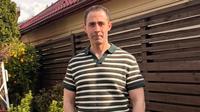
Andrei Popoviciu is an independent investigative journalist, reporter, audio-visual producer and photographer covering human rights, security, migration, international development and foreign affairs stories across Europe, the Middle East and Africa. He is currently based in Bucharest, Romania but has reported from Israel, Palestine, Lebanon, DR Congo, Rwanda, Sudan, the Gambia, Senegal, Chad, Mauritania, Moldova and Serbia. He has experience of working in hostile environments and has received first aid and hostile environment training. His reporting and writing appeared in The Guardian, Al Jazeera English, The Telegraph, New Lines Magazine, Foreign Policy, In These Times, Libération, Le Monde, Der Spiegel, The Associated Press, Politico and The Washington Post among others. Andrei also produces audio documentaries and films, edits and produces news packages for TV and short documentaries. Andrei has won or been nominated for more than a dozen international awards, including the Ján Kuciak Award for Investigative Journalism, the European Press Prize, the Livingston Award, the One World Media Awards, the De Tegel Award, the IJ4EU Impact Award and the Fetisov Award. In 2023, he was featured on the Forbes 30 under 30 list and in 2025 he was names a European Young Leaders by Friends of Europe. He earned his bachelor's degree in international relations and war studies from King's College London and his double master's degree in journalism and international human rights and humanitarian law from Sciences Po Paris.

Languages
German Spanish English French Romanian
Seen in
Al Jazeera The Guardian POLITICO Le Monde.fr Balkan Insight Vice In These Times Foreign Policy Follow the Money - Platform for investigative journalism Middle East Eye The Christian Science Monitor The Telegraph ABC17NEWS Cordópolis El País Everand KERNING CULTURES كيرنينج كلتشرز KVIA Lighthouse Reports PopularResistance.Org PÚBLICO The Europeans The New Humanitarian The Record Yahoo Sports Canada Allafrica Newlinesmag Phys Tagesschau Theafricanmirror Wiadomosci Areweeurope Freitag Huckmag

Work 136

Trump Associates Attended Rally for Bosnian Serb Nationalist Party

Balkan Insight 21 Oct 2026 English

Balkan Insight identified at least three associates of Donald Trump at an October 2 campaign rally for Milorad Dodik’s SNSD party in Banja Luka, including lobbyist Alex Garcia, James Blair and lawyer Andrew H. Smith; a person resembling strategist Chris LaCivita could not be identified with certainty. Their presence complicates claims that Trump-linked advisers worked only for the Republika Srpska government, which has paid substantial sums to US lobbyists and consultants. Bosnia and Herzegovina’s rules bar foreign contributions to parties and misuse of public funds in campaigns, though attendance alone does not establish a violation. Transparency International’s Ivana Korajlic said publicly funded advice to the party could warrant investigation. The story also details contracts with US firms, a court ban on some lobbying payments, and reported connections involving Trump’s chief of staff’s daughter and a proposed gas pipeline. The advisers and SNSD did not answer BIRN’s questions, while Continental Strategy asserted legal compliance and disputed some reporting.

Bosnia and Herzegovina Politics Foreign Lobbying Political Campaign Finance Conflicts of Interest US Politics Bosnia and Herzegovina Republika Srpska United States Alliance of Independent Social Democrats (SNSD) Government of Republika Srpska Transparency International Constitutional Court of Bosnia and Herzegovina
Reporting styleBalanced

Investigative reporting presents evidence and attributed claims about possible legal violations, while generally avoiding a definitive conclusion.

Political contextCentre

Investigative, fact-focused reporting scrutinizes possible political and legal conflicts without endorsing a partisan position.

NATO’s ‘False Solidarity’: Fico Says Neutrality Would Better Suit Slovakia

Balkan Insight 21 Oct 2026 English

Robert Fico has questioned whether NATO allies would defend Slovakia and said neutrality might suit the country better, while insisting his government will honour alliance obligations. The article argues that this rhetoric serves domestic political aims—amplifying war fears and distracting from economic problems—but risks weakening deterrence and reassuring Moscow. In practice, Slovakia continues NATO deployments, relies on allied air protection, and permits substantial commercial arms exports even while opposing direct state military aid to Ukraine. Slovak, Czech and German officials, opposition figures and security analysts warn that neutrality would leave the country unable to defend itself and that publicly casting doubt on Article 5 could erode reciprocal trust. Analysts note that Article 5 allows varied forms of assistance, but stress that credible collective defence depends on uncertainty about how allies would respond.

NATO collective defence Slovak foreign policy Slovakia’s neutrality debate Russia’s war against Ukraine European security and deterrence Slovakia Russia Central Europe NATO Government of Slovakia Smer Hlas
Reporting styleInterpretive

Analysis with a clear critical stance toward Fico’s rhetoric, while also incorporating factual reporting and multiple viewpoints.

Political contextCentre-left

The piece is broadly analytical rather than partisan, but its criticism of Fico’s nationalist rhetoric and support for NATO solidarity gives it a modestly liberal-internationalist tilt.

How Serbia’s Ruling Party Turned State Institutions into ‘Vote Machines’

Balkan Insight 20 Oct 2026 English

More than 150 testimonies collected by BIRN describe Serbian public-sector employees being pressured to pledge votes for the ruling Serbian Progressive Party (SNS), attend its rallies, and recruit friends, relatives, or colleagues as additional voters. Employees report threats of dismissal, stalled advancement, pay cuts, and transfers to distant workplaces for refusing, while some SNS loyalists allegedly hold public jobs but spend paid working hours in party call centres or campaign activities. The practice is described as longstanding and systemic, with monitoring reports and a survey also documenting voter pressure. The allegations come as Serbia approaches an early general election amid student-led protests and a growing challenge to the SNS; the Republic Geodetic Authority and Infostan did not respond to BIRN’s questions.

Political coercion Serbian elections Public-sector employment Electoral integrity Political patronage Serbia Belgrade Vojvodina Serbian Progressive Party (SNS) Republic Geodetic Authority (RGZ) Organization for Security and Co-operation in Europe (OSCE) Office for Democratic Institutions and Human Rights (ODIHR)
Reporting styleInterpretive

Investigative reporting presents allegations of systematic political coercion in a strongly critical framing, supported by interviews and cited monitoring and survey data.

Political contextCentre-left

Critical of ruling-party coercion and public-sector political patronage, while presenting its case through reported testimony and institutional sources.

Albania PM Defiant as Protests Spread to Provincial Cities

Balkan Insight 16 Oct 2026 English

Student-led demonstrations against Albania's government, calling for Prime Minister Edi Rama's resignation, better university conditions and relief from the high cost of living, entered a third day and spread from Tirana to several provincial cities. Clashes with police, tear gas, water cannons, arson and looting were reported. Rama blamed the opposition and unnamed foreign actors for escalating violence, rejected the idea that the protests were genuinely student-driven, and said he would not resign, arguing that a change of government should occur through elections.

Protests in Albania Student Protests Political Unrest Police Clashes Cost of Living Albania's European Union Accession Albania Tirana Durres Socialist Party of Albania Flamingo Revolution Albanian Ministry of Education
Reporting styleInformative

Predominantly factual reporting, presenting Rama's statements and protest developments with limited editorial judgment.

Political contextCentre

Reports political claims and protest events without clear endorsement of a political side.

Albanian PM Blames Opposition After Another Night of Violent Clashes

Balkan Insight 15 Oct 2026 English

Prime Minister Edi Rama blamed Albania’s opposition for two nights of violent clashes in Tirana, saying political forces were exploiting student discontent to destabilise the country. The protests began over university conditions, the cost of living and demands for the government’s resignation, after the Flamingo Revolution called students to the streets. Government buildings, police facilities and businesses were attacked, and the Education Ministry’s first floor was set on fire. Police used tear gas and water cannons against protesters throwing stones and petrol bombs. Authorities reported dozens treated for injuries, most of them police officers, and the violence forced the cancellation of a parliamentary session. Students marched toward parliament again on Thursday as protests appeared likely to continue.

Albanian protests Political violence Student protests Police clashes Cost of living Albania Tirana Albanian government Albanian opposition Albanian police Ministry of Education of Albania Albanian Parliament
Reporting styleInformative

Primarily factual reporting, though it includes attributed accusations and descriptions of the clashes.

Political contextCentre

Straight news coverage presents accusations from government officials and the protest context without endorsing a political position.

Romania's secret CIA prison: Two decades of denial and unanswered questions

Middle East Eye 10 Sep 2026 English

A Bucharest facility is believed to have held and tortured CIA detainees from 2003 to 2005 as part of the post-9/11 rendition program. Court records describe harsh conditions, and the European Court of Human Rights found that Romania cooperated in the program and violated a detainee's rights. Former Romanian leaders have acknowledged approving cooperation with the United States, while Romania's agencies continue to deny or avoid addressing the site's role. A domestic investigation was closed without identifying a perpetrator, and the statute of limitations had expired. The alleged torture remains central to the 9/11 defendants' military proceedings, now scheduled to begin in June 2028.

CIA Black Sites Torture 9/11 Attacks US War on Terror Romania's Role in CIA Rendition Program Guantanamo Military Trials Human Rights Romania United States Europe Central Intelligence Agency Romanian Government
Reporting styleInterpretive

Investigative reporting is strongly critical of Romania's denials and the CIA's torture program, while grounding claims in court records, official findings, and named sources.

Political contextCentre-left

Focuses on state accountability, human rights, and criticism of the US-led war on terror and Romanian government denials.

Outrage at sacking of Ukraine’s defence minister overshadows Starmer’s final visit as PM – as it happened

The Guardian 16 Jul 2026 English

Thousands protested in Kyiv and other Ukrainian cities after Volodymyr Zelenskyy dismissed popular defence minister Mykhailo Fedorov, a decision tied to a reported breakdown in relations with army chief Oleksandr Syrskyi. The dispute overshadowed Keir Starmer's farewell visit to Kyiv, where he reaffirmed long-term British support for Ukraine and received the country's Order of Freedom; Zelenskyy said he hoped to maintain close ties with Starmer's successor. Ukraine's parliament confirmed Sergii Koretskyi as prime minister. Elsewhere, the EU failed to agree on a new Russia sanctions package; a Ukrainian businessman accused Ukraine's military intelligence agency of involvement in a Monaco bombing; and European coverage included a Polish case alleging Russian-backed sabotage, unsafe tourist rentals in Bucharest, Italy's electoral reform and anti-mafia legislation, and court cases involving Spain's prime minister's family.

Ukraine's Defence Minister Dismissal Ukraine-Russia War UK-Ukraine Relations European Politics European Union Sanctions on Russia Organized Crime Earthquake Risk and Tourism Ukraine Europe United Kingdom Government of Ukraine European Union
Reporting styleBalanced

Mostly factual live reporting, with some interpretive descriptions of the leaders' relationship and the political significance of events.

Political contextCentre

A broadly factual live news report presenting competing claims and developments across European politics without a clear partisan position.

Revealed: Bucharest tourists hiring rentals that could collapse in an earthquake

The Guardian 16 Jul 2026 English

An analysis by Romanian seismic-risk organisation Re:Rise found at least 207 illegal tourist rentals advertised on Airbnb and Booking.com in Bucharest buildings classified as the highest seismic risk, with capacity for more than 1,000 guests nightly. Romanian law has prohibited rentals in these RS1 buildings since 2024, but most listings do not disclose the danger, and the platforms do not require hosts to report structural safety. Re:Rise has warned the platforms and placed QR-code stickers on lockboxes; Airbnb says it is investigating and may delist unverified properties, while Booking.com says hosts must follow local law. City officials say inspections are complaint-driven and that owners were notified. The scale of danger may be greater than identified because few buildings have been formally assessed; experts warn a major quake is inevitable, with a 2022 assessment projecting severe damage to about 23,000 buildings and thousands of deaths and serious injuries.

Earthquake Risk Tourism Short-Term Rentals Building Safety Consumer Protection Bucharest Romania European Union Re:Rise Bucharest City Hall Romania's Ministry of Tourism Romania's National Institute of Statistics
Reporting styleInterpretive

Investigative reporting uses factual data and attributed statements, while framing unsafe rentals as a serious public safety failure.

Three Million Romanians Work Abroad and Often Don’t See Their Children for Years

der Freitag 11 Jul 2026 German

More than three million Romanians work abroad, often leaving children in the care of grandparents for years. Low wages at home make migration an economic necessity for many parents, but children may take on adult caregiving duties and experience loneliness, guilt, anxiety, and other emotional difficulties. Official estimates of affected children are widely disputed, and distrust of authorities discourages families from formally transferring guardianship. Save the Children runs after-school programs in Romanian schools, but support remains inadequate. Interviews with children and caregivers show the lasting costs of separation, even as parents hope to provide their families with greater financial security.

Romanian Emigration Children Left Behind by Migrant Parents Family Separation Child Welfare Economic Inequality Romania European Union United Kingdom Romanian social services Maria Diana Sabu Anca Stamin
Reporting styleInformative

Reported feature grounded in statistics and interviews, with empathetic framing of the harms caused by parental migration.

‘She never says goodbye when she leaves’: The Romanian families separated by migration

The Guardian 29 Jun 2026 English

Low wages and limited job opportunities have led many Romanian parents to work abroad, leaving children in the care of grandparents or other relatives. Official figures count more than 53,000 affected children, but estimates suggest the real number may exceed 530,000; fear of state intervention and distrust of authorities contribute to underreporting. Children often take on adult caregiving responsibilities and may experience anxiety, guilt, and other emotional difficulties, while psychological support is scarce. Save the Children runs after-school programmes in Romanian schools. Parents describe migration as a financial necessity and try to maintain contact, but many children say they would rather be poorer if their parents could stay.

Migration Romanian diaspora Children and family separation Child welfare Poverty Romania Târgoviște Western Europe Save the Children Romanian social services Romanian authorities European Union
Reporting styleBalanced

Primarily reported human-interest journalism, with emotionally framed descriptions and attributed judgments.

See all 136 pieces of work with a free account

Other journalists in Bucharest

Hire Message
×

Sign up to message Andrei

Already have an account? Log in
Looking for work? Register as a Journalist
Verify your email to complete registration
We’ve just sent an email to . Please check your inbox and click the link to verify your email address and complete your registration. If you don’t see the email, be sure to check your spam or junk folder.
Didn’t receive the email?

Sign up to unlock profiles

Already have an account? Log in
Looking for work? Register as a Journalist
Verify your email to complete registration
We’ve just sent an email to . Please check your inbox and click the link to verify your email address and complete your registration. If you don’t see the email, be sure to check your spam or junk folder.
Didn’t receive the email?