Journalisten engagieren

Verlage & Sender Content-Marketing-Teams PR- & Kommunikationsteams Risiko- & Intelligence-Teams Journalisten finden Medienbeobachtung Preise

Für Journalisten

Stellenangebote im Journalismus Honorare und Tarife Kostenloses Profil erstellen

Über Andrew

Andrew MacDowall ist ein erfahrener Korrespondent, Analyst und Berater mit Schwerpunkt auf Zentral- und Osteuropa sowie dem Balkan. Er hat zudem umfangreich in der MENA-Region und in Südostasien als Wirtschaftsjournalist und Analyst gearbeitet. Er hat für Publikationen wie den Guardian, die Financial Times, Politico Europe und die New York Times geschrieben. Seit 2006 ist er in Südosteuropa ansässig. Er arbeitet außerdem als Berater und Risikoanalyst für Investoren in Schwellenländern. Andrew spricht außerdem regelmäßig auf Konferenzen und moderiert.

Sprachen
Englisch
Gesehen in
Worldpoliticsreview POLITICO Thebanker FM Magazine Foreign Policy Intellinews Ft The Guardian Roads & Kingdoms The New York Times Boatinternational Taipeitimes MarketScreener RealClearWorld The Christian Science Monitor Washdiplomat Yahoo

Arbeiten 124

U.S. Decides Not to Renew USMCA, Triggers Annual Reviews

Foreign Policy 1. Juli 2026 English

The United States declined to renew the USMCA with Mexico and Canada, opting instead for annual reviews that set the stage for future renegotiations focused on reducing trade deficits and encouraging domestic manufacturing. Mexico and Canada favored an extension, but U.S. efforts have been hampered by limits on tariff authority following a Supreme Court ruling. Ongoing U.S.-Mexico trade talks continue while relations with Canada remain strained. The shift raises concerns about supply chain stability, with Mexican officials warning that yearly reviews could hinder investment and complicate efforts to reduce reliance on China. Additional geopolitical developments include indirect U.S.-Iran talks on control of the Strait of Hormuz and a Japan-India LNG partnership aimed at mitigating energy market disruptions.

Trade Policy & Agreements Tariffs U.S.-Mexico-Canada Relations United States Mexico Canada U.S. government Mexican government Canadian government U.S. Supreme Court Quadrilateral Security Dialogue Donald Trump
BerichtsstilInformativ

Mostly factual reporting with limited interpretation

Politischer KontextMitte

Straightforward policy reporting without ideological framing
Bangladesh Sends Signal With China Visit

Foreign Policy 1. Juli 2026 English

Bangladeshi Prime Minister Tarique Rahman’s first foreign trip to China signals a deepening partnership, with new agreements on connectivity, port development, factory relocation, water management, and a 2+2 dialogue mechanism. China pledged support for Bangladesh’s accession to BRICS and the Shanghai Cooperation Organisation, and a memorandum will introduce Mandarin in Bangladeshi schools. The move complicates India’s diplomatic expectations and challenges Dhaka’s declared nonalignment policy. Additional regional developments include intensified Pakistan-Afghanistan border clashes causing civilian deaths, India’s decision to send junior officials to Iranian Supreme Leader Ali Khamenei’s funeral, and early signs of improvement in Bangladesh’s severe measles outbreak due to increased vaccination efforts.

Bangladesh-China relations Diplomacy India-China rivalry South Asia politics Bangladesh China India BRICS Shanghai Cooperation Organisation Taliban United Nations Pakistan military
BerichtsstilAusgewogen

Analytical tone with some interpretive judgments

Politischer KontextMitte

Geopolitical analysis without partisan framing

What to Know About Ethiopia’s Debt Breakthrough

Foreign Policy 1. Juli 2026 English

Ethiopia reached a preliminary agreement to restructure its defaulted $1 billion bond, advancing its long-delayed debt relief process under the G-20 Common Framework. The negotiations exposed tensions between bilateral creditors—led by China and France—and private investors over burden sharing. The new terms reduce the bond’s value by 12 percent and extend repayment through 2029. Broader economic reforms under Prime Minister Abiy Ahmed continue alongside shifting geopolitical dynamics, including renewed U.S. engagement and Italy’s financing package tied to energy and agriculture. Additional regional developments include U.S. sanctions on a major Rwandan gold refinery, escalating risks in Sudan’s civil war, stricter education controls in Burkina Faso, and continued political protests in Kenya, while Cape Verde achieved a landmark World Cup advancement.

Ethiopia debt restructuring G-20 Common Framework African economic policy Ethiopia United Kingdom China G-20 Debt Justice United Nations U.S. government Italian government Sudanese military
BerichtsstilInformativ

Mostly factual reporting with limited analytical commentary

Trans-Atlanticism Isn’t Dead—It’s Being Renegotiated

Foreign Policy 1. Juli 2026 English

The trans-Atlantic alliance is undergoing a structural renegotiation driven by diverging U.S. and European political dynamics, strategic priorities, and threat perceptions. Despite turbulence caused largely by U.S. domestic politics and the rise of far-right movements in Europe, defense spending increases and institutional adaptation demonstrate that the alliance is maturing rather than collapsing. Europe is moving toward greater strategic autonomy while remaining interdependent with the United States, requiring clearer responsibility-sharing, improved defense procurement, and deeper cooperation on defense technology. A rebalanced partnership is emerging, better suited to contemporary geopolitical challenges and sustained by shared long-term interests rather than sentiment or historical habit.

NATO Trans-Atlantic relations U.S.-Europe relations Geopolitics Europe United States Russia European Union German Marshall Fund of the United States U.S. military Donald Trump Nathalie Tocci
BerichtsstilInterpretierend

An analytical but opinion-driven argument defending the continued relevance of trans-Atlanticism.

Politischer KontextMitte

Policy-focused analysis of trans-Atlantic relations without strong partisan framing.

The Middle East Has a New Saudi-Led Axis With Qatar, Turkey, Pakistan, and Egypt—but Not the UAE

Foreign Policy 1. Juli 2026 English

Saudi Arabia has formed a new regional bloc with Qatar, Egypt, Turkey, and Pakistan as a response to the Iran war, excluding the UAE amid widening strategic differences. The grouping aims to contain Iran, regain influence in states affected by Iranian proxies, and limit Israel’s military reach. The UAE’s divergent approach, including closer defense cooperation with Israel and greater hostility toward Iran, underscores a growing rift with Riyadh. While Qatar leveraged diplomacy to mitigate conflict fallout, Saudi Arabia capitalized economically on higher oil prices and strengthened Red Sea infrastructure. Pakistan, Turkey, and Egypt seek strategic and economic gains from the new alignment. The emerging divide within the Gulf and broader Middle East is set to shape regional security and power dynamics.

Middle East politics Iran war Regional alliances Saudi foreign policy Middle East Gulf region Iran Saudi Arabia United Arab Emirates Gulf Cooperation Council Hezbollah Israel
BerichtsstilAusgewogen

Analysis includes interpretation of geopolitical motives alongside factual reporting.

Politischer KontextMitte

Geopolitical analysis without clear ideological framing.

Trump and the History of Empire

Foreign Policy 1. Juli 2026 English

Analysis of how early Cold War educational materials reframed U.S. imperialism as part of a moral narrative that supported liberal internationalism. The contrast between these sanitized historical portrayals and Donald Trump’s openly acquisitive and militaristic foreign policy highlights a shift away from self-critical traditions in U.S. foreign engagement. Trump’s approach, driven by self-interest rather than ideals, undermines longstanding narratives of American exceptionalism and complicates future efforts to interpret or redeem U.S. global actions.

U.S. foreign policy Imperialism Trump administration History education United States Cuba Iran U.S. government Foreign Policy magazine Donald Trump Theodore Roosevelt Jake Sullivan
BerichtsstilInterpretierend

Interpretive historical analysis with critical viewpoints on U.S. imperialism and Trump’s policies

Politischer KontextMitte-links

Critiques Trump’s foreign policy while discussing liberal internationalism and historical narratives

The Political Aftershocks of Venezuela’s Earthquakes

Foreign Policy 1. Juli 2026 English

Twin earthquakes in Venezuela exposed the profound institutional weaknesses of Delcy Rodríguez’s U.S.-backed government, which failed to provide a coordinated emergency response. Survivors relied on NGOs, local groups, diaspora networks, and online platforms as state agencies lacked fuel, equipment, and organization, and in some cases obstructed aid. Structural vulnerabilities in housing, decades of corruption, and economic collapse amplified the disaster’s impact. With billions in damages and limited financial capacity, Venezuela faces a long and difficult recovery while public anger grows, looting increases, and Rodríguez’s political standing deteriorates. The crisis threatens to trigger wider instability unless meaningful democratic and institutional reforms occur.

Natural disasters Venezuelan politics Humanitarian crisis Venezuela United States Colombia Venezuelan government United Nations Pan American Health Organization CIA Development Bank of Latin America and the Caribbean International Monetary Fund
BerichtsstilAusgewogen

Mix of factual reporting with analytical and interpretive commentary

Politischer KontextMitte-links

Critiques authoritarian governance and emphasizes institutional failure, technocratic reform, and democratic restoration

As Russia Struggles, Will Putin Escalate the War in Ukraine?

Foreign Policy 25. Juni 2026 English

Russian battlefield setbacks, high casualties, and mounting economic strain are undermining Vladimir Putin’s position and fueling domestic discontent as Ukraine intensifies long-range drone strikes deep inside Russia. Elite frustration, economic deterioration, and growing public anxiety are widening cracks in Russia’s political system. As Putin faces diminishing options, the likelihood increases that he will escalate the conflict through hybrid attacks, nuclear signaling, or broader confrontation with the West. The combination of worsening military performance and a war-dependent economy leaves him trapped, heightening the risk of destabilizing actions at home and abroad in the coming months.

Russia’s war in Ukraine Russian politics Military escalation Economic crisis in Russia NATO–Russia tensions Russia Ukraine Europe Russian government NATO Ukrainian military GCHQ
BerichtsstilAusgewogen

Analytical but includes subjective assessments of Putin’s behavior and future risks.

Politischer KontextMitte

Focuses on geopolitical analysis without promoting a partisan domestic political stance.

Dodik Is Pushing Bosnia to the Breaking Point—Again

World Politics Review 7. Mai 2025 English

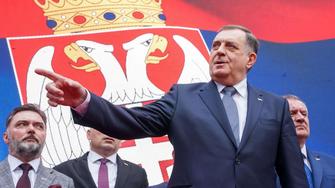
The article discusses the political crisis in Bosnia and Herzegovina, focusing on the actions of Bosnian Serb leader Milorad Dodik. It highlights the complexities of the country's governing system, established by the Dayton Agreement, and the tensions between Dodik and state institutions. The recent attempt to arrest Dodik by central state police, SIPA, was thwarted by police from the Republika Srpska, illustrating the deep divisions within the country. Dodik's secessionist rhetoric poses a significant threat to Bosnia's stability, challenging the fragile peace maintained since the end of the Bosnian War.

Bosnian Politics Milorad Dodik Dayton Agreement Bosnia and Herzegovina Republika Srpska SIPA Federation of Bosnia and Herzegovina
BerichtsstilAusgewogen

The article presents a mix of factual reporting and analysis, with some subjective interpretations of the political situation.

Politischer KontextMitte

The article provides a balanced view of the political tensions in Bosnia without taking a clear side.

Croatia’s Populist President Looks Set to Win Another Term

World Politics Review 28. Nov. 2024 English

Croatian Prime Minister Andrej Plenkovic has strengthened Croatia's alignment with the European Union and NATO, achieving significant economic growth. Despite his success, the HDZ-backed candidate in the upcoming presidential election is likely to lose to incumbent President Zoran Milanovic, who has been a formidable political figure since his first term in 2019.

Croatian Politics Elections Croatia European Union Russia Croatian Democratic Union NATO Andrej Plenkovic Zoran Milanovic
BerichtsstilAusgewogen

Balanced reporting with some subjective analysis

Alle 124 Arbeiten mit einem kostenlosen Konto ansehen

Engagieren Nachricht
×

Registrieren Sie sich, um Andrew eine Nachricht zu senden

Haben Sie bereits ein Konto? Anmelden
Suchen Sie Arbeit? Als Journalist registrieren
Verifizieren Sie Ihre E-Mail, um die Registrierung abzuschließen
Wir haben gerade eine E-Mail gesendet an . Bitte prüfen Sie Ihren Posteingang und klicken Sie auf den Link, um Ihre E-Mail-Adresse zu verifizieren und Ihre Registrierung abzuschließen. Falls Sie die E-Mail nicht sehen, prüfen Sie unbedingt Ihren Spam- oder Junk-Ordner.
E-Mail nicht erhalten?

Registrieren Sie sich, um Profile freizuschalten

Haben Sie bereits ein Konto? Anmelden
Suchen Sie Arbeit? Als Journalist registrieren
Verifizieren Sie Ihre E-Mail, um die Registrierung abzuschließen
Wir haben gerade eine E-Mail gesendet an . Bitte prüfen Sie Ihren Posteingang und klicken Sie auf den Link, um Ihre E-Mail-Adresse zu verifizieren und Ihre Registrierung abzuschließen. Falls Sie die E-Mail nicht sehen, prüfen Sie unbedingt Ihren Spam- oder Junk-Ordner.
E-Mail nicht erhalten?