Journalisten engagieren

Verlage & Sender Content-Marketing-Teams PR- & Kommunikationsteams Risiko- & Intelligence-Teams Journalisten finden Medienbeobachtung Preise

Für Journalisten

Stellenangebote im Journalismus Honorare und Tarife Kostenloses Profil erstellen

Über Angel

Freiberuflicher Print- und Rundfunkjournalist, spezialisiert auf internationale Angelegenheiten und Geopolitik. Berichterstattungserfahrung in Englisch und Spanisch aus mehr als 30 Ländern in Europa, Asien, Afrika, dem Nahen Osten und Lateinamerika. Zu den jüngsten Berichterstattungen gehören: Juni – Juli 2015 – griechische Schuldenkrise Februar 2014 – politische Krise in Venezuela Juni 2013 – Proteste und Unruhen in Brasilien Mai 2013 – Reise von US-Präsident Barack Obama in Costa Rica April 2013 – Präsidentschaftswahlen in Venezuela März 2013 – Tod des venezolanischen Präsidenten Hugo Chávez Februar 2013 – Präsidentschaftswahlen in Ecuador Oktober 2012 – Präsidentschaftswahlen in Venezuela Oktober 2011 – kürzlich erlangte Staatlichkeit des Südsudan September 2011 – Bürgerkrieg in Libyen Juli – Oktober 2011 – Unruhen nach dem Arabischen Frühling in Marokko, Tunesien und Ägypten

Sprachen
Englisch Portugiesisch Spanisch
Gesehen in
Foreign Policy

Arbeiten 19

What Ending the Military Draft Cost America

Foreign Policy 29. Juni 2026 English

Ending the military draft in 1973 weakened the political constraints on U.S. presidents by removing the personal stakes families once felt when troops were deployed, enabling greater freedom to engage in overseas conflicts such as the war in Iran. The article traces the evolution of conscription from World War II through the Vietnam era, explaining how controversies over inequality, public resistance, and political pressure culminated in Richard Nixon’s move to transition to an all-volunteer force. It details the arguments for ending the draft, the coalition that enabled the shift, and the long-term changes in civil-military relations. With a professionalized military, wartime decisions no longer generate the broad domestic repercussions they once did, reducing electoral accountability for the use of force abroad.

U.S. military draft Presidential war powers Vietnam War history U.S.–Iran conflict United States Iran Vietnam U.S. government U.S. military Selective Service System U.S. Congress Donald Trump
BerichtsstilAusgewogen

Blend of historical analysis with interpretive arguments about political effects

Politischer KontextMitte

Historical and institutional analysis without partisan framing
U.S. Strikes Iran Over Attack on Ever Lovely in Strait of Hormuz

Foreign Policy 26. Juni 2026 English

U.S. forces conducted strikes on Iranian targets after Tehran attacked the Singapore‑flagged Ever Lovely in the Strait of Hormuz, which Washington says violated a cease-fire. The incident intensified disputes over control of maritime traffic, with Iran insisting on managing passage while the United States pushes for an alternative route. Tensions persist as both sides have less than 60 days to finalize details of their cease-fire memorandum. The International Maritime Organization has halted evacuation operations in the strait following renewed attacks. Additional global developments include rising casualties from Venezuela’s earthquakes, a plane crash into Beijing’s Citic Tower, and Ukraine’s large-scale drone assault on Russia.

U.S.-Iran conflict Maritime security War in Ukraine Venezuela earthquakes China plane crash Strait of Hormuz United States Iran U.S. Central Command Gulf Cooperation Council International Maritime Organization Persian Gulf Strait Authority
BerichtsstilInformativ

Mostly factual reporting with limited analysis

Politischer KontextMitte

Geopolitical reporting without explicit partisan framing

The War Has Shifted Iran’s Relationship With Hezbollah and Other Proxies

Foreign Policy 26. Juni 2026 English

Iran’s recent strategic gains have reduced its reliance on proxies such as Hezbollah, Hamas, and the Houthis, shifting them from central pillars of deterrence to secondary tools within a broader coercive strategy. The destruction of proxy capabilities after the Oct. 7 attacks, Israeli strikes on Hezbollah leadership and infrastructure, Hamas’s military weakening, and Syria’s shift away from Iran have diminished these groups’ deterrent value. Iran now leverages threats to global energy markets, attacks on regional infrastructure, and pressure on U.S. partners to influence Washington more effectively than through proxy escalation. As Hezbollah struggles with losses and reconstruction, it has become more dependent on Iran, reversing the traditional relationship. While Iran’s proxy network endures, it no longer provides the security buffer it once did, leaving Tehran increasingly responsible for defending weakened allies rather than relying on them for deterrence.

Iran–Israel conflict Proxy warfare Middle East geopolitics Iran Israel Lebanon Hezbollah Hamas Houthis United States Kataib Hezbollah Syria
BerichtsstilInformativ

Analytical tone with evidence-based assessments and limited subjective language

The Art That Created Colonialism

Foreign Policy 26. Juni 2026 English

An exhibition at the Yale Center for British Art explores how the British East India Company’s commercial and imperial expansion fostered intense artistic exchange between European and Asian painters while concealing the violence and exploitation that enabled it. The show highlights collaborations, hybrid artistic traditions, and material innovations alongside the erasure of atrocities such as indigo coercion, famine, and opium production. Through artworks spanning India and China, it reveals how networks of artists were shaped by unequal power structures and commercial motives, leaving a complex legacy that intertwines creativity with colonial domination.

Colonialism Art History British East India Company India China United Kingdom Yale Center for British Art Maratha Empire Carey K. Mott Nawab Mubarak al-Daula Mihr Chand Tilly Kettle
BerichtsstilAusgewogen

Analytical review with interpretation but grounded in historical facts

Colombia Election and Starmer Resignation: Foreign Policy's Weekly International News Quiz

Foreign Policy 26. Juni 2026 English

Covers major global developments from the week of June 20 through a series of quiz questions, including Colombia’s presidential election, Keir Starmer’s resignation, South Sudan’s planned elections, China–Taiwan tensions, Trump’s meeting with NATO chief Mark Rutte, Bangladeshi diplomacy with China, Nigerian legislative changes, Australia’s efforts to tighten a social media ban, and key moments from the World Cup, including Cape Verde’s historic results and Lionel Messi setting a new scoring record.

International politics Elections World Cup Global Colombia United Kingdom NATO Chinese government U.S. government Abelardo de la Espriella Donald Trump Luiz Inácio Lula da Silva
BerichtsstilFaktenbasiert

Straightforward factual quiz questions

The United States Is Now a Guarantor of Last Resort

Foreign Policy 26. Juni 2026 English

Gulf states, working with Turkey and Pakistan, used diplomacy and regional security cooperation to end the 2026 Iran war while reducing dependence on the United States. Their growing ability to manage Iran allows Washington to adopt a narrower role as guarantor against existential threats rather than direct crisis manager. Divergent Gulf interests limit full integration of Iran but support economic engagement combined with military caution. Sustaining this balance determines whether the United States can maintain strategic focus beyond the Middle East.

U.S. foreign policy Middle East geopolitics Iran war Middle East United States Iran Gulf Cooperation Council Saudi Arabia United Arab Emirates Turkey Pakistan Barack Obama
BerichtsstilAusgewogen

Analysis contains interpretation but grounded in geopolitical facts

Politischer KontextMitte

Geopolitical analysis without partisan advocacy

As the Tide Turns Against Putin, Beware the Drowning Man

Foreign Policy 25. Juni 2026 English

Mounting battlefield losses, soaring casualties, and effective Ukrainian drone strikes have pushed Russia into deep economic strain and rising domestic discontent, weakening Vladimir Putin’s political position. Fuel shortages, inflation, and elite frustration add pressure as Russian military spending consumes half the national budget. Putin has responded by escalating threats toward Ukraine and the West, lowering the nuclear-use threshold, expanding hybrid attacks, and invoking claims of NATO aggression. As conditions worsen, the Kremlin is increasingly likely to resort to desperation measures at home and abroad to maintain control, raising the risk of more aggressive actions in the coming months.

Russia-Ukraine War Russian politics International security NATO Russia Ukraine Europe Russian government GCHQ Russian Ministry of Defense European Union Belarusian military
BerichtsstilInterpretierend

Analysis contains strong interpretive and evaluative judgments about Putin and Russia’s trajectory

Politischer KontextMitte-links

Critical of authoritarian governance and supportive of Western security responses

The Manufacturing-Era Toolkit Won't Work for the AI Revolution

Foreign Policy 25. Juni 2026 English

AI-driven economic disruption is outpacing traditional automation policies, which relied on retraining, unemployment insurance, and incremental productivity gains. Modern AI threatens millions of cognitive and white-collar jobs, accelerates displacement, and undermines tax bases that fund safety nets. Governments’ existing retraining models are insufficient given the speed and scale of change. A renewed policy framework should treat AI skills as essential infrastructure, target support to the least adaptable workers, build flexible labor protections, require labor-impact disclosures from employers, and ensure broader sharing of AI productivity gains through tax reform or public equity stakes. Without such changes, inequality will widen and political pressures will intensify as economic benefits concentrate among technology owners.

Artificial intelligence Labor markets Economic inequality Public policy Automation United States China India U.S. Bureau of Labor Statistics U.S. Congress California state government Victoria state government
BerichtsstilInterpretierend

Interpretive analysis with policy arguments and subjective assessments.

Politischer KontextMitte-links

Advocates policy reform, redistribution, and expanded public intervention in response to AI-driven inequality.

Trump's Iran Deal Ended the War but Won't Bring Peace

Foreign Policy 22. Juni 2026 English

The U.S.-Iran truce deal leaves major issues unresolved, exposing deep disagreements among Washington, Tehran, and Jerusalem despite the halt in large-scale fighting. Iran’s new leadership is more confrontational and distrustful, complicating negotiations on its nuclear program and regional behavior. Israel views the agreement as favoring Iran and continues aggressive military operations, while Gulf states question the reliability of U.S. security guarantees. Divergent interests, limited trust, and vague commitments make a lasting settlement unlikely, pointing instead to prolonged, low-level conflict across the region.

U.S.-Iran relations Middle East conflict Iran nuclear issue Israel security policy Iran United States Israel Hezbollah Hamas Palestinian Authority Gulf States International Atomic Energy Agency
BerichtsstilAusgewogen

Analysis with both factual reporting and interpretive judgments

Politischer KontextMitte

Policy analysis without clear ideological advocacy

Peru Awaits Election Results in Fujimori-Sánchez Presidential Runoff

Foreign Policy 11. Juni 2026 English

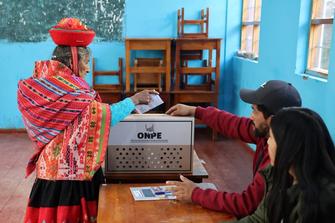
Peru’s presidential runoff remains unresolved, with fewer than 1,000 votes separating Keiko Fujimori and Roberto Sánchez as counting nears completion. Both campaigns have alleged irregularities while analysts note remaining ballots may slightly favor Fujimori, whose victory would mark a rightward regional shift amid a highly divided electorate. Any new president will face a fragmented congress, though Peru’s return to a bicameral legislature may curb rapid presidential removals. The article also highlights upcoming Latin American political events, Mexico City’s World Cup kickoff, Brazil’s plans for a yuan-denominated bond, and Delcy Rodríguez’s diplomatic outreach to India and Turkey as Venezuela expands energy ties under U.S. pressure.

Peruvian presidential election Latin American politics Elections Peru Latin America Colombia Peruvian government Venezuelan government Organization of American States G-7 U.S. State Department Indian government
BerichtsstilInformativ

Primarily factual reporting with minor analytical interpretation

Politischer KontextMitte

Balanced reporting on political developments without advocacy

Alle 19 Arbeiten mit einem kostenlosen Konto ansehen

Engagieren Nachricht
×

Registrieren Sie sich, um Angel Ricardo eine Nachricht zu senden

Haben Sie bereits ein Konto? Anmelden
Suchen Sie Arbeit? Als Journalist registrieren
Verifizieren Sie Ihre E-Mail, um die Registrierung abzuschließen
Wir haben gerade eine E-Mail gesendet an . Bitte prüfen Sie Ihren Posteingang und klicken Sie auf den Link, um Ihre E-Mail-Adresse zu verifizieren und Ihre Registrierung abzuschließen. Falls Sie die E-Mail nicht sehen, prüfen Sie unbedingt Ihren Spam- oder Junk-Ordner.
E-Mail nicht erhalten?

Registrieren Sie sich, um Profile freizuschalten

Haben Sie bereits ein Konto? Anmelden
Suchen Sie Arbeit? Als Journalist registrieren
Verifizieren Sie Ihre E-Mail, um die Registrierung abzuschließen
Wir haben gerade eine E-Mail gesendet an . Bitte prüfen Sie Ihren Posteingang und klicken Sie auf den Link, um Ihre E-Mail-Adresse zu verifizieren und Ihre Registrierung abzuschließen. Falls Sie die E-Mail nicht sehen, prüfen Sie unbedingt Ihren Spam- oder Junk-Ordner.
E-Mail nicht erhalten?