Annika Hammerschlag is the Oceans and Climate correspondent for the Associated Press. Prior to joining the AP she spent six years in West Africa as a freelance photographer, videographer and reporter. During that time her work was published by The New York Times, The Economist, Bloomberg, BBC, The Guardian and Al Jazeera English. She holds a master’s degree from Columbia Journalism School and a bachelor’s from UCLA. She received an Overseas Press Club Scholar award in 2016 for her work in India.
The IndependentVoice of AmericaAllafricaEuronewsBBCAl JazeeraThe GuardianThe New York TimesVoaafricaAssociated PressYahoo Sports CanadaCaElperiodicoYoursunAgriFocus AfricaAnnika HammerschlagArizona Daily StarBarron'sChronFood ManufacturingHartford CourantMy UP NewsOmaha Daily RecordThe Star (Malaysia)JapantodayAolKslWsbtv
Work 125
McDonald's fish supplier industry faces backlash over salmon deaths
The Independent12 Oct 2026English
Alaska’s pollock trawl fishery faces growing backlash over salmon bycatch amid the collapse of salmon runs in western Alaska and a seven-year Chinook fishing ban on the Yukon River. Researchers attribute the decline primarily to warming seas and changing ocean conditions, though critics say even limited bycatch matters to depleted runs and that river communities bear the heaviest conservation costs. The industry points to salmon excluders, monitoring, information-sharing and voluntary closures, while fishers and Alaska Native communities also object to trawl gear’s seabed impacts and continued bycatch of halibut and crab. Opposition has become a prominent issue in Alaska’s gubernatorial and U.S. Senate races.
Primarily factual reporting, with attributed criticism and competing explanations of the salmon decline.
OpinionatedFactual
Political contextCentre
Reports criticism of trawling across political groups and presents industry mitigation claims alongside concerns from fishers and Alaska Native communities.
Far leftFar right
Trawl fishing catches huge amounts of seafood. It also devastates the seafloor
The Independent9 Oct 2026English
Trawling supplies a substantial share of the world’s wild seafood, but bottom trawling can capture unwanted animals, damage seafloor habitats and disturb carbon-rich sediment. Trawl fisheries account for a large share of discarded catch, while a single pass of bottom-contact gear has been associated with an average 26% decline in seafloor invertebrates. Corals and sponges may take decades or centuries to recover. Sediment disturbance can also release carbon dioxide; a 2024 modeling study estimated that 55% to 60% of the resulting CO2 reaches the atmosphere within a decade, though scientists are still assessing the scale of these emissions. Escape panels and avoiding areas with concentrated unwanted species are among the measures used to reduce harm, but their effectiveness varies.
Trawl FishingMarine EcosystemsBycatchSeafloor Habitat DamageOcean Carbon EmissionsGlobalAuckland, New ZealandAssociated PressUniversity of AucklandUnited Nations Food and Agriculture OrganizationWalton Family FoundationSimon Thrush
Reporting styleFactual
Primarily fact-based reporting, presenting research findings and expert statements with little subjective commentary.
OpinionatedFactual
The Fish Behind America’s Fish Sticks Is Fueling a Fight Over Trawling in Alaska
The Independent9 Oct 2026English
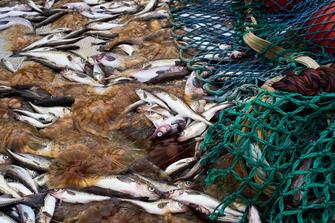
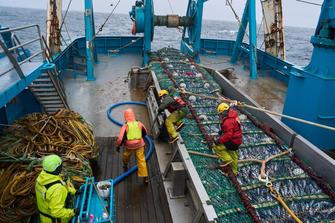
Alaska’s pollock trawl fishery supplies fish for products such as fish sticks and McDonald’s Filet-O-Fish, but its salmon bycatch has become contentious as western Alaska salmon runs have collapsed and Indigenous communities face fishing closures. Scientists identify warming and changing ocean conditions as the primary causes of declines, while critics argue that reducing trawl bycatch is a controllable way to protect depleted runs. The industry says it uses avoidance measures, salmon-exclusion devices, monitoring and closures; genetic estimates indicate most chum bycatch comes from outside western Alaska, though western Alaska fish still account for substantial losses. A proposed cap on western Alaska chum bycatch has drawn criticism as too generous. Commercial and charter fishers also object to bycatch and possible seafloor damage. Opposition has crossed political and community lines, shaping Alaska’s governor and Senate races, while families along the Yukon worry that salmon restrictions threaten subsistence, cultural practices and the transmission of knowledge to younger generations.
Alaska pollock fisherySalmon bycatchIndustrial trawlingAlaska Native subsistence fishingFisheries managementAlaska electionsAlaskaBering SeaYukon RiverNorth Pacific Fishery Management CouncilNational Oceanic and Atmospheric Administration (NOAA)Yukon River Inter-Tribal Fish Commission
Reporting styleInformative
Primarily reported facts and attributed positions, with some emotionally resonant framing around cultural impacts.
OpinionatedFactual
Fishing company behind Filet-O-Fish devastates Alaska salmon and Native communities
The Independent9 Oct 2026English
Industrial Alaska pollock trawlers, whose catch supplies McDonald’s Filet-O-Fish and other seafood products, unintentionally capture large numbers of salmon. Western Alaska salmon populations have declined, prompting subsistence fishing restrictions that have disrupted Native communities, while pollock fishing continues under monitoring, avoidance measures and spatial closures. Researchers identify warming seas and changing marine conditions as major drivers of salmon declines, but critics argue that bycatch is a controllable source of mortality. Most chum salmon caught as bycatch come from outside western Alaska, though the western Alaska share still amounts to tens of thousands of fish in some years.
Alaska pollock fishingSalmon bycatchAlaska Native communitiesFisheries managementSubsistence fishingAlaskaBering SeaYukon RiverYukon River Inter-Tribal Fish CommissionAt-Sea Processors AssociationNational Oceanic and Atmospheric AdministrationBristol Bay Science and Research Institute
Reporting styleInformative
Primarily reports data, scientific findings and competing stakeholder perspectives, though the headline uses a strong critical framing.
OpinionatedFactual
Scientists Hope Deeper-Rooted Soybeans Can Withstand Climate Extremes
Associated Press21 Sep 2026English
Researchers at the Salk Institute are testing genetically selected soybeans with deeper roots, which may help crops reach water during drought and store more carbon in soil. Early estimates suggest a hectare of these plants could store an additional metric ton of carbon dioxide per year, but researchers still need to establish how much carbon remains underground, whether yields hold up, and how the plants perform in real-world conditions. Field trials are underway in Illinois and planned for Missouri, Kansas, and Iowa. Wider adoption could use existing farmland and infrastructure, but experts note that farmer risk, seed-company incentives, subsidies, and the time needed to develop and test crops will affect whether the technology scales.
Climate ChangeAgricultural ResearchCarbon SequestrationDrought-Resistant CropsSoybean FarmingUnited StatesIllinoisMissouriSalk Institute for Biological StudiesUniversity of Illinois Urbana-ChampaignUnited Nations Development ProgrammeBezos Earth Fund
Reporting styleFactual
Primarily factual reporting, with claims attributed to researchers and experts.
OpinionatedFactual
Scientists Hope Deeper-Rooted Soybeans Can Withstand Climate Extremes
Associated Press21 Sep 2026English
Researchers at the Salk Institute are developing soybeans with deeper roots in hopes of making crops more resilient to drought and other climate stresses while storing more carbon underground. The team has identified genes linked to root growth and carbon storage, and is testing modified plants in field conditions in Illinois and other states. Early estimates suggest deep-rooted soybeans could store additional carbon, but researchers still need to establish how long it remains in soil and whether yields and resilience hold up outside laboratory settings. Experts say adoption will depend on farmer confidence, seed-company interest, incentives, funding, and agricultural policy; they also caution that crop innovation alone cannot address climate change.
Climate ChangeAgricultural ResearchSoybean CropsCarbon SequestrationDrought ResilienceUnited StatesIllinoisChampaignAssociated PressUniversity of Illinois Urbana-ChampaignSalk Institute for Biological StudiesUnited Nations Development Programme
Reporting styleInformative
Primarily factual reporting, with some forward-looking claims and expert assessments.
OpinionatedFactual
Scientists Hope Deeper-Rooted Soybeans Can Withstand Climate Extremes and Store More Carbon
KSL.com20 Sep 2026English
Salk Institute researchers are field-testing genetically engineered soybeans with deeper, larger roots to determine whether they can better withstand drought, store more carbon underground and potentially reduce fertilizer runoff. An $18 million Bezos Earth Fund grant supports tests in Illinois, Missouri, Kansas and Iowa measuring carbon retention, crop resilience and yields. Earlier laboratory work suggests the plants could store an additional metric ton of carbon dioxide per hectare annually, but field results are needed to establish the benefit, durability of storage and any yield trade-offs. Wider climate impact depends on adoption by farmers and seed companies; a study co-authored by project director Wolfgang Busch modeled that broad adoption of deeper-rooted crops could remove about a gigaton of carbon dioxide per year by 2040.
Climate ChangeAgricultural BiotechnologyCarbon SequestrationSoybean ResearchDrought ResilienceUnited StatesIllinoisMissouriSalk Institute for Biological StudiesBezos Earth FundUniversity of Illinois Urbana-ChampaignAshish Rajurkar
Reporting styleInformative
Primarily factual reporting on ongoing research, with cautious framing about unproven field results.
OpinionatedFactual
Scientists hope deeper-rooted soybeans can withstand climate extremes and store more carbon
The Independent18 Sep 2026English
Researchers at the Salk Institute are testing genetically modified soybeans with deeper, larger roots that could help crops survive drought, absorb nutrients and store more carbon underground. An $18 million Bezos Earth Fund grant will support field trials in Illinois, Missouri, Kansas and Iowa to measure carbon storage, crop yields and resilience under real farming conditions. Scientists estimate the plants could store an additional metric ton of carbon dioxide per hectare annually, but the duration of storage, possible yield trade-offs and performance outside laboratories remain uncertain. Widespread climate benefits would depend on adoption by farmers and major seed companies.
Climate ChangeCarbon RemovalAgricultural BiotechnologySoybean ResearchDrought ResilienceSoil Carbon StorageUnited StatesIllinoisMidwestern United StatesSalk Institute for Biological StudiesBezos Earth FundUniversity of Illinois Urbana-Champaign
Reporting styleInformative
Predominantly factual reporting, with limited advocacy-oriented framing and researchers’ projections about the potential benefits of the technology.
OpinionatedFactual
British Columbia Is Logging Its Last Old Growth. Protesters Are Sleeping in the Road to Stop It
The Independent5 Aug 2026English
Protesters and Indigenous forest defenders are blockading logging roads on Vancouver Island to oppose the continued cutting of some of the world’s remaining old-growth temperate rainforest. Only about 20% of the island’s productive old-growth forests remain, while scientists warn that their complex ecosystems may take millennia to recover, if they recover at all. The British Columbia government cites temporary protections, investment in second-growth forestry and the economic importance of roughly 100,000 forestry jobs, but critics argue that conservation commitments are undermined by ongoing logging and plans to increase timber harvests. The conflict also reflects divisions over how Indigenous territories should balance economic development, cultural connections and conservation.
Old-Growth Forest LoggingEnvironmental ConservationIndigenous Land RightsClimate ChangeProtest MovementsForestry IndustryBritish ColumbiaVancouver IslandCanadaPacheedaht NationGovernment of British ColumbiaHuu-ay-aht First Nation
Trump administration faces backlash over plan to dismantle ocean sensor network
The Independent15 Jun 2026English
A bipartisan group of U.S. senators and Democratic-led House committees are opposing the National Science Foundation’s decision to dismantle the Ocean Observatories Initiative, a major ocean monitoring network that has contributed to climate and extreme weather research. Lawmakers argue the move undermines coastal safety and national monitoring capabilities, while House members accuse the NSF of violating legal requirements for congressional notification and wasting valuable scientific infrastructure.
Climate ChangeScience PolicyExtreme WeatherUnited StatesNational Science FoundationOcean Observatories InitiativeU.S. SenateU.S. House of RepresentativesJeff MerkleyLisa MurkowskiOcean Observatories Initiative sensor network
Reporting styleFactual
Primarily factual reporting with minimal subjective language
OpinionatedFactual
Political contextCentre
Policy-focused coverage involving bipartisan concerns without ideological framing
We respect your privacy and use a limited number of cookies to provide essential functionality and enhance your visit. No third-party advertising cookies involved. For more details, please read our Cookie Policy.