Journalisten engagieren

Verlage & Sender Content-Marketing-Teams PR- & Kommunikationsteams Risiko- & Intelligence-Teams Journalisten finden Medienbeobachtung Preise

Für Journalisten

Stellenangebote im Journalismus Honorare und Tarife Kostenloses Profil erstellen

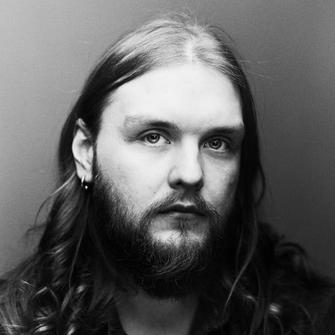
Über Antti

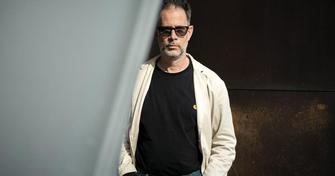
Ich bin Antti Yrjönen, ein preisgekrönter finnischer Fotojournalist, Dokumentarfotograf und Autor mit Sitz in Helsinki. Ich stehe für redaktionelle Aufträge in ganz Finnland und der nordischen Region sowie für internationale Recherchen und schnelle Einsätze zur Verfügung. Ich berichte über Eilmeldungen, Konflikte, humanitäre Krisen, Migration, Bildung, Politik und die Auswirkungen großer Ereignisse auf den Alltag. Jüngste Einsätze führten mich in die Ukraine, den Südsudan, Somalia, Uganda, Äthiopien, Nepal und die Zentralafrikanische Republik. Ich habe umfangreiche Erfahrung in komplexen und feindlichen Einsatzumgebungen und bin HEAT-, first-aid- und TECC-trained. Meine Arbeit reicht von Nachrichtenfotografie und redaktioneller Porträtfotografie bis hin zu umfangreichen Dokumentarprojekten, Fotoessays, Kurzvideos und Feature-Artikeln. Ich kann eigenständig oder als Teil eines größeren Reporting-Teams arbeiten und liefere sorgfältig beschriftete und bearbeitete Fotografien, bei Bedarf Übertragungen am selben Tag, Interviews, Videomaterial und vollständige visuelle Story-Pakete. Ich bin auch routiniert darin, bereits in der Planungsphase beizutragen und bei der Entwicklung eines visuell stimmigen Ansatzes für eine Berichterstattung zu helfen. Meine Fotografie wurde international ausgestellt und mit zahlreichen Preisen ausgezeichnet, darunter mehrere Finnish News Photo of the Year-Titel, der dritte Platz in den 2026 Giga Photo Awards und die Auswahl für das 2026 World Report Award programme. Neben Auftragsarbeiten schreibe ich über visuelle Kultur, Journalismusethik, Medienrepräsentation und Pressefreiheit. Ich arbeite professionell in Finnisch und Englisch und verfüge über Grundkenntnisse in Französisch und Schwedisch.

Sprachen
Englisch Finnisch
Gesehen in
Journalisti Maailman Kuvalehti Kansan Uutiset (KU) Helsingin Sanomat Tampere University

Arbeiten 89

Ministers are allowed to look tired

Journalisti 6. Okt. 2026 Finnish

The threatened closure of STT’s news and photo service could leave Finnish newsrooms with fewer resources to document ordinary political life. The column argues that independent photographers must be paid not only to cover major events but also to observe routine activity, while images supplied by government offices and political parties are selected to serve their interests. Past efforts to suppress unflattering photographs illustrate the risks of allowing those in power to decide what the public sees. Although STT’s profitable communications arm may survive, the author warns that relying on self-selected images could leave future records of government looking conspicuously well-rested.

Photojournalism Media independence News agency funding Political communication Finland STT (Finnish News Agency) Finnish Government Prime Minister's Office of Finland Social Democratic Party of Finland (SDP) National Coalition Party Antti Yrjönen Päivi Anttikoski
BerichtsstilInterpretierend

An explicit opinion column arguing that independent photojournalism is essential and criticizing reliance on images selected by politicians and institutions.

Politischer KontextMitte

Focuses on media independence and political accountability rather than endorsing a partisan position.

Editorial Work Needs More Inefficiency

Journalisti 1. Okt. 2026 Finnish

Firsthand reporting in South Sudan shows how travel, waiting, and informal conversations can reveal context that a planned interview or desk-based story would miss. The writer argues that reporting’s purpose is to discover information not already known to a newsroom, yet efficiency pressures and limited staffing eliminate this time-intensive work. Although media leaders say AI could free journalists to pursue original reporting, the piece says that promise is hollow unless news organizations protect the resources and time needed to go into the field.

Journalism Reporting Field journalism Newsroom resources Artificial intelligence and journalism South Sudan Finland Helsinki Journalisti Maria Lassila-Merisalo Michael Frayn Antti Yrjönen
BerichtsstilInterpretierend

An argument-driven column advocating for more time-consuming, on-the-ground reporting and criticizing efficiency pressures in newsrooms.

The media asked everyone but Moroccans about the causes of the Ceuta crisis, writes Antti Yrjönen

Journalisti 4. Aug. 2026 Finnish

The Ceuta crisis began after rumors spread in Morocco that the route to Europe was open, prompting an estimated 50,000–60,000 people to reach the Spanish enclave within days; 67 people reportedly died. Finnish media focused heavily on border security, possible Moroccan manipulation, Russian involvement and European political responses, but largely failed to ask the migrants why they were willing to risk their lives. High youth unemployment, economic hardship, limited educational opportunities, corruption and political frustration help explain why the rumor resonated. The article argues that Moroccan authorities may have facilitated the movement to pressure Spain, while migrants also had genuine independent reasons for leaving. Both realities can coexist, and journalism that frames the event primarily as an invasion obscures the people and conditions behind it.

Ceuta border crisis Migration from Morocco to Europe Immigration and border control Media framing Hybrid influence and misinformation Youth unemployment in Morocco Ceuta, Spain Morocco Finland European Union Spanish government Finnish Ministry of the Interior
BerichtsstilInterpretierend

Strongly analytical and persuasive opinion writing, despite extensive use of statistics, reporting and attributed evidence.

Politischer KontextMitte-links

Critiques anti-immigration and invasion-based political framing, emphasizes migrants' socioeconomic motivations and advocates more human-centered journalism while acknowledging possible hybrid influence.

The Greatest Deception Is the Idea That Photographs Do Not Deceive – Yanai Toister on Seeing in the Age of AI

Tampere University 31. Juli 2026 English

Yanai Toister argues that photography has never guaranteed truth and that artificial intelligence has industrialized, rather than invented, visual deception. As cameras increasingly become sensor systems embedded in phones, vehicles, borders and infrastructure, images are produced for automated decisions as much as for human viewing. His concept of the “speculative camera” treats imaging as an assemblage of sensors, algorithms, models, timekeeping and institutions oriented toward predicting and shaping the future. Toister advocates shifting attention from whether an image is authentic to who built the system, using what data, under whose authority and for what purpose. He and his collaborators also warn that generative AI may gradually reshape human imagination through a feedback loop of machine-produced images, potentially creating cognitive uniformity and statistical sameness. Despite these risks, he views interdisciplinary research, uncertainty and the gap between reality and perception as opportunities for artistic and philosophical thought.

Artificial Intelligence Photography Visual Perception Surveillance Technology Image Manipulation Epistemology Generative AI Finland Israel Global Tampere University Shenkar design university
BerichtsstilAusgewogen

Analytical interview combining factual reporting with Yanai Toister’s strongly argued philosophical views about photography, AI and visual truth.

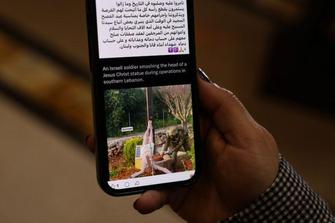
A Photo of a Jesus Statue Mutilated with an Axe Shattered the Narrative Israel’s Supporters Have Built for Decades

Maailman Kuvalehti 6. Mai 2026 Finnish

A photograph of an Israeli soldier striking a crucifix statue in the southern Lebanese village of Debel prompted swift condemnation from senior Israeli and American officials and disciplinary action against two soldiers. The article argues that the intense response reflected the image’s symbolic conflict with the Christian and civilizational narrative used by many supporters of Israel, rather than the act being the gravest documented abuse by Israeli forces. It contrasts the protected status of a damaged religious symbol with the limited public mourning afforded to Palestinians subjected to violence, humiliation and detention. Drawing on Judith Butler and James Cone, it argues that Christian symbolism is most meaningful when connected to the real bodies of people abused by systems of power, and concludes that the statue incident was easier for Israel to frame as an isolated misconduct than the broader visual record of systematic prisoner humiliation and military abuse.

Israel-Lebanon conflict Israeli military occupation War photography and media framing Christian Zionism Religious symbolism Human rights and the treatment of prisoners Southern Lebanon Israel Palestine Israel Defense Forces Israeli government International Christian Embassy Jerusalem
BerichtsstilInterpretierend

Strongly analytical and critical commentary, using theological and philosophical arguments to challenge Israel’s military conduct and its supporters’ narratives.

Politischer KontextLinks

The article adopts a strongly critical view of Israel’s occupation and military conduct, emphasizes Palestinian civilian suffering, and challenges Christian Zionist support for Israel.

For Young People, Journalism Is Just Content Among Other Content

Journalisti 10. Apr. 2026 Finnish

A survey of Finnish teenagers finds that more than half primarily encounter news on TikTok, while 45 percent would not see news elsewhere if it did not appear there. Although young people follow current events regularly and generally recognize journalism, only slightly more than 60 percent say they trust it. The article argues that journalism is now consumed alongside propaganda, memes, influencer opinions, commercial content and AI-generated material, making legacy media's gatekeeper role less persuasive. Rather than demanding automatic trust in established brands, news organizations should present journalism as a verifiable method by showing how claims are checked, sources assessed, uncertainty handled and errors corrected. Bellingcat and transparent social-media reporting are cited as models for building trust through visible reporting processes.

Youth News Consumption Digital Journalism Media Literacy Trust in Journalism Social Media Algorithms Misinformation Finland Bellingcat Uutismedian Liitto Antti Yrjönen Helsingin Sanomat TikTok
BerichtsstilInterpretierend

Strongly analytical and argumentative, advocating that journalism demonstrate its methods rather than rely on institutional authority or legacy brand recognition.

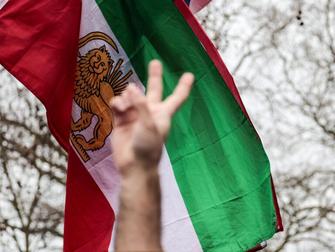
Who Was Left Out of the Picture in Iran? Authoritarian Regimes’ Version of Reality Finds Its Way Into Newsrooms Too Easily

Maailman Kuvalehti 2. Apr. 2026 Finnish

The piece argues that media coverage from Iran can be factually accurate yet still present a distorted picture of society because authorities control what journalists can access, photograph and verify. Images of mourning for Ali Khamenei are therefore more visible than evidence that most Iranians oppose the Islamic theocracy. The author links this distortion to a broader global weakening of press freedom, including political pressure in the United States, media domination by Fidesz in Hungary and newsroom dependence on AI. A mistaken Finnish report about Russian drones illustrates how automation can amplify official narratives when journalists fail to verify primary sources. The central warning is that journalism must examine not only whether individual content is true, but also which power structures made it available and which alternative realities were excluded.

Press Freedom Media Manipulation Iranian Politics Authoritarianism Artificial Intelligence in Journalism Disinformation Iran United States Hungary Iranian authorities GAMAAN Varieties of Democracy (V-Dem)
BerichtsstilInterpretierend

Strongly analytical and critical; the piece advances a clear argument about how authoritarian information control and newsroom automation distort public understanding.

Politischer KontextMitte-links

Defends independent journalism, press freedom and opposition voices while criticizing authoritarian governments, media concentration and unregulated automation.

In the Post-Truth Era, Getting Caught Distorting Things Is a Victory

Journalisti 28. Jan. 2026 Finnish

Manipulated images and AI-generated content increasingly serve not only to deceive audiences but also to make all evidence seem questionable. The article examines a manipulated White House image of civil-rights lawyer Nekima Levy Armstrong, synthetic celebrity content, AI-generated “Finland facts” monetized on Facebook, and Donald Trump’s use of AI claims to dismiss potentially damaging material. Drawing on the concept of the “liar’s dividend,” it argues that the greatest advantage for propagandists comes from eroding public confidence in the distinction between truth and falsehood. Journalism risks worsening this exhaustion if it imitates the attention-driven media environment, but images and videos can still expose abuses of power and hold authorities accountable.

Misinformation and Disinformation Artificial Intelligence-Generated Content Media Literacy Journalism and Fact-Checking Propaganda Synthetic Media United States Finland Minneapolis White House U.S. Immigration and Customs Enforcement Yle
BerichtsstilInterpretierend

Strongly argued media commentary that uses factual examples to support a critical thesis about synthetic media, propaganda and public cynicism.

AI-Generated Imagery of Misery Is the New Version of Poverty Porn

Maailman Kuvalehti 26. Jan. 2026 Finnish

Generative AI imagery used by humanitarian organizations does not break with the tradition of poverty porn but intensifies the white-savior gaze and other racialized stereotypes embedded in humanitarian photography. Campaigns by Plan International, Amnesty International and a UN peacekeeping operation were withdrawn or revised after public criticism. The technology offers organizations a cheap way to depict suffering without travel, consent negotiations or direct encounters, but it risks erasing real people, exploiting images used in training data and undermining public trust. Meaningful humanitarian communication instead requires local authorship, time on the ground and genuine encounters with the people represented.

Generative AI Poverty Porn Humanitarian Communication Racism and Representation AI Bias Nonprofit Fundraising Global South Colombia United States Plan International Amnesty International United Nations peacekeeping operations
BerichtsstilInterpretierend

Strongly argued opinion essay that uses research and case studies to support a critical view of AI-generated humanitarian imagery.

The Finns Party packaged Finnish racism into a form that works everywhere

Kansan Uutiset (KU) 17. Dez. 2025 Finnish

The article argues that the Finns Party’s public defense of politicians who reproduced an eye-stretching gesture has made Finnish anti-Asian racism instantly legible internationally. Unlike earlier controversies involving language and context, the visual gesture spread rapidly across Asia and created a damaging image of Finland’s political leadership. The controversy has already affected Finland’s reputation in Japan, including the suspension of a cultural project, while apologies that express regret over the reaction rather than responsibility for the act are portrayed as insufficient. The piece concludes that a single widely circulated image can undermine trust in Finland, especially because the country’s international brand relies on being perceived as neutral, safe and dependable.

Racism in Finland Political controversies Anti-Asian racism Finland’s international image Visual communication Finland Japan Asia Finns Party Petteri Orpo’s government Asahi Shimbun Juho Eerola
BerichtsstilInterpretierend

Strongly opinionated analysis that uses factual examples to argue that the Finns Party and the government have damaged Finland’s international reputation through racist gestures and rhetoric.

Politischer KontextMitte-links

Critical of the right-wing Finns Party and the Orpo government, emphasizing anti-racism, accountability and the reputational consequences of nationalist politics.

Alle 89 Arbeiten mit einem kostenlosen Konto ansehen

Engagieren Nachricht
×

Registrieren Sie sich, um Antti eine Nachricht zu senden

Haben Sie bereits ein Konto? Anmelden
Suchen Sie Arbeit? Als Journalist registrieren
Verifizieren Sie Ihre E-Mail, um die Registrierung abzuschließen
Wir haben gerade eine E-Mail gesendet an . Bitte prüfen Sie Ihren Posteingang und klicken Sie auf den Link, um Ihre E-Mail-Adresse zu verifizieren und Ihre Registrierung abzuschließen. Falls Sie die E-Mail nicht sehen, prüfen Sie unbedingt Ihren Spam- oder Junk-Ordner.
E-Mail nicht erhalten?

Registrieren Sie sich, um Profile freizuschalten

Haben Sie bereits ein Konto? Anmelden
Suchen Sie Arbeit? Als Journalist registrieren
Verifizieren Sie Ihre E-Mail, um die Registrierung abzuschließen
Wir haben gerade eine E-Mail gesendet an . Bitte prüfen Sie Ihren Posteingang und klicken Sie auf den Link, um Ihre E-Mail-Adresse zu verifizieren und Ihre Registrierung abzuschließen. Falls Sie die E-Mail nicht sehen, prüfen Sie unbedingt Ihren Spam- oder Junk-Ordner.
E-Mail nicht erhalten?