Contratar periodistas

Editoriales y emisoras Equipos de marketing de contenidos Equipos de relaciones públicas y comunicación Equipos de riesgo e inteligencia Encontrar periodistas Monitoreo de medios Precios

Para periodistas

Empleos en periodismo Tarifas Crea tu perfil gratis

Sobre Awal

Soy periodista de investigación en temas climáticos y científicos con base en Khulna, Bangladés. Mis reportajes se centran en cómo el cambio climático está transformando la salud pública, los medios de subsistencia, los ecosistemas y la desigualdad a lo largo de la franja costera de Bangladés y los Sundarbans. Investigo historias en la intersección del clima, la salud, el medio ambiente, la ciencia y los datos—particularmente asuntos que permanecen poco cubiertos pero que tienen consecuencias profundas para las comunidades vulnerables. Mi trabajo combina reportajes de campo, análisis de datos, investigación científica y narrativa centrada en las personas. He informado sobre la intrusión salina y sus impactos en la salud, las pérdidas de medios de subsistencia relacionadas con el clima, la degradación ambiental, la salud de la fauna silvestre, la resistencia a los antibióticos y las crecientes desigualdades que enfrentan las comunidades costeras. He recibido el Plan International Media Award y el UNICEF Meena Media Award, y he sido Thomson Reuters Foundation Alumni & fellow. También fui finalista del Knight Science Journalism Program at MIT. Soy periodista en The Business Standard y fundador y editor de The Climate Monitor, donde desarrollo reportajes de investigación y basados en datos sobre clima, medio ambiente y salud pública.

Servicios
Idiomas
bengalí inglés
Visto en
The Climate Monitor Tbsnews

Trabajo 5

Salt in the Blood: Bangladesh's Sundarbans Coast Is Trading Livelihoods for Strokes

The Climate Monitor 4 ago 2026 English

Rising salinity across Bangladesh's southwestern coast is exposing residents to unsafe drinking water and prolonged salt-water contact, contributing to hypertension and a high burden of stroke in Khulna Division. Interviews with affected families show that treatment costs, lost earning capacity and medical debt can force households to sell boats, land and homesteads and withdraw children from school. Government monitoring and UNDP survey data document sharp seasonal and long-term increases in salinity, while climate change, reduced freshwater flows, shrimp farming and poorly maintained embankments intensify the problem. Proposed responses include routine blood-pressure screening, reliable drinking-water systems, repaired sluice gates and polders, salt-tolerant crops, better land-use controls and medical-debt protection.

Coastal Salinity Stroke and Hypertension Climate Change Public Health Poverty and Household Debt Agriculture and Food Security Bangladesh's Sundarbans Coast Khulna Division Satkhira Bagerhat Government of Bangladesh Soil Resource Development Institute
Estilo periodísticoEquilibrado

Investigative reporting grounded in government datasets, surveys and expert interviews, but it uses strong causal and persuasive framing about salinity's health and economic effects.

Salt in the Blood: Bangladesh’s Sundarbans Coast Is Trading Livelihoods for Strokes

The Climate Monitor 4 ago 2026 English

Rising salinity across Bangladesh’s southwestern coast is presented as a major public-health and livelihood crisis, with saline drinking water and prolonged work in brackish water contributing to untreated hypertension, heart disease and strokes. Families in Khulna, Satkhira and Bagerhat describe losing income, land, boats, homes and children’s education to medical debt after relatively young workers become disabled or die. Government and UN data show Khulna has Bangladesh’s highest reported stroke prevalence and mortality, while monitoring records show escalating river, soil and drinking-water salinity and expanding damage to farmland. The investigation attributes the trend to climate change, sea-level rise, reduced freshwater flows, embankments, poor drainage and shrimp farming, and calls for coordinated blood-pressure screening, safe-water infrastructure, repaired sluice gates and polders, medical-debt relief, stronger land-use controls and wider adoption of salt-tolerant crops.

Climate Change Coastal Salinity Stroke and Hypertension Public Health Poverty and Medical Debt Agriculture and Livelihoods Water Security Khulna, Bangladesh Sundarbans, Bangladesh Bangladesh Soil Resource Development Institute Directorate General of Health Services
Estilo periodísticoInformativo

Predominantly evidence-based investigative reporting using government, UN and health data, though it includes advocacy-oriented conclusions and policy recommendations.

Antibiotic-Resistant Bacteria Found in Sundarbans Tigers

The Climate Monitor 29 jul 2026 English

A Bangladesh government-backed survey found multidrug-resistant bacteria in Bengal tigers, deer, wild boar and rhesus macaques in the Sundarbans, including Klebsiella pneumoniae strains resistant to carbapenems such as imipenem and meropenem. Nearly all sampled tigers carried at least one of four bacterial pathogens, while parasite infections affected 85.3% of tiger samples. The study suggests wastewater, agricultural runoff, livestock waste and human settlements may provide pathways for resistant microbes to enter the ecosystem, but it does not establish a direct source. Researchers also found canine distemper exposure in village dogs bordering the forest, though no active infection in tested tigers. They recommend a One Health strategy involving dog vaccination, livestock deworming, wildlife-disease laboratories, veterinary expertise, surveillance and stronger coordination among public-health, veterinary and conservation authorities.

Antimicrobial Resistance Wildlife Health Bengal Tigers Zoonotic Diseases Parasites One Health Public Health Sundarbans Bangladesh Khulna Division Bangladesh Forest Department Sundarbans Tiger Conservation Project
Estilo periodísticoInformativo

Predominantly evidence-based investigative reporting, with cautious interpretation of possible transmission pathways and policy implications.

The Missing Waste

The Climate Monitor 13 jul 2026 English

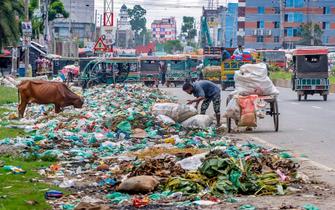
Khulna generates an estimated 1,000 tonnes of municipal waste daily, but only about 800 tonnes are formally collected, leaving roughly 200 tonnes dumped in waterways, vacant land and drains or burned in the open. The figures are based on truck counts rather than weighbridge measurements because the Rajbandh landfill, operating since 1977, has no functioning scale, engineered liner or leachate-treatment system. The city's waste stream is predominantly organic, increasing methane and public-health risks, while medical waste is often mixed with general refuse. Khulna City Corporation's own projections still leave 103 tonnes of daily waste unmanaged by 2040, despite planned infrastructure improvements. At the national level, Bangladesh's NDC 3.0 identifies waste as a major and growing emissions source but assigns zero unconditional domestic funding to its 2035 waste-sector reduction target; proposed infrastructure depends entirely on international finance. The investigation concludes that absent measurement systems, reconciled inventories and clear funding commitments undermine accountability for both municipal waste and national climate targets.

Municipal Waste Management Climate Change Greenhouse Gas Emissions Environmental Accountability Public Health Landfill Pollution Climate Finance Khulna, Bangladesh Sundarbans Delta Bangladesh Khulna City Corporation Ministry of Environment, Forest and Climate Change of Bangladesh
Estilo periodísticoInformativo

Primarily evidence-based investigative reporting grounded in official planning and climate documents, with some analytical and evaluative language about governance failures.

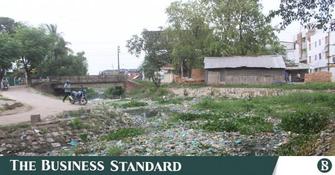
What Is Destroying Khulna Rivers?

The Business Standard 5 jun 2022 English

Khulna’s Mayur, Bhairab and Rupsha rivers are being heavily polluted by municipal waste because Khulna City Corporation lacks the capacity to collect and dispose of the city’s roughly 1,200–1,250 metric tonnes of daily solid waste. Water tests from the Mayur River show dangerously low dissolved oxygen, very high biochemical oxygen demand and excessive total dissolved solids, making the water harmful to aquatic life and public health. A sluice gate has eliminated the Mayur’s tidal flow, worsening waste accumulation from 22 drains that carry much of the city’s polluted water into the river. Researchers and environmental officials say the river should be rehabilitated, potentially turning it into a freshwater reservoir, while improved waste-collection infrastructure is needed to prevent further ecological damage.

River Pollution Waste Management Environmental Degradation Public Health Water Quality Khulna Bangladesh Mayur River Khulna City Corporation Bangladesh Department of Environment Khulna University Bangladesh Water Development Board
Estilo periodísticoInformativo

Predominantly factual reporting based on environmental measurements, research findings and statements from officials and experts, with limited interpretive framing.

Contratar Mensaje
×

Regístrate para enviar un mensaje a Awal

¿Ya tienes una cuenta? Iniciar sesión
¿Buscas trabajo? Regístrate como periodista
Verifica tu correo electrónico para completar el registro
Acabamos de enviar un correo electrónico a . Revisa tu bandeja de entrada y haz clic en el enlace para verificar tu dirección de correo electrónico y completar tu registro. Si no ves el correo, asegúrate de revisar tu carpeta de spam o correo no deseado.
¿No recibiste el correo electrónico?

Regístrate para desbloquear perfiles

¿Ya tienes una cuenta? Iniciar sesión
¿Buscas trabajo? Regístrate como periodista
Verifica tu correo electrónico para completar el registro
Acabamos de enviar un correo electrónico a . Revisa tu bandeja de entrada y haz clic en el enlace para verificar tu dirección de correo electrónico y completar tu registro. Si no ves el correo, asegúrate de revisar tu carpeta de spam o correo no deseado.
¿No recibiste el correo electrónico?