Hire journalists

Publishers & Broadcasters Content Marketing Teams PR & Comms Teams Risk & Intelligence Teams Find journalists Media Monitoring Pricing

For journalists

Journalism jobs Pay rates Create your free profile

About Barnabas

Barnabas Thondhlana is an internationally acclaimed journalist with over 30 years in the field. He has worked for Bloomberg News, Dow Jones, the United Nations and the African Union, among other organizations. He is comfortable covering any beat; be it Climate Change, Business, Social Issues Investigative Reporting or Environment.

Seen in
Africa in Fact Gga

Work 6

Zimbabwe's urban frontier

Africa In Fact 23 Apr 2026 English

Zimbabwe’s cities face severe infrastructure strain, entrenched informality, and governance conflicts driven by rapid urbanisation, weak municipal autonomy, and overlapping land tenure systems. Experts highlight how political interference, inadequate enforcement of laws, and fragile municipal finances obstruct long-term planning and service delivery. Expanding informal settlements, declining water and sewer systems, and limited formal employment illustrate how urban areas act as survival zones rather than engines of growth. Structural reforms including secure land tenure, strengthened local government, depoliticised administration, and proactive spatial planning are identified as essential for enabling Zimbabwe’s cities—especially Harare and Bulawayo—to support inclusive economic development.

Urbanisation Infrastructure Governance Economy Zimbabwe Harare Bulawayo Coalition for Market and Liberal Solutions Harare Residents Trust Bulawayo Residents Association Zimbabwe Republic Police Environmental Management Authority
Reporting styleBalanced

Mix of factual reporting and expert commentary

Political contextCentre

Focuses on governance issues without ideological framing
Smart cities represent a unique opportunity to harness the power of technology

Africa in Fact 10 Apr 2025 English

African cities are adopting smart technologies to address rapid urbanization, with initiatives ranging from smart water systems in Cape Town to intelligent traffic control in Lagos and digital education platforms in Addis Ababa. Zimbabwe’s Mount Hampden cyber city exemplifies large-scale investment-driven development, though experts warn of high costs and risks of inequality if smart systems rely solely on private funding. Inclusive models, such as drone‑assisted property titling in Epworth, demonstrate how smart technologies can support equitable infrastructure improvements. The success of smart cities will depend on policies that promote affordable technology, collaboration among key stakeholders, and planning that ensures benefits reach marginalized communities.

Smart cities Urban development Technology infrastructure African cities Africa Zimbabwe South Africa Malawi Communications Regulatory Authority Bulawayo Residents Association Harare town council Mick Pearce Winos Dube
Reporting styleInformative

Mostly factual reporting with limited interpretive commentary

Slaving over a hot stove

Africa in Fact 1 Oct 2024 English

Indoor air pollution from charcoal and firewood remains a major health threat in sub-Saharan Africa, causing high rates of respiratory illness and premature death, particularly among women and children. Despite efforts to restrict biomass use and promote cleaner technologies, dependence on solid fuels remains widespread due to energy poverty. Fuel-efficient cookstoves and biogas systems offer safer, more sustainable alternatives, but adoption has been slow, with large-scale projects in Zimbabwe and across the region falling short of targets. Continued support for clean cooking initiatives shows promise for reducing pollution, improving health outcomes and easing pressure on forest resources.

Indoor air pollution Energy poverty Public health Clean cooking technologies Deforestation Zimbabwe Sub-Saharan Africa Kenya World Health Organization UN Environment Programme International Renewable Energy Agency Africa Biogas Partnership Programme
Reporting styleInformative

Mostly factual reporting with limited subjective interpretation

A conflict of interest

Africainfact 23 Jan 2024 English

The article discusses the complex relationship between traditional leadership and multiparty governance in Zimbabwe, highlighting the accusations against traditional leaders for being partisan in elections and favoring the ruling party, ZANU-PF. It outlines the constitutional role of traditional leaders and the challenges in enforcing their neutrality. The article references the involvement of traditional leaders in the 2023 elections, where they were accused of intimidation and coercion. It also mentions a High Court judgment banning traditional leaders from partisan politics and the differing opinions on their role in politics. The article further discusses the development role of traditional leaders and the need for realignment of the Traditional Leaders Act to the Constitution, as well as the establishment of an Integrity and Ethics Committee for traditional leaders.

Politics Elections Traditional Leadership Governance Human Rights Zimbabwe South Africa Africa Zimbabwe Election Support Network (ZESN) Zimbabwe Human Rights Commission (ZHRC) National Chiefs Council Ministry of Local Government and Public Works

Zimbabwe's trust deficit

Africa In Fact 1 Apr 2023 English

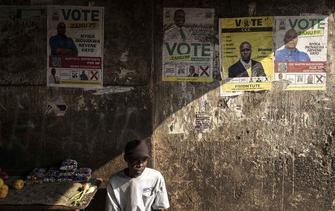
Zimbabwe faces widespread distrust in its electoral system as the opposition CCC and civil society accuse the ruling Zanu PF and the Zimbabwe Electoral Commission of undermining democratic processes ahead of the August elections. Analysts highlight constitutional manipulation, weaponisation of the judiciary, and shrinking civic space as core drivers of voter apathy and declining turnout. Human rights groups report escalating harassment of activists, while regional bodies are urged to intervene. Despite government claims of upholding good governance and pursuing reforms, international assessments show limited progress. Observers warn the country is heading toward a flawed election without inclusive political and constitutional reform.

Elections Governance Human Rights Rule of Law Zimbabwe Southern Africa Eswatini Zanu PF Citizens Coalition for Change Zimbabwe Electoral Commission Southern African Development Community African Development Bank
Reporting styleBalanced

Mix of factual reporting with analytical and critical viewpoints

Political contextCentre-left

Focus on democratic governance, civil liberties, and criticism of authoritarian practices

The high cost of slaving over a hot stove

Gga English

The article discusses the severe health and environmental issues caused by indoor air pollution in Africa and south-east Asia, particularly from the use of biomass for cooking and heating. It highlights the alarming number of deaths, especially among women and children, due to pollutants from burning firewood and charcoal. The piece references various reports and studies, including those by the WHO, UNEP, and Curtin University, to underline the gravity of the situation. It also explores the efforts to combat this issue, such as the introduction of fuel-efficient cookstoves and the adoption of biogas technology. Despite these initiatives, challenges remain, including changing traditional behaviors and the low uptake of biogas projects. The article emphasizes the need for sustainable solutions to address the health hazards and environmental impact of traditional cooking methods.

Indoor Air Pollution Health Hazards Energy Poverty Environmental Legislation Deforestation Greenhouse Gas Emissions Renewable Energy Biogas Technology Sustainable Development Africa South-East Asia Zimbabwe
Hire Message
×

Sign up to message Barnabas

Already have an account? Log in
Looking for work? Register as a Journalist
Verify your email to complete registration
We’ve just sent an email to . Please check your inbox and click the link to verify your email address and complete your registration. If you don’t see the email, be sure to check your spam or junk folder.
Didn’t receive the email?

Sign up to unlock profiles

Already have an account? Log in
Looking for work? Register as a Journalist
Verify your email to complete registration
We’ve just sent an email to . Please check your inbox and click the link to verify your email address and complete your registration. If you don’t see the email, be sure to check your spam or junk folder.
Didn’t receive the email?