Interview Putin-Carlson: Unveiling Lies About the Beginnings of Russia
Martí Noticias6 mars 2024Spanish
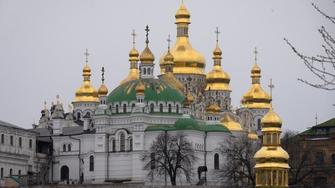
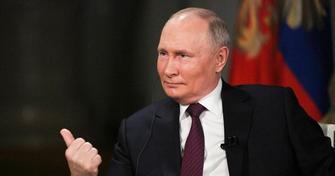
Vladimir Putin's interview with Tucker Carlson highlights the Russian president's use of historical propaganda to justify imperialism, particularly the false narrative of Russia's origins. The article debunks Putin's claims, emphasizing the distinct historical and cultural identity of Kyiv and its significance in the development of Eastern Christianity. It criticizes the Russian government's manipulation of history to assert territorial claims over Ukraine, drawing parallels to other historical contexts to illustrate the absurdity of such justifications.
Russian PropagandaHistory of RussiaUkraine-Russia RelationsRussiaUkraineKyivRussian GovernmentVladimir PutinTucker CarlsonJuan Pablo IIPríncipe RuríkPríncipe Volodymyr
Style rédactionnelInterprétatif
The text contains a mix of factual historical information and subjective analysis, particularly critical of Russian propaganda.
OpinionFactuel
Contexte politiqueGauche
The text criticizes imperialism and promotes historical accuracy, aligning with left-leaning perspectives on anti-imperialism.
Extrême gaucheExtrême droite
Opinion: Putin, in Favor of Hitler in His Fight Against Poland
Martí Noticias1 oct. 2023Spanish
The article critiques Vladimir Putin's historical revisionism, particularly his portrayal of Poland as a provocateur in World War II. It highlights Putin's use of propaganda to shift blame away from Nazi Germany and the Soviet Union, and criticizes Tucker Carlson for not challenging Putin's narrative during an interview. The text draws parallels between Poland's situation in 1939 and Ukraine's current conflict with Russia, condemning Putin's attempts to justify aggression. It also discusses the NordStream project as an example of Russian-German cooperation that undermines Eastern European countries.
Historical RevisionismWorld War IIRussian PropagandaPolandRussiaUkraineRussian GovernmentNazi GermanySoviet UnionVladimir PutinTucker CarlsonAdolf Hitler
Style rédactionnelOpinion
Complete opinion: The text is highly subjective, presenting a strong personal viewpoint and critique of Putin's historical narrative.
OpinionFactuel
Contexte politiqueGauche
The text criticizes authoritarian regimes and supports democratic values, aligning with left-leaning perspectives.
Extrême gaucheExtrême droite
Georgia 2008, the Forgotten War
Radio y Televisión Martí17 août 2023Spanish
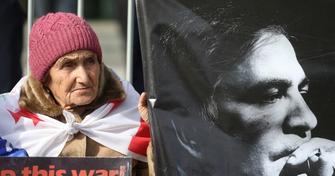
In August 2008, during the Beijing Olympics, Russia capitalized on the world's diverted attention to invade Georgia, a strategically important Caucasus country. This followed Georgia's pro-Western shift after the 2003 Rose Revolution and its aspirations to join the EU and NATO, which were stymied by opposition from Germany and France at the NATO summit in Bucharest. Russia's military preparations and use of separatism in Abkhazia and South Ossetia led to a Georgian military response, which Russia labeled as aggression, subsequently invading Georgia. The conflict ended with a ceasefire negotiated with the help of Eastern European leaders and the US, ensuring Georgia's independence but not the return of its separatist regions. The war's events were later depicted in the film '5 Days of War', with Andy García playing President Saakashvili.
War in GeorgiaRussian Military AggressionGeorgiaRussiaEastern EuropeNATOEuropean UnionUnited StatesVladimir PutinEduard ShevardnadzeMijeíl SaakashviliLech Kaczyński
Style rédactionnelÉquilibré
Contains historical analysis and subjective statements about political events
OpinionFactuel
Contexte politiqueCentre
The text provides a critical view of Russian actions, which may align with pro-Georgian and pro-Western perspectives
Extrême gaucheExtrême droite
OkDiario, at the service of Russian propaganda
Martí Noticias3 août 2023Spanish
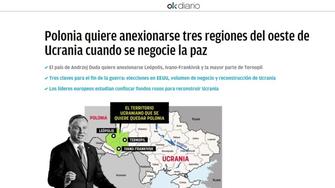
The article criticizes the Spanish website OkDiario for spreading Russian propaganda, specifically regarding false claims about Poland's intentions towards western Ukraine. It highlights the lack of verification of sources and the negative reactions from Polish officials and journalists. The piece underscores the historical context of Polish-Ukrainian relations and the ongoing Russian efforts to sow discord between Ukraine and Poland. It also emphasizes Poland's significant support for Ukraine in the current conflict and the mutual understanding between the two nations against Russian disinformation.
MediaPropagandaRussia-Ukraine WarPolandUkraineRussiaOkDiarioServicio de Inteligencia Exterior (SVR)Embassy of the Republic of Poland in MadridKulturaUnited NationsNATO
Style rédactionnelInterprétatif
The article contains subjective statements and persuasive language, particularly in its criticism of OkDiario and its alignment with Russian propaganda.
OpinionFactuel
Contexte politiqueCentre gauche
The article criticizes Russian propaganda and supports Ukraine, aligning with a center-left perspective.
Extrême gaucheExtrême droite
Russia and Poland clash over history
Elpais26 janv. 2020Spanish
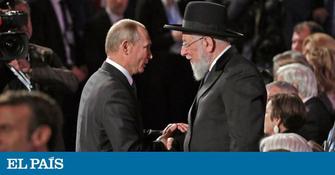
A diplomatic conflict is escalating between Russia and Poland over their respective roles in World War II. Russia accuses Poland of partial responsibility for the conflict, while Poland criticizes Russian President Vladimir Putin for political historical revisionism. The dispute is overshadowing events commemorating the liberation of Auschwitz by the Red Army. Putin's recent speech in St. Petersburg, where he defended the Ribbentrop-Molotov pact and blamed Poland for complicity with Nazi Germany, has intensified the controversy. Polish Prime Minister Mateusz Morawiecki has accused Putin of lying, suggesting Russia is using historical revisionism to distract from its internal and external issues. The conflict occurs amidst tense EU-Russia relations and criticism of Poland's government for undermining judicial independence and press freedom.
Diplomatic ConflictWorld War IIHistorical RevisionismRussiaPolandEuropean UnionEuropean ParliamentNATORussian Institute of Strategic StudiesVladimir PutinAndrzej DudaMateusz Morawiecki
Hybrid War in Catalonia? How the Kremlin was breaking the unity of Spain
Klubjagiellonski13 déc. 2019Polish
The article discusses how the Kremlin used Catalonia as a tool to destabilize Western states and create favorable conditions for Russian policy in Eastern Europe. It highlights Russian media manipulation during the 2017 Catalan independence referendum, the presence of a high-ranking Russian military intelligence officer in Catalonia during the referendum, and the separatist side's actions to seek diplomatic support from Russia. The article also examines the broader international context, including Russia's attempts to influence public opinion on national self-determination and the geopolitical implications for NATO and EU member states.
International RelationsPolitical CrisisCybersecurityCataloniaSpainRussiaRussian GovernmentNATOEuropean UnionDenis SiergiejewVictor TerradellasCarles Puigdemont
CZY MOSKWA UPOKORZYŁA UNIĘ? Dr Kaczorowski: Rosja tworzy fałszywe paralele
VidéoYouTube
Kaczorowski: To jest spór katalońsko-kataloński. Aktywny udział w promocji sporu bierze Rosja
VidéoYouTube
Unia Europejska - stan gry: nowe kryzysy i zmienne
VidéoYouTube
Franco Against Stalin
ActashistoriaSpanish
The book 'Franco Against Stalin' by Bartosz Kaczorowski explores the extent of Franco's regime's anti-communism during World War II. It details Franco's support for Hitler's Germany against Stalin's Russia, including the Blue Division's involvement and later attempts to align with the Allies to prevent the spread of Soviet influence in Europe. The book also discusses Franco's interactions with Franz von Papen to counter Hitler and achieve an 'acceptable' Germany for the Allies. Despite the failure of these initiatives, the book highlights Franco's efforts to form an anti-Soviet bloc of Western states and the eventual futility of Spanish diplomacy as Germany fell and the Red Army advanced. The work also touches on related historical events such as the German-Polish War of 1939 and the Russo-Finnish War of 1940, culminating in the Soviet occupation of Berlin and Germany's surrender.
World War IISpanish HistoryInternational RelationsSpainGermanySoviet UnionFranco RegimeNazi GermanyAllied PowersFrancisco FrancoAdolf HitlerJoseph Stalin
Nous respectons votre vie privée et utilisons un nombre limité de cookies pour fournir des fonctionnalités essentielles et améliorer votre visite. Aucun cookie publicitaire tiers n'est utilisé. Pour plus de détails, veuillez lire notre Politique en matière de cookies.