BS
Belinda Smart
Energy & Infrastructure · United Kingdom
Covers
Energy & Infrastructure
Services & Production
Environment & Climate
Business & Economy
Technology
Data & Analysis
Seen in
Published work
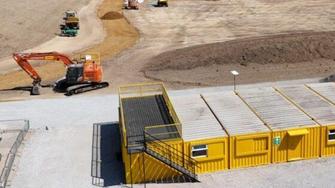
Farrans’ construction of Berkswell Battery Energy Storage System gets underway
Arup UKIMEA Managing Director on Thinking Differently About Resilience
Arup UKIMEA managing director Tom Wilcock argues that infrastructure resilience requires systems-based planning, collaboration across public and private organisations, and consideration of problems at multiple physical and time scales. He highlights digital tools including the Department for Transport’s National Transport Analysis Platform, the National Energy System Operator’s Virtual Energy System, digital twins, AI, agent-based modelling and surrogate models. Examples span national transport modelling, energy-system management, flood alleviation in Shanghai and pedestrian-wind analysis. Wilcock stresses that high-quality data, governance, shared standards and early stakeholder involvement are essential to ensure technology simplifies decisions and supports long-term investment, productivity and economic resilience.
CFD modelling promises bridge scour prevention cost efficiencies for Network Rail
Computational fluid dynamics (CFD) modelling is helping Network Rail assess bridge scour more accurately than conventional one- and two-dimensional hydraulic models, which can overestimate scour depth and lead to unnecessary or misdirected protection works. A case study at Shrewsbury railway station bridge over the River Severn found that a conventional model predicted a roughly 12m scour hole in the wrong location, while CFD identified a different location and a depth of just over 4m during a 200-year flood event. Integrated into Network Rail’s 2023 scour-assessment standard, CFD is being applied to dozens of structures to prioritize limited maintenance budgets, reduce intervention costs and evaluate effects on downstream flooding and ecology. Its broader purpose is to improve the resilience of railways and other infrastructure as climate-driven flooding increases.
How value engineering finetuned complex piling works around York's new railway overbridge
The new East Coast Main Line overbridge at York Central required 5,669 piles because of soft, variable ground, shallow groundwater, live rail infrastructure, utilities, historic railway fill, archaeology and potential unexploded ordnance. Bauer Technologies, Coffey Geotechnics and project partners used full displacement columns, full displacement piles and continuous flight auger piles to manage settlement, bearing capacity, groundwater and construction constraints. Finite element analysis and value engineering allowed pile numbers to be reduced at less-sensitive embankment shoulders, while dynamic load testing, low-spoil methods and HVO fuel improved cost, programme and carbon performance. Sisk Infrastructure completed the overbridge installation during the May 2026 Bank Holiday weekend, with the bridge expected to open in 2027 and provide access to the York Central regeneration scheme.
Silvertown Tunnel one year on: peak journey times reduced by up to 58 per cent, TfL reports
Transport for London’s first-year monitoring report says the Silvertown Tunnel has reduced peak journey times on the A102 approach to the Blackwall Tunnel by 58% in the morning and 47% in the evening. The crossing has improved network resilience, contributed to a 23% fall in over-height-vehicle incidents at Blackwall, and helped manage disruptions at Blackwall and Dartford. Nitrogen dioxide concentrations fell by an average of 17%, while bus use across the river increased substantially through the SL4, extended 129 and 108 routes. TfL, London Mayor Sadiq Khan and BusinessLDN welcomed the reported reductions in congestion and emissions, though cross-river traffic remains below pre-opening levels.
West Yorkshire Council’s Planned £14M Roads Investment Critical to Modal Shift
Calderdale Council plans to invest more than £14 million in its highways network over the next 12 months, including £1.87 million from the West Yorkshire Combined Authority for pothole repairs and resurfacing. Nearly £10 million will fund carriageway and footway repairs, more than £2 million will support structures and drainage, and £2.2 million will cover other maintenance, safer roads, rights of way and signal upgrades. The council says maintaining existing road space, while prioritising walking, cycling and public transport, is essential to achieving modal shift in West Yorkshire’s steep valleys and constrained historic streets. Inflation, supply-chain disruption and insufficient funding remain significant risks, with the network currently managed to slow deterioration rather than deliver major improvements.
‘Proactive engagement’ sees Severn Trent avoid penalty for ‘serious failings’ on wastewater and sewage management
Ofwat found that Severn Trent Water had seriously breached its duties to manage wastewater, drainage and sewer contents, as well as licence requirements for adequate systems. However, the regulator accepted enforceable undertakings instead of imposing a financial penalty because Severn Trent had already begun substantial remediation, funded £98 million by shareholders, and had engaged proactively with the investigation. Measures include expanded wastewater capacity, improved storm-overflow storage and nature-based flood resilience projects. Ofwat highlighted a 41% year-on-year reduction in storm-overflow spills per overflow in 2025 and described Severn Trent’s response as a standard for other water companies. The decision forms part of Ofwat’s wider investigation into England and Wales’ water sector, which has produced more than £300 million in enforcement packages and fines.
DESNZ Gives Green Light to Major Lincolnshire-Nottinghamshire Solar Farm, Signaling Greater Energy Certainty
The Department for Energy Security and Net Zero has granted development consent for the One Earth Solar Farm, a proposed solar-generation and battery-storage project spanning 1,600 hectares across Lincolnshire and Nottinghamshire. Developed by Perigus and PS Renewables, the project will exceed 50 MW, making it the UK’s second-largest solar farm, with construction expected to begin in late 2027. A six-month examination considered evidence and views from local communities, authorities and other interested parties. The approval follows government planning reforms intended to accelerate major infrastructure projects and record UK solar deployment in 2025. Dowladda links the scheme to reduced fossil-fuel dependence, lower bills and greater energy security.
Barhale Wins United Utilities Storm Overflow Reduction Scheme in Stockport
Barhale has been appointed by United Utilities to build a 1,000m³ detention tank at Bramhall Precinct in Stockport to reduce storm-overflow discharges into Micker Brook. The project involves diverting an existing sewer, sinking a 12.5m segmented caisson to a depth of 13.3m, and installing pumps, control systems, telemetry and power supplies. It forms part of United Utilities’ £13bn AMP8 wastewater investment programme, which aims to reduce storm-overflow spills by 60% before 2030. Completion is scheduled for early summer 2027.
AI infrastructure including data centres ‘squeezing’ capacity and driving skills shortage
Demand for AI infrastructure, particularly data centres, is concentrating construction activity while squeezing contractor capacity and worsening skilled-labour shortages. Turner & Townsend’s analysis of 112 markets across 44 countries identifies data centres as the most capacity-constrained global construction sector, with mechanical, electrical and plumbing trades especially affected; all UK respondents reported shortages in these areas. In the UK, defence is the best-performing sector, followed by data centres and industrial and logistics, while residential and office development remain subdued. Labour availability has become the main driver of cost escalation, with construction cost inflation expected to rise in the UK through 2027. The report calls for expanded training, recruitment and careful prioritisation of global projects amid geopolitical, energy and supply-chain risks.
Consultation opens on major upgrade proposals for Birmingham’s railways
An eight-week consultation has opened on proposed upgrades between Bordesley and Birmingham Moor Street as part of the Midlands Rail Hub. Plans include new railway connections, widened sections of the Bordesley viaduct, two additional platforms at Moor Street and the return of platform 5 to service. The scheme could add up to 300 trains a day, improve links across the Midlands, reduce congestion at Birmingham New Street and support jobs, housing and economic growth. The £123 million government-backed project will undergo a second consultation in 2027, with a Transport and Works Act Order application expected in early 2028.