BroadviewJewish CurrentsThe Globe and MailDaily Mail
Arbeiten 11
Who Is the Holy Spirit, Really?
Broadview Magazine16. Nov. 2026English
United Church minister and theologian Robert C. Fennell’s book Passion, Power, and Promise: Introducing the Holy Spirit examines who the Spirit is, what the Spirit does, and how United and Uniting traditions understand the Spirit’s presence. The book portrays the Spirit as active beyond church institutions, drawing Creation toward flourishing through invitation and hope rather than control or triumph. Fennell uses feminine pronouns for the Holy Spirit, grounding this choice in the Hebrew word ruach and Christian tradition. Reviewer Jun-Hyok Chon finds the book accessible and encouraging for ministers, scholars, and congregants, while noting that its account remains intentionally unfinished.
Christian TheologyHoly SpiritChristian SpiritualityBook ReviewCanadaNova ScotiaHalifaxUnited Church of CanadaAtlantic School of TheologyUnited and Uniting churchesRobert C. FennellJun-Hyok Chon
BerichtsstilInterpretierend
A strongly positive, evaluative review praises the book’s accessible theology and hopeful perspective, while noting that some readers may need time to adjust to its use of feminine pronouns for the Holy Spirit.
MeinungsbetontFaktenbasiert
Churches Take Canadian Refugee Policy to Court
Broadview Magazine13. Nov. 2026English
The Canadian Council of Churches has joined Amnesty International, the Canadian Council for Refugees and former refugee claimants in a Federal Court challenge to Canada’s Safe Third Country Agreement with the United States. The plaintiffs argue that returning asylum seekers—particularly 2SLGBTQ+ people, racialized women and children—to the U.S. exposes them to an inhumane system and violates equality rights under section 15 of the Charter. The Supreme Court previously found the agreement did not breach section 7, while sending the equality-rights issue back to the Federal Court. The churches’ participation continues a longstanding commitment to refugee support and legal advocacy.
Canadian Refugee PolicySafe Third Country AgreementAsylum SeekersRefugee RightsCharter of Rights and FreedomsCanadaUnited StatesCanadian Council of ChurchesAmnesty InternationalCanadian Council for RefugeesGovernment of CanadaSupreme Court of Canada
BerichtsstilInformativ
Mostly factual reporting, with advocacy perspectives attributed to the parties challenging the policy.
MeinungsbetontFaktenbasiert
Difficult few months for the United Church’s PAR program
Broadview Magazine12. Nov. 2026English
The United Church of Canada’s Pre-Authorized Remittance (PAR) donation system had payment errors in the early months of 2026, leading some donors and congregations to report incorrect, missed, or extra withdrawals. Executive minister Harry Li attributed the problems to the retirement of the longtime administrator, an office move, and a software upgrade during the busy year-end donation period. The church added temporary staff to clear a service-request backlog and introduced digital ticketing to track and resolve problems. Li said complaints had stopped by June and that the issues were largely resolved by early August. About 50,000 donors use PAR to support more than 2,400 United, Anglican, and Presbyterian churches.
United Church of CanadaPre-authorized donationsPayment processing errorsCanadaAnglican ChurchPresbyterian ChurchHarry LiJanice YoungPre-Authorized Remittance (PAR) program
BerichtsstilInformativ
Mostly factual reporting with attributed explanations and limited evaluative wording about service reliability.
MeinungsbetontFaktenbasiert
Who Really Wrote the Gospels?
Broadview Magazine12. Nov. 2026English
New Testament scholar Candida Moss discusses how enslaved scribes, messengers and communities helped shape biblical texts, challenging the idea that they were merely passive copyists. She argues that early Christian stories were continually adapted through oral performance and copying, and that translators should render the Greek word doulos consistently rather than soften its meaning. Moss also considers how the Gospels portray women, Jesus’s low-status working-class background, and bodily scars associated with enslavement. She rejects the claim that Christmas was simply stolen from pagan traditions and argues that public religious literacy is important to a just society, especially as religious journalism declines.
New Testament authorshipEarly ChristianityEnslaved people in the Roman worldBiblical interpretationChristianity and public discourseNew York CityRoman EmpireCanadaChristianityBBCWashington PostCandida Moss
BerichtsstilFaktenbasiert
Mostly factual interview presenting a scholar’s research and interpretations, with limited subjective commentary.
MeinungsbetontFaktenbasiert
What This Canadian Missionary Did During WWII Was Hidden for Decades
Broadview Magazine10. Nov. 2026English
Canadian missionary George Ernest Bott, long devoted to Japan, was repatriated to Canada after the 1941 attack on Pearl Harbor and later joined Ottawa’s secret Examination Unit, where his fluency in Japanese helped decode diplomatic messages. The intelligence contributed to Allied operations, including attacks on Japanese supply convoys, though Bott’s reasons for joining remain unknown. After the war, he returned to Japan to lead church-supported relief work through Licensed Agencies for Relief in Asia, which aided an estimated 14 million people. Bott also condemned Canada’s forced removal and deportation of Japanese Canadians. His intelligence service remained concealed after his death in 1952, leaving his legacy defined publicly by missionary work and humanitarian relief rather than espionage.
Canadian Wartime CodebreakingWorld War IIMissionary Work in JapanPostwar Humanitarian ReliefJapanese Canadian Internment and DeportationJapanCanadaOttawaExamination UnitUnited Church of CanadaCanadian Department of External AffairsGovernment of Canada
BerichtsstilInformativ
Primarily historical reporting, with some interpretive commentary about Bott’s motives and moral conflict.
MeinungsbetontFaktenbasiert
Yom Kippur, interrupted
Broadview Magazine24. Sept. 2026English
A shooting outside Belleville’s Sons of Jacob synagogue on Yom Kippur left Constable Jeff Smith critically injured and the alleged shooter, Sean Ward, dead. Blake Lambert argues that the incident underscores the need to confront rising antisemitism, while rejecting claims that criticism of Israel is inherently antisemitic. Citing polling that finds generally positive attitudes toward Jews but growing unfavorable views of Israel, Lambert criticizes B’nai Brith and CIJA for conflating the two and calls for Jewish institutions to build broader community alliances. The piece concludes that Jews must be protected from antisemitism and Israel must remain accountable for its actions in Gaza and the West Bank.
Yom KippurAntisemitism in CanadaBelleville synagogue shootingIsrael-Palestine conflictJewish identity and religious practiceCanadaBelleville, OntarioGazaB’nai BrithCentre for Israel and Jewish Affairs (CIJA)Canadian governmentBelleville Police Services
BerichtsstilMeinungsbetont
Opinion column advancing the author’s critical view of pro-Israel Jewish institutions and arguing both that antisemitism must be opposed and Israel must be held accountable.
MeinungsbetontFaktenbasiert
Politischer KontextMitte-links
Progressive perspective emphasizes opposing antisemitism while supporting criticism of Israel’s conduct and Palestinian rights.
Ganz linksGanz rechts
A Canadian Antisemitism Statistic Went Viral—But It Has No Source
Jewish Currents6. Aug. 2025English
An unverified claim that antisemitism in Canada rose 670 percent spread widely through Israeli government reports, media outlets, and pro-Israel advocacy organizations despite lacking a clear source. The figure traced back to an i24NEWS article citing the World Zionist Organization, though no WZO report used that number. The statistic became influential as pro-Israel groups used it to reinforce fears amid shifting Canadian public opinion and government policy on Israel, including support for a Gaza ceasefire, limits on arms sales, and potential recognition of Palestinian statehood. While antisemitic incidents have increased since October 2023, experts note inconsistencies in long-term data and argue that spikes correlate with Israeli military actions. Growing generational divides within the Canadian Jewish community and evolving national politics have heightened tensions, with inflated or unverified statistics serving efforts to maintain communal cohesion and political alignment.
AntisemitismIsrael-Palestine conflictCanadian politicsMedia accuracyCanadaIsraelGazaIsrael’s Ministry for Diaspora AffairsWorld Zionist OrganizationB’nai Brith CanadaCentre for Israel and Jewish AffairsIndependent Jewish Voices Canada
BerichtsstilAusgewogen
Reported with analysis and interpretive framing but grounded in factual investigation
MeinungsbetontFaktenbasiert
Politischer KontextMitte-links
Critical of pro-Israel institutional narratives while examining governmental policy shifts
Ganz linksGanz rechts
A Canadian Antisemitism Statistic Went Viral—But It Has No Source
Jewish Currents6. Aug. 2025English
A widely circulated claim that antisemitism in Canada rose 670 percent after October 7th has been found to lack any verifiable source, despite its repeated use by Israeli ministries, media outlets, and pro-Israel advocacy groups. The figure appears to originate from an i24NEWS report referencing unclear World Zionist Organization data, which does not contain the cited number. The statistic has fueled political narratives among Canadian Jewish institutions and conservative commentators at a time when Canadian public opinion and government policy have shifted toward greater criticism of Israel’s actions in Gaza. While antisemitic incidents have risen in Canada following October 7th, data remains complex and often conflated with political protest. Studies suggest that Canadian Jews’ sense of insecurity is strongly linked to emotional attachment to Israel. Meanwhile, Canada’s government has increasingly diverged from its historically pro-Israel stance, supporting ceasefire resolutions, pausing arms permits, sanctioning Israeli officials, and moving toward recognizing Palestinian statehood. These developments have prompted backlash from major Jewish institutions and Israel, which claim such actions contribute to rising antisemitism.
AntisemitismIsrael–Canada relationsData accuracy and misinformationCanadaIsraelGazaIsrael’s Ministry for Diaspora Affairs and Combating AntisemitismWorld Zionist OrganizationB’nai Brith CanadaCentre for Israel and Jewish AffairsIndependent Jewish Voices CanadaCanadian government
BerichtsstilAusgewogen
Mix of factual reporting with analytical and interpretive commentary, but generally grounded in verifiable data.
MeinungsbetontFaktenbasiert
Politischer KontextMitte-links
Focuses on government accountability, data accuracy, and critiques of pro-Israel institutional politics within Canada.
Ganz linksGanz rechts
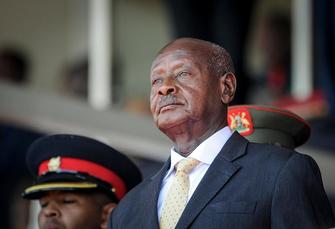
Opinion: It’s been 15 years since I was expelled from Uganda. I have changed – the country has not
The Globe and Mail15. März 2021English
Fifteen years after being expelled from Uganda, Blake Lambert reflects on the unchanged political landscape under President Yoweri Museveni, who continues to consolidate power through authoritarian measures. Despite personal growth and changes in his own life, Lambert highlights the persistent issues of corruption, media suppression, and political repression in Uganda. The article criticizes the Ugandan government's actions, including the manipulation of elections and suppression of opposition, while expressing hope for change and the potential for unforeseen events to disrupt the status quo.
Uganda PoliticsMedia FreedomPersonal ReflectionUgandaCanadaUnited StatesUgandan GovernmentUganda Media CentreVision Media GroupWorld BankUganda Communications CommissionYoweri Museveni
BerichtsstilInterpretierend
The article is largely opinion-based, reflecting personal experiences and subjective views on Uganda's political situation.
MeinungsbetontFaktenbasiert
Politischer KontextLinks
The article criticizes authoritarian practices and supports media freedom and democratic principles.
Ganz linksGanz rechts
Opinion: In 2021, let’s all step outside our comfort zones
The Globe and Mail1. Jan. 2021English
Blake Lambert reflects on his personal journey of stepping outside his comfort zone by learning to play the saxophone and performing jazz, drawing parallels to the broader discomforts brought by the COVID-19 pandemic. He emphasizes the importance of embracing vulnerability and courage, as advocated by Brené Brown, and highlights the potential for personal growth and societal improvement despite the challenges faced during the pandemic.
COVID-19 PandemicPersonal GrowthMusicCanadaHumber CollegeRyerson UniversityThe Canadian PressBlake LambertBrené BrownFela Kuti
BerichtsstilMeinungsbetont
Subjective and personal reflections on stepping outside comfort zones during the COVID-19 pandemic.
MeinungsbetontFaktenbasiert
Alle 11 Arbeiten mit einem kostenlosen Konto ansehen
Wir respektieren Ihre Privatsphäre und verwenden eine begrenzte Anzahl von Cookies, um wesentliche Funktionen bereitzustellen und Ihren Besuch zu verbessern. Es werden keine Werbe-Cookies von Dritten verwendet. Weitere Einzelheiten finden Sie in unserer Cookie-Richtlinie.