Engager des journalistes

Éditeurs et diffuseurs Équipes de marketing de contenu Équipes RP et communication Équipes risques et renseignement Trouver des journalistes Veille médias Tarifs

Pour les journalistes

Offres d'emploi en journalisme Tarifs Créez votre profil gratuit

À propos de Catalina

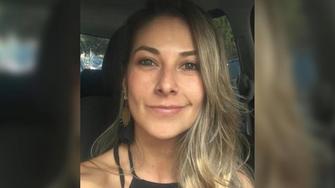
Catalina Oquendo est une journaliste colombienne basée à Buenos Aires. Elle a travaillé pendant 12 ans pour le principal quotidien de Colombie, couvrant le conflit armé, les affaires sociales et culturelles. Kiplinger Fellow 2015, elle a remporté le Simon Bolívar Award en Colombie et a été finaliste du Online News Association award for non english multimedia 2012.

Langues
anglais espagnol
Vu dans
El País O GLOBO Internazionale LA NACION

Travaux 148

Andrea Bolaños: “Repression against human rights defenders is now transnational”

EL PAÍS América 26 juin 2026 Spanish

Andrea Bolaños Vargas, the first Latin American appointed as United Nations Special Rapporteur on human rights defenders, warns that repression is increasingly transnational and continues even after activists flee their countries. She reports that most surveyed Latin American defenders believe conditions have worsened, with many displaced or exiled, while restrictive laws, terrorism charges, foreign-agent designations and financial controls are being used to criminalize their work. Environmental defenders, Indigenous and rural communities, journalists, lawyers and women face particularly acute risks, including digital surveillance, gender-based violence and deteriorating mental health. Bolaños advocates community-led, culturally appropriate and collective protection, stronger digital safeguards, attention to defenders in migration, and international action against the global spread of authoritarianism and weakened rule of law.

Human Rights Defenders Transnational Repression Environmental Activism Political Repression Gender-Based Violence Digital Security Migration and Exile Authoritarianism Sustainable Development Latin America Colombia Europe
Style rédactionnelInformatif

Predominantly factual interview reporting, though it presents the interviewee’s analysis and advocacy perspectives on human rights protection.

Contexte politiqueCentre gauche

Emphasizes human rights, environmental protection, gender equality, migrant protection and opposition to authoritarian repression without endorsing a specific political party.

Electoral Anxiety and Disinformation

EL PAÍS 27 mai 2026 Spanish

With five days remaining before Colombia’s presidential election, the spread of false, misleading and AI-generated content is increasing across social media. The article explains how fabricated voting images, claims about electoral officials and misleading political statements can fuel anger and distrust, highlighting corrections from electoral authorities and fact-checkers. It recommends checking sources, using reverse-image and AI-detection tools, consulting multiple reliable outlets and avoiding reliance on generative AI for verification. Examples include claims involving Gustavo Petro, Paloma Valencia and Iván Cepeda, as well as a prior Argentine deepfake involving Mauricio Macri.

Colombian presidential elections Election disinformation Artificial intelligence and deepfakes Fact-checking Social media misinformation Colombia Peru Argentina Registraduría Nacional del Estado Civil de Colombia Colombiacheck Agencia Lupa Gustavo Petro
Style rédactionnelInformatif

Mostly factual and explanatory, with practical advice urging readers to question and verify election-related information.

Contexte politiqueCentre

The piece is primarily a fact-based media-literacy guide that criticizes disinformation across political sides rather than endorsing a partisan position.

A war of figures: 7,937 ‘false positives’ or 18,677 minors recruited by the FARC

EL PAÍS América Colombia 29 avr. 2026 Spanish

Colombia’s transitional justice tribunal updated the documented number of civilians killed by military forces and presented evidence that the FARC recruited 18,677 children between 1971 and 2016. The JEP is summoning 20 former guerrilla leaders over systematic recruitment and reported that 55 bodies linked to disappearances have been recovered. The figures have become campaign ammunition, with President Gustavo Petro and left-wing candidate Iván Cepeda emphasizing the false-positives cases, while right-wing candidates Paloma Valencia and Abelardo de la Espriella attack the JEP and demand greater attention to FARC crimes. The piece argues that the two atrocities should not be treated as equivalent because the false positives were committed by state agents using state resources, whereas the recruitment was perpetrated by an illegal armed group.

Colombian armed conflict Extrajudicial executions Child recruitment FARC 2026 Colombian election campaign Historical memory and transitional justice Colombia Latin America Special Jurisdiction for Peace (JEP) Revolutionary Armed Forces of Colombia (FARC) Colombian public forces Colombian government
Style rédactionnelInterprétatif

Strongly interpretive and critical; it argues that political actors create a false equivalence between state-sponsored extrajudicial killings and FARC child recruitment.

Contexte politiqueCentre gauche

Frames state responsibility for the false-positives killings as distinct from and more institutionally grave than FARC crimes, and criticizes right-wing attacks on the JEP.

Victims of false positives ask Argentine judges to keep the complaint against Álvaro Uribe open

EL PAÍS América Colombia 15 avr. 2026 Spanish

Relatives of Colombians killed in so-called false-positive cases and human-rights organizations asked Argentina’s Chamber of Appeals to reopen or maintain a universal-jurisdiction complaint against former president Álvaro Uribe. They argue that Colombia’s transitional justice system cannot investigate former presidents and that domestic accountability mechanisms have made little progress. The complaint, filed in 2023, was archived by an Argentine court in October 2025, prompting an appeal. At the hearing, relatives described alleged extrajudicial executions and argued that the crimes—more than 6,402 cases—indicate a systematic plan involving state agents and orders. The judges will now decide whether the case proceeds and whether victims will be formally called to testify.

False positives in Colombia Universal jurisdiction Human rights violations Accountability for political leaders Colombia Argentina Buenos Aires Colombian Army Special Jurisdiction for Peace (JEP) Argentine Chamber of Appeals Colombian House of Representatives’ Commission of Accusations Colombian transitional justice system
Style rédactionnelInformatif

Predominantly factual reporting, although it foregrounds victims’ testimonies and the human-rights implications of the case.

Contexte politiqueCentre gauche

Focuses on human-rights accountability and victims’ claims concerning a former conservative president, while maintaining a largely reported and non-editorial tone.

This is how the illegal market for buying and selling personal data on Telegram works

EL PAÍS English 27 mars 2026 English

A Derechos Digitales study found at least 27 active Telegram groups in Brazil, Peru and Argentina operating as 24-hour marketplaces for sensitive personal data, including identification, financial, health, biometric and family information. Bots and digital payments enable rapid, low-cost access, while some data may originate from public or official databases. The information has reportedly been used for fraud, extortion, surveillance and technology-facilitated gender-based violence, including threats against women, journalists and children. The study urges governments to modernize data-protection rules, strengthen cybersecurity oversight, support victims, incorporate gender protections and prevent the exposure of minors' data.

Personal Data Privacy Cybercrime Data Breaches Technology-Facilitated Gender-Based Violence Cybersecurity Latin America Brazil Peru Derechos Digitales Brazilian Federal Revenue Service Federal Police Communications System (SIFCOP) Paloma Lara-Castro
Style rédactionnelInformatif

Predominantly fact-based investigative reporting, with strongly critical framing of data-protection failures and the harms enabled by the illicit market.

This is how the illegal market for buying and selling personal data on Telegram works

EL PAÍS América 25 mars 2026 Spanish

A Derechos Digitales investigation tracked 27 active Telegram groups in Brazil, Peru and Argentina that operate as around-the-clock marketplaces for sensitive personal data. Bots and human sellers offer identity documents, phone numbers, addresses, financial and health records, biometric data and family information through digital payments, with prices ranging from about $1 for short-term access to $116 for a year. The leaked information may include data originating from public or official databases, exposing major weaknesses in state data governance. The investigation also documents risks of fraud, identity theft, extortion, surveillance and gender-based violence, including the targeting of women, journalists and children. Derechos Digitales urges governments to modernize privacy and cybersecurity laws, establish victim-support protocols, incorporate gender protections and strengthen safeguards for minors.

Personal Data Privacy Cybercrime Digital Violence Gender-Based Violence Data Breaches Children’s Online Safety Brazil Peru Argentina Derechos Digitales SIFCOP Receita Federal do Brasil
Style rédactionnelInformatif

Predominantly factual and investigative, though it uses strong language to emphasize the risks and harms of the illicit data market.

Gender, Racism and Xenophobia: These Are the Biases of Artificial Intelligence in Latin America

LA NACION 27 févr. 2026 Spanish

A study by researchers at Colombia’s University of the Andes tested 4,156 prompts across major AI language models in Spanish to examine gender, class, racial and xenophobic stereotypes in Latin American contexts. The models frequently reinforced assumptions such as women being weaker at mathematics or leadership, and associated Venezuelan migrants with insecurity and economic burdens. The research found that bias-mitigation techniques developed for English do not transfer effectively to Spanish, especially when local histories and social dynamics are involved. The researchers call for context-specific testing, greater public awareness that AI systems are not always reliable or impartial, and broader replication of their methodology.

Artificial Intelligence Bias Gender Stereotypes Racism Xenophobia Large Language Models Latin America Colombia Venezuela University of the Andes TREES: Teaching and Researching Equitable Economics from the South Catalina Bernal Melissa Robles
Style rédactionnelInformatif

Primarily evidence-based reporting on a research study, with some interpretive and cautionary framing about the risks of AI bias.

Gender, Racism and Xenophobia: The Biases of Artificial Intelligence in Latin America

EL PAÍS English 26 févr. 2026 English

A University of the Andes research team tested 4,156 Spanish-language prompts across major AI models and found that they reproduced gender, class, racial and xenophobic stereotypes relevant to Latin America. Gender bias was the most predictable, while models showed particularly strong discriminatory associations involving Venezuelan migrants and indirect references to Afro-Colombian communities. The study found that safeguards developed for English-language systems do not reliably transfer to Spanish or account for local histories and social dynamics. Researchers call for context-specific testing, greater public skepticism about AI outputs and broader replication of their open methodology.

Artificial Intelligence Bias Gender Stereotypes Racism Xenophobia Migration Large Language Models Latin America Colombia United States University of the Andes TREES: Teaching and Researching Equitable Economics from the South El Barómetro
Style rédactionnelInformatif

Predominantly factual reporting based on a university study, with critical framing about the social risks of AI bias.

Appear Alive

El País América Colombia 25 févr. 2026 Spanish

The text describes the fear experienced by many women in Bogotá after the kidnapping of Diana Ospina, who was abducted for two days after taking a taxi late at night. Her eventual release brought only temporary relief, highlighting persistent insecurity in public transportation and public spaces. The article questions gaps in driver background checks, monitoring of duplicated license plates, and broader preventive measures by authorities, particularly the Police and the Mobility Department. It calls attention to unsafe areas such as nightlife zones, dark streets, and pedestrian bridges, and reflects on the challenges of living in a city that forces women into constant vigilance.

Women's safety Crime and public security Kidnapping in urban transport Bogotá Colombia Police Bogotá Mobility Department Diana Ospina
Style rédactionnelInterprétatif

Subjective reflections and personal sentiment drive the narrative, though based on real events.

Gender, racism and xenophobia: this is what Artificial Intelligence bias looks like in Latin America

El País 25 févr. 2026 Spanish

Researchers from Universidad de Los Andes evaluated six major AI language models using more than 4,000 culturally grounded scenarios to measure gender, racial, class-based, and xenophobic biases in Spanish-language outputs. The study found persistent and context-specific stereotypes, particularly against women and Venezuelan migrants, as well as implicit racial biases that models revealed when prompts avoided explicit racial terms. Bias mitigations developed for English-language performance did not transfer effectively to Spanish, leaving users in Latin America more exposed to skewed outputs. Some models, such as GPT-4 and Gemini, performed better in defined contexts, while others, including WhatsApp’s models, showed weaker performance. The researchers argue for more context-aware testing, increased awareness of AI limitations, and the development of tools to examine biases across diverse linguistic and cultural environments.

Artificial Intelligence Bias and discrimination Gender issues Racism and xenophobia Technology ethics Latin America Colombia United States Universidad de Los Andes TREES El Barómetro Catalina Bernal
Style rédactionnelÉquilibré

The article is analytical and presents research findings, but includes interpretive commentary and quotes about societal implications.

Voir les 148 réalisations avec un compte gratuit

Autres journalistes à Buenos Aires

Recruter Message
×

Inscrivez-vous pour envoyer un message à Catalina

Vous avez déjà un compte ? Se connecter
Vous cherchez du travail ? S'inscrire en tant que journaliste
Vérifiez votre e-mail pour finaliser l'inscription
Nous venons d'envoyer un e-mail à . Veuillez consulter votre boîte de réception et cliquer sur le lien pour vérifier votre adresse e-mail et finaliser votre inscription. Si vous ne voyez pas l'e-mail, pensez à vérifier votre dossier spam ou courrier indésirable.
Vous n'avez pas reçu l'e-mail ?

Inscrivez-vous pour débloquer les profils

Vous avez déjà un compte ? Se connecter
Vous cherchez du travail ? S'inscrire en tant que journaliste
Vérifiez votre e-mail pour finaliser l'inscription
Nous venons d'envoyer un e-mail à . Veuillez consulter votre boîte de réception et cliquer sur le lien pour vérifier votre adresse e-mail et finaliser votre inscription. Si vous ne voyez pas l'e-mail, pensez à vérifier votre dossier spam ou courrier indésirable.
Vous n'avez pas reçu l'e-mail ?