CB
Chris Berry
Services & Production · United Kingdom
Covers
Services & Production
Business & Economy
Environment & Climate
Food & Drink
Social Issues & Demographics
Arts & Culture
Seen in
Published work
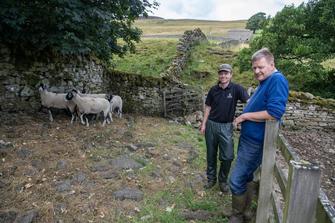
Summer Lodge Farm, Swaledale: Muker Show's a gem, but the competition is fierce
Soil science is promoting prosperity as red clover transforms Oak House Farm
North Yorkshire farmer Mike Powley says a rotation based on three years of red clover and ryegrass has significantly improved soil health, crop yields, cattle feed and farm efficiency at Oak House Farm. The system has increased earthworm numbers, reduced cultivation, fertiliser and diesel use, cut machinery and chemical costs, and restored severely degraded land. Powley also links the approach to improved beef production and carbon sequestration, and will present his experience at the Yorkshire Farming Conference in Harrogate.
The Yorkshire farmer living his dream and following in the footsteps of his nanna
Stephen Frankland is expanding Willen Tree Farm near Bentham while working in a joinery business. Inspired by his late grandmother Isobel Chapman, he has grown the farm from four acres and 15 older ewes to 110 acres, 150 breeding sheep and a small pedigree Charolais herd. The Yorkshire Agricultural Society’s Goodall Agri-Development Pathway has strengthened his business skills and confidence, and he hopes eventually to build a house on the farm, increase his flock to 300–400 breeding ewes and expand his cattle herd to around a dozen animals.
Woolas Barn: The Yorkshire farm with a historic barn which doubles as a wedding venue
Woolas Barn, a wedding venue created from three historic farm buildings at Woolas Grange in Appleton Roebuck, hosts about 30 weddings annually from April to October. Farmer James Mills developed the enterprise after returning to the family’s 500-acre farm following Brexit, seeking to diversify income as UK agricultural support changed. The Mills family manages most venue operations alongside arable farming and sheep production, supported by external catering expertise. The farm grows wheat, barley, beans and occasional oats, uses direct drilling and cover crops, and participates in two Sustainable Farming Incentive schemes. Mills also discusses declining crop prices, weak malting premiums, farm storage and marketing arrangements, and concerns that a proposed EU-UK sanitary and phytosanitary alignment could restrict farmers’ access to approved crop-protection products.
The farming family putting turkeys on Yorkshire dinner tables this Christmas
The Kemp family farms at Glebe Farm in Barton-le-Street and Springfield Farm in Horsforth are raising and selling 350 Bronze turkeys for Christmas customers across North and West Yorkshire. The birds are reared outdoors for most of their lives, brought inside because of avian flu precautions, and dry-hung before collection. Turkey production provides additional farm income alongside a 700-acre livestock and arable operation and pick-your-own businesses. Rory and Will Kemp have shifted the farm toward grassland and suckler cattle because of blackgrass problems and weak cereal prices, while considering future grass-fed beef sales and changes to the Sustainable Farming Incentive.
North Yorkshire Reindeer: The Hard-Working Young Yorkshire Farmer Who Juggles Two Jobs with His Own Reindeer Herd
Twenty-four-year-old Masham farmer Mason Dibb combines work on two farms with his own suckler-cattle herd and North Yorkshire Reindeer, a 14-animal Scandinavian reindeer enterprise. During the four weeks before Christmas, up to three teams attend more than 60 events across Yorkshire and beyond, including schools, care homes, businesses, airports and sports venues. Dibb says each team performs no more than one event a day and avoids harnesses and bells to protect animal welfare. His herd expanded from two reindeer bought in 2021, and two calves were born in May 2025. He also manages nearly 50 cattle and hopes eventually to buy his own farm.
Meet the Young Yorkshire Couple Taking the Horse Training World by Storm
Alex Wilson and Esme Howell are building a racehorse-training operation at Foulrice Farm in Stearsby while balancing childcare, employment, art and photography work. Wilson recorded six point-to-point wins last season, earning the Yorkshire Area title as leading trainer with five or fewer horses, while Hollywood Harmon and jockey Pippa Brown also received honors. The couple now care for eight horses and are preparing new entrants—including Glencorp, A Piece of the Moon and Muddagent—for the upcoming season. Wilson hopes to secure a full trainer's licence and move into full-time training within the next 12 to 18 months, while Howell continues her equestrian photography, pet portraits and plans to showjump retired racehorse Tanora.
The Festive Farm Shed, Bradford: The Yorkshire family farm which has found a festive formula for success
The Festive Farm Shed at Rapefield Farm near Bradford has developed a successful seasonal business selling Yorkshire-grown Christmas trees and wreaths while offering wreath-making, farm visits and meetings with Father Christmas. Run by Lisa Leach with support from the wider Leach family, it has built a niche by providing a quieter, more inclusive experience for families, including children who are homeschooled or autistic. The farm also diversifies through lambing and Halloween events, alongside its mixed livestock operation and long-running milk round. Recent growth includes additional land, expanded cattle and pig numbers, and a robotic calf feeder that has improved monitoring, reduced calf pneumonia and lowered veterinary costs.
“It has been a tough couple of years” – Yorkshire arable farmer on the potent mix for cereal producers
Yorkshire arable farmer and NFU West Riding County Chair Richard Pears describes a second successive difficult year, with yields down 20% because of poor weather and crop-establishment problems alongside falling grain prices. He criticizes uncertainty over the Sustainable Farming Incentive and future environmental land-management schemes, the impact of proposed inheritance-tax changes on older farmers, and delays following the Defra ministerial reshuffle. On his 550-acre farm near Sherburn in Elmet, Pears is cutting costs, adopting GPS, variable-rate technology and minimum tillage, and diversifying cereal production while the NFU continues lobbying for clearer support and fairer supply chains.
Willow Farm Produce, Butterwick: The Yorkshire Farm Selling Handmade Christmas Wreaths Across the Country
Sally and Neil Fairweather have expanded Willow Farm Produce in Butterwick from producing about 300 Christmas wreaths to around 1,200 annually, with most sold directly online and shipped across the UK. Their natural wreaths, made without plastic decorations, form the largest part of a broader business that also includes a plant nursery, hanging baskets, honey and cattle. Sally manages the horticulture and beekeeping operations while Neil works on an arable farm and helps with the family cattle enterprise. The couple plan to continue growing the business as demand for locally produced, natural goods increases.
Fylingdales Moor: The Yorkshire farm running on ‘survival mode’ after huge moor fire
Yorkshire farmer Will Terry says he is operating in “survival mode” as his farm faces failed crops, reduced support payments, rising uncertainty over inheritance tax and the wider effects of climate change. The 4,500-acre Fylingdales Moor fire added major stress for Terry and neighboring farms, forcing livestock evacuations and leaving prolonged risks from smoke and flare-ups. Terry argues that inheritance tax could prompt landlords to sell farmland or raise rents, reducing the number of farmers and domestic food production while changing the landscape. Despite the financial and political pressures, he remains committed to farming and believes that change and continued consumer support can help the sector adapt.
Lister’s Crisps: The Farming Family Behind the Crisps Which Are ‘Born and Bagged in Yorkshire’
Tom and Laura Platt have grown Lister’s Crisps from a one-acre operation using a converted garage into an on-farm factory producing 60,000–70,000 bags a week. The family grows the potatoes, processes and seasons them, and packages the crisps at Sandhall Farm near Howden. The business employs seven people, sells through independent retailers and farm shops, and is expanding nationally. Cheese and onion is the best-selling flavour, followed by steak and ale. Alongside the crisp business, the Platts farm potatoes, cereals, peas and cattle, although they report mixed potato yields and a difficult potato market.