Engager des journalistes

Éditeurs et diffuseurs Équipes de marketing de contenu Équipes RP et communication Équipes risques et renseignement Trouver des journalistes Veille médias Tarifs

Pour les journalistes

Offres d'emploi en journalisme Tarifs Créez votre profil gratuit

À propos de David

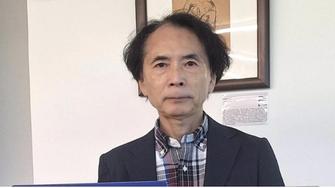
David Bandurski est le directeur exécutif du China Media Project, une organisation basée aux États-Unis, avec un bureau à Taipei, qui est l'une des principales autorités mondiales sur les médias et la politique en RPC, ainsi que sur les médias mondiaux en langue chinoise. Il est l'auteur de Dragons in Diamond Village (Penguin/Melville House), un livre de reportage sur l'urbanisation et l'activisme social en Chine, et co-éditeur de Investigative Journalism in China (HKU Press). Bandurski est un journaliste basé à Taipei, Taïwan. Site web du CMP : **** Sur Substack : **** Tian Jian (un magazine pour la pérennité du journalisme en langue chinoise) : ****

Sujets
Langues
chinois anglais japonais
Vu dans
China Media Project Lingua Sinica Dissent Magazine Commonwealth Magazine Made in China Journal

Travaux 119

China's Communication Centers Stumble

China Media Project 18 déc. 2025 English

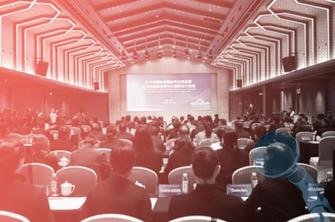
China’s rapid expansion of local and regional international communication centers faces deep structural problems, including resource imbalances, poor coordination across administrative levels, homogenized content, and ineffective distribution strategies on global platforms. Scholars highlight that reliance on government budgets, lack of professional talent in inland regions, weak differentiation among accounts, and superficial performance metrics prevent these centers from engaging foreign audiences. Proposed reforms emphasize cross-regional collaboration, clearer multi-tier role divisions, professionalized content production, and data-driven evaluation. Despite these recommendations, the underlying contradiction remains: the system is constrained by its purpose as a vehicle for state propaganda rather than genuine audience engagement, limiting the potential for meaningful improvement.
Chinese propaganda Media policy Government communication strategy China Chinese Communist Party China International Communications Group Central Propaganda Department Xinhua News Agency CGTN Media Regulation Bureau Xi Jinping Huang Dianlin
Style rédactionnelÉquilibré

Analytical and critical tone with interpretive commentary mixed with factual description.

Global Dreams in Small Town China

China Media Project 12 déc. 2025 English

Local governments across China are rapidly establishing international communication centers as part of Xi Jinping’s push to expand China’s global discourse power. While some provincial-level centers, particularly those targeting Southeast Asia, are well-resourced and active, newer local-level initiatives such as Yichun’s third communication center illustrate how national ambitions can lead to exaggerated claims and limited real-world impact. The expansion reflects Xi’s broader effort to counter perceived Western discourse dominance by blending centralized propaganda control with widespread local implementation, though the effectiveness of these smaller operations remains questionable.

Chinese propaganda strategy Discourse power International communication Local government media initiatives China Jiangxi Yichun Chinese Communist Party International Communication Centers China Media Group China Daily Xinhua
Style rédactionnelÉquilibré

Analytical tone with interpretive commentary on political strategy

Contexte politiqueCentre

Analytical discussion of Chinese political strategy without clear partisan advocacy

AI Cop Signals VPN Crackdown

China Media Project 13 nov. 2025 English

China’s Ministry of State Security has redeployed its AI anchor Agent 012339 to warn citizens against using VPNs, framing them as risks to personal security, national security, and ideological purity. The messaging highlights alleged dangers such as financial fraud, foreign intelligence control, remote device compromise, and exposure to politically sensitive information. Citizens are urged to avoid VPNs entirely and rely on state‑approved channels for legitimate needs. The campaign encourages reporting VPN users via the 12339 hotline, underscoring broader efforts to tighten information control and monitor attempts to access foreign content.

Internet Censorship Surveillance Chinese Politics China Ministry of State Security State-owned enterprises Agent 012339 VPNs
Style rédactionnelÉquilibré

Analytical tone with some interpretive commentary about government messaging

Contexte politiqueCentre

Primarily descriptive analysis of government censorship practices without explicit ideological positioning

Beyond Blue and White

China Media Project 10 nov. 2025 English

Former Global Times editor Hu Xijin criticized the growing reliance of Chinese authorities on terse "blue background" notices that prevent independent reporting and limit public understanding of major incidents. He argued that these practices undermine communication and weaken societal resilience, urging local governments to allow journalists greater access. The article highlights how major outlets increasingly reproduce these official statements without verification, including the Global Times' coverage of an investigation into Taiwanese legislator Shen Bo-yang. While Hu maintained loyalty to the Communist Party’s overarching control of the press, he stressed that journalists must be allowed to function meaningfully to support effective governance.

Press Freedom Media Control in China Chinese Politics China Taiwan Chongqing Communist Party of China Global Times Chongqing Public Security Bureau The Paper The Beijing News Hu Xijin
Style rédactionnelInterprétatif

Contains analysis and subjective critique of media controls and political practices.

Contexte politiqueCentre gauche

Critical of government information controls and supportive of greater journalistic autonomy.

Talking Heads in Taiwan

Lingua Sinica 28 oct. 2025 English

A Japanese political scientist, Yoshiyuki Ogasawara, accused Taiwan’s China Times of fabricating and distorting his analysis of the Kuomintang leadership election, replacing his description of Cheng Li-wen’s pro‑China stance with softer language and inventing quotes he never wrote. Ogasawara publicly demanded corrections, citing professional integrity. Although the China Times deleted the article, it has not issued a formal correction.

Taiwan politics Media ethics Misinformation Taiwan China Japan Kuomintang (KMT) National Tsing Hua University Yoshiyuki Ogasawara Cheng Li-wen China Times
Style rédactionnelInformatif

Mostly factual reporting with limited subjective language about media distortion.

Beijing Frames the Trump Visit

China Media Project 28 oct. 2025 English

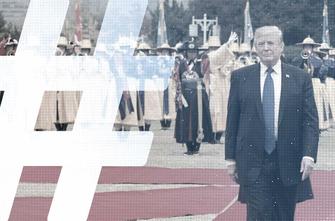
Chinese state media rolled out coordinated commentaries ahead of expected US–China diplomacy during President Trump’s Asia trip, using pseudonymous People’s Daily bylines representing central leadership consensus. The pieces emphasized trade openness, warned against protectionism, and highlighted survey data on support for APEC cooperation, showcased earlier during a media cooperation forum in Seoul used to shape favorable public opinion. A second commentary reported progress in US–China trade talks and reiterated Beijing’s stance that cooperation is mutually beneficial. Together, the messaging reflects a deliberate effort to shape elite expectations before high‑level meetings in Seoul.

China foreign policy US–China relations Media influence and propaganda Trump Asia visit China South Korea United States People's Daily Chinese Communist Party APEC Donald Trump Xi Jinping
Style rédactionnelÉquilibré

Analytical assessment with interpretive commentary but grounded in factual reporting

Foreign Voices for Xi's Global Vision

China Media Project 17 oct. 2025 English

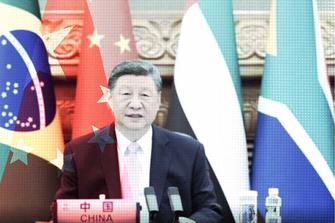
Foreign commentators are being used in Chinese state media to endorse Xi Jinping’s four major global initiatives ahead of the Fourth Plenum and the UN anniversary. An Algerian parliamentarian is featured praising China’s leadership as part of a broader propaganda strategy to create external legitimacy for Beijing’s geopolitical agenda. The coverage promotes China’s narrative of an emerging multipolar order and frames the decline of a US-led unipolar system as inevitable, reinforcing internal and external messaging around China’s role as a responsible global power.

Chinese propaganda International relations CCP politics China United States Global South Chinese Communist Party People's Daily United Nations Qiushi Xi Jinping Abdelkader Berrich
Style rédactionnelInterprétatif

Analytical and interpretive tone evaluating propaganda tactics rather than presenting strictly factual reporting.

Contexte politiqueCentre

Analytical critique of state propaganda without expressing partisan alignment.

Xi Jinping's Global Quartet

China Media Project 16 oct. 2025 English

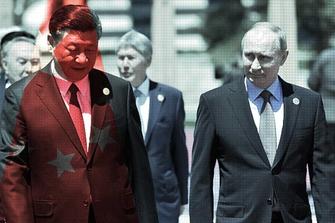
China consolidates four major foreign policy frameworks into a unified set of global initiatives promoted through Xi Jinping’s newly published article in Qiushi, positioning these as solutions to global deficits in peace, development, security, and governance. State media links the effort to upcoming political milestones and advances a revisionist narrative emphasizing the CCP’s historical and future leadership role while downplaying the Republic of China’s contributions. The initiatives challenge Western values, assert the primacy of state authority, and criticize U.S. policies through coded language, ultimately framing China as the global alternative at a moment of geopolitical uncertainty.

Chinese politics Global governance International relations China United States United Nations Chinese Communist Party People's Daily Qiushi Shanghai Cooperation Organization Republic of China Xi Jinping
Style rédactionnelÉquilibré

Analytical tone combining factual reporting with interpretive commentary on political messaging.

The Repetition Complex

China Media Project 12 oct. 2025 English

A coordinated series of eight commentaries in the People’s Daily, written under the pen name Zhong Caiwen by teams within the Central Propaganda Department and the Central Financial and Economic Affairs Commission, promotes confidence in China’s economic future through repeated endorsement of Xi Jinping Economic Thought. The messaging seeks to counter growing domestic and international concerns over China’s economic slowdown, acknowledging issues such as weak demand and business difficulties while emphasizing long-term resilience. Released ahead of the CCP’s Fourth Plenum, the articles aim to shape the political narrative before major policy discussions. The heavy reliance on repetition, however, exposes underlying insecurities in official communication and risks undermining the credibility of the intended message.

Chinese economy Propaganda Xi Jinping China United States European Union Chinese Communist Party People’s Daily Central Propaganda Department Central Financial and Economic Affairs Commission Zhong Caiwen
Style rédactionnelInterprétatif

Strong analytical and interpretive tone with clear subjective judgments about political messaging and credibility.

Contexte politiqueCentre gauche

Critical of authoritarian political communication and state-controlled economic messaging.

Oil Giant Adds Fuel to Soft Power Push

China Media Project 7 juil. 2025 English

China's strategy to enhance its international communication capabilities involves the establishment of numerous international communication centers (ICCs), including a new center by the China National Petroleum Corporation (CNPC). This initiative aligns with the Chinese Communist Party's directive to improve global communication effectiveness, as emphasized during the CCP's Third Plenum. The CNPC's center aims to promote China's petroleum narrative and was inaugurated with participation from media representatives across Africa and the Middle East. The broader effort includes similar centers across China, such as the Pujiang International Communication Center, focusing on local cultural narratives. These developments highlight China's commitment to projecting its narratives globally, though the article suggests maintaining a critical perspective on these efforts.

International Communication Chinese Propaganda Oil Industry China Africa Middle East Chinese Communist Party Economic Daily China Daily Angola National Radio Burundi Economic News Congo News Agency
Style rédactionnelÉquilibré

The article presents a mix of factual reporting and subjective interpretation, particularly in its tone and language regarding China's international communication strategy.

Contexte politiqueCentre gauche

The article discusses state-led initiatives and international communication strategies, reflecting a focus on state influence and soft power.

Voir les 119 réalisations avec un compte gratuit

Recruter Message
×

Inscrivez-vous pour envoyer un message à David

Vous avez déjà un compte ? Se connecter
Vous cherchez du travail ? S'inscrire en tant que journaliste
Vérifiez votre e-mail pour finaliser l'inscription
Nous venons d'envoyer un e-mail à . Veuillez consulter votre boîte de réception et cliquer sur le lien pour vérifier votre adresse e-mail et finaliser votre inscription. Si vous ne voyez pas l'e-mail, pensez à vérifier votre dossier spam ou courrier indésirable.
Vous n'avez pas reçu l'e-mail ?

Inscrivez-vous pour débloquer les profils

Vous avez déjà un compte ? Se connecter
Vous cherchez du travail ? S'inscrire en tant que journaliste
Vérifiez votre e-mail pour finaliser l'inscription
Nous venons d'envoyer un e-mail à . Veuillez consulter votre boîte de réception et cliquer sur le lien pour vérifier votre adresse e-mail et finaliser votre inscription. Si vous ne voyez pas l'e-mail, pensez à vérifier votre dossier spam ou courrier indésirable.
Vous n'avez pas reçu l'e-mail ?