Éditeurs et diffuseurs Équipes de marketing de contenu Équipes RP et communication Équipes risques et renseignement Journalistes et professionnels des médias Veille médias Tarifs

À propos de David

DAVID DEMBELE est journaliste et formateur basé à Bamako, Mali.

Langues
anglais français
Vu dans
ZAM Le Monde.fr Al Jazeera The Colonist Report Africa - Bring local environment, climate and energy stories across Africa

Travaux 8

No one is safe: Civilians, foreigners caught in escalating Mali violence

Al Jazeera 10 juil. 2025 English

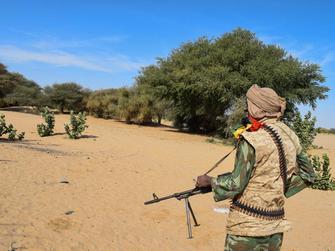
A surge in coordinated attacks by al-Qaeda-linked JNIM across western and central Mali has intensified insecurity and exposed weaknesses in the Malian army despite support from Russian Africa Corps paramilitaries. Civilians and foreigners, including three Indian nationals taken hostage, are increasingly at risk as violence escalates. Experts warn that the military-led government’s security strategy is failing, with poor troop deployment, limited local intelligence integration, and an overreliance on military force. Political tensions have deepened following the dissolution of political parties and a new law granting transitional leader Assimi Goita a renewable five-year presidential term. Russia’s role has shifted toward economic agreements despite waning security effectiveness since Wagner’s withdrawal. As attacks spread to previously stable regions, analysts caution that Mali faces a prolonged cycle of violence with no immediate political or security solution in sight.
Armed conflict in Mali Terrorism in the Sahel Political instability Russian involvement in Africa Mali Sahel Russia Malian Army JNIM ISGS Africa Corps Wagner Group
Style rédactionnelÉquilibré

Mixture of factual conflict reporting and expert commentary containing subjective assessments of security and political strategies.

Contexte politiqueCentre gauche

Critical of military rule, concerned with human rights and governance issues, but focused on analytical reporting rather than ideological framing.

Indian battery recycling company that cuts Malians air

The Colonist Report Africa 9 janv. 2024 English

In Sanankoroba, Mali, residents are battling severe air pollution caused by the Indian company SAGL MALI Recyclers SARL's battery recycling plant. The plant's emissions have led to widespread health issues, including respiratory and skin illnesses. Despite acknowledging the pollution, the company's director insists on regulatory compliance. Local authorities and the Marlian government face criticism for inadequate action and transparency. The community, supported by activists, demands the plant's closure or relocation, citing ongoing environmental and health hazards.

Environmental Pollution Health Issues Industrial Practices Sanankoroba Mali India Sanankoroba Health Centre Marlian government Kumar Jagdish Djeneba Coulibaly Binkè Koné Moussa Koné
Style rédactionnelInterprétatif

The article contains a mix of factual reporting and subjective testimonies from locals and employees, indicating a moderate level of opinion.

Contexte politiqueGauche

The article highlights environmental and health issues caused by industrial practices, often associated with left-leaning perspectives.

A show for the funders

ZAM Magazine 24 juin 2021 English

The article investigates the mismanagement and corruption surrounding Mali's COVID-19 relief funds. Businessman Boubacar Thiam and other donors contributed to a voluntary fund, but the money's fate remains unclear. The government, led by Prime Minister Boubou Cissé, failed to provide transparency, and much of the aid did not reach the intended beneficiaries. Development partners like the EU, IMF, and World Bank provided substantial funds, but these were also mismanaged. Health workers and poor communities received little to no support, while government officials and certain businesses benefited. The article highlights the lack of accountability and the ongoing need for aid in Mali.

COVID-19 Corruption Aid Mali Bamako Timbuktu Mali Government Ministry of Finance IMF EU World Bank APBEF
Style rédactionnelInterprétatif

The article contains a mix of factual reporting and subjective statements, particularly regarding the mismanagement and corruption allegations.

Mozambique | The hundred-thousand-dollar workshops

ZAM Magazine 23 juin 2021 English

Cabo Delgado, Mozambique, faces a severe humanitarian crisis exacerbated by militant attacks and the COVID-19 pandemic. Despite a $670 million COVID-19 relief budget from international donors, little aid has reached the province. Investigations reveal mismanagement and corruption, with funds diverted to unrelated expenses and military purchases. Local health facilities, supported by NGOs, struggle with inadequate resources. The Mozambican government and provincial authorities show a lack of transparency and accountability, raising concerns about the effective use of international aid.

COVID-19 Pandemic Corruption Humanitarian Crisis Cabo Delgado Mozambique Maputo Doctors without Borders Red Cross IMF World Bank EU Mozambican Government
Style rédactionnelInterprétatif

The article contains investigative reporting with subjective insights into corruption and mismanagement.

Contexte politiqueGauche

Critiques government corruption and mismanagement, highlighting social justice issues.

Mali: the Archbishop of Bamako sheltered millions of euros in Switzerland

Le Monde 31 mai 2017 French

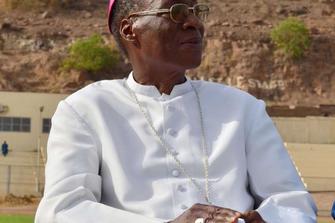
In 2002, seven discreet bank accounts were opened for the Conférence épiscopale du Mali (CEM) at Crédit lyonnais in Monaco, later transferred to HSBC Private Bank in Geneva. By 2007, these accounts held 12 million euros. The scandal, revealed by SwissLeaks in 2015, involves top CEM leaders, including Archbishop Jean Zerbo, who was recently made a cardinal. The funds' origins and management remain opaque, causing unrest among Mali's Christian community. Despite denials and evasions from involved parties, the lack of transparency and potential misuse of church funds have led to significant controversy.

Financial Scandal Religion Mali Switzerland France Conférence épiscopale du Mali HSBC Private Bank Crédit lyonnais ICIJ Vatican Jean Zerbo Jean-Gabriel Diarra
Style rédactionnelÉquilibré

The article contains a mix of factual reporting and subjective statements, particularly regarding the opinions of various stakeholders.

The Siren Call

ZAM 22 mars 2016 English

A transnational investigation across Kenya, Somalia, Mali, Burkina Faso and Nigeria argues that military-only counterterrorism strategies can strengthen jihadist recruitment by combining state abuse with poverty, marginalization and weak governance. In Kenya, alleged police and military disappearances, torture and extrajudicial killings alienate Somali communities and help Al-Shabaab recruit. In Somalia and northern Mali, insurgents gain acceptance where corrupt or absent governments fail to provide security, justice, jobs and public services. Burkina Faso activists oppose both jihadist violence and an expanded Western military presence, warning that it may reinforce authoritarian networks. Nigeria offers a more hopeful example: Radio Dandal Kura, improved military conduct under President Muhammadu Buhari and cooperation with local youth volunteers appear to have increased trust and weakened Boko Haram, though poverty, displacement and the future demobilization of armed vigilantes remain major risks. The investigation concludes that accountable, rights-respecting and effective governance is more important to lasting security than intensified militarization alone.

Jihadist Recruitment Counterterrorism Human Rights Abuses Governance and Corruption Poverty and Marginalization Political Violence East and West Africa Kenya Somalia Al-Shabaab Boko Haram Kenyan Defence Forces
Style rédactionnelInterprétatif

Investigative reporting grounded in interviews and documented evidence, but framed by a strong editorial argument that militarized counterterrorism and poor governance fuel jihadist recruitment.

Contexte politiqueCentre gauche

Strongly supports human rights, democratic accountability and functional public institutions, while criticizing authoritarianism, corruption and Western militarization without endorsing a revolutionary or partisan ideology.

In Mali, Imam Dicko Launches Campaign Against Homosexuals

Le Monde 16 déc. 2015 French

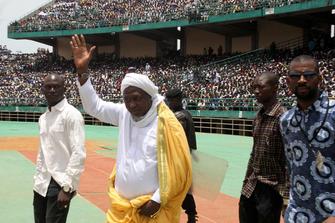
Imam Mahmoud Dicko, a prominent religious leader in Mali, has sparked controversy with his homophobic remarks, linking terrorism to the presence of homosexuals and Western influence. His statements have incited homophobia in the capital's mosques and drawn criticism from human rights activists and legal authorities. Despite backlash, his supporters defend his views, reflecting deep-seated conservative beliefs. The political silence on the issue highlights the influence of religious leaders in Mali's political landscape.

Homophobia Religious Extremism Terrorism Mali France Haut Conseil islamique malien Minusma Barkhane Mahmoud Dicko Ibrahim Diaby Moussa Mallé Alioune Ifra N’Diaye
Style rédactionnelOpinion

Complete opinion: The article is filled with subjective statements and personal beliefs, particularly from Imam Dicko and his supporters.

Contexte politiqueCentre

The article discusses extreme conservative views, particularly regarding homosexuality and Western influence.

https://panamapapers.investigativecenters.org/mali/ https://www.icij.org/journalists/daviddembele/ https://twitter.com/alcofris

Lien Ccij

Autres journalistes à Bamako

Voir tous les journalistes à Bamako
Recruter Message
×

Inscrivez-vous pour envoyer un message à David

Vous avez déjà un compte ? Se connecter
Vous cherchez du travail ? S'inscrire en tant que journaliste
Vérifiez votre e-mail pour finaliser l'inscription
Nous venons d'envoyer un e-mail à . Veuillez consulter votre boîte de réception et cliquer sur le lien pour vérifier votre adresse e-mail et finaliser votre inscription. Si vous ne voyez pas l'e-mail, pensez à vérifier votre dossier spam ou courrier indésirable.
Vous n'avez pas reçu l'e-mail ?

Inscrivez-vous pour débloquer les profils

Vous avez déjà un compte ? Se connecter
Vous cherchez du travail ? S'inscrire en tant que journaliste
Vérifiez votre e-mail pour finaliser l'inscription
Nous venons d'envoyer un e-mail à . Veuillez consulter votre boîte de réception et cliquer sur le lien pour vérifier votre adresse e-mail et finaliser votre inscription. Si vous ne voyez pas l'e-mail, pensez à vérifier votre dossier spam ou courrier indésirable.
Vous n'avez pas reçu l'e-mail ?