Journalisten engagieren

Verlage & Sender Content-Marketing-Teams PR- & Kommunikationsteams Risiko- & Intelligence-Teams Journalisten finden Medienbeobachtung Preise

Für Journalisten

Stellenangebote im Journalismus Honorare und Tarife Kostenloses Profil erstellen

Über Diane

Bonjour! Ich bin Diane de Vignemont, freiberufliche Journalistin mit Sitz in Paris. Ich schreibe über Politik und Geschichte für verschiedene Publikationen, sowohl in englischer Sprache (New Lines Magazine, Prospect Magazine, Truthdig, The Persistent...) als auch in französischer Sprache (Libération, L’Humanité, Arrêt sur images, Causette Magazine, Têtu· Magazine, Retronews, France-Amérique Magazine…). In letzter Zeit recherchiere ich außerdem die historischen Wurzeln obstetrischer und gynäkologischer Gewalt. Als Politik- und Kulturreporterin werde ich häufig von Medien wie Democracy Now!, Al Jazeera, the Canadian Broadcasting Corporation, the BBC, the Australian Broadcasting Network und NPR interviewt. Ich habe einen Abschluss von SciencesPo Paris und einen masters’ degree in contemporary history von der University of Oxford.

Sprachen
Englisch Französisch Spanisch
Gesehen in
Newlinesmag Prospectmagazine

Arbeiten 13

How France’s Religious Nationalists Hijacked the Pope’s Visit

New Lines Magazine 29. Sept. 2026 English

France’s identitarian Catholic movement used Pope Leo XIV’s 2026 visit to showcase its influence ahead of a presidential election. The article traces the movement across wealthy donors, media, politicians, traditionalist groups and online influencers, identifying symbolic choices during the visit—including a cross supplied by SOS Calvaires, a historically dubious relic backed by conservative billionaires, a nationalist-style stadium spectacle and the selection of Place de la Concorde for Mass—as signs of a coordinated effort to attach an exclusionary account of French identity to the pope’s public image. Leo, by contrast, praised France’s diversity and has opposed ultratraditionalist currents. Organizers gave the visit an inclusive aim, but the convergence of these interventions, the piece argues, risked legitimizing identitarian politics.

French Identitarianism Christian Nationalism Catholic Church Far-Right Politics Pope Leo XIV’s Visit to France Immigration and National Identity France Paris Seine-Saint-Denis SOS Calvaires National Rally Society of Saint Pius X
BerichtsstilInterpretierend

Critical, interpretive reporting argues that French identitarian groups used the papal visit to advance a far-right political and cultural agenda.

Politischer KontextMitte-links

Critical of far-right nationalism and exclusionary identity politics, while emphasizing diversity and the risks of political capture of religious events.
The Dark History Behind This Week’s Schism in the Catholic Church

New Lines Magazine 2. Juli 2026 English

The Society of Saint Pius X ordained four bishops without papal approval in Switzerland, prompting renewed attention to its conflict with the Catholic Church and the possibility of schism. The piece argues that the movement cannot be understood simply as nostalgic traditionalism: its founder, Marcel Lefebvre, supported Vichy leader Philippe Pétain and authoritarian regimes, while SSPX institutions sheltered convicted collaborator Paul Touvier and prominent figures made antisemitic and Holocaust-denying statements. It links the group's history to contemporary French far-right Catholicism, including Civitas, and contends that this genealogy shapes how the ordinations are understood in France.

Catholic Church schism Society of Saint Pius X French far-right Catholicism Antisemitism Holocaust denial Vichy regime France Switzerland United States Catholic Church National Front Civitas
BerichtsstilInterpretierend

Strongly critical commentary argues that the SSPX's break with Rome is rooted in a far-right history of collaborationism, antisemitism and Holocaust denial.

Politischer KontextMitte-links

Critical of far-right Catholic currents and their antisemitic and authoritarian history; the analysis is framed through a French perspective.

Minneapolis Protests Sound a Lot Like the French Resistance

New Lines Magazine 30. Jan. 2026 English

Drawing on historians of the French Resistance, Diane de Vignemont examines how Minneapolis communities have organized against a major federal immigration-enforcement surge. The essay argues that useful lessons lie not in treating the United States as occupied France, but in defending truth, building on existing local relationships, dividing resistance work among visible and behind-the-scenes roles, recognizing danger early, and balancing digital visibility with security. Minneapolis networks rooted in earlier mutual-aid and organizing efforts provide food, transport, childcare, legal support, and real-time information as protests spread. The historians also stress that outside solidarity, funding, and attention can sustain people confronting repression. The comparison has limits, but the history offers practical guidance while warning that networks can be infiltrated and visibility can endanger participants.

Minneapolis protests U.S. immigration enforcement French Resistance World War II Civil resistance Mutual aid networks Deportation Minneapolis, United States France United States U.S. Immigration and Customs Enforcement (ICE) U.S. Customs and Border Protection (CBP)
BerichtsstilInterpretierend

The essay advances a clear argument for lessons from resistance history and uses personal, morally charged framing, while acknowledging limits to the comparison.

Politischer KontextMitte-links

Critical of Trump administration immigration enforcement and sympathetic to protest and mutual-aid efforts, while explicitly cautioning against equating the United States with occupied France.

A Royal Veto Keeps Abortion Illegal in Monaco

New Lines Magazine 12. Dez. 2025 English

Prince Albert II vetoed draft bill no. 267, which had passed Monaco’s National Council by 19 votes to two and would have legalized abortion up to 12 weeks, or 16 weeks in cases of rape. The decision came despite a survey finding 80% support for legalization, leaving abortion largely illegal in Monaco and requiring many women to travel to France. The essay traces the restrictions to the principality’s constitutional status for Catholicism and the monarchy’s political authority, while describing the financial and practical risks women face across the border. The government offered a sexual-health roadmap and free, anonymous gynecological consultations for young women, but lawmakers and advocates criticized the veto as a setback for women’s rights.

Abortion Rights Reproductive Rights Monaco's Monarchy and Constitution Catholicism and Politics Women's Health Monaco France Europe Monaco National Council Government of Monaco Catholic Church in Monaco Planned Parenthood
BerichtsstilInterpretierend

Strongly critical of the royal veto and Monaco’s religiously rooted restrictions, advocating for women's reproductive rights.

Politischer KontextMitte-links

Rights-focused, critical of religiously grounded restrictions and supportive of abortion access, while reporting opposing arguments.

Even Before the Heist, the Louvre Had Been Robbed

New Lines Magazine 23. Okt. 2025 English

The October 2025 Louvre jewel heist exposed years of deteriorating security, understaffing and deferred maintenance at France’s most prominent museum. The article argues that governments, particularly under Emmanuel Macron, have celebrated national heritage while cutting cultural budgets and failing to address warnings from museum staff and auditors. It details security gaps at the Louvre and similar thefts at other museums, alongside funding reductions and a costly expansion plan that critics say prioritizes spectacle over urgent repairs. The author concludes that the theft symbolizes a broader erosion of culture as a public good and a failure of state stewardship.

Louvre Heist Museum Security French Cultural Funding Cultural Heritage Austerity France Paris Louvre Museum French Ministry of Culture French government National Rally SUD trade union
BerichtsstilInterpretierend

Strongly critical argument that state budget cuts and neglect have left French museums vulnerable.

Politischer KontextMitte-links

Critiques austerity and privatization while arguing for stronger public investment in cultural institutions.

A Plane Crashed in the Desert. Thirty-Five Years Later, It Would Help Take Down Nicolas Sarkozy

New Lines Magazine 6. Okt. 2025 English

A Paris court sentenced former French president Nicolas Sarkozy to five years in prison for criminal conspiracy over efforts by his associates to secure Libyan support for his 2007 campaign, reportedly in exchange for diplomatic and judicial concessions to Abdullah al-Senussi. Although the court acquitted him of corruption and embezzlement and prosecutors could not prove that the funds found in campaign circles came from Libya, it ruled that pursuing the arrangement itself betrayed public trust. The court also recognized the families of the 170 people killed in the 1989 UTA Flight 772 bombing as victims, awarding symbolic damages. Their testimony underscores how the alleged negotiations over Senussi reopened grief and made the victims’ pursuit of justice feel like a bargaining chip in Sarkozy’s political rise.

Sarkozy-Libya affair UTA Flight 772 bombing Political campaign finance Terrorism French judicial proceedings France Libya Niger French Republic Paris Criminal Court Libyan regime NATO
BerichtsstilInformativ

Mostly factual reporting, with a strong narrative emphasis on the victims’ grief and the moral significance of the court’s ruling.

Four Decades After His Imprisonment, France Can’t Stop Fighting Over Georges Abdallah

New Lines Magazine 25. Juli 2025 English

Georges Ibrahim Abdallah was released to Lebanon on July 25, 2025, after more than 40 years in French prison for complicity in the 1982 killings of U.S. and Israeli diplomats. The article traces how his 1987 life sentence and repeated parole denials were shaped by France’s 1980s bombing panic, disputed evidence, and U.S. pressure, including intervention that blocked an approved release in 2013. Although the court’s 2025 decision cited his age, the dissolution of his group, and the absence of recent threats, it reignited a polarized debate: supporters call him a political prisoner, while opponents consider him an unrepentant terrorist. The dispute reflects deeper concerns about France’s justice system, foreign influence, anti-Arab prejudice, and the framing of political violence; Abdallah’s return to Lebanon also raises concerns about his safety.

Georges Ibrahim Abdallah French justice system Political violence Terrorism France-Lebanon relations Pro-Palestinian activism Political polarization France Lebanon Palestine Lebanese Armed Revolutionary Factions French government
BerichtsstilInterpretierend

Reported historical and legal facts, but frames the case through a critical analysis of political interference, anti-Arab prejudice, and France’s polarized debate.

Politischer KontextMitte-links

Critically examines foreign influence, far-right rhetoric, and prejudice, while also acknowledging Abdallah’s militant history and violence.

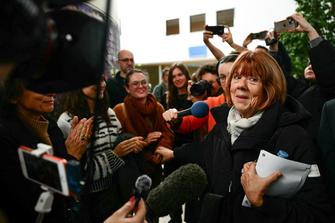
Gisele Pelicot: Finding Sisterhood at France’s Mass Rape Trial

New Lines Magazine 27. Nov. 2024 English

The article covers the mass rape trial in France, focusing on Gisele Pelicot, who waived her anonymity to make the proceedings public. The trial, involving over 200 rapes and 51 men on trial, has become a symbol of solidarity and sisterhood, drawing women from various backgrounds to support Gisele. Her decision has sparked a movement against sexual violence, with increased hotline calls and a national march. The trial highlights the inadequacies of the French legal system in addressing consent and rape. Gisele's courage has inspired a collective reckoning, transforming her into an icon of resistance and change.

Mass Rape Trial Sexual Violence Solidarity and Sisterhood France Avignon Mazan French Legal System Les Amazones Gisele Pelicot Dominique Pelicot Nicolas F. Antoine Camus
BerichtsstilInterpretierend

The article contains subjective statements and personal beliefs, particularly in its portrayal of Gisele Pelicot as a symbol of resistance and the emotional responses of those attending the trial.

Politischer KontextMitte-links

The article discusses social justice issues and advocates for societal change regarding sexual violence.

How an American Film in 1984 Shaped the ‘Fetal Personhood’ Movement

New Lines Magazine 25. Okt. 2024 English

Bernard Nathanson's 1984 film The Silent Scream used ultrasound footage and dramatic narration to portray a 12-week fetus as a person experiencing fear and pain during abortion. Though medical organizations and experts challenged its claims as inaccurate and its imagery as misleading, the film gained wide exposure through Ronald Reagan, Jerry Falwell and conservative networks, shifting abortion debate toward emotionally powerful images of fetal life. Scholars argue that this framing helped move fetal personhood from religious discourse into politics while obscuring pregnant women. Its visual strategy continues in crisis pregnancy centers, ultrasound campaigns, apps and restrictive laws, including heartbeat bills, and has contributed to fetal personhood's growing influence in the United States.

Abortion Fetal Personhood The Silent Scream Ultrasound Technology Abortion Politics in the United States United States Washington, D.C. France National Association for the Repeal of Abortion Laws (NARAL) U.S. Supreme Court U.S. Congress Moral Majority
BerichtsstilInformativ

Primarily reported and historically grounded, but uses interpretive framing about the film's cultural and political impact.

Politischer KontextMitte-links

Critical of anti-abortion political messaging and its effects on reproductive rights, while presenting historical context and multiple perspectives.

How Argentina’s Disappeared Took Center Stage in Paris

New Lines Magazine 2. Aug. 2024 English

The essay recounts how Argentine exiles, French activists and artists built a transnational campaign against Argentina’s 1976–83 military dictatorship. Paris became a center of solidarity, from the 1978 campaign to boycott Argentina’s World Cup to demonstrations supporting the Madres de Plaza de Mayo and AIDA’s theatrical 1981 march, which carried 100 banners representing disappeared Argentine artists. The activism helped publicize the junta’s abuses and, according to participants and memory officials, contributed to international pressure as Argentina returned to democracy in 1983. Former organizers argue that the movement’s example remains relevant amid current threats to cultural institutions and human rights.

Argentina’s Dirty War Enforced Disappearances Political Exile International Solidarity Human Rights Activism Theatre and Political Protest Argentina-France Relations Argentina Paris France International Association for the Defense of Artist Victims of Repression in the World (AIDA) Argentine military junta
BerichtsstilInformativ

Primarily historical reporting grounded in interviews and documented events, with some interpretive framing and advocacy for preserving memory.

Alle 13 Arbeiten mit einem kostenlosen Konto ansehen

Engagieren Nachricht
×

Registrieren Sie sich, um Diane eine Nachricht zu senden

Haben Sie bereits ein Konto? Anmelden
Suchen Sie Arbeit? Als Journalist registrieren
Verifizieren Sie Ihre E-Mail, um die Registrierung abzuschließen
Wir haben gerade eine E-Mail gesendet an . Bitte prüfen Sie Ihren Posteingang und klicken Sie auf den Link, um Ihre E-Mail-Adresse zu verifizieren und Ihre Registrierung abzuschließen. Falls Sie die E-Mail nicht sehen, prüfen Sie unbedingt Ihren Spam- oder Junk-Ordner.
E-Mail nicht erhalten?

Registrieren Sie sich, um Profile freizuschalten

Haben Sie bereits ein Konto? Anmelden
Suchen Sie Arbeit? Als Journalist registrieren
Verifizieren Sie Ihre E-Mail, um die Registrierung abzuschließen
Wir haben gerade eine E-Mail gesendet an . Bitte prüfen Sie Ihren Posteingang und klicken Sie auf den Link, um Ihre E-Mail-Adresse zu verifizieren und Ihre Registrierung abzuschließen. Falls Sie die E-Mail nicht sehen, prüfen Sie unbedingt Ihren Spam- oder Junk-Ordner.
E-Mail nicht erhalten?