Éditeurs et diffuseurs Équipes de marketing de contenu Équipes RP et communication Équipes risques et renseignement Journalistes et professionnels des médias Veille médias Tarifs

À propos de Emma

Emma Friedlander est auteure et universitaire basée à Boston, Massachusetts. Elle a de l'expérience du reportage sur le terrain et à distance, ainsi que dans la rédaction de contenu, et a signé des articles dans The Moscow Times et Dazed magazine, entre autres. Elle est experte de l'Europe de l'Est, avec une connaissance et une expérience particulières de la région baltique et de la Russie.

Langues
anglais russe
Vu dans
Themoscowtimes Daily Mail Dazeddigital

Travaux 8

Young people in Lithuania are the happiest in the world – but why?

Dazed 1 mars 2025 English

Lithuania's youth are reported as the happiest globally, with a World Happiness Report score of 7.759. Despite high suicide and alcoholism rates, young Lithuanians express optimism, driven by economic growth, a vibrant cultural scene, and a sense of freedom from Soviet-era constraints. The article highlights the generational divide, with older Lithuanians facing different challenges. Economic opportunities, especially in tech and finance, contribute to youth happiness, though concerns about cost of living and regional disparities persist. Social attitudes are shifting, with increased acceptance of LGBTQ+ rights and a thriving arts scene. Political concerns include the rise of populism and regional security threats, yet the active engagement of young people in community and political life offers hope for the future.

Happiness Youth Culture Migration Lithuania Vilnius Kaunas Emerging Kaunas Vilnius University Social Democrats Dawn of Nemunas Aistė Bakutytė Algė Bakutytė
Style rédactionnelÉquilibré

Mix of subjective experiences and factual data on happiness.

Contexte politiqueCentre gauche

Discusses social and economic issues with a focus on progress and equality.

Tammy Hembrow flaunts her famous derrière at the beach

Daily Mail 9 avr. 2019 English

Tammy Hembrow, a 24-year-old fitness model, recently denied undergoing a 'Brazilian butt lift' and showcased her 'natural booty' in a series of Instagram photos. The Gold Coast model, who has a significant social media following, flaunted her figure in various beach and poolside snaps. Tammy, the founder of the Saski Collection, is the daughter of Australian director Mark Hembrow and has four sisters. She was previously engaged to Reece Hawkins and has two children. Recently, she has been linked to U.S. rapper Tyga.

Celebrity Social Media Gold Coast Australia United States Tammy Hembrow Mark Hembrow Amy Hembrow Emilee Hembrow Starlette Hembrow Ava Hembrow Reece Hawkins
Style rédactionnelInterprétatif

Focuses on personal opinions and subjective statements about Tammy Hembrow's appearance and social media posts.

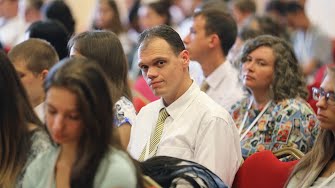
Russian Mormons Search for Identity and Acceptance in an American Church

Themoscowtimes 26 févr. 2019 English

The article discusses the challenges faced by the Church of Jesus Christ of Latter-day Saints in Russia, where religious minorities, including Jehovah's Witnesses, face persecution. Olga Trunova, a Russian convert, shares her experience of being shunned by her community due to her faith. The church, unofficially known as the Mormon church, grew in Russia during the 1990s but has seen a decline in membership due to political pressure and anti-terrorism legislation that prohibits religious proselytization. Despite this, the church plans to build its first temple in Russia. Members face discrimination and are often mistaken for other religious groups or viewed with suspicion due to political tensions between Russia and the U.S. The article also touches on the cultural differences between Russian and American Latter-day Saints and how the church's requirements can alienate casual members in Russia.

Religious Persecution Freedom of Religion International Relations Russia United States The Moscow Times Roskomnadzor Church of Jesus Christ of Latter-day Saints

Lost for Words: Non-Binary Russians Fight the Limits of Their Language

Themoscowtimes 24 août 2018 English

The article discusses the experiences of non-binary individuals in Russia, where the Russian language inherently assigns a gender to almost every word. Valeria, a non-binary person, shares how online anonymity initially allowed them to avoid specifying gender. The article highlights the challenges non-binary Russians face due to the gendered nature of their language and how they are creating new forms of expression to convey their identity. Alex Pershai, a linguistics professor, notes the sexist elements in Slavic languages. Non-binary individuals like Sasha and Seroye Fioletovoye are using different pronouns or inventing new ones to express their gender fluidity. The article also mentions the efforts of So*ni and the 'Language Neutralization Laboratory' project by the LGBTQ+ group Magma to make Russian more inclusive.

Gender Identity Non-Binary Community Linguistic Development Social Issues Russia The Moscow Times Washington Post Associated Press Center for Gender Studies of the European Humanities University Magma

Lost for Words: Non-Binary Russians Fight the Limits of Their Language

The Moscow Times 24 août 2018 English

Non-binary Russians are challenging the limitations of the Russian language, which inherently enforces gender through its grammatical structure. Individuals like Valeria, Sasha, and So*ni are adopting or inventing new language forms to express their gender fluidity. Despite resistance and controversy, especially around the use of the neuter pronoun 'ono,' these efforts are part of a broader push for inclusivity and equality within the LGBTQ+ community in Russia. Activists and linguists acknowledge the difficulty of enacting lasting linguistic change but emphasize the importance of addressing wider cultural issues alongside language reform.

LGBTQ+ Rights Language and Linguistics Social Issues Russia The Moscow Times Washington Post Associated Press Vkontakte European Humanities University Magma Valeria Alex Pershai
Style rédactionnelInterprétatif

The article contains subjective statements and personal experiences, reflecting the struggles and perspectives of non-binary individuals in Russia.

Contexte politiqueCentre

The article advocates for LGBTQ+ rights and language inclusivity, which are typically associated with progressive or left-leaning views.

Rediscover the Moscow Metro

The Moscow Times 7 août 2018 English

The Moscow Times features a piece on the architectural grandeur of Moscow's metro stations and avant-garde buildings, highlighting a series of maps by Blue Crow Media that offer insights into the city's architectural history. The maps, curated by experts and available in both English and Russian, cover notable metro stations and constructivist sites. The article emphasizes the importance of these guides for tourists and locals alike and mentions the advocacy work of The Constructivist Project for architectural preservation. Blue Crow Media plans to release a third map on Moscow’s 20th-century architecture in 2020.

Architecture Travel Local Culture Moscow Russia The Moscow Union of Architects The Constructivist Project Derek Lamberton Nikolai Vassiliev Natalia Melikova Nikolai Shumakov Fyodor Dostoevsky
Style rédactionnelInformatif

Mostly factual description of maps and architectural history

Contexte politiqueCentre

The article is focused on architecture and culture, not politics

Russia's World Cup Sparks Old Fears of Abandoned Mothers and 'Festival Children'

The Moscow Times 10 juil. 2018 English

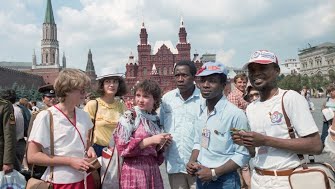
The World Cup in Russia reignited concerns about 'festival children,' a term for mixed-race children born to Russian mothers after international events. The term originated from the 1957 World Festival of Youth and Students in Moscow. Despite the Soviet Union's early stance on multiculturalism and racial tolerance, a decree in 1947 banned marriages between Soviet citizens and foreigners, reflecting underlying prejudices. These sentiments persisted, and with the recent rise in Russian nationalism, the myth of 'festival children' has taken on negative connotations. State Duma deputy Tamara Pletnyova's comments warning Russian women against relationships with foreign men during the World Cup exemplify the ongoing racial tensions. The article also explores the historical context of these attitudes and their manifestation in contemporary Russia.

World Cup Racism Soviet History Nationalism Russia Moscow Soviet Union State Duma Institute for Asian and African Countries at Moscow State University People’s Friendship University of Russia Higher School of Economics Irina Filatova
Style rédactionnelInformatif

Mostly factual reporting of historical and current events, with some opinionated statements from individuals

Contexte politiqueDroite

The article discusses conservative views on race and nationalism in Russia

Russia's World Cup Sparks Old Fears of Abandoned Mothers and 'Festival Children'

Themoscowtimes 10 juil. 2018 English

The World Cup in Russia reignited concerns about 'festival children,' a term for mixed-race children born to Russian mothers after international events. The term originated from the 1957 World Festival of Youth and Students in Moscow. Despite the Soviet Union's early stance on multiculturalism and racial tolerance, a decree in 1947 banned marriages between Soviet citizens and foreigners, reflecting underlying prejudices. These sentiments persisted, and with the recent rise in Russian nationalism, the myth of 'festival children' has taken on negative connotations. State Duma deputy Tamara Pletnyova's comments warning Russian women against relationships with foreign men during the World Cup exemplify the ongoing racial tensions. The article also explores the historical context of these attitudes and their manifestation in contemporary Russia.

World Cup Racism Soviet History Nationalism Russia Moscow Soviet Union State Duma Institute for Asian and African Countries at Moscow State University People’s Friendship University of Russia Higher School of Economics Irina Filatova

Autres journalistes à Boston

Voir tous les journalistes à Boston
Recruter Message
×

Inscrivez-vous pour envoyer un message à Emma

Vous avez déjà un compte ? Se connecter
Vous cherchez du travail ? S'inscrire en tant que journaliste
Vérifiez votre e-mail pour finaliser l'inscription
Nous venons d'envoyer un e-mail à . Veuillez consulter votre boîte de réception et cliquer sur le lien pour vérifier votre adresse e-mail et finaliser votre inscription. Si vous ne voyez pas l'e-mail, pensez à vérifier votre dossier spam ou courrier indésirable.
Vous n'avez pas reçu l'e-mail ?

Inscrivez-vous pour débloquer les profils

Vous avez déjà un compte ? Se connecter
Vous cherchez du travail ? S'inscrire en tant que journaliste
Vérifiez votre e-mail pour finaliser l'inscription
Nous venons d'envoyer un e-mail à . Veuillez consulter votre boîte de réception et cliquer sur le lien pour vérifier votre adresse e-mail et finaliser votre inscription. Si vous ne voyez pas l'e-mail, pensez à vérifier votre dossier spam ou courrier indésirable.
Vous n'avez pas reçu l'e-mail ?