Publishers & Broadcasters Content Marketing Teams PR & Comms Teams Risk & Intelligence Teams Journalists & News Professionals Media Monitoring Pricing

About Fazelminallah

Fazelminallah Qazizai is an Afghan journalist and analyst specialising in political, security, and Islamist movements in Afghanistan. A graduate in Islamic Law from Kabul University, his academic grounding in Sharia informs his nuanced reporting on governance, insurgency, and societal shifts. Qazizai is the co-author of Night Letters: Gulbuddin Hekmatyar and the Afghan Islamists Who Changed the World. Since 2010, he has reported from Kabul and remote provinces for international media including The New York Times, The New Yorker, Financial Times, New Lines, Al Jazeera, NPR, Arab News, and Le Monde diplomatique, offering rare on-the-ground insights into conflict, Taliban dynamics, and regional geopolitics.

Languages
English Pashto Persian (Farsi)
Seen in
Newlinesmag Arab News NPR New Hampshire Public Radio Ideastream Public Media KUNC KVNF Public Radio Northern Public Radio: WNIJ and WNIU Tri States Public Radio WCBE 90.5 FM WPRL | Smart Uplifting Fun Fm Kuow Mtpr Wbaa Wmky Wsiu Alabama Public Radio Black News Everand Georgia Public Broadcasting HURST Hawai'i Public Radio Iowa Public Radio Jefferson Public Radio KAWC KAXE KBBI AM 890 KCCU | Your Public Radio Station KDLL Public Radio for the Central Kenai Peninsula KNAU Arizona Public Radio KRWG Public Media KSFR KSUT Public Radio KWBU LAist - NPR News for Southern California - 89.3 FM Public Radio Tulsa WAER WCMU Public Radio WEKU WFSU News WKMS WKU Public Radio | The Public Radio Service of Western Kentucky University WLRN WPSU WRUR WUWF WWNO WYSO Asiatimes News Wealthinsidermag Bpr Capeandislands Delawarepublic Delmarvapublicmedia Houstonpublicmedia Kacu Kasu Kazu Kdlg Kdnk Kedm Ketr Kgou Kios Kpcw Ktep Kunm Kunr Lakeshorepublicmedia Marfapublicradio Nprillinois Southcarolinapublicradio Ualrpublicradio Vpm Wbfo Wcbu Wcsufm Weaa Wesa Wgvunews Wknofm Wmra Wqln Wshu Wutc Wvia Wvpe Wxxinews Wypr
Work 141

Afghanistan and Saudi group sign oil and gas deal for Kushk-Tirpul basin exploration

Arab News 8 Sep 2026 English

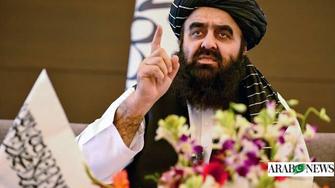
Afghanistan signed a $200 million, 25-year contract with Saudi company Delta International Energy to explore and extract oil and gas from seven blocks in the 22,000-square-kilometer Kushk-Tirpul basin in Herat and Badghis. The exploration phase will last eight years. Mines and Petroleum Minister Hedayatullah Badri said extraction could help make Afghanistan self-sufficient, while former US envoy Zalmay Khalilzad and analyst Sami Wahidi presented the investment as a sign of commercial potential and a possible boost to morale and the country’s regional role. The deal comes amid unemployment and poverty following the Taliban’s return to power in 2021.

Oil and Gas Exploration Foreign Investment in Afghanistan Afghanistan's Economy Natural Resources Afghanistan Herat Badghis Afghanistan Ministry of Mines and Petroleum Taliban Hedayatullah Badri Shaher Al-Taqi Zalmay Khalilzad
Reporting styleInformative

Primarily factual reporting, though it includes attributed optimistic assessments of the deal.

Pakistan’s Drone Strikes Are Hitting Afghan Civilians

New Lines Magazine 17 Jun 2026 English

Pakistani drone and aircraft strikes in eastern Afghanistan killed at least 13 civilians, including 11 children, according to Afghan authorities and UNAMA. The account focuses on three children killed in a strike that destroyed a family home in Paktika and describes the devastation and trauma left behind. Pakistan says its operations target TTP militant infrastructure and claims to have killed 26 militants; the Taliban government calls the strikes violations of Afghan sovereignty. The piece argues that the attacks have largely hit civilian sites, done little to weaken the TTP, and fueled anger and retaliation. Talks hosted by China yielded no lasting agreement, while disputes over the border, militant sanctuaries, and mutual distrust remain unresolved.

Pakistani airstrikes in Afghanistan Civilian casualties Afghanistan-Pakistan relations Tehrik-e-Taliban Pakistan (TTP) Border conflict Afghanistan Pakistan Durand Line Taliban government of Afghanistan United Nations Assistance Mission in Afghanistan (UNAMA) China Fazelminallah Qazizai
Reporting styleInterpretive

Strongly critical of Pakistani strikes, arguing they have killed civilians, failed to weaken the TTP, and intensified conflict.

Political contextCentre-left

Emphasizes civilian protection and criticizes state violence while presenting the competing security claims and political context.

Pakistan’s Strikes Tear Open the Afghan Sky

New Lines Magazine 18 Mar 2026 English

Pakistani airstrikes have expanded from Afghanistan’s border areas to Kabul and other cities, killing civilians, displacing tens of thousands and culminating in a devastating attack on a Kabul drug rehabilitation center. Pakistan says it is targeting militants, while the Taliban has retaliated along the disputed Durand Line. The border dispute and cross-border militancy underpin the conflict, which has prompted unusually broad Afghan solidarity across political and ethnic lines. The strikes have raised fears of wider regional insecurity, while the account warns that airpower and retaliatory violence are unlikely to resolve the underlying tensions.

Pakistan-Afghanistan Conflict Pakistani Airstrikes in Afghanistan Civilian Casualties and Displacement Durand Line Dispute Afghan National Unity Afghanistan Pakistan Kabul Taliban Government of Pakistan Tehreek-e-Taliban Pakistan Islamic State Khorasan Province
Reporting styleInterpretive

First-person, emotionally charged account that condemns the airstrikes and reflects on their human cost, while distinguishing reported facts from unverified theories.

Political contextCentre-left

The account emphasizes civilian suffering and criticizes Pakistan’s military campaign, while presenting broader political explanations as unproven.

Will Afghanistan’s pledge against cross-border attacks ease tensions with Pakistan?

Arab News 12 Dec 2025 English

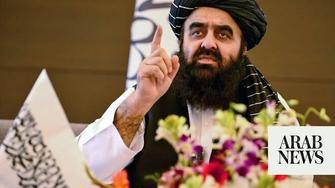
Afghanistan reaffirmed its commitment to preventing cross-border attacks amid renewed tensions with Pakistan following the collapse of a temporary ceasefire along the border. A fatwa issued by Afghan clerics, supported by Taliban Foreign Minister Amir Khan Muttaqi, emphasized that Afghan soil must not be used to harm other countries. Pakistan has long accused Kabul of enabling TTP militants, a claim Afghanistan denies. Analysts differ on the decree’s impact, with some calling it significant and others asserting that Pakistan’s internal issues are the real obstacle to progress in negotiations facilitated by Qatar and Turkiye. The move is seen as an attempt by Kabul to ease pressure and demonstrate control over its territory while signaling willingness to continue diplomatic engagement.

Afghanistan-Pakistan relations Cross-border militancy Taliban governance Regional security Afghanistan Pakistan Qatar Taliban Tehreek-e-Taliban Pakistan Government of Pakistan Turkiye Amir Khan Muttaqi
Reporting styleBalanced

Combination of factual reporting with expert commentary and interpretation

Political contextCentre

Covers geopolitical tensions and security issues without strong ideological framing

Will Afghanistan’s pledge against cross-border attacks ease tensions with Pakistan?

Arab News 12 Dec 2025 English

Afghanistan reiterated its commitment to preventing cross-border militancy amid renewed tensions with Pakistan following deadly clashes along the border. The Taliban government highlighted a new religious decree from Afghan clerics prohibiting participation in foreign jihad as evidence of its intention to prevent Afghan soil from being used for attacks. Pakistan, which blames the TTP for cross‑border violence, views the decree as a potentially significant step, though Afghan analysts argue it will not resolve the internal security issues driving Pakistan’s concerns or the stalled negotiations. The collapse of previous talks mediated by Qatar and Turkiye underscores the continuing divide over how to address the TTP threat.

Afghanistan-Pakistan border tensions Militancy Regional security Afghanistan Pakistan Qatar Taliban Tehreek-e-Taliban Pakistan Government of Pakistan Amir Khan Muttaqi Abdullah Awwab Asif Durrani
Reporting styleInformative

Primarily factual reporting with expert opinions and political analysis.

Political contextCentre

Covers geopolitical tensions without endorsing a political position.

Bangladesh sets February date for first vote since 2024 mass uprising

Arab News 12 Dec 2025 English

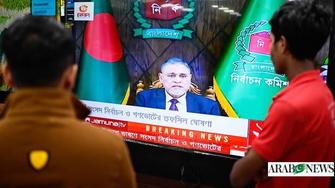
Bangladesh scheduled national elections for February 12, the first vote since the 2024 student-led uprising that removed longtime Prime Minister Sheikh Hasina from power. Interim leader Muhammad Yunus will oversee the process, which includes both parliamentary elections and a referendum on political reforms. Hasina, accused of human rights abuses and election rigging, was convicted and sentenced to death for crimes against humanity following the deadly crackdown on protestors in 2024. The Awami League has been barred from political activity, prompting uncertainty regarding its 40 million supporters. Analysts expect other political parties to ensure a participatory and fair election. With more than 127 million eligible voters, the election marks a significant transition toward a new political trajectory in Bangladesh, with growing youth engagement and expectations for improved democratic governance.

Bangladesh elections Political uprising Government transition Bangladesh India United Nations Awami League UN human rights office National University Special Tribunal in Dhaka Sheikh Hasina Muhammad Yunus
Reporting styleInformative

Largely factual reporting with some quoted subjective viewpoints from analysts and participants.

Political contextCentre

Report presents political developments without aligning with a partisan ideological position.

Afghan clerics ban use of nation’s territory for attacks, declare national defense obligatory

Arab News 11 Dec 2025 English

Afghan clerics issued a religious decree prohibiting the use of Afghan territory for attacks on other countries and declaring national defense a religious obligation, a move widely interpreted as signaling the Taliban’s stance amid renewed border clashes with Pakistan. The ruling reiterates that foreign interference must be prevented and frames defense against external aggression as sacred jihad. The decree follows deadly cross-border exchanges and comes as negotiations between the two countries stagnate. Pakistani officials view the resolution as a step toward reconciliation, while analysts note it largely restates previous Taliban positions and is unlikely to alter tensions shaped by ongoing accusations over militant activity along the border.

Afghanistan-Pakistan border tensions Taliban governance Regional security Afghanistan Pakistan Kabul Taliban Islamic Emirate of Afghanistan Government of Pakistan Tehreek-e-Taliban Pakistan Afghan Ulema Asif Durrani
Reporting styleInformative

Primarily factual reporting with limited interpretation and analyst commentary.

Political contextCentre

Straightforward geopolitical and security reporting without evident ideological framing.

Afghan clerics ban use of nation’s territory for attacks, declare national defense obligatory

Arab News 11 Dec 2025 English

Afghan religious scholars issued a decree declaring national defense a religious obligation and prohibiting the use of Afghan territory for attacks on other countries, reinforcing the Taliban’s position amid renewed border clashes with Pakistan. The ruling signals resistance to foreign interference and is interpreted by some observers as a message urging reconciliation. Tensions along the Afghanistan–Pakistan border have increased, with Islamabad accusing the Taliban of tolerating TTP militants, an allegation Afghanistan denies. Analysts suggest the decree reiterates existing Taliban policy and is unlikely to significantly alter the dynamics of cross‑border militancy.

Afghanistan–Pakistan border tensions Taliban governance Cross‑border militancy Afghanistan Pakistan Durand Line Taliban Government of Pakistan Tehreek-e-Taliban Pakistan (TTP) Asif Durrani Sheikh Abdul Hakim Haqqani Khalid Hanafi
Reporting styleInformative

Primarily factual reporting with limited analytical commentary from experts

Political contextCentre

Neutral, descriptive coverage of governmental and militant dynamics without ideological framing

New deadly clashes break out on Afghanistan-Pakistan border despite truce

Arab News 6 Dec 2025 English

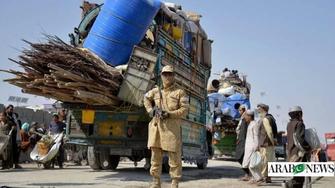
Border clashes between Afghan and Pakistani forces erupted overnight near the Spin Boldak-Chaman crossing, breaking a fragile ceasefire established in October. Each side blamed the other for initiating the violence, which resulted in civilian casualties and forced local families to flee. The renewed fighting led Pakistan to close the key border crossing, disrupting trade and medical travel. Despite earlier truce efforts brokered by Qatar and Turkey, progress toward a lasting agreement has stalled, with both sides divided over security demands. Analysts highlight that Pakistan’s expectations regarding Taliban control over security are unrealistic, contributing to ongoing instability along the Durand Line.

Afghanistan-Pakistan border conflict Ceasefire violations Cross-border security tensions Afghanistan Pakistan Kandahar–Balochistan border Taliban government of Afghanistan Pakistan government Qatar Turkey Hamdullah Fitrat Mosharraf Zaidi
Reporting styleInformative

Primarily factual reporting with some analytical commentary from experts.

The Kabul Airport Bombing’s Afterlife as a Diplomatic Prop

New Lines Magazine 24 Mar 2025 English

The article explores the aftermath of the Kabul airport bombing, focusing on the arrest of Mohammad Sharifullah, an alleged mastermind, and its use as a diplomatic tool by the U.S. and Pakistan. It highlights the complexities of foreign interventions in Afghanistan, the Taliban's role in combating ISKP, and the political motivations behind Sharifullah's extradition. The narrative questions the accountability and strategic timing of events, suggesting political convenience over genuine justice, while ordinary Afghans continue to suffer amidst ongoing instability and violence.

Kabul Airport Bombing Diplomatic Relations Terrorism Afghanistan Pakistan United States Taliban ISKP White House FBI Mohammad Sharifullah John Kirby
Reporting styleInterpretive

The article presents a narrative with subjective interpretations and speculations about political motivations.

Political contextCentre

The article discusses political maneuvers and implications without a clear partisan bias.

Sign up free to see all 141

Other journalists in Kabul

View all journalists in Kabul
Hire Message
×

Sign up to message Fazelminallah

Already have an account? Log in
Looking for work? Register as a Journalist
Verify your email to complete registration
We’ve just sent an email to . Please check your inbox and click the link to verify your email address and complete your registration. If you don’t see the email, be sure to check your spam or junk folder.
Didn’t receive the email?

Sign up to unlock profiles

Already have an account? Log in
Looking for work? Register as a Journalist
Verify your email to complete registration
We’ve just sent an email to . Please check your inbox and click the link to verify your email address and complete your registration. If you don’t see the email, be sure to check your spam or junk folder.
Didn’t receive the email?