Éditeurs et diffuseurs Équipes de marketing de contenu Équipes RP et communication Équipes risques et renseignement Journalistes et professionnels des médias Veille médias Tarifs

À propos de Ferry

Chroniqueur hebdomadaire pour Tomorrow's Affairs, contributeur à The New World et The Lancet. Ancien chercheur invité au BCU Centre for Brexit Studies. Je voyage fréquemment pour le travail au Moyen-Orient, où j'ai été basé par le passé. Analyste du Moyen-Orient chez IHS Jane's, rédacteur de grands reportages pour le FT, rédacteur en chef d'une revue communautaire trimestrielle aux Pays-Bas. Ancien rédacteur de grands reportages et correspondant au Moyen-Orient pour le Financial Times, rédacteur spécialisé en technologie pour CNBC, rédacteur de rapports pour WHO, UNAIDS, pigiste pour le Washington Post, correspondant pour Salon.com. Articles parus dans Foreign Policy Magazine, Chicago Tribune, Daily Telegraph, New Jersey Star-Ledger. Interventions sur CNN, BBC, France24. Néerlandais : Volkskrant, Elsevier magazine. Ancien correspondant radio, expérience télévisuelle.

Langues
arabe néerlandais anglais français allemand hébreu
Vu dans
The New World CNBC Tomorrow's Affairs Centre for Brexit Studies Blog The New European Trouw Spikedstories Eurozine Devdiscourse Foreign Policy Nationalpost News

Travaux 176

What We Do and Don’t Know About the U.S.-Iran Peace Deal

Foreign Policy 15 juin 2026 English

The United States and Iran announced a preliminary memorandum intended to halt their monthslong war, extend the cease-fire for 60 days, reopen the Strait of Hormuz, and end the U.S. blockade of Iranian ports. The agreement’s text has not been released, and key terms—including tolls on shipping, access to frozen Iranian assets, and nuclear restrictions—remain disputed or unclear. A formal signing is expected in Geneva on June 19, after which technical and nuclear negotiations are due to begin. The agreement’s prospects are also threatened by Israel’s opposition and its continuing campaign against Hezbollah in Lebanon, which Iran says must be covered by the deal.

U.S.-Iran Relations Iran Nuclear Program Peace Negotiations Iran War Strait of Hormuz Israel-Hezbollah Conflict Economic Impact of War Iran United States Middle East Trump administration Israel
Style rédactionnelInformatif

Primarily factual analysis, while describing the deal as a positive step and assessing its risks and uncertainties.

Contexte politiqueCentre

Straightforward reporting and analysis of competing positions, without a clear partisan endorsement.

A royal warning for Charles in Washington

The New World 29 avr. 2026 English

Diplomatic visits by Dutch and British royals to Donald Trump draw controversy, contrasting approaches, and political sensitivities. King Willem-Alexander’s visit involved a government‑approved speech defending NATO, international law, and climate policy, while British royals focused on historical ties during Charles’s address to Congress. Dutch officials distanced themselves from former prime minister Mark Rutte’s closeness to Trump, and both royal visits highlighted the difficulty of remaining apolitical amid rising tensions and Trump’s combative political environment.

US politics UK monarchy International diplomacy United States United Kingdom Netherlands NATO White House US Congress Donald Trump King Charles King Willem-Alexander
Style rédactionnelÉquilibré

Contains analysis and subjective interpretation alongside factual reporting

Contexte politiqueCentre gauche

Critical of Trump and supportive of international norms and multilateral institutions

The Netherlands almost has a government – almost

The New World 14 avr. 2026 English

Prime minister Rob Jetten leads a minority Dutch government struggling with instability, internal divisions and growing far‑right influence. Despite presenting himself as a progressive counter to Geert Wilders, Jetten has shifted rightward on migration and environmental policy to secure coalition support, while the VVD and CDA hold key government posts. His compromises risk alienating progressive voters, and securing a stable majority will likely require cooperation with parties on the far right, continuing their influence over national policy.

Dutch politics Coalition government Far right influence Netherlands Europe D66 PVV VVD CDA Extinction Rebellion Rob Jetten Geert Wilders
Style rédactionnelInterprétatif

Contains analysis and subjective characterisations of political actors and policies

Contexte politiqueCentre gauche

Critical of far-right influence and concerned about centrist drift to the right

Let’s hope AI comes for our jobs or our pensions – not both

Tomorrow's Affairs 18 déc. 2025 English

AI’s rapid adoption in 2024 and 2025 has fueled economic growth and soaring stock valuations, but rising unemployment in the US and UK has intensified concerns about job displacement. Heavy investment in AI and expansive data center construction raise fears of circular investment and a potential bubble, despite claims from major tech firms that current growth is sustainable. While AI technologies, especially agentic AI, are increasingly integrated into hiring systems, inventory management, finance, and journalism, their long-term economic impact remains uncertain. Regional adoption varies, with North America and parts of Asia moving fastest and Europe taking a more cautious approach. Sustained consumer demand will be vital, as the simultaneous erosion of jobs and retirement savings poses a significant future risk.

Artificial Intelligence Economy Labor Market Stock Market United States United Kingdom China Daniel Defoe Mark Zuckerberg Donald Rumsfeld OpenAI Amazon
Style rédactionnelInterprétatif

Strongly opinionated analysis with subjective judgments and speculative commentary

EU-deregulation in the age of emulation

Tomorrow's Affairs 11 déc. 2025 English

The European Union is weakening its sustainability directives, the CSRD and CSDDD, in response to foreign pressure and a rightward shift within Europe, undermining its previous role as a global regulatory leader. The dilution of EU-wide enforcement risks fragmentation and increased vulnerability to external influence, contradicting recommendations from Draghi to streamline rather than decentralize regulation. A growing desire among European right‑wing actors to emulate U.S.-style deregulation and culture‑war politics is fueling policy changes that create long-term uncertainty. Broader geopolitical strains—including economic pressures, far‑right gains, U.S. antagonism, tensions with China, and institutional stress on NATO—compound the EU’s search for direction, leading to reactive rather than strategic policymaking.

EU deregulation Corporate sustainability rules European politics Right-wing political shift European Union United States China Heritage Foundation NATO United States government Giorgia Meloni Mario Draghi
Style rédactionnelInterprétatif

Strongly analytical but carries significant subjective interpretation and evaluative language about political actors and policies.

Contexte politiqueCentre gauche

Critical of right‑wing deregulation, far‑right movements, and U.S.-style hyper-capitalism while defending regulatory coherence and EU protections.

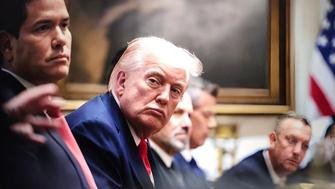
What do Trump and his envoys talk about with Putin and Xi?

Tomorrow's Affairs 4 déc. 2025 English

Trump’s private engagements with Putin and Xi, along with high-level meetings by his envoys, raise concerns about opaque geopolitical maneuvering that could disadvantage Ukraine and embolden Russian expansionism. The article argues that Trump’s proposed peace plan for Ukraine would effectively reward Russia and could impose heavy strategic burdens on Europe. It warns that a tacit Trump-Putin arrangement might lead to new territorial carve‑ups mirroring historical precedents. The analysis also connects the Ukraine conflict to broader global instability, including China’s rising assertiveness over Taiwan, and critiques the authoritarian trajectories of Russia and China. The piece concludes that personal, untransparent diplomacy involving Trump risks reshaping the global order around force and narrow self‑interest.

US–Russia relations War in Ukraine China–Taiwan tensions International diplomacy Russia Ukraine United States European Union US Congress Kremlin China Donald Trump
Style rédactionnelInterprétatif

Highly opinionated language, subjective assessments, and strong political framing throughout.

Contexte politiqueCentre gauche

critical of authoritarianism, supportive of democratic norms, and skeptical of Trump’s foreign policy

The hard right Belgian PM confronts the unions

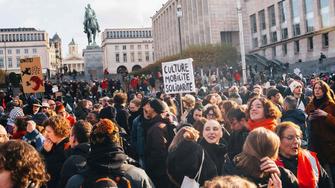
The New World 3 déc. 2025 English

Belgium faces its largest strike in decades as trade unions protest government austerity measures, welfare reforms, and rising living costs. Prime Minister De Wever seeks to reduce the welfare system, cut budget deficits, and align more closely with Dutch economic models, intensifying tensions with the traditionally left-leaning Walloon region. His calls for deeper ties with the Netherlands and refusal to engage directly with unions have further fueled unrest. With unions preparing more action and the government's stance unchanged, prolonged confrontation appears likely.

Belgian politics Labour strikes Austerity policies Belgium Flanders Wallonia Belgian government EU Trade unions De Wever
Style rédactionnelÉquilibré

Mostly factual reporting with some interpretive analysis of political motives and social tensions.

Contexte politiqueCentre

Provides descriptive political analysis without endorsing a partisan position.

Europe’s defence and tech misses might be mounting

Tomorrow's Affairs 27 nov. 2025 English

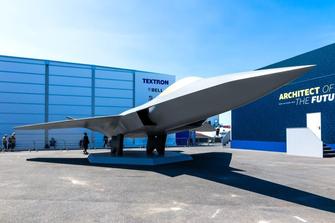
Key European defence and technology projects are faltering due to prolonged Franco-German disagreements over workload division, sovereignty, and industrial strategy. The FCAS fighter program faces delays and potential downsizing, while the MGCS tank project suffers from similar disputes. Efforts to develop European technological sovereignty, including the Gaia‑X cloud initiative, have been scaled back, with critics citing structural failures and political misalignment. Although initiatives like Catena‑X show some progress, Europe’s fragmented decision‑making and slow coordination hinder competitiveness in critical technologies. With rising geopolitical pressures and intensifying global competition, the consequences of these delays are becoming increasingly serious for Europe’s strategic autonomy.

European defence cooperation Military technology EU industrial policy Cloud computing sovereignty Franco-German relations European Union France Germany Eurofighter consortium Tempest consortium Gaia-X Catena-X
Style rédactionnelÉquilibré

Contains analysis and evaluative language but grounded in factual reporting about defence and technology projects.

Contexte politiqueCentre

Discusses European industrial policy and defence cooperation without advocating partisan ideological positions.

The dangers of returning to the status quo ante in the Middle East

Tomorrows Affairs 20 nov. 2025 English

More than two years of conflict in Gaza and Lebanon have left the balance of power largely unchanged, with Hamas and Hezbollah still capable of rebuilding despite Israeli military gains. Public support for hardline actors on both sides remains strong, driven by deep mistrust and perceptions of existential threat. Current ceasefire arrangements and plans, including UN and Trump-backed proposals, aim only to prevent open war without addressing core grievances, especially the need for Israel to demonstrate a willingness to halt territorial encroachment and consider restoring Palestinian rights. Long‑term disarmament of non‑state actors is seen as unrealistic without substantial political progress, and the region appears locked into a recurring cycle of violence unless a different, trust‑building approach is adopted.

Israeli-Palestinian Conflict Middle East Politics Gaza War Lebanon-Israel Tensions Israel Palestinian Territories Lebanon Hamas Hezbollah Government of Israel United Nations Syria
Style rédactionnelÉquilibré

Analytical but includes interpretive judgments about motivations and future outcomes.

Contexte politiqueCentre

Provides analytical critique of all sides without explicit ideological alignment.

UK-EU reset price-tag adds to Starmer’s woes

Tomorrow's Affairs 13 nov. 2025 English

Keir Starmer’s attempt to reset UK–EU relations faces mounting political and financial pressures as negotiations reveal significant costs for participating in EU markets and defence initiatives. While aligning UK agricultural and food standards with the EU and exploring cooperation in defence, energy, mobility and migration, progress has been limited and the expected economic benefits remain marginal. The EU’s proposed multibillion-pound UK contribution to the new European defence procurement fund has triggered strong backlash from British media and complicates the political environment for Labour as it confronts domestic fiscal constraints. Critics argue that the reset’s piecemeal approach and lack of transparency on potential costs have fuelled renewed Brexit tensions, with risks of derailing broader geopolitical cooperation at a sensitive moment for Europe.

Brexit UK–EU relations Defence cooperation United Kingdom European Union Russia UK Government House of Lords European Affairs Select Committee Daily Telegraph Express Mail Bloomberg
Style rédactionnelÉquilibré

Mixture of factual analysis and subjective interpretation regarding political decisions and motivations.

Contexte politiqueCentre gauche

Critiques both Brexit policy and Labour strategy while supporting pragmatic cooperation with the EU, aligning with moderate pro-EU perspectives.

Inscrivez-vous gratuitement pour voir les 176

Autres journalistes à Amsterdam

Voir tous les journalistes à Amsterdam
Recruter Message
×

Inscrivez-vous pour envoyer un message à Ferry

Vous avez déjà un compte ? Se connecter
Vous cherchez du travail ? S'inscrire en tant que journaliste
Vérifiez votre e-mail pour finaliser l'inscription
Nous venons d'envoyer un e-mail à . Veuillez consulter votre boîte de réception et cliquer sur le lien pour vérifier votre adresse e-mail et finaliser votre inscription. Si vous ne voyez pas l'e-mail, pensez à vérifier votre dossier spam ou courrier indésirable.
Vous n'avez pas reçu l'e-mail ?

Inscrivez-vous pour débloquer les profils

Vous avez déjà un compte ? Se connecter
Vous cherchez du travail ? S'inscrire en tant que journaliste
Vérifiez votre e-mail pour finaliser l'inscription
Nous venons d'envoyer un e-mail à . Veuillez consulter votre boîte de réception et cliquer sur le lien pour vérifier votre adresse e-mail et finaliser votre inscription. Si vous ne voyez pas l'e-mail, pensez à vérifier votre dossier spam ou courrier indésirable.
Vous n'avez pas reçu l'e-mail ?