The Berkshire EagleThe Christian Science MonitorVoice of AmericaSouth China Morning PostLes ActualitesLos Angeles TimesInklReformer
Work 46
Eagle Archives, Oct. 20, 1969: Rock Festival Draws Well-Behaved Crowd of 2,500
The Berkshire Eagle20 Oct 2023English
A free outdoor rock festival at the Parisi farm in Berkshire County drew about 2,500 people from Massachusetts, Connecticut and New York. Organized by local clothing-store proprietor Dave Loehr, the eight-and-a-half-hour event featured six bands and proceeded without major incident despite police concerns that attendance could approach 10,000 to 12,000 people. Extensive traffic and crowd preparations proved unnecessary, as attendees were described by authorities as exceptionally well behaved.
Rock Music Festivals1960s CountercultureLocal HistoryCommunity EventsBerkshire County, MassachusettsSpringfield, MassachusettsHartford, ConnecticutBerkshire County policeDave Loehr
Reporting styleInformative
Predominantly factual historical reporting, with colorful descriptive observations about the festival crowd and atmosphere.
OpinionatedFactual
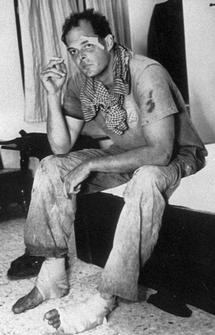
Nate Thayer, rebel reporter who interviewed Pol Pot in the Cambodian jungle, has died
inkl6 Jan 2023English
Nate Thayer, a renowned investigative reporter known for his interview with Cambodian leader Pol Pot, has passed away. Thayer's career was marked by his deep expertise in Asian affairs, stemming from a childhood spent in Taiwan and his father's diplomatic work. He contributed to various publications and was recognized for his bravery and investigative skills. Thayer's most notable achievement was securing an interview with Pol Pot in 1997, which won him several awards. Despite his professional success, Thayer faced financial difficulties later in life, leading to a crowdfunding campaign to support him. His life was characterized by a commitment to principle and a desire to understand the perspectives of those he reported on, including extremist groups.
The article is primarily factual, reporting on the life and career of Nate Thayer, but includes some subjective descriptions of his character and principles.
OpinionatedFactual
Political contextCentre
The article is an obituary and does not express political views.
Far leftFar right
The Decline and Fall of Hong Kong
Brattleboro Reformer14 May 2021English
Hong Kong is being rapidly brought under Beijing’s total control through the National Security Law, prosecutions of dissidents and restrictions on democratic institutions. The author argues that the 1997 handover replaced British colonial rule with effective Chinese recolonization, despite promises to preserve Hong Kong’s system for 50 years. Radio Television Hong Kong, once a credible and relatively independent public broadcaster, is portrayed as the latest institution being pressured into serving as a government mouthpiece, highlighting the broader collapse of political freedoms and the rule of law.
Hong Kong DemocracyChina's National Security LawPolitical RepressionPress FreedomHong Kong's HandoverHong KongChinaUnited KingdomBeijingRadio Television Hong KongNational People's CongressHong Kong Alliance in Support of Patriotic Democratic Movements of China
Reporting styleOpinionated
Strongly opinionated; the author uses personal experience and emotionally charged language to condemn Beijing's rule and the erosion of Hong Kong's freedoms.
OpinionatedFactual
Political contextCentre-left
The commentary strongly supports democracy, civil liberties and press independence while opposing authoritarian government control.
Far leftFar right
As China cracks down, Hong Kongers resist in ways they can
The Berkshire Eagle13 Aug 2020English
After authorities arrested Apple Daily founder Jimmy Lai, his sons and senior staff under Hong Kong's national security law, thousands of residents queued to buy the newspaper, turning the raid into a public show of support. Apple Daily shares also surged as residents used the market to express pro-democracy views. The column describes growing fear among Hong Kongers, preparations to protect online activity or emigrate, and business concerns about the law's effects on the rule of law, contracts and U.S.-China relations. Lai was released on bail, while the arrests and warrants against overseas figures signaled a widening crackdown.
Hong Kong Pro-Democracy MovementPress FreedomChina's National Security LawPolitical CrackdownHong KongChinaUnited StatesChinese governmentHong Kong governmentU.S. Chamber of Commerce in Hong KongRadio Television Hong KongJimmy Lai
Reporting styleInterpretive
Opinion column uses evaluative language and personal observations to criticize the crackdown and emphasize public resistance.
OpinionatedFactual
Political contextCentre
The column supports Hong Kong's democratic freedoms and criticizes Beijing's crackdown, but does not advocate a broader left- or right-wing political program.
Far leftFar right
The Tale of Two Cities — A New Cold War?
The Berkshire Eagle12 Nov 2019English
Francis Moriarty considers whether Hong Kong's pro-democracy movement resembles Cold War-era Berlin, citing activists Joshua Wong and Jimmy Lai, who use that comparison to seek Western support. The analogy has limits: Berlin's division ended through a movement for reunification, whereas Hong Kong's struggle concerns autonomy and democratic freedoms under Chinese rule. The column highlights escalating violence against protesters and Xi Jinping's warning invoking the Tiananmen Square massacre. It contrasts the Berlin Airlift's major humanitarian commitment with the likelihood that a nationalist, trade-conscious United States would hesitate to support Hong Kong, and suggests Hong Kong's dissidents and officials could learn from East German reconciliation efforts.
Hong Kong ProtestsChina-Hong Kong RelationsCold WarBerlin WallTiananmen Square MassacreHong KongChinaBerlin, GermanyUnited StatesSoviet UnionEast GermanyWest Germany
Reporting styleInterpretive
An opinion column that draws a provocative historical comparison and criticizes U.S. nationalism and reluctance to support Hong Kong.
OpinionatedFactual
Political contextCentre-left
The column supports Hong Kong's pro-democracy movement and criticizes authoritarian repression, while framing its claims through historical comparison.
Far leftFar right
Hong Kong: Is There a Way Out?
The Berkshire Eagle5 Nov 2019English
Francis Moriarty argues that Hong Kong’s increasingly forceful response to pro-democracy protests is deepening hostility, undermining trust, and making negotiations harder. He suggests that Carrie Lam could draw on F.W. de Klerk’s approach in South Africa, where releasing political prisoners helped bring the ANC to negotiations. Although Lam has withdrawn the extradition bill and allowed most pro-democracy candidates to run in local elections, the movement’s leaderless structure, Beijing’s influence, and continued arrests and violence make a negotiated settlement difficult. The column concludes that a way out may exist, but would require credible steps that allow both sides to negotiate and deliver.
Hong Kong ProtestsPro-Democracy MovementPolice ResponseNegotiations and Conflict ResolutionApartheidHong KongSouth AfricaChinaHong Kong governmentChinese governmentAfrican National CongressNational Party of South Africa
Reporting styleInterpretive
Opinion column that criticizes the government’s use of force and argues for negotiation, while grounding its case in historical comparison.
OpinionatedFactual
Political contextCentre
The column takes a critical stance toward repression and supports dialogue without expressing a clear partisan ideology.
Far leftFar right
Francis Moriarty: Happy birthday China — now blow out the Molotovs
The Berkshire Eagle1 Oct 2019English
China's 70th anniversary celebrations coincided with escalating unrest in Hong Kong, where a police officer shot a student protester, and with a show of solidarity from demonstrators in Taiwan. The column argues that Beijing's attempts to shape Taiwanese opinion through investment, tourism and political influence have failed, while events in Hong Kong have further undermined the appeal of reunification under the “one country, two systems” model. It concludes that Taiwan's democratic identity and public opposition make Beijing's preferred political arrangement increasingly implausible.
Hong Kong protestsChina-Taiwan relationsDemocracyCross-strait relationsHong KongTaiwanChinaGovernment of ChinaHong Kong Police ForceDemocratic Progressive PartyChinese Communist PartyKuomintang
Reporting styleInterpretive
Opinionated political column, using evaluative language to criticize Beijing's approach to Hong Kong and Taiwan.
OpinionatedFactual
Political contextCentre
The column supports democracy and criticizes Chinese government policies but does not clearly express a conventional left-right ideological position.
Far leftFar right
Hong Kong: A Pox on Both Their Houses?
The Berkshire Eagle24 Sep 2019English
Francis Moriarty argues that both Britain and China bear responsibility for Hong Kong's democratic crisis. Britain delayed political representation during its colonial rule and later curtailed local demands to protect the 1997 sovereignty transfer; China subsequently constrained elections and abandoned commitments to greater democracy. The column traces how officials prioritized stability and economic interests over residents' self-rule, and concludes that both powers should share blame for the current unrest.
Hong Kong Pro-Democracy ProtestsHong Kong's Political AutonomyBritish Colonial RuleChina–United Kingdom RelationsHong KongChinaUnited KingdomGovernment of ChinaUnited Kingdom GovernmentHong Kong governmentRadio Television Hong KongFrancis Moriarty
Reporting styleOpinionated
Strongly opinionated column assigning shared blame to Britain and China for denying Hong Kong democratic self-rule.
OpinionatedFactual
Political contextCentre-left
Emphasizes democratic self-determination and criticizes both British colonialism and Chinese authoritarian control.
Far leftFar right
Francis Moriarty: Is Trump’s Hong Kong silence a China trade-off?
The Berkshire Eagle11 Sep 2019English
Hong Kong demonstrators appealed to the United States to support their pro-democracy movement and pass the bipartisan Hong Kong Human Rights and Democracy Act, which could end the territory’s special U.S. trade status if its autonomy erodes. The column argues that the issue concerns democratic rights and international commitments as well as trade. It criticizes President Donald Trump for saying little about the protests while emphasizing trade sanctions against China, and notes that Beijing blames the United States and Britain for unrest while denying interference in Hong Kong. The piece concludes that the administration’s response has so far been limited, with Defense Secretary Mark Esper urging China to show restraint.
Hong Kong Pro-democracy ProtestsU.S.-China RelationsHuman RightsTrade PolicyHong KongChinaUnited StatesUnited States governmentChinese governmentHong Kong governmentBritish governmentUnited Nations
Reporting styleInterpretive
An opinion column that argues the United States should support Hong Kong’s democracy movement and questions whether Trump’s silence reflects a trade-off with China.
OpinionatedFactual
Political contextCentre-left
Supports democracy and human-rights protections in Hong Kong and criticizes Trump’s muted response, without advocating a broader partisan platform.
Far leftFar right
Francis Moriarty: What Are China’s Options in Hong Kong?
The Berkshire Eagle21 Aug 2019English
Francis Moriarty argues that fears of a Chinese military crackdown in Hong Kong are understandable but should be tempered. He contrasts the current information-rich environment and politically diverse, organized protest movement with the 1989 Tiananmen protests, noting that Beijing can use propaganda and other tactics short of force. Hong Kong Chief Executive Carrie Lam’s proposed negotiation platform was rejected, while pressure on Cathay Pacific over crew members’ protest support culminated in CEO Rupert Hogg’s resignation. With Chinese troops still barracked and Beijing occupied by trade tensions with the United States and arms sales to Taiwan, military intervention remains possible but is not inevitable.
Hong Kong ProtestsChina-Hong Kong RelationsDemocracyChina’s Foreign PolicyHong KongChinaUnited StatesChinese Communist PartyHong Kong governmentChinese governmentChinese armyUnited States government
Reporting styleInterpretive
Opinion column: argues that military intervention is possible but urges readers to temper fears, using analysis and judgments about China’s options.
OpinionatedFactual
Political contextCentre
The column assesses Beijing’s possible responses and Hong Kong’s protests without advocating a clear partisan or ideological position.
We respect your privacy and use a limited number of cookies to provide essential functionality and enhance your visit. No third-party advertising cookies involved. For more details, please read our Cookie Policy.