Ingaggia giornalisti

Editori ed emittenti Team di content marketing Team di PR e comunicazione Team di risk e intelligence Trova giornalisti Monitoraggio dei media Prezzi

Per i giornalisti

Offerte di lavoro nel giornalismo Tariffe Crea il tuo profilo gratuito

Su Gabriele

Gabriele Siciliano è uno scrittore italiano attualmente basato a Devonport, Tasmania, Australia.

Lingue
inglese italiano
Visto su
Mdpi Onlinelibrary Frontiersin Tandfonline

Lavori 6

Beyond Motor Neurons in Spinal Muscular Atrophy: A Focus on Neuromuscular Junction

International Journal of Molecular Sciences 3 lug 2024 English

Spinal muscular atrophy (SMA) is a prevalent neuromuscular disease caused by mutations in the SMN1 gene, leading to motor neuron degeneration. Recent research highlights the involvement of the neuromuscular junction (NMJ) in SMA, offering potential therapeutic targets. Disease-modifying treatments like Nusinersen, Risdiplam, and Onasemnogene Abeparvovec have shown efficacy, particularly when initiated early. The article reviews the pathogenesis of NMJ dysfunction in SMA, discusses circulating biomarkers, and explores therapeutic approaches targeting NMJ. It emphasizes the need for further research to assess NMJ involvement and optimize treatment strategies.

Spinal Muscular Atrophy Neuromuscular Junction Therapeutic Approaches Italy University of Pisa European Reference Network for Neuromuscular Diseases Francesca Torri Michelangelo Mancuso Gabriele Siciliano Giulia Ricci Nusinersen Risdiplam
Stile giornalisticoInformativo

The article is a narrative review with a focus on scientific findings and therapeutic approaches.
Advances in Dystrophinopathy Diagnosis and Therapy

Mdpi 15 set 2023 English

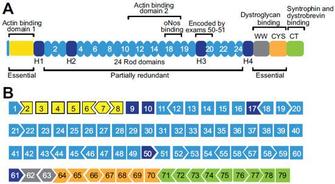
The article is a comprehensive review of the diagnosis and therapy of dystrophinopathies, which are inherited disorders affecting muscle function, primarily in boys. It covers the genetic basis of Duchenne muscular dystrophy (DMD) and Becker muscular dystrophy (BMD), the role of serum creatine kinase (CK) in diagnosis, and the use of molecular techniques like multiplex PCR, MLPA, and next-generation sequencing for detecting mutations in the dystrophin gene. The review also discusses various therapeutic approaches, including corticosteroids, innovative steroids like vamorolone, and gene therapy strategies such as exon skipping drugs. It highlights the importance of a multidisciplinary approach to manage the disease's impact on multiple organs and the potential of gene editing to correct genetic mutations causing the disease.

Dystrophinopathies Duchenne muscular dystrophy (DMD) Becker muscular dystrophy (BMD) Dilated cardiomyopathy (DCM) Genetic mutations Molecular diagnosis Pharmacological therapy Gene therapy Muscle and bone dystrophy Agilent Technologies NovaSeq 6000 SeqNext
Stile giornalisticoFattuale

Clinical, Radiological, and Neurophysiological Features in Patients With SPG11-HSP

Frontiersin 30 mar 2023 English

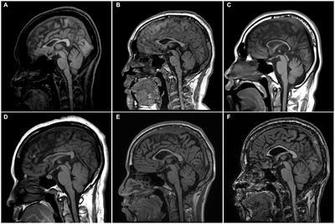
The article discusses a study on patients with Hereditary Spastic Paraplegia (HSP), specifically SPG11-HSP, which is characterized by progressive spastic weakness of the lower limbs. The study aimed to analyze the phenotype of SPG11-HSP, including clinical, radiological, electrodiagnostic, and neuropsychologic features. It involved a retrospective review of six patients diagnosed with SPG11-HSP, focusing on symptoms such as pseudobulbar dysarthria, intellectual disability, bladder dysfunction, and being overweight. The study found that the rostral body and anterior midbody of the corpus callosum were preferentially thinned, especially in the early stages of the disease. The condition worsened over time, with increased periventricular white matter signal changes and motor evoked potential abnormalities. The study was supported by the Health Fellowship Foundation and a grant from the Chonnam National University Hospital Biomedical Research Institute.

Hereditary Spastic Paraplegia SPG11-HSP Neurological Disorders Genetic Research Chonnam National University Hospital Y-RK
Stile giornalisticoFattuale

Pathophysiology and Management of Fatigue in Neuromuscular Diseases

Mdpi 15 gen 2023 English

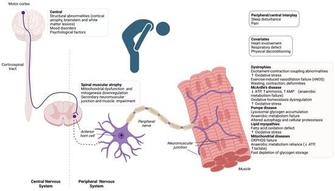
The article is a narrative review that discusses the prevalence and impact of fatigue in chronic diseases, particularly neuromuscular disorders. It highlights the two dimensions of fatigue: performance fatigability and perceived fatigue, and the importance of distinguishing these features during patient examination. The review emphasizes the role of central and peripheral nervous system alterations, as well as metabolic and psychological components, in the manifestation of fatigue. It also addresses the development of scales and questionnaires to assess fatigue in relation to disease progression and treatment efficacy. The review covers the pathophysiology of fatigue in common neuromuscular diseases such as muscular dystrophies, metabolic and mitochondrial myopathies, and Spinal Muscular Atrophy (SMA), and discusses current management strategies for fatigue. The literature search for this review was conducted on PubMed without a systematic protocol, focusing on the most recent literature from the last decade.

Chronic Diseases Neuromuscular Disorders Fatigue Pathophysiology Clinical Practice
Stile giornalisticoFattuale

An updated review on the role of prescribed exercise in the management of Amyotrophic Lateral Sclerosis

Expert Review of Neurotherapeutics 3 ago 2021 English

Exercise rehabilitation may counteract muscle disuse, weakness, deconditioning, joint tightness, contractures and pain in people with amyotrophic lateral sclerosis, while potentially improving function, independence, quality of life and cardiorespiratory performance. Evidence from resistance, endurance and combined-training studies remains preliminary and inconclusive because of small samples, heterogeneous disease stages and confounding variables. The review recommends individualized, standardized programs that minimize falls, fatigue, high resistance and eccentric loading, with home-based or telemedicine follow-up. Circulating myo-miRNAs and other biomarkers may help monitor rehabilitation and disease progression, while lower-risk activities such as swimming warrant further study.

Amyotrophic Lateral Sclerosis Exercise Rehabilitation Neuromuscular Disease Biomarkers Muscle Function Italy University of Padova University of Pisa Corrado Angelini Gabriele Siciliano AFM-Telethon
Stile giornalisticoInformativo

Primarily evidence-based medical review, while acknowledging expert interpretation and weak or inconclusive evidence.

Phenotype may predict the clinical course of facioscapulohumeral muscular dystrophy

Muscle & Nerve 21 mar 2019 English

Analysis of 642 patients with FSHD1 from the UK FSHD Patient Registry assessed the Comprehensive Clinical Evaluation Form developed by the Italian Clinical Network for FSHD. Most patients reported both facial and shoulder weakness, while nearly one-quarter had shoulder weakness without facial impairment. The facial-sparing group had a later age of onset and less severe motor disability, suggesting that clinical phenotype may help predict disease course and guide genetic diagnosis and outcome-measure selection in clinical trials.

Facioscapulohumeral Muscular Dystrophy Neuromuscular Disorders Clinical Phenotyping Genotype-Phenotype Correlation Disease Progression United Kingdom Italy Germany UK FSHD Patient Registry TREAT-NMD Alliance Italian Clinical Network for FSHD Giulia Ricci
Stile giornalisticoFattuale

Predominantly factual clinical research report based on registry data, with evidence-based interpretation of phenotype and disease course.

Ingaggia Messaggio
×

Registrati per inviare un messaggio a Gabriele

Hai già un account? Accedi
Cerchi lavoro? Registrati come giornalista
Verifica la tua email per completare la registrazione
Abbiamo appena inviato un'email a . Controlla la tua casella di posta e clicca sul link per verificare il tuo indirizzo email e completare la registrazione. Se non vedi l'email, assicurati di controllare la cartella spam o posta indesiderata.
Non hai ricevuto l'email?

Registrati per sbloccare i profili

Hai già un account? Accedi
Cerchi lavoro? Registrati come giornalista
Verifica la tua email per completare la registrazione
Abbiamo appena inviato un'email a . Controlla la tua casella di posta e clicca sul link per verificare il tuo indirizzo email e completare la registrazione. Se non vedi l'email, assicurati di controllare la cartella spam o posta indesiderata.
Non hai ricevuto l'email?