توظيف الصحفيين

الناشرون وهيئات البث فرق تسويق المحتوى فرق العلاقات العامة والاتصال فرق المخاطر والاستخبارات ابحث عن صحفيين الرصد الإعلامي الأسعار

للصحفيين

وظائف صحفية أسعار الأجور أنشئ ملفك المجاني

نبذة عن Giorgio

أنا صحفي مستقل ومُنسق محلي مقيم في بلغراد، صربيا. أنا نائب المدير والمراسل الرئيسي لشؤون البلقان في eastjournal.net، الصحيفة الإيطالية الأكثر قراءة في موضوعات أوروبا الشرقية. أكتب أخباراً وتقارير وتحليلات وموضوعات مطولة باللغات الإيطالية والإنجليزية والصربية؛ ومن بين الجهات الأخرى، أساهم في Balkan Insight وEastWest وIlTascabile. مجال خبرتي هو السياسة والاقتصاد والمجتمع في دول البلقان. لدي Master degree في الدراسة والبحث حول أوروبا الشرقية؛ الموضوعات المفضلة لدي هي تاريخ يوغوسلافيا ونظامها السياسي، وكذلك تفكك يوغوسلافيا. أعمل حالياً على إنتاج فيلم وثائقي عن العنف والانتهاكات التي يتعرض لها المهاجرون على طول طريق البلقان.

اللغات
البوسنية الكرواتية الإنجليزية الفرنسية الإيطالية الصربية
ظهر في
Eastjournal Balkan Insight Il Tascabile Cafébabel Editorialedomani Euronews L'Espresso

الأعمال 146

Greece Unveils New Rules Banning Social Media Use Among Minors

Balkan Insight 12 أكتوبر 2026 English

Greece has introduced legislation to bar children under 15 from using social networks, with the rules due to take effect on January 1, 2027, subject to parliamentary approval. Facebook, TikTok, LinkedIn and Instagram are among the platforms initially covered, with others to be added later; ordinary internet access and other technology are not covered. Enforcement will use mechanisms under the EU Digital Services Act. The bill is due before a parliamentary committee on October 13, with a vote targeted for October 22. The measure follows Greece’s school mobile-phone ban and existing parental-control resources, including the Kids Wallet App.

Social Media Regulation Children’s Digital Rights Digital Addiction Online Safety Greece Government of Greece European Union Greek Parliament Akis Skertsos Adonis Georgiadis Dimitris Papastergiou Meta
أسلوب التغطيةوقائعي

Straightforward factual report on the proposed legislation and its implementation.
Week in Review: Realities Old and New

Balkan Insight 9 أكتوبر 2026 English

A roundup of Balkan Insight coverage focuses on elections and shifting political dynamics across the Western Balkans. In Bosnia and Herzegovina, nationalist parties strengthened their position despite new voting technology, while civic and left-leaning parties lost ground. Kosovo elected Justina Shiroka Pula president after a tense political week, though the country faces growing international isolation and uncertainty about US policy. Serbia's upcoming parliamentary election will test the ruling Progressive Party against the Student List, which evolved from a protest movement into an electoral contender. In Albania, proposed criminal-procedure changes have raised concerns that they could weaken the anti-corruption prosecution office. The roundup also highlights Norwegian aid worker Tommy Olsen's trial in Greece, which he says is intended to discourage migrant-rights assistance.

Balkan Politics Elections Bosnia and Herzegovina Elections Kosovo Politics Serbian Student Movement Rule of Law Anti-Corruption Migration and Humanitarian Aid Western Balkans Kosovo Bosnia and Herzegovina Kosovo Specialist Chambers
أسلوب التغطيةإخباري

Mostly factual roundup, with some interpretive framing and attributed opinion about political developments.

السياق السياسيوسط

The roundup covers competing political developments and attributed viewpoints without advancing a consistent partisan position.

Moldova Speeds Up Construction of Trump-Named Power Line

Balkan Insight 7 أكتوبر 2026 English

Moldova’s government approved a draft law designating a planned 400-kilovolt power line to Romania a national public utility, enabling land acquisition and other project procedures to move faster. The 190-kilometre connection, including sections in both Moldova and Romania, has $130 million in US backing and is expected to be completed in 2032. Named the “Trump Liberty Line” by the US embassy, it is intended to strengthen Moldova’s energy security and integration with European electricity markets amid disruptions linked to Russian attacks on Ukraine. The name has drawn little public controversy, with attention focused mainly on the line’s expected benefits.

Energy Security Electricity Infrastructure Moldova-Romania Relations US-Moldova Relations Moldova Romania Ukraine Moldovan government United States Russia European Union Vasile Tofan
أسلوب التغطيةوقائعي

Predominantly factual reporting, with little subjective language.

Mayor of Turkey’s Third-Largest City Joins Ruling Party

Balkan Insight 7 أكتوبر 2026 English

Izmir Metropolitan Mayor Cemil Tugay, elected as a Republican People’s Party candidate in 2024, joined President Recep Tayyip Erdogan’s Justice and Development Party, giving the ruling party a mayoralty it has never won at the ballot box. Tugay praised Erdogan and said he wanted to serve Izmir, while Erdogan promised support. The switch comes amid upheaval in Turkey’s opposition, including Ankara Mayor Mansur Yavas’s departure from the CHP. Despite Tugay’s move, opposition parties retain a strong majority on Izmir’s metropolitan council, and New Party leader Ozgur Ozel challenged Erdogan’s claim of political victory.

Turkish Politics Party Switching Local Government Opposition Politics Turkey Izmir Ankara Justice and Development Party (AKP) Republican People's Party (CHP) New Party Nationalist Party Cemil Tugay
أسلوب التغطيةوقائعي

Primarily factual reporting, with attributed political claims and reactions.

السياق السياسيوسط

Straightforward coverage of a party defection and opposition realignment, presenting statements from both sides without clear ideological advocacy.

Bulgarian PM and Opposition Quarrel Over Black Sea Drone Attack

Balkan Insight 6 أكتوبر 2026 English

A drone attack in Bulgaria's Black Sea zone sank a Palau-flagged cargo ship and damaged a Togo-flagged vessel, injuring crew members and prompting an ongoing rescue operation. Prime Minister Rumen Radev condemned the incident as a violation of international law but did not identify the attacker, saying the drones could have been Russian or Ukrainian. Opposition figures accused him of avoiding blame on Russia and criticized the government's preparedness. Acting President Iliana Iotova convened Bulgaria's security council. The vessels' cargo and the attack's precise nature remain unconfirmed.

Black Sea drone attack Bulgarian politics Russia-Ukraine war Maritime security Bulgaria Black Sea Russia Bulgarian government We Continue the Change Democratic Bulgaria Bulgaria's security council Ukraine
أسلوب التغطيةمتوازن

Mostly factual reporting, with critical framing of the government's response and attributed opposition allegations.

السياق السياسيوسط

Reports competing political claims and government statements without endorsing a party, while noting criticism of Radev's perceived sympathy for the Kremlin.

Books: Sarajevo, the Fragile Laboratory of the Balkans, Europe's Metronome

East Journal 20 مارس 2026 Italian

Giorgio Fruscione reviews Joshua Evangelista’s book on Sarajevo, which portrays the city through its imperial, architectural, wartime and contemporary histories rather than reducing it to the 1990s siege. The book is praised for avoiding Balkan stereotypes and examining Sarajevo’s multicultural identity, its uneasy relationship with Bosnia and Herzegovina’s post-Dayton ethnic order, and its international significance. Its discussion of the Sarajevo Haggadah, peace movements and figures such as Jovan Divjak presents the city as a place of cultural exchange and resistance. The review argues that Sarajevo’s wartime legacy should serve as a warning about the consequences of nationalism and the world’s failure to learn from past conflicts.

Book Review Sarajevo Bosnian War Balkan History Multiculturalism Peace Initiatives Ethnonationalism Bosnia and Herzegovina The Balkans Gariwo Foundation Beati costruttori di pace Global Sumud Flottilla
أسلوب التغطيةتفسيري

A strongly evaluative book review combining historical reporting with clear approval of multiculturalism and criticism of ethnonationalism.

السياق السياسييسار الوسط

Supports multiculturalism, peace activism and opposition to ethnonationalism, while criticizing the failures of European and international responses to war.

From Srebrenica to Gaza, we learned nothing

East Journal 31 يوليو 2025 Italian

The article denounces what it portrays as the European Union’s hypocrisy in commemorating the Srebrenica genocide while failing to act against Israeli actions in Gaza, described as deliberate starvation, widespread bombardments, and ethnic persecution. It argues that Europe’s political stance and continued support for Israel amount to complicity in what multiple scholars and NGOs now define as genocide. Parallels are drawn between the international community’s passivity during Srebrenica and its current inaction, invoking Gregory Stanton’s stages of genocide to frame events in Gaza. The text highlights denialism, propaganda, and moral inconsistency among Western institutions and media, concluding that Europe risks losing its moral authority and historical memory by enabling ongoing atrocities.

War in Gaza Srebrenica genocide European Union foreign policy Gaza European Union Bosnia and Herzegovina European Commission United Nations Israeli government Dutch UN peacekeepers Ursula von der Leyen Benjamin Netanyahu
أسلوب التغطيةرأي

The text is highly opinionated, openly argumentative, and uses strong subjective and moral language.

السياق السياسييسار

Strong criticism of Israeli government actions, EU foreign policy, and Western complicity, consistent with left-wing perspectives on international justice and human rights.

Why the Protests in Serbia Are Succeeding

East Journal 20 فبراير 2025 Italian

Serbia’s student-led protests, triggered by the Novi Sad railway-station canopy collapse that killed 15 people, have expanded into the country’s largest civil-disobedience movement in two decades. Their strength comes from maintaining a civic rather than party-political character, attracting students, teachers, lawyers, farmers and some state-media journalists while demanding transparency over the station’s renovation and broader institutional accountability. The resignation of Prime Minister Miloš Vučević has not satisfied protesters because their goal is to dismantle the governing system associated with Aleksandar Vučić, not merely replace an officeholder through early elections. The movement also avoids divisive issues such as Kosovo and EU foreign policy, which could fragment Serbian society and benefit the regime. The article argues that continued success depends on preserving this nonpartisan civic strategy and sustaining popular support despite government accusations of a foreign-backed “colour revolution” and the perceived complicity of the EU in prioritizing stability, investment and Serbian lithium over democratic standards.

Protests in Serbia Democracy and Rule of Law Aleksandar Vučić Government Corruption and Government Transparency European Union and the Western Balkans Lithium Mining in Serbia Serbia Novi Sad Kosovo Government of Serbia European Union Serbian Progressive Party
أسلوب التغطيةتفسيري

Strongly analytical and critical, presenting an argument about the protests, the Vučić government and Western support for Serbia with persuasive language.

السياق السياسييسار الوسط

Supports civic mobilization, democratic accountability, transparency, free information and the rule of law, while criticizing authoritarian governance and Western accommodation of it.

Books: “Km 21, Where the Cherries Fell Silent,” an Interview with Co-Author Valerio Evangelista

East Journal 11 فبراير 2025 Italian

Co-author Valerio Evangelista explains how Km 21. Where the Cherries Fell Silent grew from a video showing a young Bosnian prisoner being removed from a military truck. Drawing on archival research, field interviews and survivor testimony, the book reconstructs the experiences of victims and survivors of the 1992 ethnic cleansing around Prijedor, including those detained at Keraterm, Omarska and Trnopolje. Evangelista describes how ordinary conversation, memories and humor coexisted with torture and terror as a form of psychological survival. The interview also examines the region’s unresolved memory politics: former sites of detention and abuse have returned to civilian use without adequate memorials, nationalist groups continue to glorify convicted war criminals, and schools and public authorities often minimize crimes against Bosniaks and Bosnian Croats. The Dayton system is portrayed as having ended the war while institutionalizing ethnic divisions, leaving reconciliation fragile and incomplete.

Bosnian War Ethnic Cleansing War Crimes Collective Memory Reconciliation Prijedor Detention Camps Book Interview Prijedor Bosnia and Herzegovina Republika Srpska Serb-Bosnian forces Bosnian Serb nationalist groups
أسلوب التغطيةمتوازن

A fact-based interview grounded in historical research and testimony, but containing strong interpretive judgments about denial, nationalism and reconciliation.

السياق السياسييسار الوسط

Criticizes ethnic nationalism, denial of war crimes and the failure of postwar institutions to establish shared historical responsibility.

Bosnia: Srebrenica, the Permanent Genocide

East Journal 13 يناير 2025 Italian

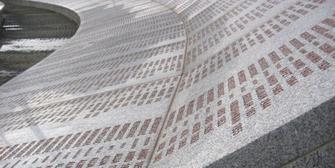
Thirty years after the Srebrenica genocide, the identification and burial of victims remain incomplete. Although 8,372 victims are recorded, about 1,400 burials are still outstanding, nearly 800 people remain unidentified or missing, and some remains cannot be identified because no relatives are available for DNA comparison. The bodies were dispersed among primary and secondary mass graves across eastern Bosnia, while silence, intimidation and the deaths of witnesses and perpetrators have made recovery increasingly difficult. Families also face the recurring trauma of reopening graves to add remains discovered later. The case of survivor Ramiz Nukić, who recovered more than 300 remains while searching for his own relatives, illustrates the decades-long effort to account for the dead and why the genocide remains an unresolved, ongoing tragedy.

Srebrenica Genocide Bosnian War Mass Graves and Human Remains Genocide Victim Identification War Crimes Commemoration Srebrenica Bosnia and Herzegovina Bosnia's Eastern Region Republika Srpska Army United Nations General Assembly Giorgio Fruscione Ramiz Nukić
أسلوب التغطيةإخباري

Predominantly factual and analytical, though it uses emotive language to convey the continuing grief of victims' families.

اعرض الأعمال كلها (146) بحساب مجاني

وظّف رسالة
×

سجّل لمراسلة Giorgio

هل لديك حساب بالفعل؟ تسجيل الدخول
هل تبحث عن عمل؟ سجّل كصحفي
وثّق بريدك الإلكتروني لإتمام التسجيل
لقد أرسلنا للتوّ رسالة إلكترونية إلى . يرجى التحقّق من صندوق الوارد والنقر على الرابط لتوثيق عنوان بريدك الإلكتروني وإتمام تسجيلك. وإذا لم تجد الرسالة، فتأكّد من التحقّق من مجلد البريد العشوائي أو غير المرغوب فيه.
لم تستلم البريد الإلكتروني؟

سجّل للاطّلاع على الملفات الشخصية

هل لديك حساب بالفعل؟ تسجيل الدخول
هل تبحث عن عمل؟ سجّل كصحفي
وثّق بريدك الإلكتروني لإتمام التسجيل
لقد أرسلنا للتوّ رسالة إلكترونية إلى . يرجى التحقّق من صندوق الوارد والنقر على الرابط لتوثيق عنوان بريدك الإلكتروني وإتمام تسجيلك. وإذا لم تجد الرسالة، فتأكّد من التحقّق من مجلد البريد العشوائي أو غير المرغوب فيه.
لم تستلم البريد الإلكتروني؟