Engager des journalistes

Éditeurs et diffuseurs Équipes de marketing de contenu Équipes RP et communication Équipes risques et renseignement Trouver des journalistes Veille médias Tarifs

Pour les journalistes

Offres d'emploi en journalisme Tarifs Créez votre profil gratuit

À propos de Halima

Halima Athumani est journaliste indépendante basée en Ouganda avec une expérience radiophonique de plus de 13 ans. Halima a travaillé pour Voice of America-Africa desk-(Radio and Television), https://www.voanews.com/author/halima-athumani/tvv_o, National Public Radio (basée aux États-Unis) et est actuellement animatrice du podcast d'un procès en cours pour crimes de guerre en Suède **** et https://www.scidev.net/global/authorhalima-athumani.html Halima a travaillé pour des médias locaux en Ouganda, notamment 93.3 KFM (2006-2009) et Uganda Radio Network-News Agency (2010-2014). En 2016, Halima s'est lancée dans la télévision avec sa première enquête intitulée "Uganda's Health Pyramids", réalisée avec le soutien total de Banyak Films-UK. Le film d'investigation spécial a été diffusé sur Al Jazeera, People and Power. Elle a réalisé des missions spéciales pour Public Radio International-America Abroad Media, la BBC et des podcasts pour University of Cambridge. **** 3 février 2022 **** 19 février 2022 En tant que fixeuse, Halima a travaillé en étroite collaboration avec des photographes et cinéastes renommés de The National Geographic, ainsi qu'avec des équipes de production cinématographique de la BBC, du Japon et d'Allemagne. Local Producer for: **** The Messenger- 2021 **** 28 octobre 2020 • Série documentaire de la BBC (Ouganda) - Can You Farm? décembre 2018 (recherche)- février 2019 (productrice)

Langues
anglais
Vu dans
Voice of America Allafrica Voaafrica Geeska NPR The World Al Jazeera BBC MPR News National Geographic VOA Indonesia Voz de América WHRO Public Media Silkroadregained Vnexplorer Aa Voazimbabwe Wbur

Travaux 106

African solidarity with Gaza doesn't downplay African conflicts

Geeska 24 juil. 2025 English

Examines internal tensions among African academics over issuing a solidarity statement for Palestinians during the Gaza crisis, highlighting concerns that such gestures overlook ongoing African conflicts. Describes debates within the African Humanities Association, where some feared undermining cohesion while others emphasized selective empathy that devalues African suffering. Argues that equating struggles in Gaza, Sudan, and Congo obscures their distinct historical and political roots, stressing the difference between anti-colonial liberation and post-colonial internal conflicts. Calls for deeper scholarly engagement with African crises rather than simplistic solidarity slogans, urging rigorous analysis of conflicts rooted in colonial legacies, citizenship disputes, and regional dynamics. Advocates restoring visibility to African lives through research and nuanced understanding rather than symbolic declarations.

Israel–Palestine conflict African regional conflicts Post-colonialism and decolonisation Academic and political solidarity debates Gaza Democratic Republic of Congo Sudan African Humanities Association CODESRIA Centre for African Studies University of Cape Town Issa Shivji
Style rédactionnelInterprétatif

Highly interpretive analysis with strong subjective arguments on solidarity, colonialism, and African conflicts.

Contexte politiqueGauche

Critiques colonialism, settler colonialism, and emphasizes liberation struggles and post-colonial structural analysis.
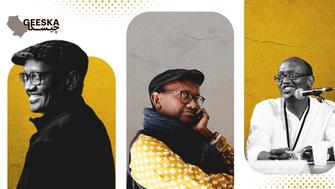

East Africa, protests and crackdowns

Geeska 22 juil. 2025 English

European and East African observers highlight a decline in democratic institutions across Uganda, Kenya, and Tanzania, where youth populations face unemployment, rising living costs, and limited political influence. Kenyan Gen Z protests against the 2024 Finance Bill demonstrate a heightened political consciousness, contrasting with the suppressed and discouraged youth movements in Uganda and Tanzania. Both Museveni’s and Suluhu’s governments respond to dissent with arrests, violence, and intimidation, leading to political numbness among young people. Historical socioeconomic disparities in Kenya contribute to stronger public mobilisation. As Kenyans continue challenging President Ruto’s leadership, some are turning toward figures such as former chief justice David Maraga as potential democratic stabilizers for future elections.

East African politics Youth protests Human rights Government crackdowns Kenya Uganda Tanzania European Union Parliament Uganda government Kenya government Tanzania government CHADEMA
Style rédactionnelInterprétatif

Strongly analytical and interpretive with subjective assessments about governments and youth sentiment.

Contexte politiqueCentre gauche

Critiques authoritarian governance while emphasizing democratic norms and social grievances.

Abdourahman Waberi and the third generation of African literature

Geeska 21 juil. 2025 English

Abdulrahman Waberi is presented as a leading figure of the third generation of African literature, distinguished by blending tradition with modernity and engaging with global themes shaped by migration and exile. Born in Djibouti and later educated in France, he developed a multifaceted cultural identity combining Arabophone, Francophone, and Anglophone influences, which informs both his creative works and academic scholarship. His major contributions across poetry, novels, and short stories, including The Nomads, Harvest of Skulls, The Land Without Shadows, and Naming the Dawn, are recognised for their lyrical language, symbolic depth, and exploration of historical and political realities. His engagement in international literary forums and his influence on contemporary African literature underscore his role as a bridge between generations and a key voice in shaping post-independence African literary identity.

African literature Literary criticism Biography Djibouti Africa Rwanda Akazu Radio France Internationale George Washington University Abdulrahman Waberi Chinua Achebe Kofi Awoonor
Style rédactionnelÉquilibré

A mix of factual biography and interpretive literary analysis with subjective interpretations of symbolism and impact.

Derek Peterson: ‘What I try to do is to explain why demagogues like Amin possess the power to convince’

Geeska 28 juin 2025 English

Historian Derek Peterson explains that Idi Amin’s violent dictatorship cannot be understood through repression alone: many Ugandans supported the regime because they viewed its anti-colonial, nationalist and Pan-Africanist projects as avenues for social and political liberation. His book examines the bureaucrats, broadcasters, religious figures, academics and artists who built the regime’s institutional and ideological infrastructure, while also documenting how economic controls, religious persecution and state violence narrowed everyday life. Peterson discusses the role of archives in recovering this history, the Museveni government’s reluctance to confront Uganda’s past, and the Rwenzururu movement’s efforts to resist Amin’s media and political system. He argues that Amin’s use of nationalism, media and resentment offers lessons for understanding modern demagogues and for identifying forms of resistance.

Idi Amin’s Uganda Dictatorship and Political Violence Decolonisation and Pan-Africanism Religious Authoritarianism Archival History Demagoguery and Resistance Uganda East Africa Rwenzori Mountains Idi Amin’s government Rwenzururu movement Pan-Africanist Congress
Style rédactionnelÉquilibré

Analytical interview that presents historical evidence while advancing Peterson’s interpretation of Amin’s popular appeal and the lessons of demagoguery.

Contexte politiqueCentre gauche

The interview is sympathetic to anti-colonial and Pan-Africanist aspirations while strongly criticising dictatorship, political violence and the manipulation of public resentment.

Ugandan boda-boda industry sees green investment from USAID

VOA Africa 15 nov. 2024 English

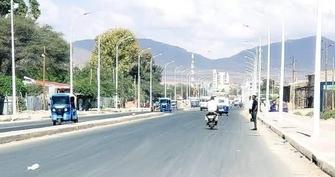
Young Ugandans in the boda-boda industry are transitioning to electric motorbikes through a collaboration between Gogo Electric and USAID's Strategic Investment Activity. While this partnership marks a significant step towards eco-friendly transportation, both manufacturers and riders acknowledge the necessity for further advancements in the technology.

Green Investment Motorcycle Taxi Industry Electric Vehicles Uganda USAID Gogo Electric
Style rédactionnelÉquilibré

Balanced reporting on the adoption of electric motorbikes and the need for further development.

Somalis in Ethiopia: still outsiders looking in

Geeska 12 nov. 2024 English

Somalis in Ethiopia continue to face systemic marginalisation rooted in imperial expansion, cultural repression, and persistent state suspicion that challenges their claims to full Ethiopian identity. Successive governments have maintained control over the Somali region through coercion, manipulation of local leadership, and limited autonomy under ethnic federalism, which has largely functioned as an instrument of central authority rather than self-governance. Although the region is currently more stable than other parts of Ethiopia, this calm reflects negative peace sustained by fear rather than genuine inclusion. Political shifts under Abiy Ahmed have brought prominent Somali officials into federal leadership, yet tensions persist as many Somalis still identify primarily with their distinct heritage and seek greater self-determination. Controversies involving leaders such as Mustafa Omer and evolving positions of the ONLF highlight continuing struggles over identity, autonomy, and the Ethiopian state’s enduring patterns of control. The Somali population remains caught between cultural pride, political caution, and an unfulfilled aspiration for meaningful self-rule.

Ethnic relations in Ethiopia Somali identity Ethiopian politics Autonomy and federalism Ethiopia Somali Region (Ogaden) Somalia Ethiopian Government Somali Regional State Ogaden National Liberation Front (ONLF) Abiy Ahmed Mustafa Omer
Style rédactionnelInterprétatif

The article is heavily analytical and interpretive, presenting strong subjective perspectives on ethnic identity, historical injustice, and political marginalisation.

Contexte politiqueGauche

The article critiques state power, centralised authority, and ethnic marginalisation while supporting minority rights and self‑determination.

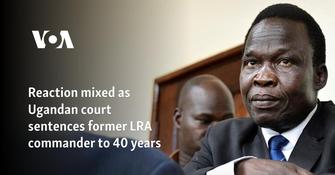
Reaction mixed as Ugandan court sentences former LRA commander to 40 years

VOA News 25 oct. 2024 English

A Ugandan court sentenced former LRA commander Thomas Kwoyelo to 40 years in prison for war crimes, including murder and gender-based violence. The decision has sparked mixed reactions, with some advocating for reconciliation through traditional methods. The court emphasized punishment over rehabilitation, while some organizations welcomed the focus on gender-based violence. The case highlights ongoing issues related to the long-standing conflict in northern Uganda, with LRA leader Joseph Kony still wanted by the International Criminal Court.

War Crimes Justice System Gender-Based Violence Uganda Northern Uganda Lord’s Resistance Army International Criminal Court Foundation for Justice and Development Initiative Thomas Kwoyelo Francis Okello Oloya Duncan Gaswaga Susan Aceng Oroma
Style rédactionnelÉquilibré

Mixed reactions to the sentencing, with some supporting the decision and others advocating for reconciliation.

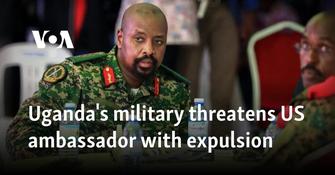
Uganda's military threatens US ambassador with expulsion

VOA Zimbabwe 5 oct. 2024 English

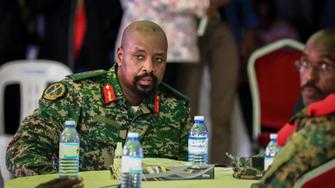
Uganda's military, led by General Muhoozi Kainerugaba, has issued an ultimatum to U.S. Ambassador William Popp to apologize or face expulsion, following U.S. sanctions on Ugandan police officers for human rights violations. Kainerugaba's authority to make such demands is questioned by local human rights advocates. The U.S. State Department has sanctioned four Ugandan officers for torture and inhumane treatment, highlighting ongoing human rights concerns in Uganda. Despite the tensions, the U.S. Embassy continues to engage with Ugandan authorities on various issues.

Diplomatic Relations Human Rights Violations Uganda United States Uganda's Defense Forces U.S. State Department Foundation for Human Rights Initiative Uganda African Center for Treatment and Rehabilitation of Torture Victims Uganda People's Defense Forces Muhoozi Kainerugaba William Popp Yoweri Museveni
Style rédactionnelÉquilibré

The article presents a mix of factual reporting and subjective statements, particularly in the quotes from individuals.

Contexte politiqueCentre

Focuses on diplomatic relations and human rights without a clear political bias.

Uganda's military threatens US ambassador with expulsion

Voice of America 4 oct. 2024 English

Uganda's military, led by General Muhoozi Kainerugaba, has issued an ultimatum to U.S. Ambassador William Popp to apologize or face expulsion, following U.S. sanctions on Ugandan police officers for human rights violations. Kainerugaba's authority to make such demands is questioned by local human rights advocates. The U.S. State Department sanctioned four officers for torture and inhumane treatment, highlighting ongoing human rights concerns in Uganda. Despite the threats, the U.S. Embassy continues its diplomatic engagement with Uganda, emphasizing accountability for human rights abuses.

Diplomatic Relations Human Rights Violations Uganda United States Uganda's Defense Forces U.S. State Department Foundation for Human Rights Initiative Uganda African Center for Treatment and Rehabilitation of Torture Victims Uganda People's Defense Forces Muhoozi Kainerugaba William Popp Yoweri Museveni
Style rédactionnelÉquilibré

The article presents a mix of factual reporting and subjective statements, particularly in the quotes from individuals.

Contexte politiqueCentre

The article discusses diplomatic tensions and human rights issues without a clear political bias.

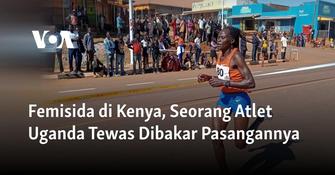
Femicide in Kenya, Ugandan Athlete Burned to Death by Partner

VOA Indonesia 8 sept. 2024 Indonesian

The brutal murder of Ugandan athlete Rebecca Cheptegei by her partner in Kenya highlights the pervasive issue of domestic violence and femicide in the region. Human rights groups are calling for stronger legal measures to protect women. The incident draws parallels with previous cases of violence against female athletes in Kenya, such as Agnes Tirop and Damaris Muthee Mutua. Organizations like UN Women and Tirop’s Angels emphasize the need for societal change and better protection for female athletes. The article advocates for recognizing such acts as femicide rather than domestic violence, urging collective action to end gender-based violence.

Domestic Violence Femicide Athletics Kenya Uganda UN Women UNODC Federasi Atletik Uganda Atletik Dunia Tirop’s Angels Pusat Pendidikan dan Kesadaran Hak Rebecca Cheptegei
Style rédactionnelInterprétatif

The article contains subjective statements and advocacy for stronger legal measures against domestic violence.

Contexte politiqueGauche

The article advocates for social justice and stronger legal measures to protect women from domestic violence.

Voir les 106 réalisations avec un compte gratuit

Autres journalistes à Kampala

Recruter Message
×

Inscrivez-vous pour envoyer un message à Halima

Vous avez déjà un compte ? Se connecter
Vous cherchez du travail ? S'inscrire en tant que journaliste
Vérifiez votre e-mail pour finaliser l'inscription
Nous venons d'envoyer un e-mail à . Veuillez consulter votre boîte de réception et cliquer sur le lien pour vérifier votre adresse e-mail et finaliser votre inscription. Si vous ne voyez pas l'e-mail, pensez à vérifier votre dossier spam ou courrier indésirable.
Vous n'avez pas reçu l'e-mail ?

Inscrivez-vous pour débloquer les profils

Vous avez déjà un compte ? Se connecter
Vous cherchez du travail ? S'inscrire en tant que journaliste
Vérifiez votre e-mail pour finaliser l'inscription
Nous venons d'envoyer un e-mail à . Veuillez consulter votre boîte de réception et cliquer sur le lien pour vérifier votre adresse e-mail et finaliser votre inscription. Si vous ne voyez pas l'e-mail, pensez à vérifier votre dossier spam ou courrier indésirable.
Vous n'avez pas reçu l'e-mail ?