توظيف الصحفيين

الناشرون وهيئات البث فرق تسويق المحتوى فرق العلاقات العامة والاتصال فرق المخاطر والاستخبارات ابحث عن صحفيين الرصد الإعلامي الأسعار

للصحفيين

وظائف صحفية أسعار الأجور أنشئ ملفك المجاني

نبذة عن Hana

أنا صحفي/صحفية مقيم/مقيمة في أربيل، العراق؛ أعمل عن بُعد ومستعد/ة للسفر داخل العراق وخارجه. راوي/راوية قصص متعددة الوسائط وشغوف/ة بالتواصل الإنساني، ألتقط قصصاً غير مروية عبر العراق. أتخصص في التصوير الفوتوغرافي وتصوير الفيديو وسرد القصص الذي ينقل أصوات المجتمعات المهمشة واللاجئين والناجين من الأزمات. ملتزم/ة باستخدام الوسائط البصرية والمكتوبة كأداة للدعوة والتعليم وبث الأمل. مهتم/ة بالدعوة البيئية وإنقاذ الحيوانات. مؤسس/مؤسسة منصة تعليمية ونشاطية للتوعية ****، تركز أساساً على الإساءة وSRHR.

اللغات
العربية الإنجليزية الكردية
ظهر في
The Jiyan Archives Global Bar Magazine Einnews

الأعمال 28

Shatoo Kamaran and the Making of Jargy

The Jiyan Archives 8 أغسطس 2026 English

Shatoo Kamaran, a self-taught Kurdish special-effects artist from Slemani, built Jargy Studio from basement experiments using improvised materials into Kurdistan’s first special-effects studio and Iraq’s first female-owned studio of its kind. Her work spans film, advertising, horror and advocacy campaigns addressing women’s rights, while major projects such as a film about the Halabja chemical attack established her professional reputation. Despite discrimination from imported male specialists, limited resources and cultural restrictions on Kurdish women, Kamaran continues to expand the field, mentor emerging artists and seek international training. Jargy’s future depends on greater investment, infrastructure and recognition for local creative talent.

Special Effects Makeup Kurdish Cinema Women Artists Women’s Rights Entrepreneurship Cultural Identity Slemani Kurdistan Iraq 51 Labs Instagram Shatoo Kamaran
أسلوب التغطيةتفسيري

A strongly admiring profile that combines reported biography with advocacy for Shatoo Kamaran and greater support for Kurdish artists.

Jinwar: Where Women Rebuild the Future

The Jiyan Archives 7 مايو 2026 English

Jinwar, a women-led village in Rojava founded in 2017, offers women and children displaced by ISIS, patriarchal violence and conflict a communal alternative centered on solidarity, self-governance, ecological sustainability and mutual aid. Resident Yasmîn describes how shared decision-making, education, agriculture, health care, breadmaking and clothing production help residents rebuild their lives and develop economic self-sufficiency. The village supports newcomers emotionally while allowing them to decide whether to join its collective life, and raises children outside traditional gender stereotypes. Its residents view Jinwar as both a sanctuary and a model for a broader liberated society.

Women's communal living Gender equality Kurdish movement Refugee resettlement Patriarchy Ecological sustainability Jinwar, Rojava Efrîn, Syria Northeast Syria Jinwar Jinwar Academy Şifajin
أسلوب التغطيةتفسيري

Advocacy-oriented feature that presents Jinwar and its communal feminist model favorably, while incorporating interviews and descriptive reporting.

السياق السياسييسار الوسط

Supports feminist communalism, anti-patriarchal organizing and ecological self-management, while criticizing state-centric systems and occupation.

Gulnam Mahmood Mustafa: A Life in the Work of Women’s Liberation (1952–2023)

The Jiyan Archives 9 أبريل 2026 English

Gulnam Mahmood Mustafa (1952–2023) was a Kurdish professor, activist and polyglot who devoted her life to women’s liberation. After founding the Kurdish Women’s Student Union in Mosul in 1971, she organized for equal pay, education, healthcare, reproductive autonomy and protection from gender-based violence while supporting families displaced by conflict. The Ba’athist regime exiled her in 1976, but she continued organizing discreetly across Iraq, Kurdistan and Turkey. After returning to liberated Kurdish areas in the 1990s, she helped rebuild the Kurdish Women’s Union, promoted women’s participation in elections, established support centres and expanded advocacy to Arab, Yezidi, Assyrian and Turkmen women. Later, she engaged Kurdish diaspora communities and international organizations in Europe, including at the 2009 UN climate conference. Her most lasting contribution was authoring the constitution of the Women’s Union of Kurdistan, which continues to guide its work. She died in Kurdistan in 2023 after suffering a severe stroke in 2015.

Kurdish Women’s Rights Women’s Liberation Kurdish Feminism Political Repression Exile and Diaspora Gender-Based Violence Kurdish History Kurdistan Iraq Europe Kurdish Women’s Union Kurdish Women’s Student Union
أسلوب التغطيةتفسيري

Strongly commemorative and advocacy-oriented, presenting Gulnam Mustafa’s activism and legacy in highly admiring terms.

السياق السياسييسار الوسط

Supports Kurdish self-determination and feminist social change while emphasizing women’s rights, equality, anti-authoritarianism and cross-ethnic solidarity.

My Participation in Queer Festival Heidelberg

Holding Each Other Festival Exhibition 2026 4 أبريل 2026

Jury StatementBetty holds close the things that give her strength: tarot cards, candles, a makeup brush, headphones, a bottle of perfume. These objects do not appear as incidental props, but as carriers of meaning, material condensations of self-assurance, protection and inner orientation. This act of holding extends beyond the objects themselves: she grips a railing in an outwardly hostile environment and carefully draws aside a delicate, translucent curtain that both separates and connects her from the viewer’s, as well as the outside’s gaze. In this work, Hana Ibrahim develops a visual language that is at once warm, intimate and restrained, approaching Betty’s everyday life with due care and sensitivity.Read and view Betty’s journey in her Photostory.

Alevi Women as the Keepers of Memory

The Jiyan Archives 17 يناير 2026 English

Kurdish Alevi women are portrayed as the living archives of a faith and culture sustained through oral tradition, music, ritual and remembrance rather than written institutions. The piece argues that women preserved Alevi identity through discrimination, state assimilation, displacement and violence by transmitting songs, laments, stories and ethical values across generations. It highlights zakire, Ana Baci and figures such as Elif Ana, Zarife, Sakine Cansiz and Bese Hozat as examples of spiritual leadership, historical memory and political resistance. Their work connects Alevi principles of equality, consent and justice with the Kurdish women’s movement and the struggle against patriarchal power and ethnic erasure.

Alevism Kurdish Alevi Women Oral History and Cultural Memory Religious Discrimination Women’s Resistance Assimilation and Ethnic Erasure Kurdistan Turkey Dêrsim Alevi community Kurdistan Workers’ Party (PKK) Kurdistan Communities Union (KCK)
أسلوب التغطيةتفسيري

Strongly interpretive and advocacy-oriented, presenting Alevi women’s cultural and political roles through a sympathetic perspective while incorporating historical claims.

السياق السياسييسار الوسط

Supports Kurdish cultural and political rights, gender liberation and resistance to state oppression, while criticizing patriarchal and assimilationist structures.

Gold as Archive: Kurdish Women, Memory and Survival

The Jiyan Archives 19 ديسمبر 2025 English

Kurdish gold jewellery is presented as a portable archive of memory, identity and survival. Families have used bracelets, coins, belts and other pieces as emergency wealth during war, displacement and economic crisis, while wedding gifts and mahr provide women with assets under their own control. The article examines regional forms including the Kamar belt, Ashêqbend, Sar Parcham and Shahmaran motifs, linking their materials and designs to Kurdish, Yazidi, Assyrian and broader Middle Eastern traditions. It concludes that gold is more than ornament: it preserves women’s histories, supports family resilience and carries cultural belonging across borders and generations.

Kurdish Culture Women’s History Jewellery and Adornment Memory and Heritage Portable Wealth Migration and Displacement Kurdistan Middle East Diaspora Communities ISIS Ottoman Empire Dilman Yasin
أسلوب التغطيةتفسيري

Personal and interpretive cultural essay combining historical context with subjective reflections and advocacy for Kurdish women’s heritage.

The Morning Without Her: The Execution of a Kurdish Schoolgirl in Iran

The Jiyan Archives 25 نوفمبر 2025 English

Wahîda, a Kurdish teenager from Saqqez, was arrested at fifteen during an Iranian state crackdown on Kurdish activists in December 1982. After eight months in prison, she was executed by firing squad on 13 August 1983, and her body was never returned; her family was reportedly billed for the bullets used in her execution. Through testimony from her childhood friend Azita, the piece recounts Wahîda’s activism, imprisonment, execution, and the lasting grief carried by her family and community. Decades later, The Jiyan Archives preserves her photographs and story as an act of remembrance and resistance against the disappearance of Kurdish girls from historical memory.

Kurdish Political Activism Executions in Iran Kurdish Women's Resistance Political Repression Memory and Oral History Saqqez Iran Eastern Kurdistan (Rojhelat) Islamic Republic of Iran Komala Kurdistan Democratic Party of Iran (KDPI) Peshmerga
أسلوب التغطيةتفسيري

A strongly framed historical and testimonial narrative that condemns state repression while relying on eyewitness memory and documented events.

السياق السياسييسار الوسط

Sympathetic to Kurdish self-determination, women’s political participation, and resistance to authoritarian state repression.

Iraq: A Mother's Strength – A Family's Teamwork

Global Bar Magazine 31 أكتوبر 2025 Swedish

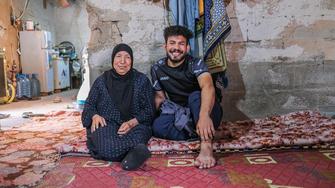
A family in Baiji, Iraq, rebuilds its life after displacement caused by the ISIL conflict. Matriarch Amsha leads the effort despite disability and hardship, supported by her children and daughter-in-law. With assistance from Welthungerhilfe in 2023, including a greenhouse, tools and agricultural training, the family restored their land and produced their first crops in 2024. While most produce is used for subsistence, they hope to expand production and income. Their collective work aims to secure long-term stability and a legacy for future generations.

Post-conflict recovery Agricultural livelihoods Human interest Iraq Baiji Salah Al-Din ISIL Amsha Ruqaya Ahmed Kawakib Welthungerhilfe
أسلوب التغطيةإخباري

Mostly factual human-interest reporting with minor subjective tone about resilience.

Stateless Twice Over: The Story of Meryem Mado from Hesekê

The Jiyan Archives 28 سبتمبر 2025 English

Meryem Mado, born near Tirbespî in 1942, was classified as Maktoum al-Qayd after Syria’s 1962 census stripped many Kurds in Hesekê province of citizenship. Her undocumented status prevented legal recognition of her marriage, restricted her children’s access to education, employment and travel, and left several generations stateless. After her husband’s death in 1976, she supported their four children through agricultural labor. Meryem moved to Erbil in 2019, where she is recognized as Kurdish, but her children and grandchildren remain undocumented in Syria despite government pledges to restore citizenship.

Kurdish Statelessness Kurdish Rights Syrian Citizenship Crisis Gender and National Oppression Rojava Human Rights Hesekê, Syria Erbil, Iraq Syrian state Rojava self-administration Meryem Mado Şînda Ekrem
أسلوب التغطيةتفسيري

Strongly sympathetic and advocacy-oriented narrative about the harms of Kurdish statelessness, while recounting documented personal experiences.

السياق السياسييسار الوسط

Supports Kurdish recognition and equal citizenship while criticizing state-imposed ethnic discrimination and advocating for human rights.

Della Murad: The Matriarch of Modern Kurdish Dress

The Jiyan Archives 19 أغسطس 2025 English

Della Murad transformed Kurdish dress from a largely private and traditional form of clothing into a visible expression of identity, pride and resistance. Drawing on her upbringing in Baghdad and experiences in Germany, Kurdistan and London, she modernized Kurdish garments through new cuts, colors, fabrics and the deliberate exposure of the derpê. Her designs gained attention across the Kurdish diaspora and at international cultural venues. As co-founder and Artistic Director of the charity Gulan, Murad also promoted Kurdish art and heritage, although an ambitious archive of regional dress was halted by ISIS’s violence. She hopes to establish a living design house in Kurdistan to preserve and reinterpret Kurdish fashion for future generations.

Kurdish Fashion Cultural Identity Cultural Preservation Kurdish Diaspora Women in the Arts Kurdistan Region of Iraq London Baghdad ISIS Victoria and Albert Museum British Museum Museum of London
أسلوب التغطيةتفسيري

Highly laudatory profile that presents Murad as a pioneering and transformative cultural figure.

اعرض الأعمال كلها (28) بحساب مجاني

وظّف رسالة
×

سجّل لمراسلة Hana

هل لديك حساب بالفعل؟ تسجيل الدخول
هل تبحث عن عمل؟ سجّل كصحفي
وثّق بريدك الإلكتروني لإتمام التسجيل
لقد أرسلنا للتوّ رسالة إلكترونية إلى . يرجى التحقّق من صندوق الوارد والنقر على الرابط لتوثيق عنوان بريدك الإلكتروني وإتمام تسجيلك. وإذا لم تجد الرسالة، فتأكّد من التحقّق من مجلد البريد العشوائي أو غير المرغوب فيه.
لم تستلم البريد الإلكتروني؟

سجّل للاطّلاع على الملفات الشخصية

هل لديك حساب بالفعل؟ تسجيل الدخول
هل تبحث عن عمل؟ سجّل كصحفي
وثّق بريدك الإلكتروني لإتمام التسجيل
لقد أرسلنا للتوّ رسالة إلكترونية إلى . يرجى التحقّق من صندوق الوارد والنقر على الرابط لتوثيق عنوان بريدك الإلكتروني وإتمام تسجيلك. وإذا لم تجد الرسالة، فتأكّد من التحقّق من مجلد البريد العشوائي أو غير المرغوب فيه.
لم تستلم البريد الإلكتروني؟