Editoras e emissoras Equipes de marketing de conteúdo Equipes de RP e comunicação Equipes de risco e inteligência Jornalistas e profissionais de imprensa Monitoramento de mídia Preços

Sobre Hanna

Trabalhos 9

My Life in Chaos

Profil 14 ago. 2017 German

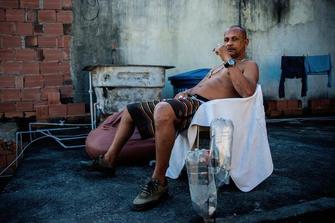
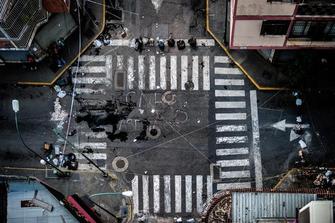
After three and a half years in Venezuela, Austrian journalist Hanna Silbermayr describes the country’s economic collapse, shortages, hyperinflation and escalating political violence. She recounts people searching rubbish for food, the dangerous black market, chaotic currency decisions and security forces’ violent suppression of protests. As the crisis deepens, international connections diminish and Venezuelans—including people in her own circle—leave the country. With unrest intensifying and her family’s safety at risk, Silbermayr decides to return to Austria.
Venezuelan Economic Crisis Hyperinflation Political Crisis in Venezuela Food and Medicine Shortages Protests and Political Violence Emigration from Venezuela Venezuela Caracas Austria Government of Venezuela Venezuelan Supreme Tribunal of Justice National Assembly of Venezuela
Estilo de reportagemInterpretativo

First-person reportage with strongly critical judgments about Venezuela’s political leadership and the country’s deteriorating conditions.

Contexto políticoCentro-esquerda

Critical of Maduro’s government and its authoritarian response, while presented as personal reportage rather than an explicit ideological argument.
A Sick Health System

Wiener Zeitung 12 mar. 2015 German

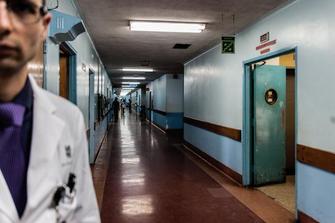
Venezuela’s hospitals faced acute shortages of medicines, equipment and basic supplies amid inflation, foreign-currency controls and unpaid debts to overseas suppliers. At Caracas’s university hospital, operations were canceled and patients and families had to search for or purchase necessities themselves; one patient described nearly dying after an infection could not be treated with hospital antibiotics. Doctors and medical associations called attention to the crisis and staged protests, while the government was accused of minimizing the problem and blaming opponents. Doctors also faced threats and violence. The government later announced the seizure of a large stockpile of medical goods in Aragua and promised to distribute it to hospitals.

Healthcare Crisis Medicine Shortages Venezuela's Economic Crisis Hospital Conditions Political Protests Venezuela Caracas Aragua Venezuelan government Venezuelan Medical Federation (FMV) Venezuelan Association of Clinics and Hospitals (AVCH) Venezuelan Association of Medical Technology Representatives (AVEDEM)
Estilo de reportagemInterpretativo

Reported as an investigative feature, but uses vivid, emotionally charged testimony and critical framing of government inaction.

Contexto políticoCentro-esquerda

Critical of the Maduro government’s handling of the health crisis, while primarily focused on reporting conditions and testimony.

On the Sidelines

Datum 6 fev. 2015 German

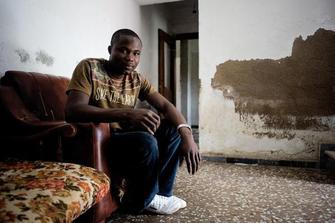
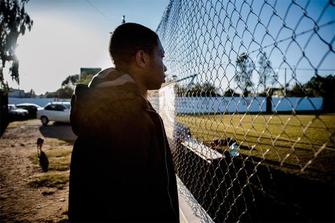
Cameroonian teenager Daniel Kombi was taken to Argentina by a supposed football agent who promised a trial with River Plate, then abandoned him without a club, valid immigration status or support. The account places his experience within a wider pattern of African minors being recruited through dubious intermediaries who charge families substantial fees and leave unsuccessful players stranded. Jean Claude Mbvoumin, founder of the NGO Foot Solidaire, calls the practice human trafficking and urges stronger protections, local sports development and accountability for agents and parents. FIFA rules restrict international transfers of minors, and FC Barcelona was sanctioned for violating them. Daniel eventually regularized his status, returned to school and joined a small Argentine club, while continuing to pursue football.

Human Trafficking Youth Football Exploitation of Minors Migration Football in Africa Argentina Cameroon France Foot Solidaire FIFA FC Barcelona African Union
Estilo de reportagemInterpretativo

Investigative reportage takes a strongly critical stance toward the exploitation of underage footballers, while grounding its claims in interviews and documented evidence.

The Outcasts

Profil 22 dez. 2014 German

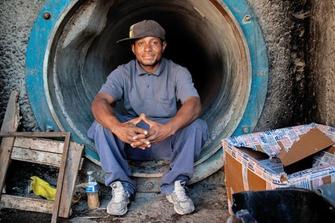
The report follows Luis Leyva, deported from the United States after 15 years in Los Angeles, as he survives in Tijuana’s El Bordo canal. Many deportees arrive without money, identity papers, housing or access to work, while Mexican authorities provide little support. Although Barack Obama proposed immigration reform, his administration carried out more deportations than George W. Bush’s, and deportees like Leyva were left stranded before reform could help them. Residents of the canal face stigma, police harassment and alleged abuses, documented by a human-rights organization. Leyva fears returning to violence in Acapulco and risks losing contact with his daughter if he tries to cross the border again, leaving him uncertain about how to regain a stable life.

Deportation Undocumented Immigration Homelessness Human Rights Drug War Tijuana, Mexico United States Acapulco, Mexico Mexican government U.S. Immigration and Customs Enforcement Mexican police U.S. Border Patrol
Estilo de reportagemInformativo

Fact-based reported feature, with vivid narrative and some critical framing of deportation and institutional treatment.

Scenes of an Announced Death

Profil 13 dez. 2014 German

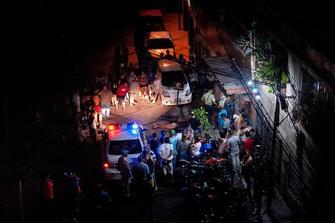
Venezuela is portrayed as nearing political and economic collapse after years of mismanagement, falling oil revenues and increasingly authoritarian government. The report describes widespread crime and vigilantism amid public distrust of police and courts; hospitals lacking medicines and equipment; severe food and consumer-goods shortages; and drought-driven water and electricity rationing compounded by neglected infrastructure. The opposition has gathered signatures for a referendum to remove Nicolás Maduro, but authorities may delay the process, while political prisoners and the violent handling of protests fuel fear and division. The cumulative shortages and institutional failures threaten further unrest and a deepening humanitarian crisis.

Venezuela crisis Economic collapse Political repression Shortages of food and medicine Violence and vigilantism Drought and infrastructure Political opposition Venezuela Caracas Colombia Government of Venezuela Venezuelan National Electoral Council
Estilo de reportagemEquilibrado

Critical, strongly framed reportage that presents government mismanagement and repression as central causes of the crisis, while grounding its claims in reported events and data.

Contexto políticoCentro-esquerda

Critical of the Venezuelan government’s left-populist rule and repression, while taking a broadly reportorial rather than partisan approach.

God’s City and Sergio’s Contribution

Profil 1 set. 2014 German

In Rio de Janeiro’s Cidade de Deus favela, property owner Sergio Barriga remains distrustful of the state and the pacifying police, despite official claims that violence has fallen since the UPP took control. Resident Benta Neves do Nascimento feels safer and supports local social programs, while infrastructure failures and the suspension of the community currency illustrate persistent shortcomings. The account contrasts Barriga’s self-reliance and growing real-estate wealth with residents’ continuing reliance on uneven public services, against a backdrop of political campaigning and efforts to integrate the favela into the wider city.

Life in the Cidade de Deus favela Police pacification and public security Poverty and inequality Favela community initiatives Real estate and urban change Cidade de Deus, Rio de Janeiro Brazil Rio de Janeiro government UPP (Pacifying Police Units) Workers’ Party (Brazil) Brazilian government Sergio Barriga
Estilo de reportagemInformativo

Reported feature grounded in interviews and attributed data, with some vivid, interpretive description.

State Bankruptcy Vultures

Profil 24 mar. 2014 German

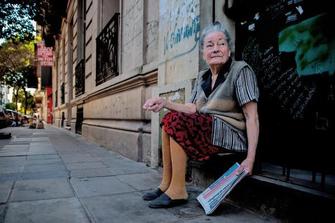
Argentina faces renewed financial strain twelve years after its 2002 default, with a sharply devalued peso, high inflation, falling credit ratings and declining confidence in the government. Official inflation figures substantially understate the price rises estimated by independent experts, while pensioners and the middle class struggle with escalating living costs. Police and teacher strikes, violent looting and hundreds of road blockades reflect mounting social unrest. Currency controls, import restrictions, subsidies and price freezes have failed to arrest inflation, and government expropriation and protectionist measures have brought international disputes. The widening gap between official and black-market exchange rates underscores Argentinians’ flight to dollars and the erosion of trust in President Cristina Fernández de Kirchner’s government.

Argentina's Economic Crisis Inflation Sovereign Debt Austerity and Social Protests Currency Controls Argentina Buenos Aires Chubut Government of Argentina World Trade Organization European Union Cristina Fernández de Kirchner
Estilo de reportagemInformativo

Reported feature grounded in economic indicators and interviews, with some vivid, critical framing.

Tigers in the Forest

Hanna Silbermayr 4 jan. 2012 German

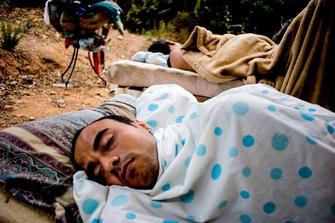
A group of Indian Sikh migrants became stranded in Ceuta after smugglers promised legal work in Europe, took their passports and subjected them to a perilous journey across Africa. After two years in a reception center, 54 men fled to the Monte del Renegado woods to avoid deportation, where they endured harsh conditions for nearly 1,000 days. Some were later transferred to mainland Spain, but remained unable to work or secure legal status, in part because they could not obtain passports from the Indian embassy. The report follows Babu and Vinda through detention, release and displacement, while twenty members of the group remain in Ceuta, still hoping to reach safety and build a future.

Irregular Migration Human Trafficking and Smuggling Asylum Seekers Migrant Detention Sikh Community Ceuta Spain India Spanish Government Indian Embassy in Madrid Red Cross Migreurop
Estilo de reportagemInformativo

Reported as a factual investigative narrative, with some evocative descriptive language.

They Stole the Sea from Us

Mo - Magazin für Menschenrechte 11 mar. 2011 German

The report follows Kofi, a Ghanaian fisherman who migrated to Spain after European industrial fishing agreements contributed to depleted West African fisheries and undermined local livelihoods. In Almería, he and other African migrants face irregular status, scarce agricultural work, low wages, poor housing, and everyday racism. As the economic crisis deepened, employers increasingly sought workers from Romania and Bulgaria, while some plantation owners reportedly sold the contracts migrants needed to regularize their status for up to €3,000. The Hermanas Mercedarias de la Caridad offer practical and legal support, though their work is criticized by some. With little prospect of papers or stable employment, Kofi increasingly sees returning to Africa as his best option.

African Migration to Spain Migrant Workers Racism and Discrimination Overfishing Agricultural Labor Irregular Immigration Almería, Spain West Africa Spain European Union Spanish Government Hermanas Mercedarias de la Caridad
Estilo de reportagemInformativo

Reported feature grounded in interviews and contextual facts, with some empathetic framing.

Contratar Mensagem
×

Cadastre-se para enviar uma mensagem para Hanna

Já tem uma conta? Entrar
Procurando trabalho? Cadastre-se como jornalista
Verifique seu e-mail para concluir o cadastro
Acabamos de enviar um e-mail para . Verifique sua caixa de entrada e clique no link para verificar seu endereço de e-mail e concluir seu cadastro. Se não vir o e-mail, não deixe de checar sua pasta de spam ou lixo eletrônico.
Não recebeu o e-mail?

Cadastre-se para desbloquear perfis

Já tem uma conta? Entrar
Procurando trabalho? Cadastre-se como jornalista
Verifique seu e-mail para concluir o cadastro
Acabamos de enviar um e-mail para . Verifique sua caixa de entrada e clique no link para verificar seu endereço de e-mail e concluir seu cadastro. Se não vir o e-mail, não deixe de checar sua pasta de spam ou lixo eletrônico.
Não recebeu o e-mail?