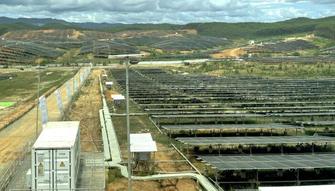
Assessing Energy Transition Justice in East Kalimantan: Who Is Ready, Who Is Left Behind?
East Kalimantan faces deep economic dependence on coal as Indonesia pushes for an energy transition toward renewables, leaving the region vulnerable to economic shocks and labor displacement. Officials acknowledge that over 60 percent of regional revenue and more than 160,000 workers remain tied to fossil fuel industries, yet concrete reskilling or social protection measures are absent. Labor groups warn that workers are at risk of unemployment without safety nets, while economists highlight unaccounted ecological and social costs such as floods and health impacts. Fiscal transfers to the region are declining despite its large contribution to national revenue, prompting calls for a revised revenue-sharing formula to fund renewable energy development and worker training. Advocacy groups argue that ongoing coal expansion contradicts the claimed shift to clean energy, with local communities continuing to bear the brunt of environmental damage. Experts warn that delaying preparation for energy transition will escalate future economic and social burdens.
أسلوب التغطيةتفسيري
The article contains substantial analysis, critiques, and subjective evaluation of government policies and social impacts, although supported by data.
السياق السياسييسار الوسط
Focuses on labor protections, social justice, environmental accountability, and critiques of government policy