Verlage & Sender Content-Marketing-Teams PR- & Kommunikationsteams Risiko- & Intelligence-Teams Journalisten & Medienschaffende Medienbeobachtung Preise

Über Iqbal

Iqbal Kusumadirezza ist ein unabhängiger, preisgekrönter indonesischer Fotojournalist und Dokumentarfotograf mit Sitz in Bandung, West-Java. Anstatt sich auf die täglichen Breaking-Punkte der Mainstream-Nachrichten zu konzentrieren, spezialisiert sich Rezza auf visuelle Langform-Erzählungen. Seine Arbeit konzentriert sich stark auf Menschenrechte, illegale Ausbeutung von Arbeitskräften, Marginalisierung und Umweltzerstörung. In Indonesien ist er für seinen geduldigen, ungeschönten und eintauchenden Ansatz anerkannt, Geschichten aufzudecken, die typischerweise der öffentlichen Wahrnehmung verborgen bleiben. Rezza spezialisiert sich auf immersive, langfristige Dokumentarprojekte. Tiefgehende Recherche: Monate zu verbringen — oder sogar eight aufeinanderfolgende Jahre, wie in seiner Citarum River-Dokumentation zu sehen — um ein einzelnes ökologisches oder soziales systemisches Versagen nachzuverfolgen. Aufbau tiefen Vertrauens: Sich sicher in verletzliche, marginalisierte oder misstrauische Gemeinschaften einzubetten (wie etwa im Untergrund arbeitende Schlangenhauter oder Opfer von Menschenrechtsverletzungen).

Sprachen
Indonesisch Englisch Arabisch
Gesehen in
New Naratif Vice Iklimku

Arbeiten 8

The Unfragrant Citarum

Iklimku 19. Mai 2023 English

Textile-factory effluent and household waste have severely polluted the Cikijing and Citarum rivers in West Java, turning waterways that once supported farming and fishing into sources of illness and economic loss. Contamination has damaged roughly 1,000 hectares of agricultural land, introduced lead, cadmium and chromium into soils and crops, reduced farm productivity and contributed to respiratory, skin and digestive complaints among residents. Although the government began normalizing the Cikijing River in 2022 and launched the Citarum Harum program after President Joko Widodo’s 2018 directive, environmental advocates warn that recovery will take decades—or may be impossible—without effective industrial wastewater treatment and better household waste management.

Citarum River Pollution Textile Industry Environmental Health Water Pollution Agricultural Losses Climate and Community Resilience Citarum River West Java Indonesia Walhi West Java Greenpeace Pawapeling
BerichtsstilInformativ

Predominantly factual investigative reportage supported by research and testimony, with some emotive framing about environmental damage and community suffering.
The Serpent Seekers of North Java

New Naratif 26. Okt. 2020 English

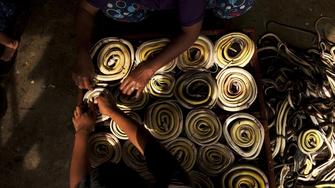
Snake hunter Takadi travels across northern Java to catch snakes for local dealers, but habitat conversion, declining populations, tighter protections and falling market demand have sharply reduced his income. Kapetakan’s snake-processing industry, once supported by exports of meat, bile and skins to Asian and European markets, has contracted from eight slaughterhouses in 2011 to three. International concern over sustainability and animal welfare, along with import restrictions and designers’ shift toward alternatives such as buffalo hide, has cut demand roughly in half since 2015.

Snake Hunting Wildlife Trade Exotic Leather Industry Rural Livelihoods Environmental Sustainability Animal Welfare North Java West Java Central Java Indonesia's Natural Resources Conservation Agency Python Conservation Partnership Takadi
BerichtsstilInformativ

Predominantly factual reporting, with some critical discussion of animal welfare and sustainability.

Down and Out in Bandung’s Dollar City

New Naratif 19. Okt. 2020 English

Majalaya, once known as Indonesia’s “Dollar City” because of its thriving textile industry, is now marked by factory closures, poverty and severe environmental degradation. Textile factories have dumped untreated wastewater into the Cikaro, Cikakembang and Citarum rivers, while coal-fired machinery contributes to persistent air pollution. Residents of Kampung Ciwalengke face contaminated water, inadequate sanitation, open defecation and high costs for clean water, alongside widespread respiratory infections, dermatitis and other illnesses. The Citarum Harum task force has removed waste and sealed some illegal sewage pipes, but activists argue that enforcement is limited and that the programme fails to address poverty, sanitation and residents’ lack of alternatives. Local communities continue to demand basic access to clean water and fresh air.

Textile Industry River Pollution Air Pollution Public Health Poverty and Inequality Environmental Governance Majalaya Bandung Regency West Java, Indonesia Citarum Harum Task Force Indonesian Ministry of Industry West Java Environmental Agency
BerichtsstilInformativ

Fact-focused investigative reporting supported by health, pollution and government data, with critical framing of industrial and governmental failures.

Fear and Loathing at Citarum’s Pollution Ground Zero

New Naratif 15. Okt. 2020 English

The Citarum River begins at the relatively clean Cisanti Lake, where the military-led Citarum Harum task force has removed invasive plants and improved conditions since 2018. Downstream, however, deforestation, intensive vegetable farming, cattle manure, pesticides, domestic waste and industrial pollution continue to degrade the river, causing sedimentation, flooding and threats to reservoirs that supply water and electricity to millions. Government officials promote communal cowsheds, settling ponds and reforestation, but implementation has been weak. Farmers argue that low and unstable incomes, rented land and inadequate infrastructure make it impossible to abandon productive farmland, while environmental advocates say responsibility must be shared across the entire upstream-to-downstream system rather than placed solely on farmers.

Citarum River Pollution Agricultural Pollution Water Quality Deforestation and Land Use Flooding and Landslides Environmental Policy Citarum River Basin West Java Indonesia Citarum Harum Task Force West Java Siliwangi Regional Military Command Citarum River Basin Management Agency
BerichtsstilInformativ

Predominantly factual investigative reporting based on statistics, studies, interviews and on-site observation, with some vivid and critical descriptive language.

I Photographed the “World’s Dirtiest River” for Eight Years. Here’s What I Saw.

VICE 16. Sept. 2019 English

A photographer documents eight years of worsening pollution in Indonesia’s Citarum River, linking its toxic chemical contamination to textile factories and its pervasive trash problem to inadequate public waste services and household dumping. The river contains hazardous substances including mercury, lead, chromium, zinc, copper, and sulphates, while pollution has contaminated groundwater and rice paddies and contributed to health problems among nearby residents. Environmental groups won a 2016 lawsuit that made pollution by three factories illegal, and government initiatives such as Citarum Harum aim to restore the river. However, weak enforcement, limited waste infrastructure, and continued industrial activity have undermined progress. President Joko Widodo’s pledge to restore the river within seven years is challenged by photographic evidence showing that conditions around Majalaya remain largely unchanged.

Citarum River pollution Water pollution Industrialization Environmental degradation Waste management Environmental activism West Java Indonesia Bandung Indonesian Ministry of Environment Greenpeace Indonesia Walhi (Indonesian Forum for the Environment)
BerichtsstilInformativ

Mostly factual environmental reporting grounded in long-term photographic documentation, though it includes the photographer’s personal perspective and critical judgments about government and industry.

A Look Inside the Indonesian Village That Hunts Geckos

VICE 29. Aug. 2019 English

In Kapetakan, West Java, Sugandhi runs a village-wide gecko-hunting operation that employs hunters across six villages. Geckos are caught with glue-coated sticks, cleaned, roasted, dried and packaged, with women handling the final packaging. The animals are sold as alternative medicine for itchy skin and allergies despite little scientific evidence, and are also used in cosmetics. Sugandhi says major buyers come from China and the United States.

Gecko hunting Traditional medicine Cosmetics industry Rural livelihoods Unusual occupations Kapetakan, West Java Cirebon, Indonesia China Sugandhi Gecko-based alternative medicine Gecko-derived cosmetics
BerichtsstilInformativ

Primarily factual reporting, though the framing uses subjective descriptions such as “weird” and “bizarre.”

Welcome to the Indonesian Village That Builds Guns

VICE 21. Mai 2019 English

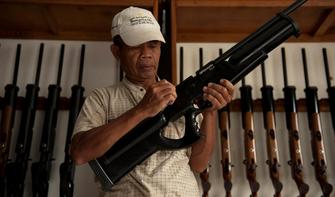
Cipacing in West Java has manufactured air rifles for roughly a century, evolving from blacksmithing and Dutch rifle repair into a major center for inexpensive weapons. The village’s makers supplied civilians, athletes, hunters and prominent Indonesian military and political figures, but the industry suffered a serious backlash after accepting orders from terrorist groups, including the Abu Roban network. Police raids and the conviction of a middleman prompted manufacturers to tighten screening and restrict sales to legitimate sporting customers.

Air Rifle Manufacturing Illegal Weapons Trade Terrorism Gun Regulation Indonesian History and Culture Cipacing West Java Indonesia Indonesian National Armed Forces Indonesian Shooter’s Association Abu Roban network Islamic State (ISIS)
BerichtsstilInformativ

Mostly factual reporting supported by historical context and interviews, with some colorful narrative framing.

vice.com

Link Vice
Engagieren Nachricht
×

Registrieren Sie sich, um Iqbal eine Nachricht zu senden

Haben Sie bereits ein Konto? Anmelden
Suchen Sie Arbeit? Als Journalist registrieren
Verifizieren Sie Ihre E-Mail, um die Registrierung abzuschließen
Wir haben gerade eine E-Mail gesendet an . Bitte prüfen Sie Ihren Posteingang und klicken Sie auf den Link, um Ihre E-Mail-Adresse zu verifizieren und Ihre Registrierung abzuschließen. Falls Sie die E-Mail nicht sehen, prüfen Sie unbedingt Ihren Spam- oder Junk-Ordner.
E-Mail nicht erhalten?

Registrieren Sie sich, um Profile freizuschalten

Haben Sie bereits ein Konto? Anmelden
Suchen Sie Arbeit? Als Journalist registrieren
Verifizieren Sie Ihre E-Mail, um die Registrierung abzuschließen
Wir haben gerade eine E-Mail gesendet an . Bitte prüfen Sie Ihren Posteingang und klicken Sie auf den Link, um Ihre E-Mail-Adresse zu verifizieren und Ihre Registrierung abzuschließen. Falls Sie die E-Mail nicht sehen, prüfen Sie unbedingt Ihren Spam- oder Junk-Ordner.
E-Mail nicht erhalten?