Engager des journalistes

Éditeurs et diffuseurs Équipes de marketing de contenu Équipes RP et communication Équipes risques et renseignement Trouver des journalistes Veille médias Tarifs

Pour les journalistes

Offres d'emploi en journalisme Tarifs Créez votre profil gratuit

À propos de Ivan

Journaliste environnemental basé à Pucallpa, Pérou. Dédié à rendre compte des peuples autochtones, de l'Amazonie et des questions environnementales, avec plus de 30 ans d'expérience. Mon expérience couvre les domaines de la gestion environnementale, sociale et public-privée, les évaluations d'impact environnemental et social dans les industries extractives et routières. J'ai commencé à travailler dans le journalisme en 2006, mais professionnellement et de façon continue depuis 2020. Pulitzer Foundation's 2020 Amazon Rainforest Journalism Fellowship. GK Amazon All Eyes on the Amazon - Hivos 2021 Fellowship Environmental Crimes in the Amazon USAID Prevenir 2021 grant Pulitzer Foundation Rainforest Investigation Network grantee 2022 WCS - Internews Fellowship - Environmental Crimes in the Peruvian Amazon 2023

Langues
portugais anglais espagnol
Vu dans
Ibrehaut Epicentro TV Biodiversidad en América Latina Voz de América Almargen SWI swissinfo.ch The Intercept Voice of America Infoamazonia

Travaux 47

Bleeding Forest: Critical Situation of Environmental Defenders

Biodiversidad en América Latina 17 sept. 2026 Spanish

Reports describe widespread killings of environmental defenders in Latin America and severe impunity in Peru: 45 defenders were killed in Peru from 2014 to 2024, but only five cases resulted in convictions. Indigenous communities in the Amazon face threats from drug trafficking, illegal logging, mining, and land seizures, while state protection mechanisms and investigations are portrayed as ineffective. The article highlights the Kakataibo Indigenous Guard as a community-led response and warns that militarized initiatives such as the proposed “Shield of the Americas” could criminalize local communities, weaken Indigenous self-defense, and displace violence into vulnerable forest areas. It calls for collective protection, communal land titling, justice reform, and ratification of the Escazú Agreement.

Environmental Defenders Indigenous Peoples Amazon Deforestation Environmental Crime Drug Trafficking Illegal Logging Environmental Justice Militarization Peru Amazonia Latin America American Bar Association Center for Human Rights
Style rédactionnelInterprétatif

Strongly critical and persuasive framing of state policy, militarization, extractive interests, and institutional failures; explicitly advances preferred policy measures.

Contexte politiqueGauche

The article advocates collective Indigenous rights, environmental protection, stronger regulation, and opposition to militarized and extractivist policies.
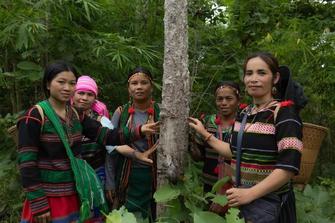
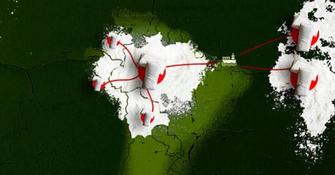
Peru, the Expansion of Coca Cultivation and ‘Narco-Governance’

Biodiversidad en América Latina 1 août 2026 Spanish

Peru is experiencing a major expansion of coca cultivation and illicit drug economies, particularly in Loreto, Ucayali, Madre de Dios and other Amazonian regions. A congressional Devida commission reports that armed transnational groups, including Comandos de la Frontera, are imposing territorial rules, extorting communities and forcibly recruiting young people. The proposed Bellavista-Mazán-Salvador-El Estrecho road could strengthen drug and illegal-gold corridors unless preceded by land titling, environmental safeguards and a stronger state presence. The formal coca market has weakened as Enaco purchases and police seizures have declined, while synthetic-drug seizures have surged in Lima and Callao. The dissolution of Corah and the transition to Precip, alongside the loss of U.S. funding, could create an operational gap and allow coca cultivation to rise sharply. The report calls for sustained funding, protection for Indigenous communities and environmental defenders, and an integrated rather than purely militarized strategy.

Drug Trafficking Coca Cultivation Organized Crime Indigenous Rights Environmental Defenders Illegal Mining Amazon Governance Drug Policy Peru Peruvian Amazon Putumayo River Commission Special Multipartidaria Devida
Style rédactionnelInterprétatif

Strongly analytical and critical, combining official statistics with alarmed and persuasive language about state failure, narco-governance and infrastructure policy.

Contexte politiqueCentre

Center-Left: Emphasizes Indigenous territorial rights, environmental protection, social investment and criticism of militarized or extractivist responses to organized crime.

Narcogovernance and Coca Cultivation Expansion in Peru: The Critical Security Situation in the Amazon

Epicentro TV 27 juil. 2026 Spanish

A parliamentary Devida report depicts Peru’s cocaine economy as expanding into Loreto, Ucayali, Madre de Dios and other regions, where transnational armed groups impose territorial rules, extort communities and recruit young people. Coca cultivation reached 95,008 hectares in 2022, while 95.5% of production is estimated to enter the illicit market. The article warns that the proposed Bellavista-Mazán-Salvador-El Estrecho road could accelerate drug and illegal-gold trafficking unless communities receive legal protection and the project is redesigned. It also highlights the collapse of Enaco’s formal coca collection, declining seizures, unsafe storage of confiscated chemicals and a sharp rise in synthetic-drug seizures. The dissolution of Corah and transition to Precip, alongside the withdrawal of U.S. funding, could create a six-month operational gap and allow cultivation to reach 144,101 hectares. The report calls for sustained resources, Indigenous land titling, protection for environmental defenders and an integrated state presence in the Amazon.

Drug Trafficking Coca Cultivation Organized Crime Illegal Mining Indigenous Rights Amazon Security State Governance Peru Loreto Putumayo River Peruvian Government Devida
Style rédactionnelInterprétatif

Strongly analytical and critical, combining official data with alarmed language and explicit policy recommendations.

Contexte politiqueCentre gauche

Supports stronger public institutions, Indigenous community protection and state investment, while criticizing security failures and the incoming government's proposed approach.

Once Again in the Name of God: Israelite Communities and Illicit Crops Advance into the Yavarí

Almargen 27 mai 2026 Spanish

The proposed Yavarí Mirim Indigenous Reserve in Peru has remained stalled for more than a decade, leaving territory inhabited or used by Indigenous peoples in isolation exposed to permanent settlement and illegal economies. Communities associated with AEMINPU have expanded from San José de Parinari and Monte de los Olivos into primary forest, while testimonies describe displacement of Indigenous residents, armed groups, and the growth of coca cultivation. DEVIDA data show coca-growing areas in Yavarí rising from 284 to 1,293 hectares in less than a decade. A planned road, mining claims, and weak state oversight could intensify the pressure and expose isolated peoples to disease, forced contact, recruitment, and narcotrafficking. Brazilian Indigenous organizations and Peruvian experts are urging authorities to protect the area and advance the reserve’s creation.

Indigenous Peoples in Isolation Amazon Deforestation Coca Cultivation and Drug Trafficking Illegal Land Occupation Environmental Crime Indigenous Territorial Rights Yavarí, Loreto, Peru Peru-Brazil Border Amazonia Association Evangelical of the Israelite Mission of the New Universal Covenant (AEMINPU) Peruvian state Yavarí Mirim Indigenous Reserve Commission
Style rédactionnelInformatif

Investigative and predominantly fact-based, but includes allegations and critical assessments of state inaction.

Drug Trafficking and Corruption Allegations Grow in Conservation Area in Ucayali

Epicentro TV 12 mai 2026 Spanish

Illegal coca cultivation and alleged cocaine-processing laboratories are expanding inside Peru’s Imiría Regional Conservation Area in Ucayali, while the area’s management faces allegations of ghost contracts, misappropriated funds and unpaid obligations to local reforesters. Audits by the Comptroller and a prosecutorial investigation have focused on the Regional Environmental Authority and successive administrations of the Regional Government of Ucayali. Years of weak institutional presence and the withdrawal of operational staff have intensified disputes among Indigenous organizations and local communities, leading to protests and violent incidents in 2026. Local leaders and experts generally oppose abolishing the protected area, instead calling for transparent administration, repayment of community workers and the restoration of effective conservation and security operations.

Drug Trafficking Illegal Coca Cultivation Corruption and Public Funds Indigenous Community Conflicts Environmental Conservation Protected Areas Ucayali Imiría Regional Conservation Area Masisea, Peru Regional Government of Ucayali Regional Environmental Authority of Ucayali Office of the Comptroller General of Peru
Style rédactionnelInterprétatif

Investigative reporting with substantial factual documentation, but strongly evaluative language assigning institutional responsibility for corruption, neglect and inaction.

A New Threat of Impunity in the Saweto Case: The Legal Action That Could Overturn the Conviction of Four Illegal Loggers for the Murder of Ashéninka Leaders

Epicentro TV 20 mars 2026 Spanish

A recently filed habeas corpus petition seeks to overturn the 28-year-and-three-month convictions of Jossimar Atachi Félix, Segundo Atachi Félix, Hugo Soria Flores and José Carlos Estrada Huayta for the 2014 torture and murders of Ashéninka leaders Edwin Chota, Leoncio Quintisima, Jorge Ríos and Francisco Pinedo. The petition also requests that arrest warrants be lifted while the convicted men remain fugitives. The case has been delayed for more than a decade: an initial 2023 conviction was annulled over procedural flaws, while a new conviction was issued in April 2024, confirmed on appeal in August 2024 and accompanied by increased civil compensation. With the case still before Peru’s Supreme Court on cassation, concern centers on Judge Dilmer Meza Conislla’s role in hearing the habeas corpus petition despite having participated in the panel that issued the 2024 conviction, potentially creating another path to impunity.

Saweto Case Indigenous Rights Illegal Logging Environmental Defenders Impunity Peruvian Justice System Peru Ucayali Amazon Basin Juzgado Penal Colegiado de Ucayali Corte Superior de Justicia de Ucayali Corte Suprema de Justicia
Style rédactionnelInterprétatif

Strongly critical and interpretive; the column argues that procedural maneuvers and judicial conflicts could produce impunity.

Organizations and Peasant Patrols Question the Legitimacy of the Political System

La Mula 17 mars 2026 Spanish

More than 60 social organizations, peasant and urban patrol groups, and environmental defenders presented a Declaration for a New Social Pact ahead of Peru’s 2026 general elections. They call for a participatory constitutional process based on a legitimized constituent act, recognition of Peru as a unitary but plurinational state, Indigenous territorial self-determination, and stronger communal rights. The proposal also advocates a mixed and solidarity-based economy, public control of strategic resources, dignified employment, protections for small farmers, and recognition of nature’s rights. Representatives from Puno, Lambayeque, Cajamarca, Apurímac and the Amazon criticized the 1993 Constitution and political institutions for excluding Indigenous and rural communities, while placing water, food security and environmental justice at the center of the electoral debate.

Peruvian constitutional reform 2026 Peruvian general elections Indigenous peoples’ rights Peasant and urban patrols Plurinational state Environmental justice Water and biodiversity protection Social pact Peru Puno Cajamarca Consejo de Autoridades Originarias de Puno
Style rédactionnelInterprétatif

Strongly sympathetic to the organizations’ demands, with advocacy-oriented framing and limited presentation of opposing views.

Contexte politiqueCentre gauche

Supports constitutional and economic reform centered on plurinational democracy, social inclusion, public control of strategic resources and environmental protection.

Tarcila Rivera: Restoring a forest is restoring the dignity of the territory

La Mula 15 nov. 2025 Spanish

Indigenous women leaders from around the world assert their role as central actors in climate governance during events parallel to COP30 in Belém. The International Indigenous Women’s Forum outlines five transformation pathways grounded in ancestral knowledge, ecological restoration, climate monitoring, water and food sovereignty, equitable financing, and intersectional justice. Speakers emphasize the need for direct funding, recognition of Indigenous governance, and implementation of global rights frameworks. Evidence cited shows reduced deforestation and leadership in community adaptation within Indigenous territories. The movement positions Indigenous women not as victims but as essential architects of global climate solutions.

Climate Change Indigenous Rights Global Governance Belém, Brazil Peru Global South Foro Internacional de Mujeres Indígenas (FIMI) CHIRAPAQ World Resources Institute UN Permanent Forum CEDAW Tarcila Rivera Zea
Style rédactionnelInterprétatif

The text contains strong advocacy, subjective statements, and persuasive language emphasizing political and social demands.

Contexte politiqueCentre gauche

Advocates climate justice, Indigenous rights, and structural reforms with a strong social-justice orientation.

Advancement of factions and cocaine refining threaten the Amazon

The Intercept Brasil 12 nov. 2025 Portuguese

Brazil has emerged as a major global hub for cocaine refining, with 550 laboratories identified across the country and the Amazon increasingly serving as a key corridor for trafficking toward Atlantic ports and Europe. The study Floresta em Pó links this expansion to escalating violence, environmental degradation, and the entrenchment of powerful criminal factions such as PCC and Comando Vermelho. The report highlights the intertwining of drug networks with illegal mining, logging, and land grabbing, while Indigenous communities face recruitment, exploitation, substance abuse, and rising suicides. Authorities acknowledge the Amazon’s role in international trafficking and outline efforts involving police cooperation and cross‑border coordination, though the region continues to suffer from limited state presence. Illegal religious‑political groups like Aeminpu and expanded criminal governance further destabilize the tri-border area. Data shows soaring incarceration rates, record cocaine production, and violence driven in part by policy shifts such as air interdiction that displaced trafficking to river routes. Researchers argue that dismantling criminal networks requires moving beyond prohibitionist frameworks and integrating environmental, social, and security strategies to protect the Amazon and its communities.

Drug trafficking Organized crime Amazon environmental degradation Climate politics Public security Amazon Brazil Peru and Colombia Primeiro Comando da Capital (PCC) Comando Vermelho (CV) Polícia Federal Ministério da Justiça e Segurança Pública
Style rédactionnelInformatif

Mostly factual investigative reporting with analytical framing but limited subjective opinion.

Contexte politiqueCentre gauche

Critiques of prohibitionist drug policy and emphasis on structural, social, and environmental approaches align with center-left perspectives.

Bicameral Congress Eliminates Indigenous Committee and Deepens Representation Crisis

Epicentro TV 28 oct. 2025 Spanish

Peru’s new bicameral congressional regulations, set to take effect in 2026, eliminate the Commission of Andean, Amazonian and Afro-Peruvian Peoples, Environment and Ecology, particularly in the Senate. Experts and indigenous organizations say the move removes the only specialized legislative forum for indigenous and environmental concerns and deepens a longstanding representation gap: only seven of 720 parliamentary seats held since 2001 were occupied by self-identified indigenous legislators, with none in the 2020 and 2021 congresses. Indigenous federations, CAAP and DAR warn that the change amounts to invisibilization, racism and a loss of congressional checks over laws affecting indigenous territories and protected areas. The decision is also framed as part of a broader centralization of power in Congress, potentially widening the divide between the Peruvian state and indigenous communities and aggravating political inequality linked to social unrest and organized crime.

Indigenous Political Representation Peruvian Congress Political Exclusion Environmental Governance Institutional Crisis Organized Crime and Political Inequality Peru Peruvian Amazon Southern Andes Congress of the Republic of Peru Commission of Andean, Amazonian and Afro-Peruvian Peoples, Environment and Ecology (CPAAAAE) Instituto de Defensa Legal (IDL)
Style rédactionnelInterprétatif

Strongly critical and interpretive, presenting the committee's elimination as discriminatory, authoritarian and harmful to indigenous representation, while incorporating expert evidence and quotations.

Contexte politiqueCentre gauche

Advocates stronger indigenous political representation, environmental oversight and institutional checks, while criticizing congressional centralization and authoritarian tendencies.

Voir les 47 réalisations avec un compte gratuit

Recruter Message
×

Inscrivez-vous pour envoyer un message à Ivan

Vous avez déjà un compte ? Se connecter
Vous cherchez du travail ? S'inscrire en tant que journaliste
Vérifiez votre e-mail pour finaliser l'inscription
Nous venons d'envoyer un e-mail à . Veuillez consulter votre boîte de réception et cliquer sur le lien pour vérifier votre adresse e-mail et finaliser votre inscription. Si vous ne voyez pas l'e-mail, pensez à vérifier votre dossier spam ou courrier indésirable.
Vous n'avez pas reçu l'e-mail ?

Inscrivez-vous pour débloquer les profils

Vous avez déjà un compte ? Se connecter
Vous cherchez du travail ? S'inscrire en tant que journaliste
Vérifiez votre e-mail pour finaliser l'inscription
Nous venons d'envoyer un e-mail à . Veuillez consulter votre boîte de réception et cliquer sur le lien pour vérifier votre adresse e-mail et finaliser votre inscription. Si vous ne voyez pas l'e-mail, pensez à vérifier votre dossier spam ou courrier indésirable.
Vous n'avez pas reçu l'e-mail ?