Ingaggia giornalisti

Editori ed emittenti Team di content marketing Team di PR e comunicazione Team di risk e intelligence Trova giornalisti Monitoraggio dei media Prezzi

Per i giornalisti

Offerte di lavoro nel giornalismo Tariffe Crea il tuo profilo gratuito

Su James

Con sede nella città di Medellin, ho seguito la Colombia e l'America Latina per una vasta gamma di media tra cui the Miami Herald, the Independent, the Toronto Star e Sky News. Lavoro prevalentemente per la carta stampata, ma ho anche realizzato video, fotografie e lavori multimediali e ho partecipato a segmenti di interviste televisive. Sono specialista in criminalità organizzata, nella guerra alla droga e nel conflitto colombiano, ma mi sono anche occupato di un'ampia gamma di argomenti, dalla politica alla cultura.

Lingue
inglese spagnolo
Visto su
Insightcrime Mediacatmagazine shots In These Times Vice The Christian Science Monitor Business Insider El Espectador The Crime Report The Guardian The Washington Post War Is Boring Worldpoliticsreview

Lavori 156

Illegal Mining in Peru: How Facebook Ads Offer Cover

InSight Crime 6 ott 2026 English

An InSight Crime reporter describes contacting a person found through a Facebook group advertising mining land with REINFO permissions in Madre de Dios. The contact appeared to offer legal cover while miners supplied equipment and conducted extraction, illustrating how the registry intended to formalize informal mining can be abused. The report says illegal miners use machinery and mercury in environmentally destructive operations. As military raids intensify around La Pampa, where REINFO permits have not been issued because it borders a nature reserve, social media ads promote concessions elsewhere as a way for miners to continue operating. The attempted inquiry ended when the contact called and the reporter declined to answer.

Illegal gold mining Social media and organized crime Mining formalization and REINFO Environmental damage Peru Madre de Dios La Pampa Peruvian military REINFO (Integral Registry for Mining Formalization) Henry Shuldiner Facebook
Stile giornalisticoInformativo

Investigative reporting presents firsthand observations and expert context, with limited evaluative language.


Juan Carlos Valencia González: A New CJNG Leader in Mexico?

InSight Crime 10 lug 2026 English

The US National Counterterrorism Center has identified Juan Carlos Valencia González, known as “El 03,” as the CJNG’s top leader following the February 2026 death of Nemesio Oseguera Cervantes (“El Mencho”). Valencia González is portrayed as a deeply embedded figure with family ties to the cartel, experience in its armed and financial operations, and longstanding links to drug trafficking and violence. However, InSight Crime’s analysis argues that CJNG power remains distributed among regional figures including Ricardo Ruíz Velasco, Heraclio Guerrero Martínez and Gonzalo Mendoza Gaitán. The cartel’s operations largely continued after El Mencho’s death, suggesting that no clear succession has been established and that the organization’s decentralized structure remains intact.

Organized Crime Drug Trafficking CJNG Leadership Mexico Money Laundering Fuel Theft Jalisco United States Jalisco Cartel New Generation (CJNG) US National Counterterrorism Center Mexican military Mexican National Guard
Stile giornalisticoEquilibrato

Evidence-based investigative analysis, but it questions and interprets the US government's claim that Valencia González is the CJNG's supreme leader.

The Anti-Gang Op Where Venezuela’s Security Forces Ran Wild

InSight Crime 12 giu 2026 English

A violent attack by the Tren del Llano gang on a Venezuelan voting center triggered Operation Zaraza, a large‑scale security deployment marked by widespread human rights abuses. Security forces carried out raids, arbitrary detentions, torture, sexual violence, and an airstrike on the rural community of Boca de María, leaving residents injured, displaced, and traumatized. Despite the scale of the operation, authorities failed to capture gang leaders, while communities suffered long‑term social and economic devastation.

Organized crime Human rights abuses Venezuelan politics Security operations Venezuela Guárico Miranda Tren del Llano Venezuelan security forces Venezuelan government Defiende Venezuela Nicolás Maduro
Stile giornalisticoInformativo

Fact‑focused reporting with some subjective victim testimony

Contesto politicoSinistra

critical of state repression and government abuses

Migration Smuggling Market Goes From Boom to Bust

InSight Crime 26 dic 2025 English

A sharp decline in migration toward the United States in 2025 slashed revenues for organized crime groups that had profited from a booming human smuggling industry. US policy shifts under President Donald Trump, including dismantling asylum programs and increasing deportations, dramatically reduced migrant flows through Latin America. Criminal groups that once earned billions from smuggling have struggled to replace lost income, adapting by offering more expensive, riskier smuggling routes, exploiting reverse migration, and expanding into extortion, kidnapping, and drug trafficking. These substitutions have proven unstable, intensifying violence and vulnerability for migrants and local populations while criminal networks reposition themselves toward other illicit economies.

Migration Organized Crime Border Security US Immigration Policy US–Mexico Border Colombia Panama Tren de Aragua Gaitanistas US Customs and Border Protection Department of Homeland Security Washington Office on Latin America
Stile giornalisticoInformativo

Reporting is largely factual with limited interpretive language

Contesto politicoCentro-destra

Evaluates effects of Trump administration immigration policies without clear ideological advocacy

How Organized Crime Threatens the Amazon’s Uncontacted Tribes

InSight Crime 18 dic 2025 English

Uncontacted Indigenous communities across the Amazon face growing existential threats from organized crime, including drug traffickers, illegal miners, loggers, and poachers pushing deeper into remote forest regions. Criminal groups such as Brazil’s Red Command and PCC, Colombia’s ELN and FARC dissidents, and Ecuador’s Choneros are expanding operations in border territories rich in natural resources. Coca cultivation and drug trafficking have triggered violence against Indigenous leaders, particularly in Peru, while illegal gold mining—fueled by high global demand—is rapidly degrading ecosystems and encroaching on uncontacted groups’ lands in Brazil, Venezuela, Colombia, and Ecuador. Additional pressures from timber and wildlife trafficking further erode the resources these communities depend on. Lacking the ability to advocate for themselves, uncontacted tribes rely on other Indigenous groups and environmental organizations to defend their territories from these escalating threats.

Organized crime Illegal mining Drug trafficking Indigenous rights Environmental destruction Amazon Basin Brazil Peru Red Command (Comando Vermelho – CV) First Capital Command (Primeiro Comando da Capital – PCC) National Liberation Army (ELN) FARC dissidents
Stile giornalisticoInformativo

Primarily factual reporting with minimal subjective interpretation

How organized crime threatens uncontacted tribes of the Amazon

InSight Crime 18 dic 2025 Spanish

Criminal networks, including powerful Brazilian gangs, Colombian guerrilla groups, illegal miners, drug traffickers, loggers, and wildlife poachers, are expanding into the Amazon, threatening uncontacted indigenous communities by destroying ecosystems, invading their territories, spreading disease, and generating violence. Illegal coca cultivation and drug trafficking have surged in Peru’s border regions, while illegal gold mining—particularly in Yanomami territories—has intensified across Brazil, Venezuela, Colombia, and Ecuador with the involvement of armed groups and corrupt officials. Local economic desperation fuels participation in logging and wildlife trafficking, though these activities are often backed by complex criminal and legal networks. Indigenous leaders warn that isolated tribes remain exceptionally vulnerable and rely on outside communities to defend their lands.

Organized crime Illegal mining Drug trafficking Indigenous rights Environmental destruction Amazon Basin Brazil Peru Comando Vermelho Primer Comando da Capital Ejército de Liberación Nacional FARC dissidents
Stile giornalisticoInformativo

Mostly factual reporting with some expert interpretations and advocacy statements.

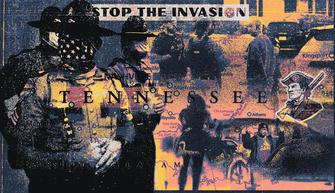
The Nashville ICE Raids: Anti-Gang Offensive or Immigration Crackdown?

InSight Crime 15 ott 2025 English

A large-scale Nashville immigration operation conducted jointly by ICE and the Tennessee Highway Patrol resulted in 196 arrests but yielded minimal evidence of gang-focused enforcement, with only two alleged gang affiliates detained. The sweep, part of a national shift under the Trump administration toward expansive immigration enforcement, drew criticism for racial profiling, limited transparency, and denial of due process, leaving local migrant communities fearful and destabilized. Data from national operations showed similarly low numbers of gang-related arrests despite public framing emphasizing organized crime. Law enforcement reactions were divided, with some arguing the operations reduce criminal activity by pressuring gangs, while others contended they divert resources from complex investigations and damage community trust crucial for prosecuting transnational groups. Policy changes under the administration have further prioritized rapid removals, cut investigative agency budgets, and dismantled multi-agency task forces, raising concerns that immigration enforcement is overtaking organized crime prevention. Politically, the crackdown has deepened partisan divides, and reports indicate a shift toward mass worksite arrests rather than targeted criminal operations.

Immigration Enforcement Organized Crime US Domestic Policy Tennessee Nashville United States ICE Tennessee Highway Patrol Department of Homeland Security Department of Justice FBI DEA
Stile giornalisticoEquilibrato

Mix of factual reporting and subjective interpretations, especially regarding motives, impacts, and political reactions.

Contesto politicoCentro-sinistra

critical examination of immigration enforcement policies and their impact on communities, with emphasis on civil rights concerns

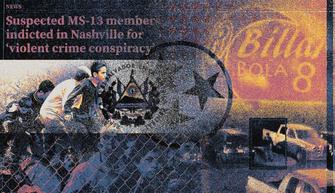
Feeding the Beast: MS13 in Nashville

InSight Crime 15 ott 2025 Spanish

MS13’s Thompson Place Locos Salvatrucha clique in Nashville evolved within impoverished, marginalized migrant neighborhoods, blending local and Central American dynamics to fuel a cycle of violence, drug trafficking, and internal disorder. A major federal case culminated in 2024 with the conviction of 18 members for murder, attempted murder, and organized crime, exposing the clique’s chaotic structure and extreme brutality despite limited resources. Migration patterns, shifting U.S. political narratives, and inadequate support for migrant youth contributed to recruitment vulnerability. Recent federal and state crackdowns, including broad ICE raids and new Tennessee laws targeting undocumented migrants, have intensified fear in immigrant communities, increasing school absences and potentially strengthening gang recruitment conditions. Despite major prosecutions, MS13 activity in Nashville continues, illustrated by new arrests and retaliatory attacks on witnesses.

Gang violence MS13 in the United States Migration and crime policy Organized crime Nashville United States Central America MS13 Thompson Place Locos Salvatrucha (TPLS) US Immigration and Customs Enforcement (ICE) Department of Justice (DOJ) Homeland Security Investigations (HSI)
Stile giornalisticoInformativo

Mostly factual investigative reporting with minimal subjective language.

Contesto politicoCentro-sinistra

Critically examines hardline migration and security policies, highlighting social impacts on vulnerable communities.

Feeding the Beast: MS13 in Nashville

InSight Crime 15 ott 2025 English

MS13’s Thompson Place Locos clique in Nashville evolved locally within marginalized immigrant communities, driven by poverty, instability, and social exclusion. The gang carried out a series of brutal murders and attempted murders between 2016 and 2017, culminating in major federal prosecutions that led to life sentences and lengthy prison terms. Nashville’s social conditions—high poverty, limited educational support, and strained relations with institutions—created fertile ground for gang recruitment among both US-born and migrant youths. Federal and state shifts toward aggressive immigration enforcement under the Trump administration disrupted investigative task forces while raising fears among migrant families, increasing truancy and youth vulnerability. Despite major convictions, MS13 activity continues, exemplified by new arrests and retaliatory violence against witnesses.

Organized crime Gang violence Immigration policy Law enforcement Nashville United States Central America MS13 US Government Immigration and Customs Enforcement Homeland Security Investigations Tennessee State Congress
Stile giornalisticoInformativo

Extensively reported and fact-based but includes analytical framing and quoted opinions about policy and gang dynamics.

Contesto politicoCentro-sinistra

Highlights humanitarian concerns, critiques harsh immigration enforcement, and emphasizes structural causes of gang vulnerability.

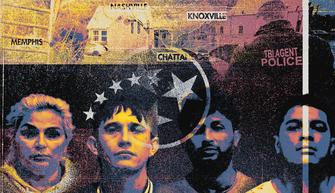
Tren de Aragua in Tennessee: A Ghost Train?

InSight Crime 15 ott 2025 English

Tennessee authorities linked a Nashville-based human trafficking ring led by Yilibeth Rivero and her son to Tren de Aragua, sparking widespread alarm over the Venezuelan gang’s alleged expansion into the state. Despite high-profile warnings from state law enforcement officials and political amplification, subsequent investigations revealed limited evidence of an organized Tren de Aragua presence beyond isolated individuals and loosely connected actors. Several arrests initially portrayed as gang-related produced little substantiation, with many charges reduced or dismissed. Conflicting assessments from law enforcement and intelligence agencies further complicated the situation, highlighting decentralized criminal activity rather than a coordinated national network. The intensified rhetoric fueled public fear and contributed to aggressive immigration actions under the Trump administration, including mass detentions and deportations of Venezuelans, many without credible gang ties. The resulting atmosphere created both social stigma for Venezuelan communities and uncertainty among officials over the true extent of Tren de Aragua’s operations.

Organized Crime Immigration Policy Human Trafficking Law Enforcement US–Venezuela Relations Tennessee Venezuela United States Tren de Aragua Tennessee Bureau of Investigation US Government Interpol
Stile giornalisticoEquilibrato

Mix of factual reporting and interpretive analysis, with some political critiques and subjective assessments included.

Contesto politicoCentro-sinistra

Critical of politicized law enforcement and immigration crackdowns, emphasizing civil rights and due process concerns.

Vedi tutti i 156 lavori con un account gratuito

Ingaggia Messaggio
×

Registrati per inviare un messaggio a James

Hai già un account? Accedi
Cerchi lavoro? Registrati come giornalista
Verifica la tua email per completare la registrazione
Abbiamo appena inviato un'email a . Controlla la tua casella di posta e clicca sul link per verificare il tuo indirizzo email e completare la registrazione. Se non vedi l'email, assicurati di controllare la cartella spam o posta indesiderata.
Non hai ricevuto l'email?

Registrati per sbloccare i profili

Hai già un account? Accedi
Cerchi lavoro? Registrati come giornalista
Verifica la tua email per completare la registrazione
Abbiamo appena inviato un'email a . Controlla la tua casella di posta e clicca sul link per verificare il tuo indirizzo email e completare la registrazione. Se non vedi l'email, assicurati di controllare la cartella spam o posta indesiderata.
Non hai ricevuto l'email?