Hire journalists

Publishers & Broadcasters Content Marketing Teams PR & Comms Teams Risk & Intelligence Teams Find journalists Media Monitoring Pricing

For journalists

Journalism jobs Pay rates Create your free profile

About Claude

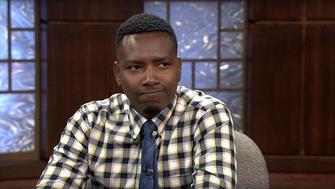
Claude Kabengera is a journalist based in Kigali, Rwanda. He has been working with Voice of America in Washington D.C as a visiting journalism fellow and has acted as a Producer and Fixer for an investigation into the Ugandan immigration to the United States, a collaboration involving NBS TV in Kampala, Uganda on stories in San Diego, CA and Boston. He also worked as an International Broadcaster within VOA's the Central Africa Service (Kirundi/Kinyarwanda). Kabengera's professional affiliation at the International Center For Journalists built him a global brand in serving a community of 180.000 journalists worldwide on IjNet.org. A 2016/2017 Humphrey Alumni of the Cronkite School of Journalism and Mass Communication in Phoenix, Arizona, Kabengera has made appearance on numerous U.S television shows including PBS and Cronkite News commenting on 2016 U.S Presidential elections. Kabengera's Journalism experience has risen from his long-time interest in human rights, social justice, international mass communication, new media and data journalism allowing him to be accepted as an official member of the Central Africa Forum of Journalists for Democracy and Human Rights in 2013.

Languages
English Kinyarwanda
Seen in
Ijnet Azpbs

Work 4

8 PM Special: Foreign Journalists on the Presidential Debate

Azpbs 8 Oct 2016 English

Three foreign journalists participating in the Humphrey Fellows program at the Arizona State University Walter Cronkite School of Journalism and Mass Communication provide their perspectives on the presidential debate. The journalists include Jean Claude Kabengera from Rwanda, Dina Zhansagimova from Kazakhstan, and Ivaylo Vezenkov from Bulgaria.

Presidential Debate Journalism United States Rwanda Kazakhstan Bulgaria Arizona State University Walter Cronkite School of Journalism and Mass Communication Radio/TV10 BBC World Service Private Television Channel in Bulgaria Jean Claude Kabengera Dina Zhansagimova
Reporting styleFactual

The text appears to be a factual announcement of participants in a program.

Airdate: November 16, 2016. Rwandan Journalist Claude Kabengera's insight on US elections - Day 2- Donald Trump elected

Video YouTube

The Power of Investigative Journalism: Uncovering the Truth in 2016

Ijnet English

The article reviews the impact of investigative journalism in 2016, highlighting several key reports that brought significant issues to light. The Panama Papers, released by the International Consortium of Investigative Journalists and partners, exposed offshore financial activities of the elite, leading to global repercussions. The Intercept's investigation into a U.S. military raid in Afghanistan revealed that the victims were government allies, not Taliban militants. The Global Initiative Against Transnational Organized Crime shed light on the criminal networks exploiting refugees. Ojo Público and its partners uncovered the illegal trade of Latin American cultural artifacts. These investigations underscore the role of journalism in uncovering truths and prompting action.

Investigative Journalism Panama Papers Offshore Accounts Military Operations Refugee Crisis People Smuggling Cultural Artifact Trafficking Worldwide Afghanistan Latin America International Consortium of Investigative Journalism Süddeutsche Zeitung

U.S. media outlets and tech giants gear up to combat fake news in 2017

Ijnet English

The article discusses the issue of fake news, particularly in the context of the U.S. presidential election. It highlights a viral tweet by Eric Tucker about paid anti-Trump protesters, which was false, and the spread of a fabricated story by The Denver Guardian. The article notes that fake news has become a significant problem, with social media platforms like Facebook being criticized for not doing enough to prevent the spread of misinformation. Mark Zuckerberg, CEO of Facebook, has stated that identifying the truth is complicated, but the company has started to take measures to combat fake news, including partnering with fact-checking organizations. News outlets like The Washington Post and Slate are also developing technology to help users identify false stories. The article underscores the challenges of media literacy and the public's growing distrust in traditional news sources.

Fake News Presidential Election Social Media Misinformation Media Literacy Fact-Checking United States The New York Times The Denver Guardian Pew Research Center Columbia Journalism Review FactCheck.org PolitiFact

Other journalists in Kigali

Hire Message
×

Sign up to message Claude

Already have an account? Log in
Looking for work? Register as a Journalist
Verify your email to complete registration
We’ve just sent an email to . Please check your inbox and click the link to verify your email address and complete your registration. If you don’t see the email, be sure to check your spam or junk folder.
Didn’t receive the email?

Sign up to unlock profiles

Already have an account? Log in
Looking for work? Register as a Journalist
Verify your email to complete registration
We’ve just sent an email to . Please check your inbox and click the link to verify your email address and complete your registration. If you don’t see the email, be sure to check your spam or junk folder.
Didn’t receive the email?