Journalisten engagieren

Verlage & Sender Content-Marketing-Teams PR- & Kommunikationsteams Risiko- & Intelligence-Teams Journalisten finden Medienbeobachtung Preise

Für Journalisten

Stellenangebote im Journalismus Honorare und Tarife Kostenloses Profil erstellen

Über Joël

Joël ALIMASI Kitambala ist ein engagierter Fact-Checking-Journalist mit Sitz in der Demokratischen Republik Kongo, spezialisiert auf politische Berichterstattung, Sicherheitsfragen sowie Daten- und digitale Überprüfung. Er hat einen Abschluss in Economics von der University of Goma und verfügt über mehr als vier Jahre Erfahrung im Community-Management und in der Faktenprüfung, insbesondere durch UNICEF’s Veilleurs du Web program und Eleza Fact. Seine Arbeit konzentriert sich auf die Identifizierung von KI-generierten Fehlinformationen, Datenmanipulation und visueller Desinformation und zeichnet sich durch rigorose investigative Methoden sowie ein starkes Engagement für Genauigkeit in komplexen Medienumgebungen aus.

Sprachen
Französisch Suaheli Englisch
Gesehen in
Eleza Fact

Arbeiten 5

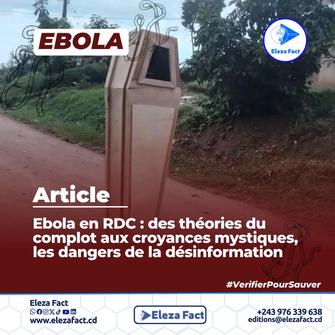
Ebola in DRC: from conspiracy theories to mystical beliefs, when health misinformation is amplified

Eleza Fact 29. Mai 2026 French

Health authorities and journalists report a resurgence of Ebola in Ituri and surrounding regions, while widespread rumours and conspiracy theories undermine the response. Claims of mystical causes, political manipulation, or fabricated outbreaks circulate on social media, fueling distrust and encouraging people to avoid medical care. Field investigations dismiss myths such as the so‑called “mysterious coffin,” confirming instead the role of unsafe funerary practices in spreading the Bundibugyo variant. Experts from the WHO and national laboratories provide scientific confirmation of the outbreak through PCR testing and genomic sequencing. Violent reactions driven by misinformation disrupt treatment efforts, with attacks on isolation centres and patients fleeing care. Strengthening community engagement, transparent communication, and trust in scientific evidence is identified as essential to controlling the epidemic and countering harmful false narratives.
Ebola outbreak Health misinformation Public health crisis Democratic Republic of the Congo Ituri Goma Organisation mondiale de la Santé Africa CDC Institut national de recherche biomédicale Croix-Rouge Gouvernement de la RDC Ministère de la Santé de la RDC
BerichtsstilInformativ

Mostly factual with analysis of misinformation and expert testimony
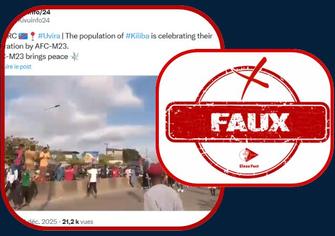
Attention, this video of a protest in Cameroon does not show the population of Kiliba celebrating the arrival of the AFC/M23

Eleza Fact 16. Dez. 2025 French

A widely shared video claiming to show residents of Kiliba celebrating the arrival of AFC/M23 fighters was verified as originating from Douala, Cameroon, during post‑election protests in October 2025. Visual clues, Google Lens, Google Earth, and metadata analysis confirmed the footage was unrelated to events in South Kivu. The misleading clip was amplified across social media accounts, contributing to false narratives amid heightened insecurity in eastern DR Congo.

Misinformation Conflict in DR Congo Cameroon elections Cameroon Democratic Republic of the Congo South Kivu AFC/M23 FARDC UNICEF Les Dossiers de Franck 237showbiz Issa Tchiroma Bakary
BerichtsstilFaktenbasiert

Fact-focused verification of misleading video

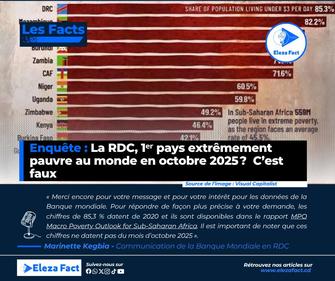
Investigation: Is the DRC the world's No. 1 extremely poor country in October 2025? This is false

Eleza Fact 31. Okt. 2025 French

Multiple sources confirmed that no World Bank poverty ranking was published in October 2025, contradicting viral claims that the Democratic Republic of the Congo was classified as the world's most extremely poor country. The rumor originated from a Visual Capitalist graphic that misinterpreted outdated 2020 poverty data from Our World in Data. The World Bank, IMF, and national statistics authorities confirmed that while the DRC faces high poverty levels, current assessments place it around sixth or seventh globally, not first. Updated national surveys indicate nuanced socioeconomic trends, with improvements in some social indicators and ongoing severe challenges in others. The investigation underscores the importance of verifying sources, as misinformation can worsen public distrust amid economic and security instability.

Poverty statistics Misinformation on social media Economic situation in the DRC Fact-checking Democratic Republic of the Congo Sub-Saharan Africa Global World Bank International Monetary Fund Institut National de la Statistique (INS) Radio Okapi Rodriguez Katsuva
BerichtsstilInformativ

Mostly factual reporting with analytical commentary about data validity and misinterpretation.

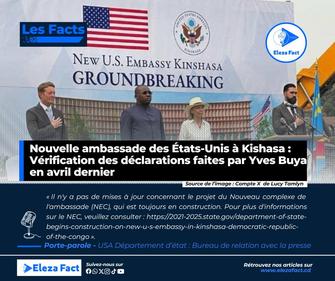
New U.S. Embassy in Kinshasa: Verification of Statements Made by a Congolese Journalist Last April

Eleza Fact 30. Mai 2025 French

U.S. involvement in diplomatic mediation in eastern DRC has fueled speculation online, including viral false claims by journalist Yves Buya alleging that Donald Trump ordered Secretary of State Marco Rubio to accelerate construction of the new U.S. Embassy in Kinshasa and that the site would host agencies such as the CIA, the Department of Defense, and AFRICOM. A review of official documents and communications with the U.S. Department of State, the U.S. Embassy in Kinshasa, and Congolese authorities confirms that these assertions are unfounded. The only verified information derives from an August 2023 State Department press release announcing the launch of construction under the Biden administration, led by Ambassador Lucy Tamlyn. The project focuses on diplomatic modernization, with an investment estimated between 750 and 764 million dollars, contrary to the claimed one billion. No evidence supports the involvement of Trump or Rubio or the relocation of strategic U.S. security institutions to the embassy site, underscoring the need for rigorous verification amid widespread misinformation.

Misinformation U.S.–DRC Relations Diplomacy Democratic Republic of the Congo Kinshasa United States U.S. Department of State U.S. Embassy in Kinshasa AFRICOM CIA Presidency of the Democratic Republic of the Congo Ministry of Land Management of the DRC
BerichtsstilFaktenbasiert

The text is a factual, evidence-based fact-check relying on official statements and documentation.

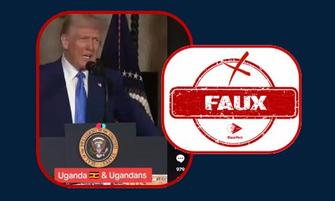
These videos of Donald Trump speaking about Uganda are the result of artificial manipulation

Eleza Fact 16. Mai 2025 French

Multiple viral TikTok videos claiming to show Donald Trump addressing Ugandan military and political issues were proven to be digitally manipulated. The original footage comes from a February press conference with Benjamin Netanyahu focused solely on Gaza. Deepfake detection tools confirmed that the audio in the TikTok versions was artificially generated and unsynchronized with Trump's lip movements. Despite real recent U.S. policy decisions affecting Uganda—such as suspension of foreign aid programs and reduced USAID contracts—none pertain to military or political intervention. The findings highlight the prevalence of AI-generated misinformation and the need for careful verification of online content.

Disinformation Deepfakes Donald Trump Uganda United States Gaza United States government USAID PEPFAR Euronews Radio France Internationale Benyamin Nétanyahou
BerichtsstilFaktenbasiert

The text is a factual verification report relying on evidence, tool analyses and source comparison.

Engagieren Nachricht
×

Registrieren Sie sich, um Joël eine Nachricht zu senden

Haben Sie bereits ein Konto? Anmelden
Suchen Sie Arbeit? Als Journalist registrieren
Verifizieren Sie Ihre E-Mail, um die Registrierung abzuschließen
Wir haben gerade eine E-Mail gesendet an . Bitte prüfen Sie Ihren Posteingang und klicken Sie auf den Link, um Ihre E-Mail-Adresse zu verifizieren und Ihre Registrierung abzuschließen. Falls Sie die E-Mail nicht sehen, prüfen Sie unbedingt Ihren Spam- oder Junk-Ordner.
E-Mail nicht erhalten?

Registrieren Sie sich, um Profile freizuschalten

Haben Sie bereits ein Konto? Anmelden
Suchen Sie Arbeit? Als Journalist registrieren
Verifizieren Sie Ihre E-Mail, um die Registrierung abzuschließen
Wir haben gerade eine E-Mail gesendet an . Bitte prüfen Sie Ihren Posteingang und klicken Sie auf den Link, um Ihre E-Mail-Adresse zu verifizieren und Ihre Registrierung abzuschließen. Falls Sie die E-Mail nicht sehen, prüfen Sie unbedingt Ihren Spam- oder Junk-Ordner.
E-Mail nicht erhalten?