JK
John Kampfner
Politics & Government · United Kingdom
Covers
Politics & Government
International Affairs
Conflict & Security
Social Issues & Demographics
Arts & Culture
Breaking News & General Assignment
Seen in
Published work
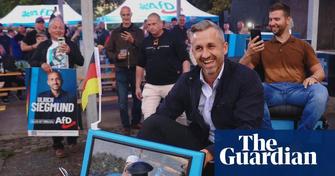
Is Ulrich Siegmund the most dangerous man in Germany?
The shadow of the AfD hangs over German democracy – but I still have faith in my adopted country
John Kampfner reflects on becoming a German citizen as the far-right AfD is expected to perform strongly in Saxony-Anhalt, potentially gaining regional power for the first time since the Nazi era. He criticizes Germany’s economic stagnation, fractious coalition government and vulnerability to disinformation, but argues that democratic resilience, social solidarity, infrastructure investment and increased defence spending offer grounds for optimism. He calls for a bolder, more courageous political centre to confront the AfD and preserve Germany’s liberal democratic order.
For three years I scoured the world for answers to Europe’s big problems – here’s what I found
Japan and Taiwan demonstrate how long-term planning, transparent funding and patient autonomy can help address ageing populations and healthcare pressures. Japan’s multigenerational communities, care-insurance system and local support centres, alongside Taiwan’s digitised and relatively inexpensive health insurance, offer potentially transferable lessons. European systems vary, with Sweden and Spain performing comparatively well, while France, Germany and especially the UK face serious shortcomings. The central problem is political short-termism: leaders fear immediate electoral costs and avoid reforms, even as weak service delivery erodes public trust. European politicians should learn from successful models, involve voters and rival parties, and pursue more imaginative, durable policies.
In a dangerous world, Britain needs its diplomats more than ever – this is no time to axe them
Britain is cutting Foreign Office staffing and diplomatic expertise at a time when Brexit, Donald Trump’s approach to international relations, wars, tariffs and global instability have made diplomacy more important. Up to a quarter of the department’s UK-based jobs and many overseas posts are reportedly at risk, threatening policy analysis, language skills and knowledge of regions such as Africa and the global south. The cuts have drawn criticism from MPs across parties, while the government presents them as an efficiency-driven transformation. The argument is that weakening diplomatic and soft-power institutions, including the British Council and BBC World Service, will leave the UK more isolated, vulnerable and dependent on its own reduced capabilities.
Big trouble in ‘Little Berlin’: the tiny hamlet split in two by the Cold War
Mödlareuth, a tiny settlement divided between Bavaria and Thuringia, was split by the inner German border after the Second World War and eventually enclosed by a concrete wall, mines and guard posts. The division separated neighbours and families, while strict controls and Stasi surveillance made everyday life precarious. A new German-German Museum Mödlareuth, developed with local involvement and preserving sections of the wall and watchtowers, documents the village’s Cold War history. Although the political border has disappeared, administrative divisions remain, and the museum is expected to increase the site’s status as a place of historical pilgrimage.
After a torrid 100 days, Germany’s Friedrich Merz is mocked as a ‘dead man walking’. He must fight back
Friedrich Merz’s German coalition government has struggled from its first day, facing internal dissent, media mockery, coalition tensions and rising support for the far-right AfD. The failed nomination of judge Frauke Brosius-Gersdorf exposed pressure from the right and fears that the CDU could abandon its firewall against the AfD. Although the coalition is vulnerable and unpopular, Merz and SPD deputy chancellor Lars Klingbeil may stabilize it through infrastructure and security investment, tighter migration policy and pragmatic compromise, while the AfD’s infighting and incompetence could limit its advance.
The British-German conversation deserves more than tired old clichés. Over to you, Merz and Starmer
Friedrich Merz’s first official visit to London and the signing of the first UK-Germany friendship treaty offer a chance to replace historically focused clichés with practical cooperation. The agreement prioritises defence and military coordination while addressing post-Brexit obstacles affecting business travel, school trips, cybersecurity, digital infrastructure, green hydrogen and healthcare. Britain, Germany and France are presented as reviving a closely coordinated European diplomatic grouping in response to Russia, Ukraine, Donald Trump and the need for greater European defence capacity. However, Brexit, British reluctance to make broader concessions to the EU, domestic challenges facing Merz and Keir Starmer, and the leaders’ limited control over events make claims of a lasting new era premature.
‘Migration is not always a story of suffering’: the Dutch museum telling the full story of global diaspora
Fenix Rotterdam, a new museum devoted to migration, opens in a regenerated former warehouse district with a collection combining difficult evidence of displacement—including an impounded migrant boat, a refugee tent and thousands of suitcases—with playful and esoteric works by artists such as Yinka Shonibare, Raquel van Haver and Red Grooms. Director Anne Kremers argues that migration encompasses love, work and adventure as well as suffering, and seeks to create a space for debate rather than political propaganda. The museum’s location reflects Rotterdam’s long history of global movement, while its privately funded model allows experimentation amid increasingly restrictive Dutch migration politics. Its distinctive blend of personal testimony, historical objects and contemporary art is presented as a potentially significant new cultural attraction.
Germany is finally getting a new government – and it will be plunged straight into crisis mode
Germany’s incoming CDU/CSU-SPD coalition will take office amid severe external and domestic pressures, including Donald Trump’s tariffs, Russia’s war in Ukraine, China’s growing influence, economic stagnation and rising AfD support. Friedrich Merz has secured tougher immigration rules, lower corporation tax and major defence and infrastructure spending, while Lars Klingbeil’s SPD preserved minimum-wage and welfare commitments. A national security council, optional military service and a digitisation ministry are planned, but climate policy received little attention. Despite the coalition’s difficult compromises and Merz’s controversial use of the outgoing parliament to pass constitutional spending reforms, the government may provide the stability Germany and Europe lacked under Olaf Scholz.
Europe is crying out for leadership. After years of drift, Germany is finally ready to answer
Germany’s historic vote to approve a €500bn investment in infrastructure and environmental projects, alongside unrestricted increases in defence spending, marks a decisive break with its longstanding fiscal caution and dependence on US security guarantees. Friedrich Merz engineered the measure with support from the Greens and the outgoing parliament, despite accusations of political opportunism. The shift was driven by Donald Trump’s hostility toward Europe and the threat posed by Vladimir Putin. A CDU-led coalition with the SPD is now expected to give Germany a more assertive role in European defence, while attempting to contain the far-right AfD and overcome years of political drift.
It’s the liberal German dilemma: Merz is anathema, but he might stand up to Trump
Germany’s liberal voters face a difficult choice after the election: Friedrich Merz is objectionable to many because of his positions on migration, social policy and his confrontational style, yet he may be better placed than his alternatives to confront Donald Trump and respond to the collapse of Europe’s postwar security assumptions. The article argues that Germany must abandon its longstanding pacifist and deferential attitudes, reform the constitutional debt brake and invest substantially more in defence. Merz has shifted from fiscal restraint toward support for a long-term defence fund, while the weakened SPD, Greens, Die Linke and AfD offer competing but problematic alternatives. Russia’s invasion of Ukraine and the US rapprochement with Vladimir Putin have made a more muscular German foreign and security policy unavoidable.
Trump and Vance have smashed the old order – how should Europe respond?
Six contributors argue that Donald Trump and JD Vance have shattered assumptions about a stable transatlantic alliance by attacking European democratic institutions, supporting the far right and excluding Europe from negotiations over Ukraine. They urge European governments to stop relying on US protection, define their own red lines on Ukraine, strengthen military and economic autonomy, and build a capable but limited common European force. The contributors also warn against both complacency and panic, calling for renewed commitments to inclusion, human rights and the rule of law while recognizing the need for stronger defence and a more independent European security regime.