Hire journalists

Publishers & Broadcasters Content Marketing Teams PR & Comms Teams Risk & Intelligence Teams Find journalists Media Monitoring Pricing

For journalists

Journalism jobs Pay rates Create your free profile

About Joseph

Languages
English
Seen in
Himal Southasian The New York Times Vice Foreign Policy Nybooks Netra News — নেত্র নিউজ Newhumanist Foreignaffairs HuffPost Nikkei Asia Scroll.in The Baffler Time Asiatimes Caravanmagazine Indianexpress Theprint Economist Lowyinstitute Ndtv

Work 53

Bangladesh: breaking with dynasty

Lowy Institute 1 Oct 2023 English

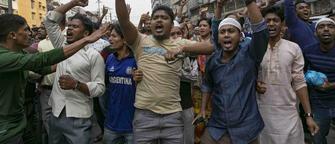
Bangladesh's political landscape, long dominated by the dynastic rivalry between Begum Khaleda Zia and Sheikh Hasina, is undergoing significant changes. With Khaleda Zia facing legal troubles and Sheikh Hasina's continued dominance, the future of the country's political structure is uncertain. The political impasse has raised concerns about the rise of extremism, with Islamist groups like Hefazat Islam and Islami Andolan gaining influence. The Awami League's shift towards China and the potential for new political alliances highlight the complexities of Bangladesh's evolving political scene.
Political Dynasties Corruption Elections Islamism Bangladesh China India Awami League Bangladesh Nationalist Party Hefazat Islam Islami Andolan International Crisis Group
Reporting styleBalanced

Balanced between factual reporting and subjective analysis

Political contextCentre-left

The article discusses the centre-left Awami League and its political maneuvers.
Power play

Himal Southasian 10 Dec 2021 English

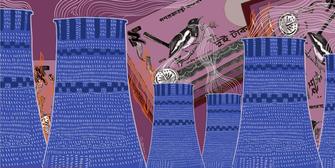
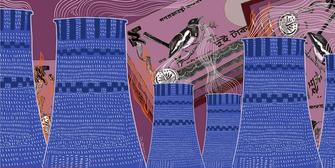
The article discusses the political and energy landscape in Bangladesh, focusing on the extension of the Speedy Supply of Power and Energy (Special Provisions) Act 2010. Originally intended as a temporary measure to address electricity shortages, the act has been extended multiple times, raising concerns about governance and extra-legal incentives. Under Sheikh Hasina's leadership, Bangladesh has seen significant increases in electricity generation capacity, but the continued reliance on this act suggests underlying issues in the country's governance.

Bangladesh Politics Energy Policy Bangladesh Dhaka Bangladeshi government Sheikh Hasina
Reporting styleBalanced

The article presents a mix of factual information and analysis regarding the political and energy situation in Bangladesh.

Political contextCentre

The article discusses governance and policy issues without a clear partisan bias.

Power play

Himal Southasian 1 Oct 2021 English

Stability in political leadership and power supply has been elusive in Dhaka, with no prime minister serving more than one term until Sheikh Hasina's post-2009 rule. The Speedy Supply of Power and Energy (Special Provisions) Act 2010, initially a temporary measure to address electricity shortfalls, has been extended multiple times and will remain in effect until at least 2026. Despite significant improvements in electricity generation capacity, the prolonged existence of this act raises concerns about governance and extra-legal incentives in Bangladesh.

Energy Policy Governance Political Stability Bangladesh Dhaka Bangladeshi Government Sheikh Hasina
Reporting styleBalanced

Balanced between factual reporting and subjective analysis

The Battle for Bangladesh

New Humanist 14 Sep 2021 English

Bangladesh's achievements since independence coexist with weak democracy, authoritarian rule and growing religious conservatism. The article traces Islamist influence to post-1970s state Islamisation, Cold War politics and a weak state, and argues that successive governments have accommodated hardline religious groups. Prosecutions over 1971 war crimes intensified secular-Islamist tensions; the 2013 murder of atheist blogger Ahmed Rajib Haider was followed by further attacks and restrictions on speech. The Digital Security Act has been used against journalists, cartoonists and critics, while the government has failed to protect targeted groups. The author argues that authoritarianism, sectarianism and majoritarianism threaten Bangladesh's founding ideals and future.

Bangladesh Islamist Extremism Authoritarianism Secularism Freedom of Speech Bangladesh Liberation War Pakistan India Awami League Hefazat Islam Al Qaeda Bangladesh government
Reporting styleInterpretive

Analytical and strongly critical of authoritarianism and religious extremism, while advancing the author's interpretation of their causes.

Political contextCentre-left

Supports secular, democratic and inclusive governance, and criticizes both Islamist extremism and authoritarianism.

The battle for Bangladesh

New Humanist 14 Sep 2021 English

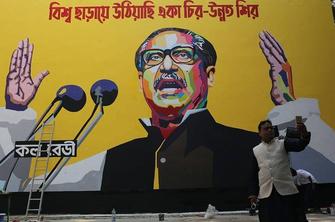
Bangladesh's struggle for independence from Pakistan in 1971, led by Sheikh Mujibur Rahman, established a secular state based on linguistic culture. However, the subsequent decades have seen the rise of authoritarian governance and religious extremism, influenced by Middle Eastern funding during the Cold War. The assassination of Sheikh Mujibur in 1975 led to a shift towards Islamisation, with significant political and social repercussions. Today, under the leadership of Sheikh Hasina, Bangladesh faces challenges of weak democracy, rights abuses, and increasing religious conservatism, despite economic progress. The country's history of conflict and ongoing tensions between secular and Islamist forces continue to shape its political landscape.

Bangladesh Independence Political History Religious Extremism Bangladesh Pakistan India Awami League Pakistani Army Al Qaeda Hefazat Islam Sheikh Mujibur Rahman Sheikh Hasina
Reporting styleInterpretive

The text contains a mix of factual reporting and subjective analysis, particularly in its interpretation of historical events and political dynamics.

Political contextCentre-left

The text criticizes authoritarianism and religious extremism while advocating for secularism and democracy.

Book review: Caste

New Humanist 17 Dec 2020 English

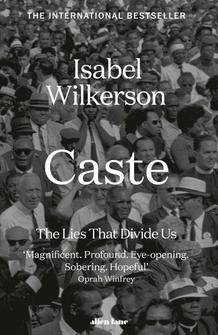
Joseph Allchin reviews Isabel Wilkerson’s Caste: The Lies That Divide Us, which argues that racism in the United States operates as a deeper caste hierarchy shaping status, opportunity and political behavior. The review highlights parallels between American racial oppression and India’s caste system, including violence, purity norms and social competition. It also describes Wilkerson’s argument that some Trump supporters prioritize preserving the advantages of a historically dominant caste over immediate economic benefits. The book is presented as a timely account of why legal reforms have not ended entrenched social hierarchies.

Book Review Caste System Racism US Politics Black Lives Matter United States India Democratic Party Isabel Wilkerson Donald Trump Lyndon B. Johnson Allen Lane
Reporting styleInformative

Mostly analytical review, with evaluative praise and criticism of the book.

Political contextCentre-left

Critiques racial hierarchy and discusses how caste dynamics shape US politics, while presenting the argument through a book review.

Book review: Caste

New Humanist 17 Dec 2020 English

Isabel Wilkerson's 'Caste: The Lies That Divide Us' argues that racism in America is better understood as a caste system, a deeply entrenched hierarchy that affects social standing, respect, and access to resources. The book draws parallels between the American and Indian caste systems, highlighting the performative violence and social mechanics that maintain these hierarchies. Wilkerson challenges the notion that working-class Trump supporters are voting against their interests, suggesting instead that they are preserving their status within the ruling caste. The book provides timely insights into the persistence of social divisions despite legal and progressive reforms, especially in the context of the global Black Lives Matter movement.

Book Review Racism Caste System United States India Democratic Party Black Lives Matter Isabel Wilkerson Lyndon B. Johnson Donald Trump Barack Obama Caste: The Lies That Divide Us
Reporting styleInterpretive

The text contains a mix of factual information and subjective analysis, particularly in the interpretation of social dynamics and historical events.

Political contextLeft

The text critiques systemic oppression and aligns with progressive views on social justice.

The Discreet Charm of White-Collar Jihad

The Baffler 25 Aug 2020 English

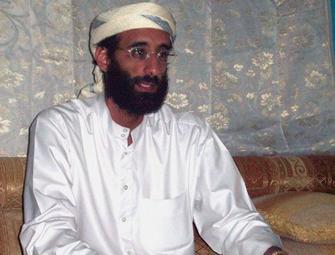
Alexander Meleagrou-Hitchens's book 'Incitement' explores the life and influence of Anwar al-Awlaki, a radical ideologue who became the first American killed by a drone strike. The book delves into Awlaki's appeal among disaffected Muslim youth, particularly in Bangladesh, where he inspired a series of attacks on secular activists. Awlaki's ability to blend authoritative religious interpretation with a counterculture image made him a magnetic figure for extremists. The article also discusses the class dynamics within jihadist organizations, where middle-class members often assume 'white-collar' roles in propaganda and planning, while lower-class recruits are left with 'blue-collar' tasks like violence. The author, James Allchin, reflects on his personal experiences reporting on religious extremism in Bangladesh and the broader implications of Awlaki's legacy in developing countries, where many men feel a sense of ressentiment and a thirst for order amidst societal changes.

Terrorism Radicalization Extremism Bangladesh Yemen United States Al Qaeda in the Arabian Peninsula Ansarullah Bangla Team Al Qaeda in the Indian Subcontinent Islamic State USAID Anwar al-Awlaki
Reporting styleInformative

Primarily factual reporting of historical events, ideologies, and personal narratives

Political contextCentre

The article is a historical and sociological analysis rather than a political argument

Britain’s COVID response exposes its dying welfare state

The Caravan 1 Jun 2020 English

Britain's handling of the COVID-19 pandemic revealed significant flaws in its welfare state, exacerbated by a decade of austerity that cut public services and local authorities. The country faced the highest death toll in Europe, with the government's slow response and Boris Johnson's initial nonchalance, including a remark about shaking hands in a hospital, drawing criticism. The structural weaknesses of the health system were laid bare, with reduced hospital beds and a decimated health service leaving it ill-prepared to handle the crisis.

COVID-19 Healthcare System British Politics Britain Europe Public Health England Boris Johnson Naila Kabeer Bharat Pankhania
Reporting styleBalanced

Contains subjective statements about government policy and individual behavior

Political contextLeft

Criticizes austerity and government response to COVID-19

Great reads for the Year of the Rat

Asia Times 1 Feb 2020 English

Asia Times presents a curated list of recommended books for the Year of the Rat, featuring insightful reads from 2019 and earlier. Highlights include Joseph Allchin's analysis of Islamic militancy in Bangladesh, Amaryllis Fox's controversial CIA memoir, Dinny McMahon's critique of China's debt crisis, Khaled Khalifa's wartime novel, Elif Shafak's politically charged narrative, and Young Chun's account of his conscription into the Korean army. The reviews offer a mix of praise and critique, with particular commendation for Allchin, McMahon, Khalifa, and Chun, while Shafak's work is noted for its political overtones.

Books Literature Reading List Bangladesh Myanmar China US Central Intelligence Agency Georgetown University Hurst & Company Alfred A. Knopf Houghton Mifflin Harcourt MacMillan
Reporting styleInformative

Mostly factual with some subjective reviews and opinions on the books.

See all 53 pieces of work with a free account

Other journalists in Dhaka

Hire Message
×

Sign up to message Joseph

Already have an account? Log in
Looking for work? Register as a Journalist
Verify your email to complete registration
We’ve just sent an email to . Please check your inbox and click the link to verify your email address and complete your registration. If you don’t see the email, be sure to check your spam or junk folder.
Didn’t receive the email?

Sign up to unlock profiles

Already have an account? Log in
Looking for work? Register as a Journalist
Verify your email to complete registration
We’ve just sent an email to . Please check your inbox and click the link to verify your email address and complete your registration. If you don’t see the email, be sure to check your spam or junk folder.
Didn’t receive the email?