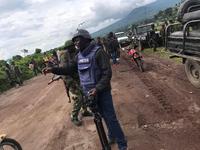
Justin Kabumba is a journalist based in Goma, Congo The Democratic Republic. Justin Kabumba, an independent correspondent based in Goma for France 24 and the Associated Press (AP), is a journalist renowned for his professionalism. The 28-year-old became known for his in-depth and accurate coverage of the conflict in the eastern Democratic Republic of Congo.
The Associated PressAjcCastanetKamloops.netChronFrance 24KAMR - MyHighPlains.comLos Angeles TimesMid Florida NewspapersThe Washington TimesTribuna do SertãoYourCentralValley.comHttps://WwwArkansasonlineStartribune
Work 25
Ebola outbreak in Congo poses deadly risks for pregnant women
Associated Press3 Aug 2026English
Pregnant women in Congo’s Ituri province are increasingly avoiding hospitals because of fears and misinformation about Ebola, while the outbreak is diverting health workers and supplies from routine maternal care. UNFPA figures show weekly maternal deaths rising from an average of 3.1 before the outbreak to 5.8 between May 25 and July 19, with a growing share occurring outside health facilities. A Bunia clinic’s monthly prenatal registrations fell from 60 to about 10. Health workers also face shortages, unpaid wages, infections and attacks on facilities. Officials warn that women may die from preventable childbirth complications when care is inaccessible or distrusted, even apart from Ebola itself.
Ebola outbreakMaternal mortalityPregnancy and childbirthHealthcare accessMisinformationIturi Province, Democratic Republic of the CongoDemocratic Republic of the CongoSub-Saharan AfricaUnited Nations Population FundU.S. Centers for Disease Control and PreventionEsther LutulaNoemi Dalmonte
Reporting styleInformative
Primarily factual reporting, with limited evaluative language describing the dangers and consequences of reduced care.
OpinionatedFactual
More Pregnant Women Are Dying in Congo as They Avoid Hospitals Over Ebola
The Philadelphia Inquirer3 Aug 2026English
Fear of Ebola infection, quarantine, violence and misinformation has led many pregnant women in Ituri province to avoid hospitals and prenatal checkups. Maternal deaths in the province nearly doubled after the outbreak began, while the share of deaths occurring outside health facilities also rose sharply. The Ebola response has diverted staff and supplies from maternal care amid attacks on health facilities, unpaid health workers and shortages, creating a shadow crisis in a country already facing one of the world’s highest maternal mortality rates.
Ebola OutbreakMaternal MortalityPregnancy and Prenatal CarePublic HealthHealthcare AccessMisinformationDemocratic Republic of the CongoIturi ProvinceBuniaUnited Nations Population FundU.S. Centers for Disease Control and PreventionNoemi Dalmonte
Reporting styleFactual
Predominantly fact-based reporting supported by health data, expert statements and firsthand accounts.
OpinionatedFactual
Ebola makes people avoid hospitals in Congo and drives up deaths among pregnant women
AP News3 Aug 2026Spanish
Fear, rumors and misinformation surrounding a rapidly growing Ebola outbreak in eastern Democratic Republic of the Congo are driving pregnant women away from hospitals and prenatal care. In Ituri, weekly maternal deaths rose from an average of 3.1 before the outbreak to 5.8 between May 25 and July 19, while deaths occurring outside health facilities nearly doubled. Clinics have seen sharp declines in prenatal visits as staff, supplies and facilities are redirected to Ebola response efforts, compounded by attacks on health centers, unpaid workers and the deaths of infected medical personnel. Health officials warn that women may increasingly die from treatable pregnancy and childbirth complications because care is no longer viewed as safe or accessible.
Ebola outbreakMaternal mortalityPregnancy and childbirthPublic healthHealthcare accessMisinformationDemocratic Republic of the CongoIturi ProvinceBuniaUnited Nations Population FundCenters for Disease Control and PreventionWorld Health Organization
Reporting styleInformative
Predominantly factual reporting supported by health data, expert testimony and firsthand accounts, with limited interpretive framing about the hidden maternal-health crisis.
OpinionatedFactual
Ebola is spreading faster in eastern Congo than it can be tracked, as deaths pass 700
Associated Press14 Jul 2026English
Ebola cases in eastern Democratic Republic of the Congo are spreading faster than responders can track them: the WHO says 80% of newly reported cases are outside known contact lists, while at least 1,926 people have been infected and 702 have died. Many people are dying in their communities without reaching health facilities. Response capacity has expanded in Bunia, including treatment beds and laboratories, but funding gaps, attacks on health centers, conflict, community mistrust and a strike over unpaid health-worker salaries continue to impede efforts. The outbreak, caused by the Bundibugyo virus, was declared on May 15 after weeks of undetected transmission; cases have also been confirmed in Uganda, and clinical trials have begun.
Ebola outbreakPublic health responseInfectious diseaseDemocratic Republic of the CongoUgandaAfricaWorld Health OrganizationAfrica Centres for Disease Control and PreventionCongolese authoritiesU.S. Centers for Disease Control and PreventionChikwe Ihekweazu
Reporting styleFactual
Factual news reporting, primarily presenting health authorities’ statements and outbreak figures.
OpinionatedFactual
Death toll from Congo's Ebola outbreak reaches 600
AP News9 Jul 2026English
Congo's latest Ebola outbreak has killed 600 people, with 1,759 confirmed cases. Suspected cases have appeared in Tshopo and Haut-Uele, beyond the outbreak's epicenter in Ituri; one suspected Tshopo case has no apparent link to known outbreaks. The Africa CDC describes the outbreak as the continent's fastest-growing. Caused by the rare Bundibugyo virus, it has no approved vaccine or treatment, although clinical trials have begun. Response efforts face funding shortages, attacks on health centers and conflict in eastern Congo.
Ebola outbreakPublic healthInfectious diseaseDemocratic Republic of the CongoIturi ProvinceTshopo ProvinceCongolese Ministry of HealthAfrica Centres for Disease Control and PreventionWorld Health OrganizationJean-Yves KamaleJustin Kabumba
Reporting styleFactual
Factual news reporting focused on outbreak figures and official statements.
OpinionatedFactual
AP reporter recounts a month covering Ebola in Congo's outbreak
AP News2 Jul 2026English
A month of reporting from eastern Congo’s Ebola outbreak revealed a crisis marked by deaths, overwhelmed health services and significant dangers for responders and journalists. Conflict, displacement, inaccessible areas and attacks on health workers have hindered the response, while distrust and misinformation lead some residents to avoid care and make the outbreak’s true scale difficult to establish. The disease’s peak may still lie ahead, and there is no approved treatment for the Bundibugyo strain, with a vaccine months away. Despite fear and restrictions, residents continue daily life and find moments of communal celebration.
Ebola outbreakPublic healthConflict and humanitarian crisisMisinformationDemocratic Republic of the CongoIturi ProvinceBuniaWorld Health OrganizationM23 rebelsJustin KabumbaMoses SawasawaHusein Twaibu
Reporting styleBalanced
First-person, emotionally reflective reporting, while grounded in factual details and attributed accounts.
OpinionatedFactual
Confirmed Ebola cases in Congo outbreak top 1,000 with 254 deaths, authorities say
Associated Press22 Jun 2026English
Confirmed Ebola cases in eastern Congo’s Ituri province have risen to 1,003, with 254 deaths, 100 recoveries and at least 365 people hospitalized or isolated. The outbreak, caused by the Bundibugyo virus, has no available vaccine or treatment, and officials say its true scale and starting point remain unknown. Contact tracing has reached only 55% of its target, while authorities have yet to identify the index case or trace more than 35,000 reported contacts. Rebel violence restricts access to villages and displaces residents, increasing risks in crowded camps. Officials at one camp reported 10 unusual deaths but no confirmed Ebola cases there; the U.N. refugee agency warned that millions of displaced people in the region are at risk.
Ebola outbreakPublic healthDisplacement and conflictIturi ProvinceDemocratic Republic of the CongoEast AfricaCongo Ministry of HealthAfrica Centres for Disease Control and PreventionUnited Nations High Commissioner for RefugeesAllied Democratic ForceJean KaseyaCharité Banza
Reporting styleFactual
Fact-focused reporting on case counts, response challenges and statements from officials and local representatives.
OpinionatedFactual
Mourners bury a 6-month-old Ebola victim in the Congo outbreak’s third orphanage death
Associated Press19 Jun 2026English
A 6-month-old girl, Vanisa Anifa, was buried in Bunia after dying of Ebola, becoming the third child to die at an orphanage in eastern Congo during the outbreak. Authorities reported 933 confirmed cases and 245 deaths, with more than 90% of cases in Ituri; infections have also been recorded in North and South Kivu and across the border in Uganda. Containment has been hindered by community clashes, disrupted burial practices, shortages of protective equipment and delayed identification of the Bundibugyo strain, which has no approved vaccine or treatment. Congo’s health minister announced free care at health centers in Ituri and increased bonuses for health workers.
Ebola outbreakPublic healthInfectious diseaseBurial practicesDemocratic Republic of the CongoIturiUgandaDemocratic Republic of the Congo Ministry of HealthInternational Federation of Red Cross and Red Crescent SocietiesAfrica Centres for Disease Control and PreventionVanisa AnifaRoger Kamba
Reporting styleFactual
Straightforward factual news reporting, with attributed statements and outbreak figures.
OpinionatedFactual
A 16-month-old and his mother recover from Ebola in rare good news from outbreak in Congo
Associated Press17 Jun 2026English
A 16-month-old boy and his mother were among seven people discharged after recovering from Ebola at a treatment center near Bunia in eastern Democratic Republic of the Congo. The outbreak, caused by the Bundibugyo virus, has recorded 837 confirmed cases and 196 confirmed deaths, though the total is believed to be higher. Africa CDC chief Jean Kaseya warned it could become the worst Ebola outbreak on record if it continues spreading. Contact tracing is hampered by conflict-driven displacement and the movement of miners across remote areas; cases have also been reported in neighboring Uganda.
Ebola outbreakPublic healthInfectious diseasesDisease surveillanceIturi Province, Democratic Republic of the CongoDemocratic Republic of the CongoUgandaAfrica Centres for Disease Control and PreventionDemocratic Republic of the Congo Ministry of HealthUnited Nations Office for the Coordination of Humanitarian AffairsAlliance for International Medical ActionKahindo Mireille Pierrette
Reporting styleInformative
Mostly factual reporting, with limited emotionally framed language describing the recovery as rare good news.
OpinionatedFactual
Motorcycle taxi drivers rally for Ebola awareness in eastern Congo as attacks hinder response
Associated Press10 Jun 2026English
Motorcycle taxi drivers held an Ebola-awareness caravan in Bunia and Rwampara, in eastern Democratic Republic of the Congo, to counter skepticism and misinformation and encourage prevention. Ituri accounts for more than 90% of the outbreak’s cases; authorities reported at least 598 confirmed cases and 115 deaths. Attacks on health facilities and more than 520 incidents affecting health workers, conflict, and shortages of supplies such as water are obstructing the response. The outbreak is caused by the Bundibugyo virus, for which there is no approved vaccine or treatment, though three vaccine candidates are in development. Some countries have tightened screening or travel measures, while WHO has not recommended broad travel bans; U.S. Secretary of State Marco Rubio urged European countries to strengthen restrictions.
Ebola outbreakPublic health awarenessMisinformationAttacks on health workersVaccine developmentIturi, Democratic Republic of the CongoNorth Kivu and South Kivu, Democratic Republic of the CongoUgandaWorld Health OrganizationCongolese authoritiesIslamic State groupJacques Maliro
Reporting styleFactual
Primarily factual reporting, with attributed statements from health officials and residents.
We respect your privacy and use a limited number of cookies to provide essential functionality and enhance your visit. No third-party advertising cookies involved. For more details, please read our Cookie Policy.