Journalisten engagieren

Verlage & Sender Content-Marketing-Teams PR- & Kommunikationsteams Risiko- & Intelligence-Teams Journalisten finden Medienbeobachtung Preise

Für Journalisten

Stellenangebote im Journalismus Honorare und Tarife Kostenloses Profil erstellen

Über Kevin

Kevin Lunzalu ist freiberuflicher Journalist mit Sitz in Nairobi, Kenia. Er spezialisiert sich auf die Berichterstattung über Umweltfragen, insbesondere darauf, wie Gemeinden Klimaschutzmaßnahmen vorantreiben. Kevin interessiert sich außerdem für nachhaltige Landwirtschaft, Jugendstimmen, ökologische Entwicklung und Friedensfragen. Durch seine Arbeit wurde er 2015 im Rahmen des community awareness program der Organisation Environment254 als Umweltschützer des Jahres ausgezeichnet. 2017 wurde er für das Global Youth Biodiversity Network (GYBN) berufen, wo er basisnahe Jugendinitiativen dokumentiert, die den Verlust an Biodiversität stoppen, und Berichte erstellt, die vom GYBN während Konsultationssitzungen der UN Convention on Biological Diversity verwendet werden. Kevin arbeitete außerdem als Umweltbotschafter bei CoalitionWILD, einer internationalen Plattform für junge Menschen, die sich aktiv dem ökologischen Naturschutz widmen, wo er aktiv nach Geschichten zu Jugendprojekten in Kenia recherchierte. Kevin hat in Kenia, Uganda, Ägypten, Ruanda und Südafrika berichtet. Er unterstützt gerne bei Dokumentarfilmproduktionen, beim Bloggen, in der Recherche, bei Medienkoordination, Nachrichtenbeschaffung, Projektberichterstattung, Fotografie, Profilinterviews, Feature-Stories und im Social-Media-Management. Kevin ist flexibel, vielseitig, kreativ, dynamisch und kann auch in anderen für Auftraggeber interessanten Bereichen arbeiten. Er arbeitet in Englisch und Suaheli, mit Grundkenntnissen in Luganda und Kinyarwanda.

Sprachen
Englisch Suaheli
Gesehen in
Kelvin's Wild Chronicles Asparagus Magazine World Bank

Arbeiten 22

Fighting Climate Change Through Community Activism

Coalitionwild 3. Apr. 2026 English

The article discusses the efforts of a Kenyan youth biodiversity network aligned with the United Nations Convention for Biological Diversity (UN CBD) to address climate change and biodiversity conservation. The network is focused on integrating gender, human rights, economics, construction, and finance into their strategies for a post-2020 global biodiversity framework. They have established five pillars for their operation, including biodiversity loss prevention and sustainable agriculture. The group has facilitated dialogues between youth and government officials, held capacity-building workshops, and utilized digital platforms to engage and update young people. They have also organized awareness forums and campaigns, such as the Global March for Elephant, Rhinos, and Lions, and an advocacy caravan on Ocean Conservation. The network has received support from the African Wildlife Foundation and has been successful in getting the County Government of Nandi to employ young people in environmental roles.
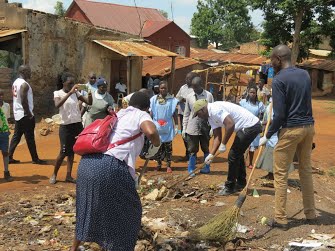
Climate Change Biodiversity Conservation Youth Engagement Environmental Policy Kenya Africa China United Nations Convention for Biological Diversity (UN CBD) GYBN African Wildlife Foundation

How Young Africans Can Help Build a Post-Pandemic Future

Blogs 1. Jan. 2021 English

The article discusses the role of young people in Africa in rebuilding a stronger post-pandemic economic and social system. It highlights four key areas where youth can collaborate with governments and civil society organizations: creating innovation hubs to develop solutions to challenges, improving access to employment, business, and education opportunities, supporting youth-led practices in healthcare, agriculture, climate action, and industrialization, and fostering good governance, inclusivity, peace, and political stability. The author, Kevin Lunzalu, is a winner of the 2021 Blog4Dev competition organized by the World Bank, which focuses on the economic development of African countries and the impact of COVID-19.

COVID-19 Pandemic Economic Development Youth Involvement Social Systems Africa World Bank Kevin Lunzalu
BerichtsstilAusgewogen

Kenyan Women Improve Family Diets Through Smart Agriculture

Kelvin's Wild Chronicles 23. Okt. 2020 English

Women farmers in Machakos County are improving household nutrition through the Kenya Climate-Smart Agriculture Project, supported by the World Bank and implemented locally by Kings Agricultural Services. Training focuses on water and soil management, integrated farming, resilient seed selection, pest control, and smart agriculture technologies to diversify food production and increase yields. Beneficiaries report improved access to vegetables, milk, and nutrient-rich crops, contributing to better health outcomes and greater food security. Local experts highlight ongoing climate challenges and emphasize the need for sustainable, diversified farming practices to strengthen resilience and close regional diet gaps.

Climate-smart agriculture Food security Women's empowerment Kenya Machakos County Sub-Saharan Africa Kenya Climate-Smart Agriculture Project World Bank Ministry of Agriculture, Livestock, and Cooperatives Kenya Bureau of Statistics Global Forest Atlas Kyeni Self Help Group
BerichtsstilInformativ

Informational reporting with some expert commentary and interpretation

Green Quarantine During the COVID-19 Pandemic

Kelvin's Wild Chronicles 20. Aug. 2020 English

With people in Kenya staying home during the COVID-19 pandemic, reduced human activity has lowered carbon dioxide emissions, while increased household use of electricity and water may add other environmental pressures. The piece argues that quarantine need not prevent eco-friendly living and encourages adapting everyday routines to conserve resources.

COVID-19 pandemic Environmental sustainability Energy conservation Household resource use Kenya Jack The Environmentalist
BerichtsstilAusgewogen

Offers practical environmental advice and makes some evaluative claims about eco-friendly living.

Time for Sports to Be Eco-Conscious

Kelvin's Wild Chronicles 10. Juni 2020 English

Sports activities significantly affect land, water, and energy resources, contributing to biodiversity loss and climate change. Limited ecological footprint measurement tools hinder understanding of these impacts, particularly at the grassroots level. Unequal access to advanced facilities between the Global North and Global South creates disparities in environmental harm, with less developed regions often having lower energy consumption and pollution. The sector’s broad stakeholder base offers potential to drive sustainability through awareness campaigns, capacity building, and adoption of renewable energy and low-impact equipment. Legally binding policies and environmentally responsible practices are emphasized as essential for reducing sport-related ecological damage.

Environmental Sustainability Sports Climate Change Global South Global North Kenya
BerichtsstilInterpretierend

Mainly factual analysis but includes subjective arguments advocating eco-conscious reforms in sports.

Kenyan Youth Biodiversity Network holds a youth consultation meeting in Kakamega

Kelvin's Wild Chronicles 15. März 2020 English

Kenyan youth environmental advocates convened in Kakamega to review and discuss the Zero Draft of the Convention on Biological Diversity’s post‑2020 framework. Participants emphasized the need for stronger language on inter‑generational equity, gender, human rights, and community engagement, and voiced concerns over missing elements such as youth capacity‑building and adequate support for youth‑led conservation efforts. Discussions highlighted the urgency of increasing national and global climate commitments, reducing emissions significantly by 2030, and reaching climate neutrality by 2050. Attendees proposed the creation of a national scientific body to oversee framework implementation, greater private‑sector accountability, expanded nature‑based solutions, and stronger support for local and Indigenous communities. They also called for clearer and more ambitious targets on sustainable consumption, supply‑chain due diligence, and investments in nature that align environmental protection with livelihood improvement.

Biodiversity Climate Change Youth Activism Environmental Policy Kenya Kakamega Global Kenyan Youth Biodiversity Network Global Youth Biodiversity Network Convention on Biological Diversity
BerichtsstilAusgewogen

Generally factual but includes subjective views and advocacy points from youth participants

Environmental Responsibility; A business imperative or a moral obligation?

Kelvin's Wild Chronicles 6. Okt. 2019 English

The text argues that monetary incentives often undermine genuine environmental stewardship and calls for a shift toward intrinsic motivation and sustainable habits. It highlights Kenya’s waste, production, and consumption challenges, urging stronger policy frameworks and broader public understanding of ecosystem value. Emphasizing the global ecological overshoot and the urgency of conservation, it encourages personal responsibility, mindset change, and active participation in sustainability efforts to protect natural systems for future generations.

Environmental Conservation Climate Change Sustainability Kenya Global World Wildlife Fund United Nations Global Footprint Network Esther Maina Anna
BerichtsstilInterpretierend

Highly subjective, motivational and advocacy‑driven language throughout

African Youth Declaration on Nature, Why a New Approach is Needed for its Success

Kelvin's Wild Chronicles 13. Juni 2019 English

A youth-focused conservation conference organized by WWF and AWF led to the creation of an African Youth Declaration aligned with regional priorities for the Post‑2020 global biodiversity framework. The article highlights Africa’s accelerating biodiversity loss, shortcomings in meeting the Aichi Targets, and the need for a more effective, youth‑driven approach. It stresses the importance of practical action plans, unity across regional conservation differences, engagement in policy processes, and support for grassroots participation to ensure the declaration leads to tangible environmental outcomes.

Conservation Youth activism Biodiversity policy Africa Kenya China IPBES Convention on Biological Diversity African Union World Wildlife Fund African Wildlife Foundation
BerichtsstilInterpretierend

Contains subjective reflections and advocacy alongside factual context

How do we integrate biodiversity into mainstream conservation discussions?

Kelvin's Wild Chronicles 3. Juni 2019 English

The text argues for integrating biodiversity into wider public and policy discussions by shifting from expert‑centric forums to community‑driven, bottom‑up approaches. It highlights Africa’s biodiversity value and the importance of local and indigenous knowledge in shaping effective conservation strategies. The article calls for broader engagement, especially among youth, to address threats such as unsustainable consumption, urbanization, and climate change. It stresses the need to simplify conservation concepts for non‑experts and to embed biodiversity considerations into development planning and lifestyle choices to ensure long‑term sustainability.

Biodiversity Conservation Climate Change Sustainable Development Africa Kenya Paris IPBES Kenyan Government Conference of Parties Kelvin
BerichtsstilInterpretierend

Subjective reflections and advocacy for community-centered biodiversity discussions

Politischer KontextMitte-links

Emphasis on community engagement, equity, environmental action, and critique of global policy gaps.

Fighting Climate Change Through Community Activism

Kelvin's Wild Chronicles 25. März 2019 English

Kenya’s Youth Biodiversity Network mobilizes young people to combat climate change and biodiversity loss through community activism, education, and policy engagement. Founded in 2017, the group has expanded its reach nationally and internationally, working with government bodies, private sector partners, and global biodiversity institutions. Its initiatives include youth summits, conservation marches, digital engagement, and regional workshops that promote environmental awareness and influence policymaking. Despite challenges such as inadequate funding and limited political support, the network continues advancing youth-led conservation solutions and expanding its role in shaping post-2020 global biodiversity frameworks.

Climate Change Youth Activism Biodiversity Conservation Kenya Africa China Kenyan Youth Biodiversity Network Global Youth Biodiversity Network United Nations Convention for Biological Diversity African Wildlife Foundation County Government of Nandi Maryanne Muriuki
BerichtsstilAusgewogen

Mix of factual reporting and subjective praise for youth activism

Alle 22 Arbeiten mit einem kostenlosen Konto ansehen

Weitere Journalisten in Nairobi

Engagieren Nachricht
×

Registrieren Sie sich, um Kevin eine Nachricht zu senden

Haben Sie bereits ein Konto? Anmelden
Suchen Sie Arbeit? Als Journalist registrieren
Verifizieren Sie Ihre E-Mail, um die Registrierung abzuschließen
Wir haben gerade eine E-Mail gesendet an . Bitte prüfen Sie Ihren Posteingang und klicken Sie auf den Link, um Ihre E-Mail-Adresse zu verifizieren und Ihre Registrierung abzuschließen. Falls Sie die E-Mail nicht sehen, prüfen Sie unbedingt Ihren Spam- oder Junk-Ordner.
E-Mail nicht erhalten?

Registrieren Sie sich, um Profile freizuschalten

Haben Sie bereits ein Konto? Anmelden
Suchen Sie Arbeit? Als Journalist registrieren
Verifizieren Sie Ihre E-Mail, um die Registrierung abzuschließen
Wir haben gerade eine E-Mail gesendet an . Bitte prüfen Sie Ihren Posteingang und klicken Sie auf den Link, um Ihre E-Mail-Adresse zu verifizieren und Ihre Registrierung abzuschließen. Falls Sie die E-Mail nicht sehen, prüfen Sie unbedingt Ihren Spam- oder Junk-Ordner.
E-Mail nicht erhalten?