Hire journalists

Publishers & Broadcasters Content Marketing Teams PR & Comms Teams Risk & Intelligence Teams Find journalists Media Monitoring Pricing

For journalists

Journalism jobs Pay rates Create your free profile

About Komeil

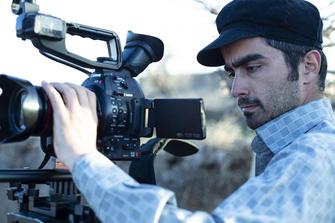
Komeil Soheili is an experienced Iranian-Korean journalist, filmmaker, and author with over two decades of experience in journalism with experience in working from world's top platforms including BBC, National Geographic, CNN and more. He in also professor of Korean University of Media Arts and been panelist on several TV shows in South Korea. Komeil movies honored at festivals including the Seoul Eco Film Festival (Grand Award), Bucheon International Fantastic Film Festival (NAFF), Meihodo International Film Festival, and GZDocs (Golden Kapok Award). He has served as a jury member at festivals such as the Busan International Short Film Festival (South Korea) and Aladerri International Film Festival (USA). Komeil keep talking and writing about cultural and political changes in Iran and South Korea for platforms like BusinessInsider, Insideover and etc.

Languages
English Korean Persian (Farsi)
Seen in
InsideOver Business Insider Asian Movie Pulse BBC Dawn Euronews Nukta Voice of America koreatimes Nonfungibleplanet Rethinkq 노동자 연대

Work 46

Iranian director in Korea calls for peace as war claims innocent lives

The Korea Times 6 Mar 2026 English

An Iranian-born filmmaker living in Korea, Komeil Soheili, urges the international community to reject the justification of war and protect civilian lives as Iran faces ongoing airstrikes by the United States and Israel. He describes the emotional toll of witnessing the crisis from abroad and recounts communication with family members affected by the conflict. Soheili draws parallels between Iran’s democratic struggle and Korea’s historical fight for freedom, emphasizing the shared experience of collective sorrow. As a filmmaker documenting humanitarian issues, he calls for global solidarity with the Iranian people and hopes Koreans will recognize and support their democratic aspirations.
War in Iran Humanitarian Crisis Filmmaking and Culture International Relations Iran South Korea United States U.S. government Israeli government Iranian government Komeil Soheili Ayatollah Ali Khamenei
Reporting styleInterpretive

The piece contains strong personal viewpoints and emotional reflections while also describing factual events.

Political contextCentre-left

Emphasizes human rights, anti-war principles, and support for democratic movements.
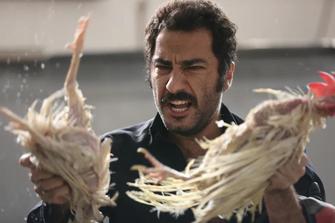
Collection of Monologues: A Social Critique of No Date, No Signature

Asian Movie Pulse 15 Feb 2026 English

The text analyzes Vahid Jalilvand’s film “No Date, No Signature,” arguing that its central tragedy stems from a deep cultural pattern of silence and failed communication in Iranian society. Through the parallel stories of Dr. Nariman and Mousa, the narrative highlights how suppressed emotion, patriarchal expectations, and withheld truth lead to irreversible loss. Drawing connections to the Persian epic Shahnameh and its tale of Rostam and Sohrab, the piece suggests that monologue has replaced dialogue across family, social, and institutional relationships. The film is presented as a critique of a broader cultural inability to express vulnerability or listen openly, framing silence—not accident or illness—as the real source of destruction.

Iranian cinema Social critique Communication and masculinity Iran Persia Tehran Dr. Nariman Mousa Leila Vahid Jalilvand Dr. Sayeh Rostam
Reporting styleInterpretive

Analytical and subjective interpretation of a film’s cultural themes.

Could Trump pull a Venezuela on Iran?

Dawn 12 Jan 2026 English

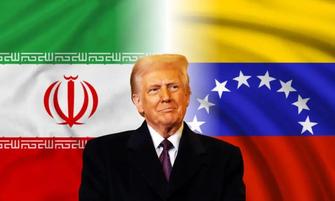
Mounting economic distress and a rapidly depreciating currency have fueled widespread protests across Iran, prompting a forceful state crackdown and accusations that the United States and Israel are orchestrating unrest. As Washington signals possible intervention and Donald Trump draws global attention with his seizure of Venezuelan President Nicolas Maduro, Iranian officials warn of severe consequences should the US attempt a similar operation. Analysts note Iran’s strategic depth, regional alliances, and geopolitical significance make direct intervention far riskier than in Venezuela, though Trump’s rhetoric heightens anxiety. While comparisons between the two countries highlight concerns about US motives, Iran’s regional influence and shifting global perceptions reduce the likelihood of a comparable intervention for now.

US-Iran relations Middle East tensions Foreign intervention Venezuelan crisis Iran United States Venezuela Iranian government United States government Israel Donald Trump Masoud Pezeshkian
Reporting styleBalanced

Mixture of factual reporting with analytical and interpretive commentary on geopolitical motives and risks.

Political contextCentre

Focuses on geopolitical analysis and security concerns without advocating a partisan stance.

Tehran in the shadow of war

Nukta 13 Jun 2025 English

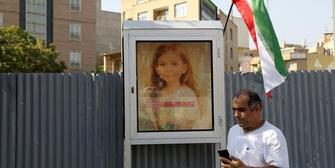
Tehran is emptying as residents flee or stock up on supplies amid escalating conflict between Iran and Israel. Israeli airstrikes on Iranian sites and Iran’s missile and drone retaliation have caused casualties on both sides and hit civilian infrastructure, including a hospital and a tech park. European, Russian, and Chinese leaders urge de-escalation, while Iran signals further escalation and warns of potential actions if the United States intervenes. Analysts note Israel may require U.S. support to target Iran’s deep-underground Fordow facility, though Washington remains cautious. Amid the devastation, some Iranians maintain hope for internal change rather than foreign intervention, recalling past movements for democracy.

Iran–Israel conflict Middle East tensions War impacts on civilians Iran Israel Middle East Iranian government Israeli government European Union U.S. government Russian government Chinese government
Reporting styleBalanced

Contains factual reporting with embedded expert opinions and personal testimonies.

Political contextCentre

Focuses on factual reporting and quoted expert analysis without advocating specific political positions.

The DMZ gift shop worker

Rethink 15 Mar 2024 English

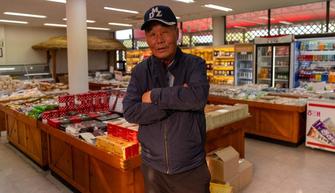
Wanbae Lee, head of a village near the Korean DMZ and founder of a local souvenir shop, has created a unique business selling items like vegan ice cream and souvenirs made from barbed wire. The shop, which began with a small investment from village families, has become an economic lifeline, adapting to tourist demands and government policies. Despite challenges from the Covid-19 pandemic and the emotional toll of a divided community, the shop has seen success, with earnings up to $500,000 per year shared within the community. Lee's vision for the shop includes expansion and a broader product range, but opportunities are limited in the DMZ.

Travel Business Culture DMZ South Korea North Korea Government of South Korea Wanbae Lee Vegan ice cream Souvenirs Agricultural products
Reporting styleInformative

The article contains mostly factual reporting of a unique business and its context, with some personal insights from the business owner.

Preview: Painting Through Pain

VOA News 22 Nov 2023 English

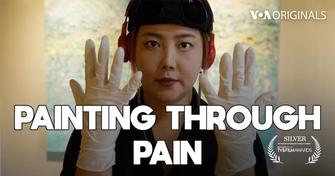
Solbi, a K-pop star turned artist known as Kwon Jian, transformed her experience with cyberbullying into a powerful artistic journey. Through her art, she raises awareness about the mental health impacts of online negativity, particularly in South Korea. Her story is featured in 'Painting Through Pain,' which debuts on VOA+ on November 23, 2023.

Cyberbullying Mental Health Art South Korea Solbi Kwon Jian Painting Through Pain
Reporting styleBalanced

The article presents a mix of factual information and subjective interpretation about Solbi's journey and her art.

Meet the young K-pop artist seeking fame in South Korea

Euronews 19 Sep 2022 English

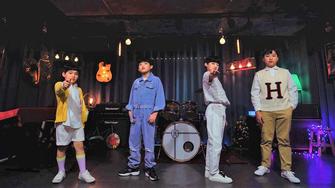
Thirteen-year-old Lim Hee Seo, from a musically talented Seoul family, discovered K-pop three years ago and quickly became passionate about the genre. Encouraged by his mother Won Min Suk, he attended a teen music festival in Seoul where a music producer praised his voice and encouraged him to pursue K-pop. There, he met three other young enthusiasts — Hyun-ho, Ha-el and Min-Seong — and together they formed the boy band 'RE Kids Dream'. The group rehearses twice a week with a vocal coach and dance teacher, and has released songs including 'Dreaming Way', 'Like a Movie', and their first music video 'Dream My Way', which received positive feedback after its release in September 2020. The boys look up to global K-pop phenomenon BTS and aspire to become Korea's most famous K-pop group, with hopes of spreading positivity worldwide. Both parents support the endeavour, viewing the experience as a confidence-building and creatively enriching chapter in their children's lives.

K-pop Youth Culture Music South Korean Culture Teenage Artists South Korea Seoul BTS RE Kids Dream Lim Hee Seo Won Min Suk Lim Byung Hoon
Reporting styleBalanced

Mostly factual reporting of a human-interest story, but contains subjective praise and emotionally positive framing of K-pop and the subjects

The Eating of Dog Meat is Still Common in East Asian Communities

InsideOver 19 Sep 2020 English

Debate around dog meat consumption in South Korea reflects shifting cultural norms, growing pet-related industries, and selective moral judgments influenced by Western sentiment. While dog meat consumption has sharply declined, criticism often overlooks wider environmental and ethical issues tied to global meat consumption and the expanding pet industry. The narrative contrasts the diminishing dog meat trade with rising consumption patterns that strain natural resources, questioning why dogs receive disproportionate moral attention compared to other animals.

Animal welfare Cultural practices Environment South Korea East Asia United Kingdom FAO UC Davis University Brigitte Bardot Gus Kenworthy Lechón Khash
Reporting styleInterpretive

Contains strong subjective arguments and personal perspectives

The Story of the Generations Who Were Shot in Advance

InsideOver 12 Jun 2020 English

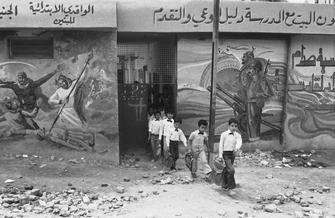
A traveller visiting a remote border village in western Iran, near the ruins of the Sassanid-era Yazgird palace, encounters a community of Yaresan (Ahl-e Haqq) believers living with the long-term consequences of Iraqi chemical weapons attacks during the Iran-Iraq War. An elderly local man recounts how Iraqi aircraft dropped chemical bombs on their village and farmland, and how the contamination has persisted for generations — more than half the children born in the community suffer from serious congenital diseases and disabilities. The old man notes that a captured Iraqi pilot admitted the bombs were dropped there simply because the crew did not want to fly further. The German government is referenced, via a protest sign outside the German embassy in Tehran, for having supplied Saddam Hussein's regime with chemical weapons. The article interweaves observations about the Yaresan faith — including beliefs in reincarnation, 1,001 cycles of the soul, and the symbolic significance of the mustache — with a deeply personal account of a community still living inside a war that officially ended decades ago.

Chemical Weapons Iran-Iraq War Generational Trauma Yaresan Religion Iranian History War Crimes Rural Iran Minority Religions Iran Iraq Kermanshah (Iran-Iraq border region) Sassanid Dynasty
Reporting styleInterpretive

Strongly personal narrative with subjective observations and emotional language, but grounded in real events and first-hand testimony

Political contextCentre-left

Implicitly critical of the Iraqi regime and German government's role in supplying chemical weapons, sympathetic to civilian victims

Pros and Cons of South Korea's Approach to Fighting Covid-19

InsideOver 3 Mar 2020 English

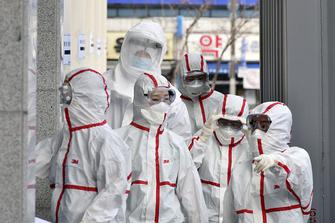
South Korea's response to COVID-19 was shaped by its prior experience with MERS in 2015, which led to a robust testing infrastructure, aggressive contact tracing, and a policy of full public transparency — including a dedicated app alerting citizens to infected locations. The government also rationed face masks and closed schools, public events, and religious venues early. However, its decision to keep borders with China open drew significant public criticism, with many citizens and observers arguing that economic ties with China took precedence over public health. A key turning point was "Patient 31," an undetected 61-year-old member of the Shincheonji Church of Jesus who infected over 1,000 people; the Seoul Metropolitan Government subsequently filed a murder complaint against the congregation. Health Minister Park Neung-Hoo was widely mocked on social media for his weak justifications of the border policy. Despite these controversies, South Korea's recoveries eventually outpaced new infections, suggesting its overall strategy was gaining ground.

COVID-19 Pandemic Public Health Policy Contact Tracing Border Control MERS South Korea Politics South Korea China Middle East South Korean Government Shincheonji Church of Jesus Seoul Metropolitan Government
Reporting styleBalanced

Mix of factual reporting and subjective opinions from citizens and officials; some editorial framing present but largely grounded in documented events

Political contextCentre

The article reports critically on government decisions around border policy and public health but does so in a balanced, journalistic manner without strong ideological framing

See all 46 pieces of work with a free account

Other journalists in Seoul

Hire Message
×

Sign up to message Komeil

Already have an account? Log in
Looking for work? Register as a Journalist
Verify your email to complete registration
We’ve just sent an email to . Please check your inbox and click the link to verify your email address and complete your registration. If you don’t see the email, be sure to check your spam or junk folder.
Didn’t receive the email?

Sign up to unlock profiles

Already have an account? Log in
Looking for work? Register as a Journalist
Verify your email to complete registration
We’ve just sent an email to . Please check your inbox and click the link to verify your email address and complete your registration. If you don’t see the email, be sure to check your spam or junk folder.
Didn’t receive the email?