Contratar periodistas

Editoriales y emisoras Equipos de marketing de contenidos Equipos de relaciones públicas y comunicación Equipos de riesgo e inteligencia Encontrar periodistas Monitoreo de medios Precios

Para periodistas

Empleos en periodismo Tarifas Crea tu perfil gratis

Sobre Lobato

Lobato Felizola es un periodista brasileño.

Idiomas
inglés italiano portugués
Visto en
Livescience Mongabay Progressive Earthisland Yahoo Culturico Global Voices по-русски NACLA Protean Magazine YES! Magazine Inkl

Trabajo 30

Indigenous funeral urns discovered on human-made islands in Amazon rainforest

LiveScience 26 jun 2025 English

Archaeologists in the Brazilian Amazon uncovered seven large pre-Columbian funerary urns after a fallen tree exposed them on a human-made island in the middle Solimões region. Two urns contained human remains, while others held seeds and animal remains likely connected to burial rituals. Excavations, supported by local communities, revealed the urns were buried on artificial islands constructed by ancestral Indigenous groups to avoid flooding. Researchers plan to date the artifacts and investigate reports of additional urn sites in the surrounding area.

Archaeology Indigenous history Amazon rainforest Brazil Solimões region Mamirauá Institute for Sustainable Development Brazilian Ministry of Science, Technology and Innovation Geórgea Layla Holanda Márcio Amaral
Estilo periodísticoFactual

Factual reporting on archaeological discoveries
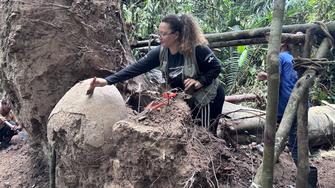
Centuries-old funeral urns that 'symbolized a new body, a new skin,' found deep in the Amazon rainforest

Live Science 26 jun 2025 English

Seven pre-Columbian funeral urns were discovered in the Brazilian Amazon rainforest by a local fisher. These urns, found on a human-made island, contained human bones and remains of seeds and animals, indicating a complex funeral ritual. The discovery was facilitated by the Mamirauá Institute for Sustainable Development, with local community involvement. The urns' age is yet to be determined, and similar finds have been noted in the region. The research team faced challenging conditions to reach the site, highlighting the significance of community collaboration in archaeological endeavors.

Archaeology Amazon Rainforest Indigenous Cultures Brazil Mamirauá Institute for Sustainable Development Brazilian Ministry of Science, Technology and Innovation Geórgea Layla Holanda Márcio Amaral
Estilo periodísticoInformativo

The article is factual with detailed descriptions of the archaeological findings and expert statements.

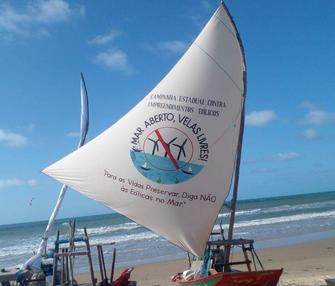
Brazil’s offshore wind farms could sacrifice small-scale fishing in Ceará

Mongabay 1 may 2025 English

In Ceará, Brazil, the expansion of offshore wind farms poses a threat to small-scale fishing communities reliant on traditional sail rafts. The installation of over 4,300 turbines could disrupt fishing activities and ecosystems, sparking opposition from local fishers. Despite the potential for clean energy and economic benefits, concerns about environmental racism and the lack of community consultation persist. The region's wind energy projects are linked to the emerging green hydrogen industry, which aims to support global decarbonization efforts. However, the balance between energy production and preserving traditional livelihoods remains contentious.

Offshore Wind Farms Small-Scale Fishing Environmental Impact Ceará Brazil Europe Federal University of Ceará Brazilian Institute of the Environment and Renewable Natural Resources Brazilian Wind Energy Association International Labor Organization Ronaldo Gonzaga Adryane Gorayeb
Estilo periodísticoInterpretativo

The article presents a critical view of the impact of offshore wind farms on small-scale fishing communities, highlighting concerns and opposition from local stakeholders.

Contexto políticoIzquierda

The article discusses environmental justice and the impact of energy projects on traditional communities, aligning with leftist concerns about social equity and environmental protection.

Aiming for clean energy, offshore wind farms may sacrifice artisanal fishing in Ceará

Mongabay Brasil 30 abr 2025 Portuguese

Offshore wind projects planned along the coast of Ceará overlap with extensive artisanal fishing areas used by more than 340 traditional communities, raising fears of disrupted navigation, loss of fishing grounds, and ecological impacts. Local leaders and researchers warn that tropical marine environments face unknown risks and that past land-based wind developments brought significant harm without local benefits. Although Brazil seeks to expand offshore wind power to support green hydrogen production and meet international clean‑energy demand, critics argue that these initiatives may impose disproportionate burdens on marginalized coastal communities, violate consultation rights, and deepen environmental inequities. Regulatory advances and major investments position the Northeast as a key player in green hydrogen exports, but scaling this industry will require substantial new renewable energy capacity, particularly offshore wind.

Offshore wind energy Artisanal fishing Environmental impacts Green hydrogen Renewable energy policy Ceará Brazil Nordeste (Brazil) Universidade Federal do Ceará Ibama Organização Internacional do Trabalho Governo do Ceará
Estilo periodísticoEquilibrado

Mix of factual reporting with some subjective and critical viewpoints from community leaders

Contexto políticoCentroizquierda

Highlights environmental justice concerns, impacts on traditional communities, and critiques of unequal energy development

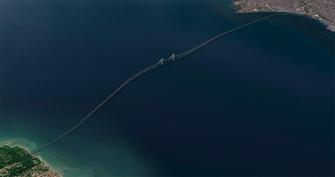
Communities Warn of Threat to Ecosystems From Brazil Bridge Project

Mongabay 12 dic 2024 English

A planned 12.4-kilometer bridge between Salvador and Itaparica Island, scheduled to begin construction in 2025, is drawing warnings from residents, fishers and environmental experts about damage to mangroves, coral reefs and marine life, including humpback whales and sea turtles. Road expansion and increased truck traffic could disrupt artisanal fishing and marisqueiras’ shellfish gathering, while projected population growth on the island could intensify pressure on already limited schools, health care, sanitation and land access. Project supporters cite faster travel and improved transport for agricultural produce; the state has issued only a preliminary environmental license, and critics say the impact assessment and mitigation plans are inadequate and community consultation insufficient. Residents and experts argue that expanding and improving the existing ferry service would be a cheaper, less environmentally damaging alternative that planners failed to assess.

Salvador-Itaparica Bridge Environmental Impact Mangrove Forests Coral Reefs Artisanal Fishing Traditional Communities Infrastructure Development Urbanization Bahia, Brazil Salvador, Brazil Itaparica Island, Brazil Bahia state government
Estilo periodísticoInterpretativo

The report is predominantly factual but gives substantial space to critical views from residents and experts who characterize the bridge as environmentally and socially harmful.

Construction of the second largest bridge in Brazil threatens ecosystems and communities in Bahia

Mongabay 1 nov 2024 Portuguese

The construction of a 12.4 km bridge in Bahia, Brazil, set to be the second largest in the southern hemisphere, raises significant environmental and community concerns. The project, led by a consortium of Chinese companies, aims to improve logistics but threatens local ecosystems, including mangroves and marine life, and traditional fishing communities. Critics argue that the environmental impact study is incomplete and that the project could lead to overpopulation and strain on public services in Ilha de Itaparica. Alternatives such as improving the existing ferry service are suggested as less invasive solutions.

Infrastructure Development Environmental Impact Community Concerns Bahia Salvador Ilha de Itaparica Conselho Pastoral dos Pescadores Universidade Federal da Bahia Grupo Ambientalista da Bahia Projeto Baleia-Jubarte Maria José Pacheco Tânia França
Estilo periodísticoInterpretativo

The article presents a critical view of the bridge project, highlighting environmental and community concerns.

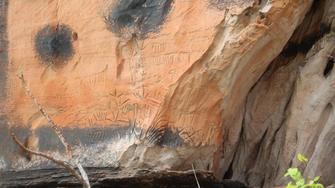
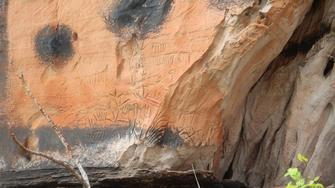
2,000-year-old carvings of celestial bodies and animals discovered on rocky cliffs in Brazil

Yahoo! Lifestyle 19 mar 2024 English

Brazilian archaeologists have discovered numerous 2,000-year-old rock carvings in Jalapão State Park, Tocantins, depicting human footprints, celestial bodies, and animals. The findings, made during expeditions between 2022 and 2023, include 16 precolonial archaeological sites with engravings and red paintings, suggesting cultural connections and settlement patterns of ancient communities. The rock art, which may have been created using pointed stones and pigments from iron minerals, provides insights into the spirituality and way of life of Indigenous groups. The work, led by Rômulo Macêdo of IPHAN and commented on by archaeology professor Marcos Zimmermann, indicates technical and thematic similarities with other Brazilian sites, dating the art to around 2,000 years ago. Further analysis and excavations are expected to reveal more about the precolonial populations.

Archaeology Ancient Civilizations Rock Art Jalapão State Park Tocantins Brazil National Institute of Historic and Artistic Heritage Federal University of Tocantins Tocantins Archaeology Center Rômulo Macêdo Marcos Zimmermann
Estilo periodísticoFactual

The text reports findings and statements from researchers, presenting factual information about archaeological discoveries.

2,000-year-old carvings of celestial bodies and animals discovered on rocky cliffs in Brazil

Live Science 19 mar 2024 English

Brazilian archaeologists from the National Institute of Historic and Artistic Heritage discovered numerous 2,000-year-old rock carvings in Jalapão State Park, Tocantins, depicting human footprints, celestial bodies, and animals. The findings, made during expeditions between 2022 and 2023, include 16 precolonial archaeological sites with engravings and red paintings, suggesting cultural connections and settlement patterns of ancient communities. The rock art, which may be older than previously found stone artifacts, provides insights into the Indigenous groups' way of life and spirituality. Further analysis and excavations are expected to yield more information about the precolonial populations.

Archaeology History Science Jalapão State Park Tocantins Brazil National Institute of Historic and Artistic Heritage Federal University of Tocantins Tocantins Archaeology Center Rômulo Macêdo Marcos Zimmermann
Estilo periodísticoFactual

The article reports on archaeological findings and includes statements from researchers, indicating a factual report.

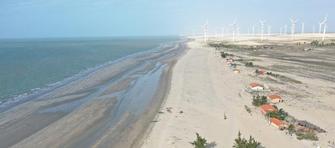
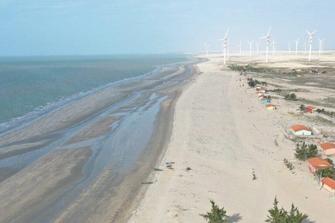
How a fishing village had to disappear from the map to make way for a wind farm in Ceará

Mongabay Brasil 11 mar 2024 Portuguese

In Camocim, Ceará, the fishing village of Praia do Xavier was erased from maps to facilitate the construction of the Central Eólica Praia Formosa wind farm by French company Siif Énergies do Brasil. The wind farm, operational since 2009, has significantly impacted the local community, which previously relied on artisanal fishing and agriculture. The community was not consulted, and their traditional way of life was disrupted by the construction and operation of the wind farm. Legal battles ensued, and the community received some compensation, including new houses. However, issues like food insecurity and land speculation persist. The case highlights the need for inclusive approaches and real consultations with affected communities in renewable energy projects.

Renewable Energy Community Displacement Camocim, Ceará Brazil Superintendência Estadual do Meio Ambiente (Semace) Conselho Nacional do Meio Ambiente (Conama) Universidade Federal do Ceará (UFC) Ministério Público (MP) do Ceará Maria Luiza Fernandes Francisco das Chagas Adryane Gorayeb Paulo Henrique de Freitas Trece
Estilo periodísticoEquilibrado

The article includes some subjective statements from community members and researchers, but largely reports on factual events and legal proceedings.

How a wind farm on Brazil’s coast erased a fishing village from the map

Mongabay 11 mar 2024 English

In Camocim, Brazil, the fishing village of Praia do Xavier was effectively erased from maps to facilitate the construction of the Praia Formosa wind farm by SIIF Énergies do Brasil, a subsidiary of EDF. The wind farm, operational since 2009, has caused significant environmental and social impacts, including restricted access, loss of fishing resources, and noise pollution. Despite legal efforts and compensation measures, the community remains dissatisfied. The case underscores the need for inclusive and consultative approaches in renewable energy projects, especially in sensitive environments.

Wind Energy Environmental Impact Community Displacement Camocim Ceará Brazil SIIF Énergies do Brasil Federal University of Ceará Brazilian Institute of Geography and Statistics National Environmental Council Social Pastoral Service Ceará state environmental agency
Estilo periodísticoInterpretativo

The article contains a mix of factual reporting and subjective statements, particularly from community members and experts.

Ver los 30 trabajos con una cuenta gratuita

Contratar Mensaje
×

Regístrate para enviar un mensaje a Lobato

¿Ya tienes una cuenta? Iniciar sesión
¿Buscas trabajo? Regístrate como periodista
Verifica tu correo electrónico para completar el registro
Acabamos de enviar un correo electrónico a . Revisa tu bandeja de entrada y haz clic en el enlace para verificar tu dirección de correo electrónico y completar tu registro. Si no ves el correo, asegúrate de revisar tu carpeta de spam o correo no deseado.
¿No recibiste el correo electrónico?

Regístrate para desbloquear perfiles

¿Ya tienes una cuenta? Iniciar sesión
¿Buscas trabajo? Regístrate como periodista
Verifica tu correo electrónico para completar el registro
Acabamos de enviar un correo electrónico a . Revisa tu bandeja de entrada y haz clic en el enlace para verificar tu dirección de correo electrónico y completar tu registro. Si no ves el correo, asegúrate de revisar tu carpeta de spam o correo no deseado.
¿No recibiste el correo electrónico?