Contratar periodistas

Editoriales y emisoras Equipos de marketing de contenidos Equipos de relaciones públicas y comunicación Equipos de riesgo e inteligencia Encontrar periodistas Monitoreo de medios Precios

Para periodistas

Empleos en periodismo Tarifas Crea tu perfil gratis

Sobre معتز

معتز أبو سمرة es periodista. معتز ابو سمرة, periodista egipcio, escritor y analista político especializado en asuntos estratégicos. Es subdirector de redacción de جريدة الاحرار المصرية y responsable de asuntos árabes e internacionales; ha cubierto decenas de eventos políticos y crisis regionales como Yemen y Sudán, además de numerosas conferencias dentro y fuera de Egipto. Trabajó durante 6 años en جريدة الشرق القطرية como jefe del departamento de Asuntos Árabes e Internacionales.

Idiomas
árabe inglés
Visto en
MEO Al-Tanوير Magazine Amwaly Independent Arabia

Trabajo 36

Can the Arab Voice Succeed Where Weapons Failed?

Middle East Online 16 nov 2026 Arabic

Motaz Abu Samra argues that the historic winning of 19 Knesset seats by Arab lists could shift Palestinian political influence inside Israel, moving the struggle beyond military confrontation and ineffective negotiations. He contends that past rejectionism, military strategy, and diplomacy often failed because they lacked sound planning or leverage. Arab representation could use parliamentary, legal, and rights-based tools to pressure Israel, but faces limits imposed by the state’s Jewish identity, divisions among Arab parties, and resistance from Israeli political forces. The author argues that sustained, pragmatic unity could make the system choose between genuine democracy and growing political and moral isolation.
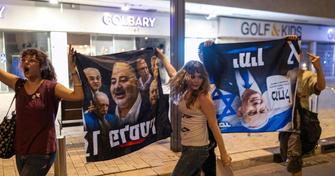
Palestinian Political Representation Arab Parties in the Israeli Knesset Israeli-Palestinian Conflict Israeli Politics Political Strategy Israel Palestine Middle East Israeli Knesset Likud Arab political parties in Israel Palestinians
Estilo periodísticoInterpretativo

An argumentative political commentary that advocates parliamentary, legal, and rights-based strategies while critically assessing earlier approaches.

Contexto políticoIzquierda

Advocates Palestinian political rights and challenges the structures and policies of the Israeli state, while emphasizing democratic and parliamentary action.
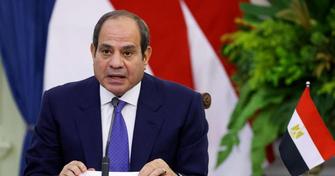
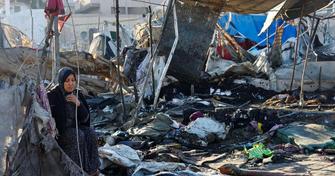
Egypt: Thorny Issues Test the Stability Equation

Middle East Online 14 nov 2026 Arabic

Egypt faces three interconnected pressures: legal and security action against the Muslim Brotherhood, continued calls to amend the constitution to permit Abdel Fattah el-Sisi to remain in office beyond 2030, and worsening cost-of-living conditions. The article explains that the group’s final terrorism listing enables asset freezes, financial scrutiny, and possible international action. Although el-Sisi has denied plans to alter the constitution, proponents cite regional challenges and stability, while critics warn that the campaign may prepare public opinion for an extension and divert attention from political competition. Inflation’s cumulative effects have eroded purchasing power and pushed many middle-class households toward austerity. Observers differ over whether hardship and political frustration could prompt unrest or whether security structures and fear of regional instability will contain it. The central challenge is to secure lasting stability by addressing economic and political concerns rather than relying on security measures alone.

Egyptian Politics Constitutional Amendments Muslim Brotherhood Economic Hardship Political Stability Egypt Middle East Egyptian government Egyptian judiciary Interpol Abdel Fattah el-Sisi Moataz Abu Samra
Estilo periodísticoEquilibrado

Analytical commentary presents competing interpretations, while emphasizing concerns about security and stability.

Contexto políticoCentro

The article outlines both state security arguments and critics’ concerns about political succession, while stressing the need to address economic hardship.

Hamas and Fatah: A Struggle Over Nothing

Middle East Online 12 nov 2026 Arabic

Renewed Hamas–Fatah tensions unfold as Gaza’s services collapse and Palestinians face severe hardship. The factions trade accusations, while repeated reconciliation efforts have failed and both are criticized for prioritizing control and political legitimacy over civilians. The article describes Gaza’s destruction, high unemployment and poverty, and the erosion of Palestinian authority and sovereignty in both Gaza and the West Bank under Israeli control and settlement expansion. It argues that the rivalry is a struggle over increasingly hollow structures of power, leaving Palestinians with diminished national and civil rights. It calls for a comprehensive reassessment that ends the division, rebuilds inclusive national institutions, protects civilians and land, and puts human resilience and dignity first.

Hamas–Fatah rivalry Palestinian political division Gaza humanitarian crisis Israeli occupation Palestinian economy and governance Palestine Gaza Strip West Bank Hamas Fatah Palestinian Authority Israel
Estilo periodísticoDe opinión

Strongly opinionated commentary criticizes Hamas and Fatah for prioritizing factional power over Palestinian civilians and calls for national unity and a change of priorities.

Contexto políticoIzquierda

Pro-Palestinian national rights and social welfare, and critical of Israeli occupation as well as Palestinian factional leadership.

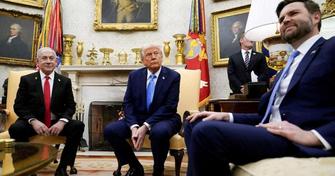
Is Washington Reshaping Its Alliance with Tel Aviv?

Middle East Online 10 nov 2026 Arabic

The article argues that ending traditional U.S. military aid to Israel should be seen not as a rupture or punishment but as a reconfiguration of the alliance. Israel would purchase U.S. weapons with its own funds, gaining flexibility and potentially reducing Congress's leverage over Israeli policy, while deeper defense-industry cooperation and Israel's role as a regional military partner would support Washington's gradual shift of resources toward Asia. The arrangement could give Israel more latitude in regional operations but would also embed its security more deeply in U.S. strategic and military structures.

U.S.-Israel Relations U.S. Military Aid to Israel Defense Industry Cooperation U.S. Strategy in the Middle East United States Israel Middle East U.S. Congress Donald Trump Benjamin Netanyahu U.S. military weapons and equipment
Estilo periodísticoInterpretativo

Analytical commentary advances a clear interpretation that ending military aid is a structural upgrade of the alliance, while acknowledging possible constraints and implications.

Contexto políticoCentroderecha

Emphasizes strategic alliance, military security, and Israel's role in protecting Western interests, while discussing the consequences of reduced U.S. oversight.

Israel and Suwayda: An Old Recipe for a New War of Attrition

Middle East Online 8 nov 2026 Arabic

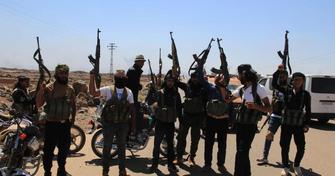
Israel is described as exploiting Syria's political and security weakness to build influence in the south, including through reported arms deliveries to Druze groups in Suwayda and the possibility of local autonomy. Such arrangements could limit the return of Iranian-backed forces near the Golan Heights, but the author argues they risk weakening central authority and provoking resistance. Drawing parallels with Israel's former security belt in southern Lebanon, the article concludes that any tactical gains could become a prolonged source of instability and attrition rather than lasting security.

Israel's policy in southern Syria Suwayda Druze communities Syrian sovereignty Israeli security zones Iranian influence in Syria Syria Israel Lebanon Syrian government Iran Hezbollah
Estilo periodísticoInterpretativo

Opinionated geopolitical commentary argues that Israeli intervention and local security arrangements risk creating a prolonged conflict.

Contexto políticoCentro

The article criticizes Israeli policy and stresses Syrian sovereignty, but does not clearly align with a domestic left-right political ideology.

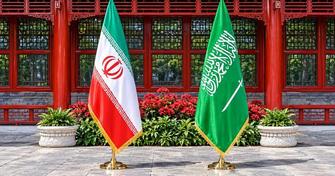
Saudi Arabia and Iran: The Clash of Geography and History with Politics

Middle East Online 6 nov 2026 Arabic

Saudi Arabia and Iran remain divided by geography, history, sectarian ideology, and competing regional security doctrines. Although China brokered a 2023 reconciliation, the article argues that agreements have not overcome Riyadh’s distrust of Tehran or concerns about Iran-aligned groups. Houthi attacks and threats to shipping and energy infrastructure expose vulnerabilities in Saudi defenses and put the stability and investment assumptions underpinning Vision 2030 at risk. The author argues for reducing conflict through economic interdependence, revised historical narratives, and acknowledgement of past harms, while warning that cheap drones and missiles can impose disproportionate economic and security costs.

Saudi-Iranian Relations Middle East Geopolitics Regional Security Houthi Attacks Missile and Drone Warfare Saudi Vision 2030 Saudi Arabia Iran Middle East Houthi movement Hezbollah Iraq
Estilo periodísticoInterpretativo

Opinionated analysis arguing that historical and ideological rivalry undermines trust and that low-cost attacks expose weaknesses in Saudi security and economic plans.

Contexto políticoCentro

Geopolitical commentary focused on mistrust and security concerns, while recommending dialogue, economic interdependence, and reconciliation.

Trump… Has the “Lame Duck” Phase Begun Early?

Middle East Online 4 nov 2026 Arabic

The article argues that Republicans’ losses of both chambers of Congress in the 2026 midterms could make Donald Trump a lame-duck president earlier than expected, reflecting public frustration over living costs, inflation, tariffs, and costly foreign commitments. It also cautions that midterm losses are common for the president’s party and do not amount to a conclusive rejection of Trump’s political program. An opposition-controlled Congress could constrain legislation, trade policy, and some foreign-aid decisions, offering allies and Ukraine a degree of parliamentary protection, but it cannot direct the president’s day-to-day foreign policy or prevent all executive action. The author contends that Iran may gain room to maneuver as Congress complicates new sanctions or expanded military funding, while Trump retains the ability to issue executive orders and conduct limited military actions. Those unilateral actions, however, could face prolonged challenges from Congress and federal courts.

U.S. midterm elections Donald Trump U.S. Congress U.S. foreign policy Iran U.S. relations with allies United States Middle East Democratic Party Republican Party U.S. government NATO
Estilo periodísticoInterpretativo

Opinionated political analysis that interprets election results and their likely implications, while acknowledging competing explanations.

Contexto políticoCentro

The analysis criticizes aspects of Trump’s policies but also presents arguments from his supporters and frames the election as both a reaction to policy and a recurring political balancing pattern.

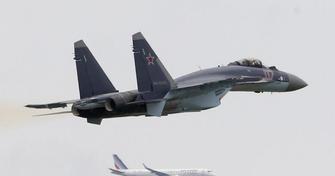
Ethiopian Sukhois: Weapons Noise and the Realities of Power

Middle East Online 2 nov 2026 Arabic

Ethiopia’s acquisition of Su-35E fighters and a contract for S-400 systems will strengthen its military and may improve its ability to deter Eritrea or address internal threats, but the limited number of aircraft is unlikely to change the balance with Egypt or reshape power in the Horn of Africa. The region’s dense network of foreign bases and security partnerships further limits the significance of the deal. Egypt’s distance-strike capabilities, refueling aircraft, long-range weapons, and experience with integrated air operations are presented as important advantages, while S-400 effectiveness depends on a broader radar and electronic-warfare network. The article also argues that any expanded Egyptian cooperation with China would reflect Cairo’s longstanding arms-diversification policy, not a reaction to Ethiopia’s purchase. The deal is characterized as primarily a limited military and political signal rather than a strategic turning point.

Ethiopia's Arms Deal Military Balance in the Horn of Africa Egypt-Ethiopia Relations Red Sea Security Air Defense Systems Horn of Africa Egypt Red Sea Ethiopia Russia African Union United Nations
Estilo periodísticoInterpretativo

Argues that the Ethiopian arms deal will not alter the strategic balance and uses evaluative, dismissive language to challenge claims that it can constrain Egypt.

Contexto políticoCentro

A strategic and military analysis focused on regional power balances rather than an identifiable partisan political position.

Striking Iran: Personal Calculations or Security Necessities?

Middle East Online 31 oct 2026 Arabic

The article examines whether a possible renewed US or Israeli strike on Iran would be driven by security needs or by political calculations. Qatar is trying to bridge US and Iranian demands through nuclear inspections, proposals to reopen the Strait of Hormuz, and sanctions relief, while Iranian moderates see mediation as a way to avert another attack. The US administration is divided between officials skeptical of a deal and those favoring renewed negotiations; regional countries including Egypt, Turkey, Iraq, Pakistan, and Saudi Arabia are pressing for diplomacy, while Benjamin Netanyahu is urging joint military action. The author argues that conflict could help Netanyahu consolidate power amid uncertain Israeli coalition politics and offer Donald Trump short-term political gains, but congressional constraints, military costs, and domestic backlash pose serious risks. Gulf states and the wider region could suffer major damage to energy infrastructure and supply, with broader economic consequences. The article concludes that renewed war would be motivated chiefly by personal political aims, not compelling security, legal, or moral grounds.

US-Iran Relations Potential Military Conflict with Iran Middle East Diplomacy Israeli Politics US Politics Energy Security Iran United States Israel United States government Israeli government Iranian government
Estilo periodísticoInterpretativo

The piece is an argumentative political analysis, concluding that renewed attacks would be driven by personal political goals rather than security or legal necessities.

Contexto políticoCentroizquierda

Critical of leaders' perceived use of military escalation for personal political advantage and emphasizes diplomatic alternatives.

The Day After in Israel: Who Will Govern, and Where Is the Country Headed?

Middle East Online 29 oct 2026 Arabic

Israel’s election results leave Benjamin Netanyahu’s right-wing bloc short of a governing majority, while Gadi Eisenkot’s change camp and Arab lists hold pivotal seats. Netanyahu could seek a wartime unity arrangement, split or recruit rivals, or negotiate a rotation deal with Eisenkot; Eisenkot could also try to assemble a coalition with Arab-party support. If neither side can win Knesset confidence, another election may follow. The analysis argues that Arab voters have become more consequential, polls failed to predict the result, and U.S. intervention helped Netanyahu. It concludes that replacing Netanyahu alone will not resolve Israel’s challenges: a future government must address the Palestinian issue and pursue a sustainable political settlement, since Israeli security and Palestinian freedom are interdependent.

Israeli elections Israeli coalition formation Israeli politics Palestinian rights and Israeli security Israel-Iran relations U.S.-Israel relations Israel Palestine Iran Likud Israeli Knesset United States government
Estilo periodísticoInterpretativo

Opinionated political analysis, offering judgments about Israel’s electoral choices and arguing for a sustainable resolution that addresses Palestinian rights and Israeli security.

Contexto políticoCentroizquierda

Advocates addressing the roots of the Israeli-Palestinian conflict and links lasting Israeli security with Palestinian freedom, while analyzing coalition politics.

Ver los 36 trabajos con una cuenta gratuita

Contratar Mensaje
×

Regístrate para enviar un mensaje a معتز

¿Ya tienes una cuenta? Iniciar sesión
¿Buscas trabajo? Regístrate como periodista
Verifica tu correo electrónico para completar el registro
Acabamos de enviar un correo electrónico a . Revisa tu bandeja de entrada y haz clic en el enlace para verificar tu dirección de correo electrónico y completar tu registro. Si no ves el correo, asegúrate de revisar tu carpeta de spam o correo no deseado.
¿No recibiste el correo electrónico?

Regístrate para desbloquear perfiles

¿Ya tienes una cuenta? Iniciar sesión
¿Buscas trabajo? Regístrate como periodista
Verifica tu correo electrónico para completar el registro
Acabamos de enviar un correo electrónico a . Revisa tu bandeja de entrada y haz clic en el enlace para verificar tu dirección de correo electrónico y completar tu registro. Si no ves el correo, asegúrate de revisar tu carpeta de spam o correo no deseado.
¿No recibiste el correo electrónico?