Hire journalists

Publishers & Broadcasters Content Marketing Teams PR & Comms Teams Risk & Intelligence Teams Find journalists Media Monitoring Pricing

For journalists

Journalism jobs Pay rates Create your free profile

About Maksim

A Belarusian independent journalist currently living in Poland. I have collaborated with Internews and Belarusian exile media, including MOST Media and Zerkalo.io, the largest news portal writing for readers in Belarus and the Belarusian diaspora. I currently collaborate with the prominent Polish media outlet OKO.press.

Languages
Belarusian Russian Polish English Ukrainian
Seen in
Oko MOST Media Зеркало

Work 18

Was Mickiewicz Belarusian? How Belarus Views Its Shared History

OKO.press 7 Nov 2026 Polish

Belarusian textbooks present the Grand Duchy of Lithuania as a foundation of Belarusian statehood and treat much of the Polish-Lithuanian Commonwealth’s history as shared, while emphasizing tensions over polonization, religion, and political autonomy. Figures including Vytautas, Tadeusz Kościuszko, Adam Mickiewicz, and Konstanty Kalinowski are claimed as part of Belarusian heritage. Accounts of the partitions, the 1812 invasion, uprisings, interwar Polish rule, and the Soviet-era unification of Belarus reflect distinct Belarusian perspectives, sometimes retaining Soviet-era justifications. Following the 2020 protests, new school textbooks have intensified an us-versus-enemies framing and recast the Commonwealth as repressive, particularly in its portrayal of Poland. Historian Aliaksei Lastouski warns that this politicization may deepen hostility and argues that citizen contacts and renewed cooperation with Belarusian historians could counter the trend.

Belarusian History Polish-Belarusian Relations History Education National Identity Historical Memory Political Propaganda Belarus Poland Lithuania Belarusian government Grand Duchy of Lithuania Polish-Lithuanian Commonwealth
Reporting styleInformative

Primarily an explanatory, evidence-based account comparing textbook narratives, though it includes evaluative framing and expert interpretation.

Political contextCentre

Historical analysis that describes competing national narratives and criticizes state-driven politicization without advocating a party position.
A Belarusian Doctor in Every City. Why Are They Leaving?

OKO.press 7 Nov 2026 Polish

Belarusian doctors are leaving for Poland amid political repression, arrests, professional blacklisting, low pay, and poor working conditions. The experiences of Yuliya Kazachenka and Dzmitry Markelau illustrate the difficult transition: foreign-trained doctors face demanding exams, language requirements, and lengthy routes to full licensure, but can find better pay and supportive workplaces. A Belarusian democratic representative estimates that 30–40% of doctors and nurses have left their professions for various reasons and says many Belarusian medical workers now work in Poland. The article also outlines Poland’s temporary licensing pathway and the dispute over extending it: some officials warn about patient-safety risks, while Sochaczew hospital director Robert Skowronek argues that hiring should be based on professional ability and Polish-language competence.

Belarusian Doctors Emigrating Political Repression in Belarus Healthcare Workforce Shortages Foreign Medical Professionals in Poland Medical Licensing and Recognition Belarus Poland Sochaczew Belarusian government Polish Ministry of Health Supreme Medical Council of Poland Yuliya Kazachenka
Reporting styleInformative

Reported feature grounded in interviews and figures, with some evaluative framing around repression and the value of retaining experienced doctors.

Political contextCentre-left

Critical of authoritarian repression in Belarus and supportive of the ability of emigrant doctors to work in Poland, while also reporting concerns about licensing safeguards.

From a Plan for a Peaceful Transfer of Power to a Spy Scandal: Belarus’s Parliament in Exile

OKO.press 7 Nov 2026 Polish

Belarusian democratic forces in exile have built institutions modeled on a state, including the elected Coordination Council, which is holding a new online election. Candidate Sergey Stalmakov argues that the Council can help Belarusian communities abroad organize and develop democratic experience, although it has little power to enforce decisions. The article outlines the Council’s international engagement and limited practical achievements, alongside criticism of its authority, internal disputes, reliance on grants, and a major scandal involving former chair Anzhalika Mielnikava, who was reportedly linked to a Belarusian intelligence agent and accused in reporting of withdrawing $150,000. The Council’s broader mission, supporters say, is to involve Belarusians in political life and prepare for democratic change.

Belarusian Opposition Belarusian Politics in Exile Coordination Council Elections Political Repression in Belarus Espionage Scandal Belarusian Diaspora Belarus Poland Europe Coordination Council Belarusian democratic forces Office of Sviatlana Tsikhanouskaya
Reporting styleBalanced

Mostly reported analysis, with some evaluative commentary and attributed opinions from a candidate.

Political contextCentre

The article is largely reported and presents competing views and institutional criticisms without endorsing a clear ideological position.

He Hit a Police Officer with a Baton; Now He Is Studying to Become a Brewer in Poland: The Story of a Belarusian Who Tried to Leave the Country Three Times

OKO.press 7 Nov 2026 Polish

Former Belarusian paramedic Viktar was sentenced to two years of restricted freedom at home after striking a police officer during a 2022 anti-war protest. After completing his sentence, he faced surveillance, travel restrictions and renewed threats, and tried twice unsuccessfully to leave Belarus. An evacuation service run by the BYSOL foundation helps people at risk, though Viktar ultimately secured a Polish visa through the Kalinowski Program and crossed the border after his name unexpectedly disappeared from the travel-ban database. He is now studying Polish and preparing for food-technology studies related to brewing. The account describes the repression and psychological strain experienced by former political prisoners, as well as the practical risks and support involved in fleeing Belarus.

Belarusian political repression Political prisoners Belarusian refugees Escape and evacuation routes Protests in Belarus Surveillance and facial recognition Belarus Poland Lithuania Belarusian Militia European Union Kalinowski Program
Reporting styleInformative

Reported as a factual human-interest investigation, with some attributed assessments and emotionally vivid testimony.

Political contextCentre

The piece focuses on human rights and the experiences of people facing political repression, without advocating a party-political position.

Freedom Without Repentance: Why Andrzej Poczobut Remained in Prison for So Long

OKO.press 7 Nov 2026 Polish

Andrzej Poczobut, a Polish-Belarusian journalist and activist, spent more than five years imprisoned in Belarus before being released in an exchange on April 28, 2026. The article traces his persecution to the Belarusian authorities' long-running pressure on the Union of Poles in Belarus and their campaign against Polish history and identity. Poczobut was sentenced to eight years in a penal colony on charges tied to his journalism and historical writing, endured harsh prison conditions, and refused to seek pardon or accept release on terms requiring deportation. His eventual freedom followed negotiations between Poland and Belarus and broader talks led by US envoy John Coale; Poland handed over people accused of spying for Russia and Belarus, among others.

Andrzej Poczobut's release Political imprisonment in Belarus Belarusian repression of the Polish minority Poland-Belarus relations Prisoner exchanges State propaganda Belarus Poland Lithuania Belarusian government Union of Poles in Belarus Government of Poland
Reporting styleInformative

Primarily factual reporting, with some critical language describing Belarusian repression and propaganda.

Political contextCentre

The article is political reporting that criticizes Belarusian repression but does not advocate a party-political position.

The Belarusian People’s Republic: How Belarusians Tried to Create a State—and Why They Failed

OKO.press 7 Nov 2026 Polish

The Belarusian People’s Republic emerged amid the upheaval of 1917–1918, after Bolsheviks dispersed the All-Belarusian Congress in Minsk. Its leaders declared independence in March 1918, but German occupation, successive military advances, limited resources, lack of an army or broad international recognition, and divisions among pro-Polish, pro-Lithuanian, and pro-Soviet factions prevented it from establishing effective statehood. The movement also faced a weakly developed national consciousness, the displacement of much of the Belarusian population during the war, and competing claims over border regions. The republic remained an unrealized state-building project, while its council continued in exile and is described as the world’s oldest still-active government in exile.

Belarusian People’s Republic Belarusian Independence Movement History of Belarus Post–World War I Europe National Self-Determination Belarus Poland Eastern Europe Belarusian Council of the People’s Republic Russian Bolsheviks Germany Lithuania
Reporting styleInformative

Primarily historical reporting and expert explanation, with limited interpretive framing.

Political contextCentre

Historical analysis presents competing political positions without endorsing a contemporary ideological viewpoint.

Poor Sadists Want to Seize Grodno and Lviv: What Lukashenko’s Propaganda Says About Poland

OKO.press 7 Nov 2026 Polish

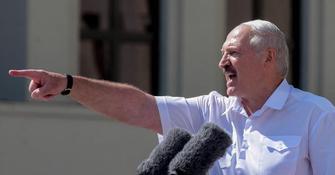
Belarusian state propaganda has portrayed Poland as a threat seeking to seize western Belarus and parts of Ukraine, while depicting Poland as impoverished, subservient to the West, and abusive toward migrants and Belarusian exiles. These themes, which intensified after Belarus’s 2020 protests and Russia’s invasion of Ukraine, draw on social media, state television, historical revisionism, and figures such as former Polish judge Tomasz Szmydt. The article traces the deterioration of Polish-Belarusian relations and describes how the Belarusian regime has targeted Polish institutions, activists, and historical memory. Available surveys suggest that propaganda has influenced some older Belarusians, but most respondents have viewed Poland and its people favorably; personal contact and travel appear to help counter hostile messaging.

Belarusian Propaganda Poland–Belarus Relations Disinformation Political Repression Migration Historical Memory Belarus Poland Ukraine European Union Russia United States
Reporting styleInformative

Evidence-based explanatory reporting, with a critical assessment of Belarusian state propaganda.

Political contextCentre

The article is primarily explanatory reporting on propaganda and regional politics, rather than advocacy for a domestic political position.

How Belarusian Athletes Start from Scratch in Poland and Win Medals

OKO.press 6 Nov 2026 Polish

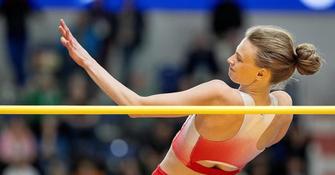
Belarusian athletes and sports professionals who left after the 2020 protests and subsequent repression are rebuilding their careers in Poland, often while facing financial hardship, immigration hurdles and delays in changing sporting nationality. Some have returned to elite competition: Maria Żodzik won a world silver medal for Poland, while archer Karina Kozłowska and equestrian Olga Safronova have also achieved success. Others now coach or run clubs, contributing skills and experience to Polish sport, though they encounter workplace conflicts, limited resources and eligibility restrictions. The article contrasts Poland’s club-based, relatively flexible system with Belarus’s state-controlled sports structure, and describes how repression and international competition bans have damaged Belarusian sport and driven athletes to seek opportunities abroad.

Belarusian Athletes in Poland Sports and Migration Political Repression in Belarus Sports Systems and Funding Refugees and Migrants Poland Belarus Ukraine Belarusian Sports Solidarity Foundation (BSSF) Belarusian government Polish sports federations Belarusian National Olympic Committee
Reporting styleInformative

Primarily reported and supported by interviews and examples, with some evaluative characterizations of the sports systems and their effects.

Political contextCentre

The article reports on the political pressures and consequences affecting Belarusian athletes, without advocating a distinct partisan ideology.

“Poles Killed More Belarusians Than the Germans”: How Lukashenko’s Propaganda Equates the Home Army with the Nazis

OKO.press 6 Nov 2026 Polish

Belarusian state propaganda has increasingly portrayed the Polish Home Army as equivalent to Nazi forces, using contested wartime episodes and postwar violence to frame Poland and the West as historic enemies of Belarus. The article acknowledges that Home Army units committed abuses and that civilians suffered amid conflicts involving Polish, Soviet, and other forces, but argues that equating the Home Army with systematic Nazi crimes is an ideological distortion. It traces how the Belarusian government connected its investigation into the wartime genocide of Belarusians with the 2020 protests, promoted the narrative through media and schools, and used it to justify anti-Polish policy. The campaign has included the destruction of Home Army memorial sites and the prosecution of Polish activists and journalist Andrzej Poczobut, who received an eight-year prison sentence. The article concludes that the historical narrative serves to legitimize Lukashenko’s government and portray contemporary Poland and Europe as threats.

Belarusian State Propaganda World War II History Polish-Belarusian Relations The Home Army Historical Memory Political Repression Belarus Poland Eastern Europe Government of Belarus General Prosecutor's Office of Belarus Home Army
Reporting styleInformative

Mostly historical and factual reporting, with a clear critical interpretation of the Belarusian government’s propaganda.

Political contextCentre-left

Critical of authoritarian rule, state propaganda, and the political use of historical memory; it does not advocate a specific party position.

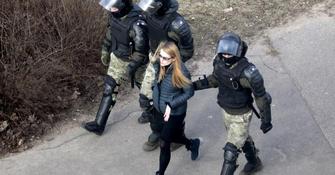
Iron batons, stun guns, suspension. How the Belarusian "Gestapo" tortures.

Oko 18 Oct 2026

See all 18 pieces of work with a free account

Other journalists in Białystok

Hire Message
×

Sign up to message Maksim

Already have an account? Log in
Looking for work? Register as a Journalist
Verify your email to complete registration
We’ve just sent an email to . Please check your inbox and click the link to verify your email address and complete your registration. If you don’t see the email, be sure to check your spam or junk folder.
Didn’t receive the email?

Sign up to unlock profiles

Already have an account? Log in
Looking for work? Register as a Journalist
Verify your email to complete registration
We’ve just sent an email to . Please check your inbox and click the link to verify your email address and complete your registration. If you don’t see the email, be sure to check your spam or junk folder.
Didn’t receive the email?