Contratar periodistas

Editoriales y emisoras Equipos de marketing de contenidos Equipos de relaciones públicas y comunicación Equipos de riesgo e inteligencia Encontrar periodistas Monitoreo de medios Precios

Para periodistas

Empleos en periodismo Tarifas Crea tu perfil gratis

Sobre Mani

Mani Tehrani es un periodista con base en Estambul, Turquía. Periodista freelance (escritor y editor - desde 2001) 1-Entrevistas críticas 2-Informes sobre debates de especialistas 3-Informes locales de comercios y ciudadanos 4-Informes de hechos a partir de fuentes en inglés y turco 5-Ideas estratégicas y programación para medios

Idiomas
persa
Visto en
Euronews Gooya News

Trabajo 19

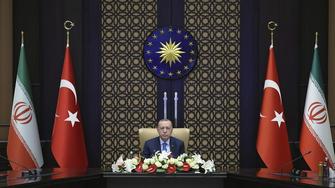
Erdogan between Iran and Israel; Will Iranian opponents have security in Turkey?

Parsi 22 dic 2020 Persian

The article discusses the complex relationship between Turkey, Iran, and Israel, focusing on a controversial poem recitation by Turkish President Recep Tayyip Erdogan, which sparked diplomatic tensions with Iran. The poem, perceived as promoting separatism among Iran's Azerbaijani population, led to a strong reaction from Iranian Foreign Minister Javad Zarif and subsequent diplomatic exchanges to de-escalate the situation. The article also touches on the broader geopolitical dynamics, including Turkey's support for Azerbaijan in the Nagorno-Karabakh conflict, the impact of U.S. sanctions on Turkey, and the potential implications of Joe Biden's presidency for the region. Additionally, the safety of Iranian opponents in Turkey is questioned, given the history of suspicious deaths and abductions, and the recent arrest of an alleged Iranian criminal gang in Istanbul.
International Relations Security Diplomacy Turkey Iran Israel United Nations Minsk Group European Union United States People's Protection Units (YPG) Justice and Development Party (AKP)
Estilo periodísticoInformativo

Contains both factual reporting and some opinionated statements

Contexto políticoCentroderecha

The text discusses Erdogan's policies and actions, which are generally associated with center-right politics in Turkey.
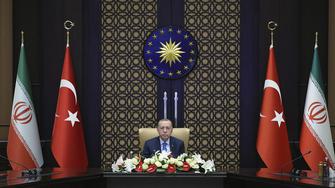
Erdogan between Iran and Israel; Will Iranian opponents have security in Turkey?

Per 22 dic 2020 Persian

The article discusses the complex relationship between Turkey, Iran, and Israel, focusing on a controversial poem recitation by Turkish President Recep Tayyip Erdogan, which sparked diplomatic tensions with Iran. The poem, perceived as promoting separatism among Iran's Azerbaijani population, led to a strong reaction from Iranian Foreign Minister Javad Zarif and subsequent diplomatic exchanges to de-escalate the situation. The article also touches on the broader geopolitical dynamics, including Turkey's support for Azerbaijan in the Nagorno-Karabakh conflict, the impact of U.S. sanctions on Turkey, and the potential implications of Joe Biden's presidency for the region. Additionally, the safety of Iranian opponents in Turkey is questioned, given the history of suspicious deaths and abductions, and the recent arrest of an alleged Iranian criminal gang in Istanbul.

International Relations Security Diplomacy Turkey Iran Israel United Nations Minsk Group European Union United States People's Protection Units (YPG) Justice and Development Party (AKP)

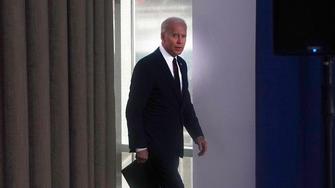
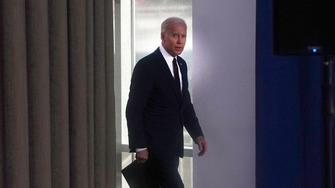
Joe Biden and Iran; Negotiation conditions have become difficult and the military option is always on the table

Parsi 16 nov 2020 Persian

The article discusses the challenges facing the potential negotiations between Joe Biden's administration and Iran. It highlights the complexities of the Iran nuclear deal and the differing approaches of the Democratic and Republican parties towards Iran. The text also touches on the role of Israel and the impact of sanctions on Iran. The authors suggest that while the military option remains on the table, the path to negotiations is fraught with difficulties, and the outcome is uncertain.

US Elections Iran Nuclear Deal US-Iran Relations United States Iran Middle East Democratic Party Republican Party Israeli Government Iranian Government Joe Biden Donald Trump
Estilo periodísticoEquilibrado

Contains both factual reporting and analysis or opinion

Contexto políticoCentro

The text discusses political strategies and viewpoints without clear bias towards a specific political spectrum.

Joe Biden and Iran; Negotiation conditions have become difficult and the military option is always on the table

Per 16 nov 2020 Persian

The article discusses the challenges facing the potential negotiations between Joe Biden's administration and Iran. It highlights the complexities of the Iran nuclear deal and the differing approaches of the Democratic and Republican parties towards Iran. The text also touches on the role of Israel and the impact of sanctions on Iran. The authors suggest that while the military option remains on the table, the path to negotiations is fraught with difficulties, and the outcome is uncertain.

US Elections Iran Nuclear Deal US-Iran Relations United States Iran Middle East Democratic Party Republican Party Israeli Government Iranian Government Joe Biden Donald Trump

Who can prevent famine in Iran, Ali Khamenei or Donald Trump?

Parsi 15 oct 2020 Persian

The US Treasury Department announced new sanctions against eighteen Iranian financial institutions as part of its maximum pressure campaign. The sanctions target both public and private banks, potentially leading to a famine in Iran. Iranian officials have reacted by calling the sanctions a spectacle and a move to close Iran's financial channels with the world. Human rights researcher Nahid Farhad and former political science professor at Tarbiat Modares University, Peirooz Mojtahedzadeh, provide differing perspectives on the impact of the sanctions and the motivations behind the US government's actions. Farhad sees the sanctions as a way to weaken the Iranian regime's repressive forces, while Mojtahedzadeh criticizes the sanctions for punishing the Iranian people instead of the regime. Both discuss the potential for a famine in Iran and the need for a reevaluation of US policies.

Sanctions Iran Economy US-Iran Relations Iran United States US Treasury Department Central Bank of Iran Iranian Government Donald Trump Ali Khamenei
Estilo periodísticoEquilibrado

Contains both factual reporting and analysis or opinion

Contexto políticoCentro

The text discusses political actions and strategies, particularly in relation to US-Iran relations and sanctions.

Who can prevent famine in Iran, Ali Khamenei or Donald Trump?

Per 15 oct 2020 Persian

The US Treasury Department announced new sanctions against eighteen Iranian financial institutions as part of its maximum pressure campaign. The sanctions target both public and private banks, potentially leading to a famine in Iran. Iranian officials have reacted by calling the sanctions a spectacle and a move to close Iran's financial channels with the world. Human rights researcher Nahid Farhad and former political science professor at Tarbiat Modares University, Peirooz Mojtahedzadeh, provide differing perspectives on the impact of the sanctions and the motivations behind the US government's actions. Farhad sees the sanctions as a way to weaken the Iranian regime's repressive forces, while Mojtahedzadeh criticizes the sanctions for punishing the Iranian people instead of the regime. Both discuss the potential for a famine in Iran and the need for a reevaluation of US policies.

Sanctions Iran Economy US-Iran Relations Iran United States US Treasury Department Central Bank of Iran Iranian Government Donald Trump Ali Khamenei

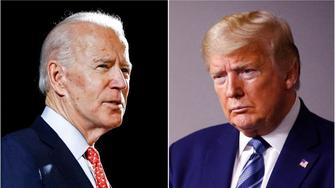
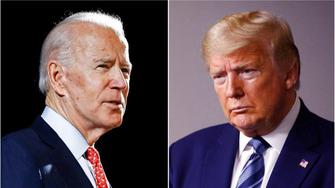
Joe Biden and Donald Trump; Who holds the key to unlocking Iran's economic sanctions?

Parsi 8 sept 2020 Persian

The article discusses the potential implications of the US presidential election on Iran, particularly in terms of how the candidates, Donald Trump and Joe Biden, would handle negotiations and economic sanctions. It includes perspectives from Arash Ghafouri, a Washington-based electoral analyst, and Maliheh Mohammadi, a left-wing political activist, on the differences between US and Iranian election processes and the power of the presidency in both countries. The article also explores the historical context of US-Iran relations, the role of internal US politics, and the influence of external factors such as the security and satisfaction of Israel. It suggests that while a Biden presidency might reduce psychological warfare against Iran, it is unlikely to resolve Iran's complex and chronic issues quickly. The article concludes that, despite criticisms of Trump, his re-election might be more beneficial for Iran, as it could lead to a more straightforward negotiation process.

US Politics Iran Sanctions Presidential Election United States Iran Democratic Party Republican Party Joe Biden Donald Trump Arash Ghafouri Maliheh Mohammadi Barack Obama
Estilo periodísticoEquilibrado

Contains expert analysis and political opinions

Contexto políticoCentro

The article discusses US and Iran politics, focusing on the impact of presidential candidates on sanctions without advocating a specific political ideology.

Joe Biden and Donald Trump; Who holds the key to unlocking Iran's economic sanctions?

Per 8 sept 2020 Persian

The article discusses the potential implications of the US presidential election on Iran, particularly in terms of how the candidates, Donald Trump and Joe Biden, would handle negotiations and economic sanctions. It includes perspectives from Arash Ghafouri, a Washington-based electoral analyst, and Maliheh Mohammadi, a left-wing political activist, on the differences between US and Iranian election processes and the power of the presidency in both countries. The article also explores the historical context of US-Iran relations, the role of internal US politics, and the influence of external factors such as the security and satisfaction of Israel. It suggests that while a Biden presidency might reduce psychological warfare against Iran, it is unlikely to resolve Iran's complex and chronic issues quickly. The article concludes that, despite criticisms of Trump, his re-election might be more beneficial for Iran, as it could lead to a more straightforward negotiation process.

US Politics Iran Sanctions Presidential Election United States Iran Democratic Party Republican Party Joe Biden Donald Trump Arash Ghafouri Maliheh Mohammadi Barack Obama

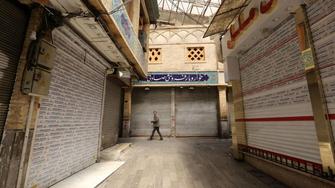
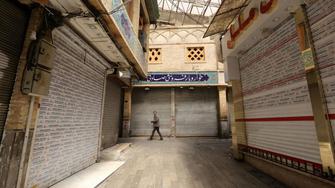
Will COVID-19 Pandemic Accelerate the Digitalization of the Global Economy?

Parsi 5 abr 2020 Persian

The COVID-19 pandemic, which began in Wuhan, China in December 2019, has rapidly spread globally, prompting countries to take immediate actions such as repatriating citizens, canceling flights, and closing borders. The crisis has highlighted the interconnectedness of nations and the shared nature of human problems, challenging the concept of globalization. Experts like Jamshid Asadi, an economics professor at the American University of Paris, believe that the pandemic has not changed worldviews but has shown that solutions to crises are global. The pandemic has accelerated the digital transformation of economies, as seen with educational institutions moving online. The crisis may lead to a financial crisis if it persists, but it also presents an opportunity to advance knowledge-based economies. The article discusses the potential for governments to provide direct financial support to citizens, the ongoing robotization of industries, and the need for investment in healthcare and biotechnology to prepare for future viral threats.

COVID-19 Pandemic Global Economy Digital Transformation Global China Switzerland World Health Organization European Union University of Paris Oxford Sigmund Freud Jamshid Asadi
Estilo periodísticoEquilibrado

Contains expert analysis and projections about economic and technological trends

Contexto políticoCentro

The text discusses liberal economic policies favorably, suggesting a pro-liberal stance

Will COVID-19 Pandemic Accelerate the Digitalization of the Global Economy?

Per 5 abr 2020 Persian

The COVID-19 pandemic, which began in Wuhan, China in December 2019, has rapidly spread globally, prompting countries to take immediate actions such as repatriating citizens, canceling flights, and closing borders. The crisis has highlighted the interconnectedness of nations and the shared nature of human problems, challenging the concept of globalization. Experts like Jamshid Asadi, an economics professor at the American University of Paris, believe that the pandemic has not changed worldviews but has shown that solutions to crises are global. The pandemic has accelerated the digital transformation of economies, as seen with educational institutions moving online. The crisis may lead to a financial crisis if it persists, but it also presents an opportunity to advance knowledge-based economies. The article discusses the potential for governments to provide direct financial support to citizens, the ongoing robotization of industries, and the need for investment in healthcare and biotechnology to prepare for future viral threats.

COVID-19 Pandemic Global Economy Digital Transformation Global China Switzerland World Health Organization European Union University of Paris Oxford Sigmund Freud Jamshid Asadi

Ver los 19 trabajos con una cuenta gratuita

Contratar Mensaje
×

Regístrate para enviar un mensaje a Mani

¿Ya tienes una cuenta? Iniciar sesión
¿Buscas trabajo? Regístrate como periodista
Verifica tu correo electrónico para completar el registro
Acabamos de enviar un correo electrónico a . Revisa tu bandeja de entrada y haz clic en el enlace para verificar tu dirección de correo electrónico y completar tu registro. Si no ves el correo, asegúrate de revisar tu carpeta de spam o correo no deseado.
¿No recibiste el correo electrónico?

Regístrate para desbloquear perfiles

¿Ya tienes una cuenta? Iniciar sesión
¿Buscas trabajo? Regístrate como periodista
Verifica tu correo electrónico para completar el registro
Acabamos de enviar un correo electrónico a . Revisa tu bandeja de entrada y haz clic en el enlace para verificar tu dirección de correo electrónico y completar tu registro. Si no ves el correo, asegúrate de revisar tu carpeta de spam o correo no deseado.
¿No recibiste el correo electrónico?