Ingaggia giornalisti

Editori ed emittenti Team di content marketing Team di PR e comunicazione Team di risk e intelligence Trova giornalisti Monitoraggio dei media Prezzi

Per i giornalisti

Offerte di lavoro nel giornalismo Tariffe Crea il tuo profilo gratuito

Su Marianna

Fotogiornalista, giornalista e ricercatore pluripremiato con ten years of experience in journalism, publishing, and communications con base a Cambridge, Regno Unito ma disponibile a viaggiare. Lavoro come corrispondente estero, giornalista, fotogiornalista e fixer per diverse organizzazioni mediatiche e organizzazioni internazionali per i diritti umani del Regno Unito, degli Stati Uniti, della Germania, della Finlandia, della Svizzera e di altri paesi. Dal 2020-2023 sono stato responsabile della comunicazione per una organizzazione non profit globale che lavora su media e diversità. Ho riportato dalla Grecia, dalla più ampia regione balcanica, dal Regno Unito, da Malta e da Cipro. Ho costruito una reputazione di reportage validi e affidabili, di cui si fidano migliaia di persone. Grazie alla mia presenza sui social media, sono riuscito a creare una vasta rete di contatti e risorse. Mi concentro sul reportage umanitario e sulla politica e la mia expertise riguarda le questioni migratorie e dei rifugiati, la politica europea, il genere e il femminismo, e i movimenti sociali e le proteste. Nel 2017 il mio pezzo ‘EU-Turkey Deal Fails to Stop Refugee Flow‘, pubblicato da Deutsche Welle, ha vinto un premio al European Migration Media Award. Sono anche membro del National Union of Journalists (UK). Nel 2015 ho fatto parte della produzione di 'Macedonia: Tracking Down the Refugee Kidnap Gangs' che ha vinto il Foreign Press Association Award for News Story of the Year e il Royal Television Society for the Independent Award. Il mio libro 'Crossing Lines - Climbing Walls: Critical Perspectives on Migration in the 21st Century' sarà pubblicato nella primavera del 2018. Attualmente sono PhD researcher in Political Science and International Studies at the University of Birmingham. Ho un BA in Mediterranean Studies (International Relations and Organisations), University of the Aegean, Greece e un MA in International Relations (Security Studies), University of Birmingham, UK.

Lingue
inglese greco
Visto su
Deutsche Welle E-International Relations Al Jazeera IRIN Prio CBC Global Voices по-русски Media Diversity Institute - Media Diversity Institute Middle East Eye N-tv The New Humanitarian

Lavori 33

Earned Living and the UK’s Dehumanising Approach to Migration

E-International Relations 11 nov 2026 English

The UK’s settlement reforms, due to take effect in January 2027, would make migrants qualify through financial contribution and character requirements, with waits ranging from three to 20 years. The author argues that the policy divides migrants into worthy and unworthy categories, particularly disadvantaging people arriving outside designated safe and legal routes and workers on temporary visas. Linking the reforms to years of British political rhetoric about border control and the “small boat crisis,” the article contends that such framing turns migrants into threats and produces their illegality and deportability. It also argues that restrictive controls cannot stop human movement, and that the reforms continue a longstanding pattern of racialised exclusion and dehumanisation.

UK Immigration Policy Asylum and Refugee Policy Border Security Migrant Rights Racism and Migration United Kingdom European Union English Channel UK Government Home Office Labour Party Reform UK
Stile giornalisticoInterpretativo

Strongly critical of UK migration policy, arguing that settlement rules dehumanise and marginalise migrants.

Contesto politicoSinistra

Critiques restrictive, nationalist immigration policies from a migrant-rights and anti-racist perspective.
Invisibility and Intersectionality: A Feminist Critical Discourse Analysis of Palestinian Women in Western War Reporting

E-International Relations 9 nov 2026 English

Emily Angwin examines how The New York Times and The Guardian represented women in selected coverage of the Russia-Ukraine and Israel-Gaza wars. Using Feminist Critical Discourse Analysis and the concept of the “politics of invisibility,” she argues that Palestinian women are more often depersonalized, treated as statistics, or omitted than Ukrainian and Israeli women. Examples include the contrasting labels “hostage” and “prisoner,” sparse attention to Palestinian mothers and patients in Gaza hospitals, and richer personal detail given to Ukrainian women fleeing attacks. The essay links these disparities to gendered and racialized power relations and concludes that broader comparative research is needed to expose how war reporting can normalize Palestinian women’s erasure.

Media Representation Palestinian Women Feminist Media Analysis Intersectionality War Reporting Russia-Ukraine War Israel-Gaza War Gaza Ukraine Israel Palestine United Nations
Stile giornalisticoDi opinione

Argues that Western war reporting systematically dehumanizes and erases Palestinian women, using an explicitly critical feminist and postcolonial analytical framework.

Contesto politicoCentro-sinistra

The essay advances a critical, pro-Palestinian feminist and postcolonial analysis of Western media coverage, while focusing on discourse and representation rather than advocating a party-political position.

Black Lives Matter, Poetry, and Pedagogy: On Gil Scott-Heron and Global Protests

E-International Relations 26 set 2026 English

Lee Jones and Matthew Leep argue that Gil Scott-Heron’s poetry, especially “The Revolution Will Not Be Televised,” can help students examine Black Lives Matter and global protests. They highlight how media coverage can focus on looting and property damage rather than structural racism, how Scott-Heron critiques divisions between establishment civil rights leadership and grassroots communities, and how movements can be commercialized or reduced to cosmetic reforms. Linking Black Lives Matter to a longer international history of Black political thought, the authors connect the deaths of George Floyd and Adama Traoré and propose poetry as a way to explore the complexities and possibilities of political change.

Black Lives Matter Gil Scott-Heron Poetry and politics Racism and police brutality Pan-Africanism Teaching and pedagogy United States France Global National Association for the Advancement of Colored People National Urban League Organization of African Unity
Stile giornalisticoInterpretativo

The authors make an interpretive argument for using Scott-Heron’s poetry to teach about Black Lives Matter, racism, media framing, and political change.

Contesto politicoCentro-sinistra

Emphasizes systemic racism, police brutality, and solidarity across anti-racist movements, while offering an academic and interpretive rather than partisan argument.

Ceuta: When Europe's Reaction Does the Damage

E-International Relations 7 ago 2026 English

The July 2026 mass crossing from Morocco into Ceuta produced tens of thousands of arrivals, dozens of deaths and a severe local reception crisis, but the evidence does not establish that Morocco deliberately engineered the movement. Misreadings of a Spanish court ruling, online misinformation, economic hardship and possible Moroccan non-prevention remain competing explanations. The article argues that Europe's response caused additional damage: Italy threatened measures against Spain and reintroduced controls, while several governments debated excluding a Schengen partner despite no reported onward movement. This diverted pressure from unresolved attribution, strained Schengen solidarity and placed migrants and border communities at immediate risk. Future responses should combine rapid assessment, support for affected states and rights-compliant border management, reserving punitive measures for cases where sponsorship is established.

Migration and Border Control Ceuta Migration Crisis European Schengen Area Instrumentalised Migration European Union Policy Ceuta Morocco European Union Spain European Commission Italy Schengen Area
Stile giornalisticoInterpretativo

Strongly analytical and argumentative, presenting evidence but advancing a clear judgment that Europe's reaction worsened the crisis.

Contesto politicoCentro

The article is a critical, evidence-based analysis that questions both Moroccan attribution and European punitive responses rather than aligning clearly with either the left or right.

Europe’s deadly border theatre is back

Al Jazeera 30 lug 2025 English

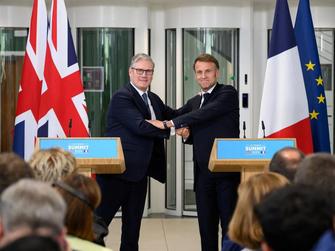
New migration deterrence measures in Greece and the UK have drawn sharp criticism from human rights groups, legal associations, and non-governmental organisations. Greece’s proposed legislation would deny asylum to migrants arriving via Mediterranean routes, while the UK-France agreement aims to prevent small boat crossings despite concerns it will not stop attempts to reach the UK. Both policies reflect a broader trend across Europe in which governments adopt far-right narratives that portray migrants as threats, reinforcing a divisive ‘us versus them’ dynamic. The article argues that such deterrence strategies fail because human movement cannot be controlled and instead create more dangerous migratory routes. These measures are described as rooted in racism, shaped by colonial legacies, and designed to manufacture a border crisis that justifies harsh policies rather than resolves underlying issues.

Migration policy European border crisis Refugee crisis Greece United Kingdom European Union Greek government UK government Doctors Without Borders Migrants’ Rights Network Islamic State (ISIS) Thanos Plevris
Stile giornalisticoDi opinione

Strongly opinionated analysis criticising migration deterrence policies and their ideological foundations.

Contesto politicoSinistra

Critiques far-right rhetoric, neoliberal policy frameworks, and restrictive migration legislation while advocating for humanitarian protections.

Tensions boil over in the Balkans

IRIN 5 ott 2023 English

Riots erupted at Greece's border with Macedonia as migrants and asylum seekers, stranded for two weeks, protested against selective border policies. Only refugees from Syria, Iraq, and Afghanistan were allowed entry, leading to frustration among other nationalities. The situation escalated with clashes, looting, and a tragic electrocution incident. Greek authorities offered transportation back to Athens, but few accepted. The situation remained tense with a heavy police presence and expectations of further unrest.

Refugee Crisis Border Conflict Greece Macedonia Idomeni Greek authorities Macedonian border police NGOs aid agencies Moroccan migrant Afghan refugees Iranian asylum seekers
Stile giornalisticoEquilibrato

The article contains a mix of factual reporting and subjective statements from migrants and volunteers.

Trapped on Greek Islands: Refugees Face Overcrowding and Bureaucratic Challenges

Dw 5 apr 2023 English

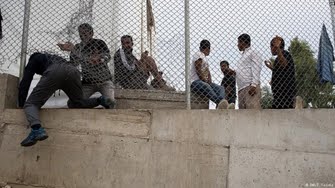
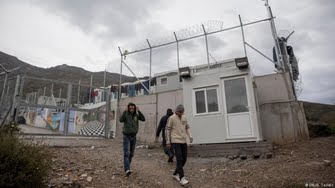
The article by Marianna Karakoulaki and Dimitris Tosidis focuses on the dire situation of refugees on the Greek island of Samos. Overcrowded and with inadequate facilities, the camp built for 850 people now hosts over 1,800. Refugees, including Mohammed from Iraq and Maher from Syria, face harsh living conditions, with some resorting to buying containers for shelter. The EU-Turkey refugee deal complicates their situation, limiting movement and prolonging asylum procedures. Frontex is involved in identity screening, while the Greek Asylum Service processes asylum claims, which can take months. Healthcare is stretched thin, with the hospital unable to cope with the demand. Refugees like Ahmad from Syria express a desire to work and contribute to Greece, despite the challenges they face. The article highlights the human aspect of the refugee crisis, the bureaucratic hurdles, and the psychological impact on those seeking asylum.

Refugee Crisis EU-Turkey Refugee Deal Asylum Procedures Healthcare in Refugee Camps Refugee Living Conditions Greece Middle East Europe UNHCR Frontex Praksis Doctors without Borders (MSF)

Life after the Moria refugee camp fire: A tale of a broken system

Dw 5 apr 2023 English

Journalists Marianna Karakoulaki and Dimitris Tosidis report from Lesbos on the aftermath of a fire that destroyed part of the Moria refugee camp. The camp is described as prison-like, with poor living conditions and restricted media access. Refugees from African countries feel discriminated against by the asylum services, which they believe prioritize Middle Eastern refugees. The article shares personal stories of refugees like Wafor from Nigeria and Michael from Cameroon, who fled due to his sexual orientation. Legal anthropologist Dr. Barbara Harrel-Bond criticizes the asylum process, noting that those handling asylum claims often lack knowledge of refugee law. The EU-Turkey agreement has exacerbated the situation, effectively turning Lesbos into a prison with a slow and discriminatory asylum system.

Refugee Crisis Moria Refugee Camp Fire Asylum Process Discrimination EU-Turkey Agreement Greece Cameroon Lesbos Refugee Studies Center at Oxford University

Life at the Macedonian gate to Europe

Dw 3 apr 2023 English

Marianna Karakoulaki reports from Idomeni, where the refugee situation is tense following a police action against refugees trying to force open the Macedonian gate to Europe. The camp, designed for 3,000, now holds around 10,000 people, creating a Middle Eastern bazaar atmosphere. Refugees from Kurdistan, particularly Aleppo, have increased due to the Syrian conflict. Sami, a Kurdish architecture student, fled with his family due to threats from 'IS'. Despite the hardships, refugees like Baidar and Ahmed, who studied economics, remain positive and hope to continue their education in Europe. Osman, a Kurdish hairdresser from Aleppo, has set up a makeshift salon in the camp, hoping to eventually open a salon in Germany. The refugees remain hopeful despite the uncertainty of their situation, with some acknowledging the violence and the use of tear gas as a consequence of refugees throwing stones at the police.

Refugee Crisis Syrian War Migration Macedonia Syria Europe Medicins Sans Frontieres

Refugees continue to cross the Balkan route into Europe

Dw 1 apr 2023 English

The article reports on the ongoing movement of refugees through the Balkan route into Europe, despite the EU-Turkey deal intended to curb this flow. It follows the story of Mohammed, a stateless individual from Kuwait, who navigates the perilous journey with the help of smugglers. Despite the EU-Turkey deal, which traps refugees on Greek islands until their asylum applications are processed, many like Mohammed seek alternative paths to reach mainland Europe. The article details the extensive networks of smugglers and the various routes taken by refugees, as well as the costs involved. It also touches on the lives of other refugees stranded in Serbia, their attempts to cross borders, and the involvement of local authorities and other actors in facilitating or hindering their movement. The piece is based on the authors' direct contact with refugees and observations at different points along the route, and it is produced with funding from the Migration Media Award, funded by the EU.

Refugee Crisis Human Smuggling EU-Turkey Deal Asylum Seekers Balkan Route Europe Greece Serbia European Union Frontex United Nations refugee agency

Vedi tutti i 33 lavori con un account gratuito

Ingaggia Messaggio
×

Registrati per inviare un messaggio a Marianna

Hai già un account? Accedi
Cerchi lavoro? Registrati come giornalista
Verifica la tua email per completare la registrazione
Abbiamo appena inviato un'email a . Controlla la tua casella di posta e clicca sul link per verificare il tuo indirizzo email e completare la registrazione. Se non vedi l'email, assicurati di controllare la cartella spam o posta indesiderata.
Non hai ricevuto l'email?

Registrati per sbloccare i profili

Hai già un account? Accedi
Cerchi lavoro? Registrati come giornalista
Verifica la tua email per completare la registrazione
Abbiamo appena inviato un'email a . Controlla la tua casella di posta e clicca sul link per verificare il tuo indirizzo email e completare la registrazione. Se non vedi l'email, assicurati di controllare la cartella spam o posta indesiderata.
Non hai ricevuto l'email?