As Europe mulls Russia’s Sputnik V jab, how is it going down at home?
Euronews19 Mar 2021English
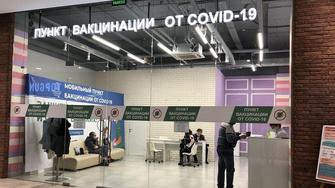
All Russian citizens over 18 are eligible for the Sputnik V COVID-19 vaccine, but uptake is low, with only 3.81% of the population having received at least one dose by mid-March. Vaccine hesitancy is high, with only 30% willing to get vaccinated, citing concerns about side effects and waiting for final data. Authorities are incentivizing vaccination through perks and easy access at polyclinics and mobile centers. Sputnik V, made from two human adenoviruses, is 91.6% effective. Side effects are generally mild and short-lived. Foreigners in Russia face mixed policies on vaccine eligibility, with some able to get vaccinated under certain conditions.
COVID-19VaccinationPublic HealthRussiaMoscowSt PetersburgLevada CentreEuropean Medicines AgencyRospotrebnadzorRussian Gerontological Research and Clinical CentreMinistry of HealthVladimir Putin
Reporting styleInformative
Mostly factual with some subjective statements and personal anecdotes.
OpinionatedFactual
Hope, fears, and distrust: the experience of getting vaccinated with Sputnik V in Russia
Euronews19 Mar 2021Spanish
The article explores the experience of getting vaccinated with Sputnik V in Russia, highlighting personal accounts, public sentiment, and logistical aspects. Despite the vaccine being free and widely available, only 2% of Russians have received both doses. The article discusses the side effects experienced by different age groups, the role of online communities in sharing information, and the slow progress of the vaccination campaign. It also addresses the reluctance of Russians to get vaccinated, citing fear of side effects and waiting for final research results. The article includes expert opinions and mentions various incentives introduced by authorities to encourage vaccination.
VaccinationCOVID-19Public HealthRussiaMoscowSaint PetersburgMinistry of HealthCenter GamaleyaLevada CenterRospotrebnadzorThe New York TimesCNN
Reporting styleBalanced
Mix of personal experiences and factual information
OpinionatedFactual
'They say I sold out to Europe': Belarusian police officer resigns over protests
Euronews19 Aug 2020English
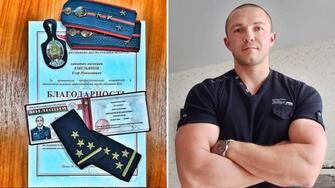
Yegor Yemelyanov, a former captain of the Belarusian police, resigned due to his opposition to the government's handling of protests following the elections. He faced detention after his resignation but was later acquitted. Yemelyanov's decision inspired some colleagues to follow suit, although management accused him of being influenced by Europe. He expressed fear for his future under the current regime but remains hopeful for peaceful and fair elections. Yemelyanov plans to pursue a career in fitness.
The text contains subjective statements and personal beliefs, particularly from Yegor Yemelyanov's perspective.
OpinionatedFactual
Political contextCentre-left
Supports peaceful protests and fair elections, criticizes the current regime
Far leftFar right
Go to vote and win an apartment: Lotteries and concerts encouraged voting in the Russian referendum
Euronews2 Jul 2020Spanish
In Russia, various incentives such as apartment lotteries, concerts, and the ability to vote from car trunks were used to encourage participation in the referendum that could extend President Vladimir Putin's eligibility to serve until 2036. Despite coronavirus concerns, over 60% of Russians voted. The military reported near-unanimous participation. The Kremlin questioned the authenticity of some online images of voting, while regional authorities were instructed to create a festive atmosphere on voting day. Prizes for voting included appliances, iPhones, cars, and apartments, with some regions requiring knowledge of the Constitution for entry into contests.
The article presents factual information about the referendum but may contain some unverified claims or quotes.
OpinionatedFactual
Political contextCentre
The article reports on the referendum without explicit political bias.
Far leftFar right
I want the law to be on our side: Little support for victims of domestic violence in Russia
Euronews25 Nov 2019English
In Russia, domestic violence remains a critical issue with insufficient legal protections for victims. The case of Elena Verba, murdered by her husband Sergey Gusyatnikov, highlights the consequences of Russia's 2017 law partially decriminalizing domestic violence. Despite high-profile cases and alarming statistics, the country lacks dedicated laws to protect women. New legislation is being considered to address this gap, but faces opposition from pro-family and religious organizations. Advocates argue that the current legal framework fails to prevent violence and protect victims, calling for comprehensive reforms.
Domestic ViolenceLegal ReformWomen's RightsRussiaState DumaAnna Crisis CentreWorld Congress of FamiliesSergey GusyatnikovElena VerbaAnna VerbaAlexandra PatsalidesMarina Pisklakova-Parker
Reporting styleInterpretive
The article contains a mix of factual reporting and subjective statements, particularly from individuals affected by or involved in the issue.
OpinionatedFactual
Political contextCentre-left
The article advocates for stronger protections for victims of domestic violence and criticizes current laws, aligning with progressive social policies.
Far leftFar right
Controversial new Russian internet law could increase censorship, critics say
Euronews1 Nov 2019English
A new Russian internet law, effective from November 1, aims to protect the country's internet, 'Runet,' from cyber-attacks by allowing isolation from the global network. Critics argue it will increase government censorship, jeopardizing free speech and information freedom. The law mandates special equipment for internet providers to filter and reroute traffic, with significant implementation costs. While some justify the law as a protective measure, others, including Human Rights Watch and Reporters Without Borders, warn it could lead to unprecedented levels of internet control and blackouts.
Internet CensorshipRussian LegislationRussiaRoskomnadzorHuman Rights WatchReporters Without BordersRosKomSvobodaAlexander ZharovRachel DenberAnton FishmanChristian MihrSarkis Darbinyan
Reporting styleInterpretive
The article contains a mix of factual reporting and opinions from various stakeholders, indicating a moderate level of subjectivity.
OpinionatedFactual
Political contextCentre
The article highlights criticisms from human rights organizations and emphasizes concerns about censorship and freedom of information.
Far leftFar right
Why did Erdogan come to meet Putin? Clue: It's about Syria...
Euronews22 Oct 2019English
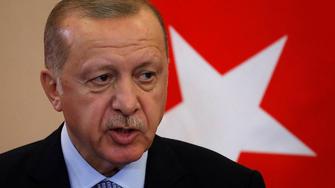
Russian President Vladimir Putin and Turkish President Tayyip Erdogan are meeting in Sochi to discuss the Syrian conflict, particularly the establishment of a 'safe zone' along the Turkey-Syria border and the future of Kurdish forces in the region. Experts suggest that Russia is filling the vacuum left by the US withdrawal, and the talks may result in a new status quo in Syria, including Turkish control of a border zone. The discussions also cover the Syrian constitutional committee, the situation in Idlib, and the potential for joint operations against jihadist groups. The cooperation between Moscow and Ankara is seen as crucial for resolving the Syrian crisis, despite the risks of population displacement and regional tensions.
Syrian ConflictTurkey-Russia RelationsKurdish IssueSyriaTurkeyRussiaRussian FederationEuropean Council on Foreign RelationsValdai Discussion ClubRussian Union for International AffairsAstana groupVladimir Putin
Reporting styleBalanced
Balanced analysis with expert opinions and factual reporting.
OpinionatedFactual
Political contextCentre
The article provides a balanced view of the geopolitical situation without leaning towards any political ideology.
Far leftFar right
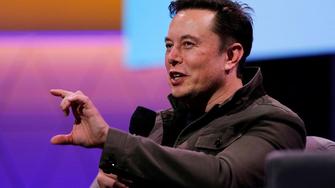
Elon Musk responds in Russian to singing entrepreneurs
Euronews28 Sep 2019English
Elon Musk showcased his Russian language skills by responding to an invitation from Krasnodar entrepreneurs who used a billboard and a video to invite him to a local business forum. The entrepreneurs' video, which included a parody song, aimed to persuade Musk to visit, but it remains unclear if he will accept the invitation. Musk's response in Russian was a playful acknowledgment of their efforts.
The article contains a mix of factual reporting and subjective statements, particularly in the description of the entrepreneurs' efforts and Musk's response.
OpinionatedFactual
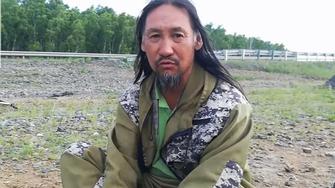
Armed police arrest 'warrior shaman' who wants Putin out of the Kremlin
Euronews19 Sep 2019English
Aleksandr Gabyshev, a self-proclaimed warrior shaman, was arrested by up to 50 armed police officers while on a 8,000-kilometer journey from Siberia to Moscow with the intent to 'expel Vladimir Putin' from the Kremlin. Gabyshev, who has gained a significant following and views on social media, was detained in Buryatia, Siberia. He may face charges for organizing an extremist movement. The Kremlin denied knowledge of the detention, while Amnesty International declared Gabyshev a 'prisoner of conscience' and criticized the Russian authorities' response to his actions.
ArrestPolitical DissentSiberiaMoscowRussiaRussia’s Ministry of Internal AffairsAmnesty InternationalAleksandr GabyshevVladimir PutinNatalia Zviagina
Reporting styleInformative
The article presents factual information about the arrest but also includes quotes from Amnesty International which contain subjective assessments.
OpinionatedFactual
Political contextLeft
The text reports on a political dissident and includes a statement from Amnesty International, which is often associated with liberal or left-leaning positions.
Far leftFar right
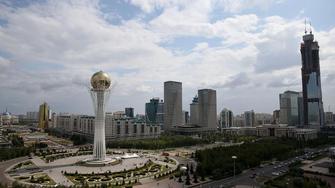
Kashistan? Half-a-million Kazakhs have debts paid by the government
Euronews29 Aug 2019English
The government of Kazakhstan announced that it will pay off debts for half-a-million citizens as a one-time action to aid the country's poorest. This follows a presidential decree by President Kasym-Jomart Tokayev and targets orphans, large families, the disabled, and socially vulnerable families. The state will use budgetary funds to repay up to 105 billion Kazakh tenge (€245m) in loans and arrears, with a cap of 300,000 KZT (€700) per person.
Debt ReliefGovernment PolicyKazakhstanCentral AsiaGovernment of KazakhstanSvetlana ZhakupovaKasym-Jomart Tokayev
Reporting styleFactual
The article presents factual information about a government policy.
We respect your privacy and use a limited number of cookies to provide essential functionality and enhance your visit. No third-party advertising cookies involved. For more details, please read our Cookie Policy.