Contratar periodistas

Editoriales y emisoras Equipos de marketing de contenidos Equipos de relaciones públicas y comunicación Equipos de riesgo e inteligencia Encontrar periodistas Monitoreo de medios Precios

Para periodistas

Empleos en periodismo Tarifas Crea tu perfil gratis

Sobre Masoud

Videógrafo, fotógrafo, realizador de documentales

Idiomas
inglés persa
Visto en
Mdpi Nature Preprints Tandfonline

Trabajo 7

Fall-planted cover crops improve nitrogen use efficiency but reduce garlic yield in a relay intercropping system amended with arbuscular mycorrhizal fungi

Journal of the Science of Food and Agriculture 26 sept 2025 English

Relay intercropping garlic with fall-planted cover crops increased nitrogen use efficiency but reduced bulb yield due to competition, particularly when cover crop biomass was high. Negative effects on nutrient assimilation in the first year diminished in the second season, indicating a need for multi‑year implementation. Arbuscular mycorrhizal fungi inoculation did not significantly improve yield or nutritional quality. Proper management of cover crops is required to prevent yield loss while achieving nitrogen efficiency benefits.

Agriculture Crop management Nitrogen use efficiency United States Northeast United States Massachusetts University of Massachusetts Amherst Society of Chemical Industry Alexandra Smychkovich Masoud Hashemi
Estilo periodísticoFactual

Scientific research article presenting empirical findings
Breaking of Seed Dormancy in Redroot Pigweed

Communications in Soil Science and Plant Analysis 20 may 2025 English

Controlled growth-chamber experiments evaluated treatments for breaking dormancy in redroot pigweed seeds. Among the tested methods, 48-hour priming with 800 mg/L gibberellic acid, particularly when combined with scarification or stratification, produced strong germination results; scarified seeds treated with this GA₃ concentration reached about 91.5% germination. A 0.5% potassium nitrate treatment during 24-hour priming increased radicle elongation by 44% compared with untreated seeds. The findings indicate that combining chemical priming with mechanical or cold-treatment methods can improve germination and early seedling vigor.

Seed Dormancy Redroot Pigweed Seed Germination Seed Priming Agronomy Iran United States University of Khuzestan Agricultural Research Education and Extension Organization (AREEO) University of Massachusetts Amherst Mayeh Rohani Nejad Zohreh Emami Bistgani
Estilo periodísticoFactual

Scientific review reporting experimental results in a factual, evidence-focused manner.

Diverse fatty acid profiles and antioxidant properties in different populations of Ox Tongue (Echium amoenum)

Preprints.org 24 sept 2024 English

Six Iranian Echium amoenum populations were compared for oil concentration, fatty acid composition, and antioxidant activity. α‑linolenic acid dominated all samples, followed by linoleic and oleic acids. Fasa and Sari populations showed the highest polyunsaturated fatty acid levels, while Leron exhibited the strongest antioxidant performance. Ghazvin displayed the greatest phenolic and flavonoid content. Multivariate analyses separated the populations into distinct biochemical groups. Results indicate substantial genetic variability, with elite accessions suitable for food and industrial applications due to their high unsaturated fatty acid content and antioxidant properties.

Agricultural science Plant biochemistry Fatty acids Antioxidants Iran Shahid Fozveh Research Facility Zohreh Emami Bistgani Vahid Rowshan Sarvestani Masoud Hashemi Sigma-Aldrich Merck
Estilo periodísticoFactual

Scientific, data‑driven reporting with no subjective language

U.S. cereal rye winter cover crop growth database

Scientific Data 7 mar 2024 English

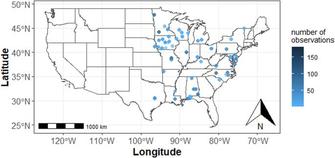
The article presents a study on cereal rye, a common winter cover crop in the United States, focusing on its biomass production and associated ecosystem services. The study compiled plot-level observations from various agronomic, soil, and climate conditions across the eastern half of the United States. Data included biomass, nitrogen content, carbon to nitrogen ratio, and other agronomic and soil metrics. The study aimed to help farmers optimize cover crop termination timing for maximum benefits and support the adoption of winter cover crops for climate resilience and reduced soil erosion. The dataset excluded outliers and observations from sites terminating cover crops after May. Statistical analysis was performed using R software, and the final dataset showed a mean cereal rye biomass of 3,428 kg ha−1. The variability in biomass production was attributed to differences in agronomic, soil, and climate factors.

Agriculture Environmental Science Data Collection United States Eastern United States University of Maryland Tennessee State University West Texas A&M University USDA-ARS Purdue University Texas A&M University University of Nebraska-Lincoln
Estilo periodísticoFactual

The text is based on data collection and research findings.

Dual-Purpose Rye, Wheat, and Triticale Cover Crops Offer Increased Forage Production and Nutrient Management but Demonstrate Nitrogen Immobilization Dynamics

Agronomy 31 may 2023 English

Dual-purpose cover crops (DPCCs) such as rye, wheat, and triticale are shown to provide significant forage production and nutrient management benefits in dairy systems in the Northeastern United States. A three-year field study demonstrated that these DPCCs can yield an average of 4.1 Mg ha−1 of forage without affecting subsequent corn silage yield. The study also highlighted the nutrient capture capabilities of DPCCs, which removed substantial amounts of nitrogen and phosphorus from the soil, aiding in nutrient management. However, the decomposition of DPCC residues indicated nitrogen immobilization dynamics, which could impact the fertility needs of corn in multi-year rotations. Despite these dynamics, no yield penalties were observed in corn silage following DPCCs.

Agriculture Nutrient Management Forage Production Northeastern United States University of Massachusetts National Institute of Food and Agriculture Northeast Sustainable Agriculture Research and Education Samantha Glaze-Corcoran Alexandra Smychcovich Masoud Hashemi
Estilo periodísticoFactual

Complete fact-based research study with detailed experimental data and analysis.

Cover Crop Termination Method and N Fertilization Effects on Sweet Corn Yield, Quality, N Uptake, and Weed Pressure

Nitrogen 25 ene 2023 English

The study investigates the effects of different cover crop termination methods and nitrogen fertilization rates on sweet corn yield, quality, nitrogen uptake, and weed pressure. Conducted at the University of Massachusetts Research Farm, the experiment used four termination strategies and four nitrogen application rates. Results showed that increasing nitrogen fertilization up to 144 kg N ha−1 improved sweet corn yield and quality but also promoted weed growth. The method of cover crop termination did not significantly affect sweet corn's response to nitrogen fertilizer, suggesting that decisions on residue incorporation should focus on management issues like weed control and environmental impacts.

Agriculture Soil Health Crop Management New England Massachusetts USA University of Massachusetts Stockbridge School of Agriculture Sachina Sunuwar Arthur Siller Samantha Glaze-Corcoran Masoud Hashemi
Estilo periodísticoFactual

Complete fact; the article is a scientific study with data and results.

Influence of N, K, and Seaweed Extract Fertilization on Biomass, Photosynthetic Pigments, and Essential Oil of Thymus vulgaris: Optimization Study by Response Surface Methodology

Agronomy 19 dic 2022 English

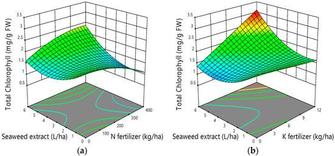
The study investigates the optimal levels of nitrogen, potassium, and seaweed extract fertilizers to enhance the yield and quality of thyme (Thymus vulgaris) using response surface methodology. Conducted at Sanandaj Azad University, the research utilized a Box-Behnken design to evaluate the effects of these fertilizers on biomass, photosynthetic pigments, and essential oil yield. Results indicated that the application of 162 kg/ha urea, 12 kg/ha Flourish Sulfopotash, and 4 L/ha seaweed extract maximized dry matter and essential oil yield. The study highlights the potential of resource optimization to improve thyme production while reducing environmental impact.

Agriculture Fertilization Thyme Cultivation Iran Mediterranean Southern Europe Islamic Azad University University of Massachusetts Amherst Shaida Muetasam Jafr Abdol Rahman Rahimi Masoud Hashemi Asad Rokhzadi
Estilo periodísticoFactual

Complete fact: The article is a scientific study with data and results.

Contratar Mensaje
×

Regístrate para enviar un mensaje a Masoud

¿Ya tienes una cuenta? Iniciar sesión
¿Buscas trabajo? Regístrate como periodista
Verifica tu correo electrónico para completar el registro
Acabamos de enviar un correo electrónico a . Revisa tu bandeja de entrada y haz clic en el enlace para verificar tu dirección de correo electrónico y completar tu registro. Si no ves el correo, asegúrate de revisar tu carpeta de spam o correo no deseado.
¿No recibiste el correo electrónico?

Regístrate para desbloquear perfiles

¿Ya tienes una cuenta? Iniciar sesión
¿Buscas trabajo? Regístrate como periodista
Verifica tu correo electrónico para completar el registro
Acabamos de enviar un correo electrónico a . Revisa tu bandeja de entrada y haz clic en el enlace para verificar tu dirección de correo electrónico y completar tu registro. Si no ves el correo, asegúrate de revisar tu carpeta de spam o correo no deseado.
¿No recibiste el correo electrónico?