Contratar periodistas

Editoriales y emisoras Equipos de marketing de contenidos Equipos de relaciones públicas y comunicación Equipos de riesgo e inteligencia Encontrar periodistas Monitoreo de medios Precios

Para periodistas

Empleos en periodismo Tarifas Crea tu perfil gratis

Sobre Mauricio

Mauricio Percara es un periodista, editor, investigador y consultor internacional argentino con base en Pekín, con amplia experiencia profesional por toda China. Su trabajo se centra en las relaciones China–América Latina, asuntos internacionales, negocios, tecnología, cuestiones sociales e intercambio cultural. Anteriormente trabajó como periodista y editor en China Radio International y ha contribuido a China.org.cn, E-International Relations, China Files y otras publicaciones internacionales. También está realizando investigación doctoral en International Relations en Central China Normal University, combinando experiencia académica con experiencia práctica en periodismo internacional y comunicación intercultural. Mauricio asiste a redacciones internacionales, emisoras y productores de documentales con investigación editorial, identificación de fuentes, informes de contexto, coordinación de entrevistas, enlace local, contactos corporativos y logística de producción. Su experiencia como consultor aporta contactos adicionales con empresas e instituciones que operan en China. También es locutor profesional en español con su propio estudio de grabación, ofreciendo narración, voz en off para documentales y producción de audio. Disponible para trabajos remotos y proyectos presenciales seleccionados en Pekín, Wuhan y otras localidades en China, previa coordinación.

Idiomas
inglés español portugués chino italiano japonés
Visto en
Spanish.china.org.cn E-International Relations China Files Espanol

Trabajo 6

Confucius Institutes in Argentina and China’s Soft Power Strategy

E-International Relations 13 oct 2026 English

Argentina’s five Confucius Institutes operate within a university system shaped by a strong tradition of institutional autonomy. Rather than adopting China’s cultural diplomacy wholesale or rejecting it outright, public universities negotiate institute partnerships individually and retain control over governance, curricula, hiring, and academic collaboration. Activities are often limited to non-degree language courses and cultural events, while concerns about funding transparency and cultural bias are handled through university forums. The Argentine case shows that the effects of soft power depend on host institutions, which can adapt and constrain foreign initiatives while pursuing international cooperation.
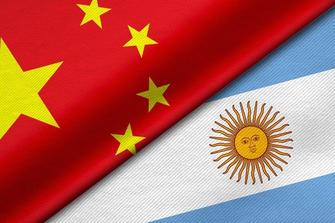
Confucius Institutes China’s soft power Academic freedom University autonomy Cultural diplomacy Argentina China Latin America Center for Language Education and Cooperation Universidad de Buenos Aires Universidad Nacional de La Plata Universidad Nacional de Córdoba
Estilo periodísticoInformativo

Primarily analytical and explanatory, though it draws interpretive conclusions about institutional autonomy and soft power.


China and the United States: From High-Level Dialogue to a More Stable and Predictable Relationship

Spanish.china.org.cn 28 sept 2026 Spanish

Xi Jinping’s September 23–25 state visit to the United States, following Donald Trump’s visit to China earlier in the year, renewed efforts to build a stable strategic relationship. The leaders endorsed respect, fairness, reciprocity, continued communication, and mechanisms to manage disagreements while allowing competition to persist. Their discussions included a new economic and trade understanding, cooperation and risk dialogue on artificial intelligence, regular government and military contacts, and international issues including the Middle East, Ukraine, and the Korean Peninsula. They also agreed to support one another’s hosting of the 2026 APEC and G20 leaders’ meetings. The article argues that the central challenge is to turn high-level understandings into sustained channels for cooperation and crisis management, rather than expecting differences to disappear.

China–United States Relations Diplomacy Economic and Trade Relations Artificial Intelligence International Cooperation China United States Asia-Pacific Government of China Government of the United States Asia-Pacific Economic Cooperation (APEC) G20
Estilo periodísticoInterpretativo

Commentary presents a favorable, advocacy-oriented view of high-level dialogue and cooperation as a path to greater stability.

Contexto políticoCentro

The article advocates dialogue and cooperation between the two governments without endorsing a partisan political position.

Soft Power Viral: TikTok, Memes, and Transnational Dissent in the Age of Digital Influence

E-International Relations 2 sept 2026 English

TikTok and meme culture have expanded digital soft power beyond governments, allowing ordinary users and grassroots movements to shape international narratives and mobilize support. The article examines Ukrainian wartime storytelling and meme campaigns, pro-Palestinian content and mutual-aid efforts, and the Milk Tea Alliance’s cross-border pro-democracy activism. These examples show how viral content can humanize conflict, challenge official narratives, and translate attention into fundraising and protest. The same decentralized influence also carries risks, including disinformation, algorithmic bias, censorship, surveillance, polarization, and the commodification of trauma. The article argues that digital influence is reshaping public diplomacy and geopolitics, while raising questions about protecting civic expression and ensuring accountability.

Digital Soft Power TikTok and Political Influence Internet Memes and Activism War in Ukraine Pro-Palestine Mobilization Milk Tea Alliance Disinformation and Content Moderation Ukraine Palestine East and Southeast Asia North Atlantic Fellas Organization (NAFO) Ukrainian Ministry of Defense
Estilo periodísticoEquilibrado

Analytical and broadly supportive of grassroots digital activism, while also detailing its risks and ethical concerns.

Contexto políticoCentroizquierda

Supports democratic dissent and marginalized voices while critically examining state influence, propaganda, and platform power.

Venezuela After January 3, 2026: Announced Capture, Legal Debate, and an Open Scenario

Spanish.china.org.cn 4 ene 2026 Spanish

The reported U.S. operation in Venezuela and transfer of Nicolás Maduro to the United States have created uncertainty over who controls the state and whether an interim arrangement ordered by Venezuela’s Supreme Tribunal can secure effective authority. The operation has prompted an international debate over sovereignty, the use of force, and the role of the UN Security Council, with governments divided between condemnation, calls for restraint, and limited support. Brazil and other neighboring countries are concerned about regional security and cross-border effects. Disruptions to oil logistics and exports could compound existing sanctions-related constraints and increase economic and political volatility. Venezuela’s trajectory will depend on institutional and security-force cohesion, the response of international actors, and whether oil operations stabilize.

Venezuela Political Crisis U.S. Intervention in Venezuela International Law Venezuelan Oil and Sanctions Regional Stability Venezuela United States South America United Nations Security Council United Nations Supreme Tribunal of Justice of Venezuela Government of Venezuela
Estilo periodísticoEquilibrado

Analytical commentary that weighs competing interpretations and consequences, while largely presenting a cautious, fact-oriented assessment.

Contexto políticoCentro

Focuses on competing legal and political claims, emphasizing uncertainty and consequences rather than endorsing a partisan position.

China and Latin America: 2025, a Year of Strategic Consolidation and Shared Vision

Spanish.china.org.cn 22 dic 2025 Spanish

The article portrays 2025 as a year in which China–Latin America relations became more strategically established and diversified. It highlights the China–CELAC ministerial meeting and its 2025–2027 action plan, record trade, expanded infrastructure cooperation under the Belt and Road Initiative, and the Chancay megaport’s potential to shorten shipping routes. It also points to Chinese electric-vehicle and technology companies’ role in regional transport and clean-energy transitions, alongside scholarships, educational agreements, Confucius Institutes, and improved travel links. Argentine Ambassador Marcelo Gabriel Suárez Salvia and academic Héctor Villagrán-Cepeda describe opportunities in investment, education, and technology. The piece concludes that the relationship is increasingly comprehensive and oriented toward a shared future.

China–Latin America Relations International Trade Infrastructure Development Education and Cultural Exchange Electric Mobility Renewable Energy China Latin America and the Caribbean Argentina China–CELAC Forum Community of Latin American and Caribbean States (CELAC) Belt and Road Initiative
Estilo periodísticoInterpretativo

The piece presents a strongly favorable interpretation of China–Latin America cooperation, emphasizing shared benefits and strategic progress while offering little criticism.

Contexto políticoCentroizquierda

The article endorses multilateral cooperation and shared development, using language aligned with China’s diplomatic framing, but is not primarily partisan.

Pandarinathan, a Story from China’s Most Indian Side

China Files 2 ago 2016 Spanish

Mauricio Percara recounts his friendship with Pandarinathan, an Indian from Tamil Nadu whom he met in China and later lived with. Pandarinathan studied computer science but pursued journalism and writing, working to translate his Tamil-language writing skills into English. He is a devoted reader of Paulo Coelho, whose books helped him through a difficult breakup and inspired his writing.

Indian diaspora in China Personal profile Paulo Coelho and literature China India Brazil Pandarinathan Mauricio Percara Paulo Coelho
Estilo periodísticoInterpretativo

A personal, subjective profile told through the author’s recollections and impressions of his friend.

Contratar Mensaje
×

Regístrate para enviar un mensaje a Mauricio

¿Ya tienes una cuenta? Iniciar sesión
¿Buscas trabajo? Regístrate como periodista
Verifica tu correo electrónico para completar el registro
Acabamos de enviar un correo electrónico a . Revisa tu bandeja de entrada y haz clic en el enlace para verificar tu dirección de correo electrónico y completar tu registro. Si no ves el correo, asegúrate de revisar tu carpeta de spam o correo no deseado.
¿No recibiste el correo electrónico?

Regístrate para desbloquear perfiles

¿Ya tienes una cuenta? Iniciar sesión
¿Buscas trabajo? Regístrate como periodista
Verifica tu correo electrónico para completar el registro
Acabamos de enviar un correo electrónico a . Revisa tu bandeja de entrada y haz clic en el enlace para verificar tu dirección de correo electrónico y completar tu registro. Si no ves el correo, asegúrate de revisar tu carpeta de spam o correo no deseado.
¿No recibiste el correo electrónico?